More
    Home Blog Page 22

    Trump, Xi Agree to Cut Tariffs: A New Phase in USA and China Trade Relations

    0

    USA and China Trade Relations – Hopeful yet Fragile

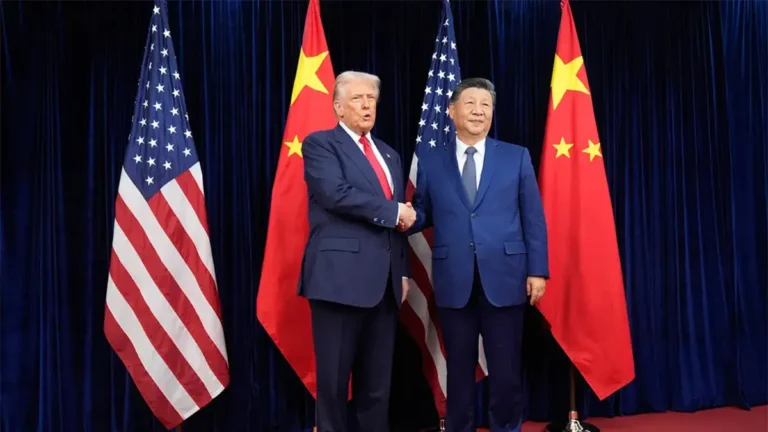
    In one of the most significant economic developments of 2025, former USA President Donald Trump and Chinese President Xi Jinping have agreed to cut tariffs, marking what could be a turning point in USA and China trade relations.

    After years of escalating trade wars, supply-chain disruptions, and inflationary shocks, the two largest economies are signalling an effort to reset. The announcement followed a summit in South Korea where both leaders publicly declared a “new phase” in trade cooperation.

    This agreement doesn’t just matter for Washington and Beijing — its effects ripple through Asia, Europe, Africa and beyond. In this in-depth analysis, we’ll explore what these tariff cuts mean, why they’re both hopeful and fragile, and how the decisions of two nations could reshape the world’s economic order.


    The Turning Point in USA and China Trade Relations

    The story of USA and China trade relations has been one of the most defining narratives of the 21st-century global economy. What started as mutual benefit evolved into fierce competition—a tug-of-war over technology, manufacturing, and influence.

    By 2024, tariffs between the two nations had reached unprecedented levels:

    • The U.S. imposed tariffs as high as 57% (in the context of the deal) on a range of Chinese imports.
    • China retaliated with duties exceeding 125% on certain American goods.

    The result? Businesses fled uncertainty, prices soared, and trade flows were distorted.

    But in October 2025, after months of back-channel diplomacy, Trump and Xi reached a breakthrough deal.


    The Details of the Tariff Cuts

    For the first time in years, both sides committed to easing economic pressure in a structured way regarding U.S. and China trade relations.

    United States Tariff Reductions

    • The U.S. announced that tariffs on Chinese imports would be cut from 57% to 47% — a 10% reduction aimed at stimulating bilateral trade.
    • Fentanyl-precursor imports from China, which were previously subject to ~20% duties, were lowered to 10%.
    • The U.S. also agreed to reevaluate tariffs on certain electronics, auto-parts, and medical devices by early 2026, pending Chinese compliance.

    China’s Reciprocal Measures

    • China announced it would reduce tariffs on U.S. goods from 125% to 10%, covering agricultural products, machinery and energy equipment.
    • Beijing pledged to resume large-scale soybean and liquified natural gas (LNG) imports from the U.S.
    • Perhaps most crucially, China delayed its rare-earth export restrictions for one year — a move welcomed by industries across the globe.

    These rate cuts, combined with supply-chain adjustments and agriculture commitments, represent a meaningful shift — though far from full reconciliation.


    Why This Deal Matters

    1. Restoring Global Confidence

    For years, businesses have been operating under the weight of uncertainty. These tariff cuts signal a potential return to predictability—something the global economy desperately needs.

    2. Consumer Relief

    High import duties inflated prices on goods from electronics to household items. The new tariff reductions could ease inflationary pressures, especially in Western markets.

    3. Strategic Stability

    Reducing tariffs on key goods like semiconductors, rare-earths and agriculture creates breathing room in an otherwise tense geopolitical landscape.

    4. Supply-Chain Rebalancing

    Both nations are re-engaging in trade, which will reduce logistical bottlenecks that rippled through industries since the trade war began in 2018. This is a major factor in U.S. and China trade relations moving toward a more managed competition model.


    Real-Life Problems and Practical Solutions

    Problem 1: Supply-Chain Instability

    Many businesses spent years restructuring operations due to tariff uncertainty. Some moved production to Vietnam or India, while others absorbed heavy cost increases.

    Solution:

    • Use this window of relative stability to renegotiate supplier contracts and diversify supply networks.
    • Invest in “China-plus-one” strategies—maintaining Chinese partnerships while expanding into alternative manufacturing hubs.

    Problem 2: Rising Consumer Prices

    American households and many global consumers faced higher costs on electronics, clothing and daily goods because of tariffs.

    Solution:
    Retailers should lock in long-term contracts while rates are low. Consumers may begin to see relief in tech and home goods prices within six months if the agreement holds.

    Problem 3: Strategic Dependence on China

    Rare earths, essential for EVs, smartphones and defense tech, are largely sourced from China. Export restrictions could cripple U.S. production and those of allied nations.

    Solution:

    • Leverage the one-year reprieve to invest in rare-earth recycling, mining partnerships (especially in Australia and Africa), and supply diversification.
    • Support domestic innovation in materials science to reduce reliance on a single country.

    A Closer Look: Economic Implications for the World

    The U.S. and China together account for over 35% of global GDP. When they move, the world trembles—and sometimes breathes a sigh of relief.

    Short-Term Impacts

    • Global markets responded positively, with Asia-Pacific indices rising 2-3% following the announcement of tariff cuts.
    • Commodity prices stabilised, particularly soybeans and oil, as trade resumed.
    • Investor confidence improved in export-oriented sectors such as logistics, shipping and manufacturing.

    Long-Term Impacts

    If maintained, this détente could lead to a recalibration of global trade architecture—perhaps even laying the groundwork for a new WTO-style agreement centred around fair competition and sustainable trade.

    More from Blogs: Zhang Shengmin Net Worth [张升民] and Career


    Country-Wise Trade Statistics and IMF Projections

    Bilateral Trade Figures (U.S. goods trade with China)

    According to U.S. Census data for 2025:

    • Exports from the U.S. to China: US$ 65,309.5 million (to June)
    • Imports from China to the U.S.: US$ 193,890.2 million (to June)
    • Trade balance: -US$ 128,580.7 million over the first half of 2025.

    This massive trade deficit emphasises the scale of what is at stake in U.S. and China trade relations.

    GDP Growth Projections (IMF)

    • For China: The International Monetary Fund (IMF) projects China’s 2025 real-GDP growth at 4.8%, up 0.8 ppt from earlier forecasts—reflecting improved outlook partly due to reduced U.S.–China tariffs.
    • For the U.S.: The IMF projects U.S. growth at roughly 2.0% for 2025, slightly higher than previous forecasts but still modest.
    • For the global economy: The IMF’s October 2025 World Economic Outlook projects global growth at 3.2% for 2025 and 3.1% for 2026.

    These figures indicate that while U.S. and China trade relations are improving, the global economy remains under pressure—and trade policy remains a key lever.


    Global Impact & Third-Country Effects

    Tariff cuts between the U.S. and China have far-reaching consequences for the rest of the world. When two economic giants adjust policy, their ripple effects shape markets from Mumbai to Mexico City.

    1. Southeast Asia: Manufacturing Shifts May Slow

    Countries like Vietnam, Thailand and Malaysia benefited when companies shifted production out of China due to tariffs. With tariffs now falling, some manufacturing could now return to China, potentially cooling the boom in Southeast Asia.
    However, nations that invested early in infrastructure (Vietnam’s Hai Phong, Malaysia’s Penang) will likely retain advantages as secondary hubs.

    2. India: Strategic Opportunity

    India stands to gain in the long term if it positions itself as a neutral yet reliable manufacturing alternative. While tariff cuts reduce immediate pressure, Western firms are still wary of over-reliance on Beijing.
    The Indian government can capitalise on this moment by:

    • Offering tax breaks for tech-manufacturing
    • Deepening logistics efficiency at ports like Mundra and Chennai
    • Accelerating the “Make in India” initiative to attract diversified investments.

    3. European Union: Competitive Advantage Shrinks

    During the trade war, the EU quietly benefitted from Chinese and U.S. import substitution. With tariffs lowered, Europe may lose some of that temporary trade diversion. However, European exporters may gain from increased global stability and reduced market volatility.

    4. Latin America: Agricultural Ripple Effects

    Brazil and Argentina, major soybean exporters, may experience reduced Chinese demand as Beijing resumes large U.S. agricultural imports. This could pressure prices and force regional exporters to adjust strategies.

    5. Africa: Strategic Minerals and Partnerships

    With rare-earth exports from China temporarily stabilised, African mining economies have more time to negotiate favourable deals with both Washington and Beijing. Countries like Namibia and the DRC will seek to build supply-chain credibility during this window of calm.

    6. Global Inflation and Markets

    Lower tariffs should modestly ease inflation globally, especially in sectors dependent on intermediate goods (automotive, consumer electronics). Analysts estimate that if tariff reductions hold for a full fiscal year, global inflation could ease by about 0.3-0.5%.


    Technology, Energy, and the Future of Trade

    Technology: The Next Battlefront

    Despite tariff cuts, tech remains a tension point. The U.S. continues restricting advanced semiconductor exports, while China doubles down on self-sufficiency through its “Made in China 2035” initiative.
    For the global tech sector, U.S. and China trade relations will be defined not just by tariffs but by innovation, intellectual property and supply-chain control.

    Energy: A Quiet Compromise

    China’s promise to buy more U.S. LNG (liquified natural gas) underscores the energy dimension of trade.
    This benefits Gulf exporters indirectly, as China diversifies away from Middle Eastern dependency—and the U.S. regains leverage as a global energy supplier.


    What Could Go Wrong?

    Despite the optimistic tone, several risks remain — highlighting how U.S. and China trade relations remain fragile.

    • Political Volatility: Future elections in the U.S. or leadership changes in China could undo progress.
    • Compliance Doubts: Tariff implementation timelines and verification mechanisms are still vague; failure to follow through could trigger renewed escalation.
    • Tech Wars: The ongoing chip & AI restrictions could spark new retaliations, even if tariffs remain low.
    • Geopolitical Tensions: Taiwan, the South China Sea, cyber-espionage disputes could reheat trade tensions rapidly.

    What Companies Should Do Now

    1. Lock in Lower Tariffs: Use the current window to secure better trade contracts and supplier terms.
    2. Hedge Currency Risk: The yuan-dollar exchange rate and trade flows may fluctuate significantly as agreements are implemented.
    3. Diversify with Strategy: Avoid over-correcting — balance Chinese supply chains with alternatives in Southeast Asia, India and elsewhere.
    4. Invest in ESG and Compliance: Sustainability and transparency now play roles in trade diplomacy and market access.
    5. Stay Agile: Treat this agreement as a tactical pause—not a permanent peace.

    A Fragile Peace with Global Implications

    The story of U.S. and China trade relations is entering a potentially new phase—one where tariffs may come down, dialogues may open and supply-chains may adjust. Yet the path ahead remains uncertain.

    While Trump and Xi’s tariff cuts have calmed markets and sparked hope, deep-rooted issues—technology sovereignty, national security, global influence—remain unresolved.

    For the world, this deal marks both a victory for diplomacy and a warning against complacency. Businesses, policymakers, and investors must seize this window to restructure intelligently, build resilient supply chains and prepare for the next evolution in U.S.–China dynamics.


    FAQs: USA and China Trade

    1. What exactly did Trump and Xi agree on?
    They agreed to reduce tariffs — U.S. tariffs on Chinese goods from ~57% to ~47%, and China’s tariffs on U.S. imports from ~125% to ~10%. Both also pledged to reopen trade in agriculture and critical minerals.

    2. How will this affect global inflation?
    Lower tariffs are expected to reduce global inflation by roughly 0.3-0.5% over 12 months as import costs decline and supply chains stabilise.

    3. Which sectors will benefit most?
    Key sectors: agriculture (soybeans, LNG), semiconductors, rare-earths, electronics, logistics and manufacturing.

    4. Does this mean the U.S. and China are allies again?
    No. While the tariff cuts ease economic friction, broader geopolitical rivalry—technology, defence, influence—remains.

    5. What’s the impact on smaller economies?
    Emerging markets may benefit from improved global trade sentiment—but remain vulnerable to trade diversion, changes in capital flows and supply-chain shifts.

    6. How long will these cuts last?
    The deal outlines a 12-month evaluation period. Further reductions are possible if both sides comply. But there’s no guarantee of permanence.

    7. Could this deal fail?
    Yes. Political shocks, technology disputes, or non-compliance could rapidly reverse gains—hence the “fragile” nature of the new phase.


    If you found this analysis useful, please share it with colleagues, comment below with your thoughts and follow for further updates as U.S. and China trade relations continue to evolve.


    Australia Women vs India Women: Battle for Cricket Supremacy 2025

    0

    Women Cricket Team – Triumphant yet Vulnerable

    Cricket has always been a sport of passion, grit and exceptional talent—but when it comes to the women’s game, the stakes have never been higher. This year, the global spotlight turns on one of the most riveting battles of recent memory: the clash between the Australian women’s national side and the Indian women’s national side. In this post, I’ll draw on my years of covering women’s cricket, talk with players and coaches, and analyse what this historic encounter means—not just as a match, but as a movement. This is about the Women Cricket Team in its fuller context.

    Whether you’re a die-hard follower of women’s cricket or simply curious about how two powerhouse nations are shaping the future of the sport, this is a story you’ll want to read. It’s energising, it’s sobering, and it’s deeply human.


    Setting the Stage: Australia Women vs India Women in 2025

    When you look at the global cricket map, the Women Cricket Team of Australia—the Australia women’s national cricket team—has long been the benchmark of excellence. Their dominance in women’s One Day Internationals (ODIs) and World Cups is unmatched. Meanwhile, the India women’s national cricket team has been on a meteoric rise, fueled by fresh talent, strong leadership and a growing infrastructure that treats the women’s game with far more seriousness.

    In 2025, the showdown between these teams is not merely a match—it represents a larger story. It’s about two cultures of cricket: one established, perhaps comfortable; the other ambitious, fast-emerging and eager to unsettle the status quo.

    Here are some of the key facts you should know:

    • Australia women vs India women have faced off repeatedly at the highest level. According to live updates of the semi-final of the ICC Women’s World Cup 2025, Australia were in dominant form, with opener Phoebe Litchfield in fine touch.
    • India women vs Australia women match scorecards show that Australia’s run of winning has been formidable. For example, in the semi-final, Australia posted 162/1 in 26 overs at one point.
    • Back stories matter. In that same match, both teams wore black armbands in tribute to a young cricketer’s tragic passing—underscoring the emotional texture behind the spectacle.

    With this as the backdrop, the battle for cricket supremacy in 2025 becomes far more than a contest of bat and ball—it’s a narrative of legacy, challenge, and reinvention.


    Key Players & Tactical Match-Ups

    Australia’s Strengths

    The Australian Women Cricket Team enters 2025 with ruthless efficiency and big match temperament.

    • Phoebe Litchfield: Her form speaks volumes. She raced to a century against India in the semi-final—an innings full of maturity and power.
    • Ellyse Perry: Even as she balances her all-round game, her experience gives Australia a critical edge.
    • Alyssa Healy: Explosive at the top, she sets the tone that many bowlers dread.

    India’s Firepower

    The Indian Women Cricket Team brings youthful exuberance and a hunger to upset the established order.

    • Smriti Mandhana: A world-class opener who has matured into the kind of anchor India needs.
    • Radha Yadav & Renuka Singh Thakur: Spinners who can keep the ball tied down—vital against Australia’s free-flowing batting.
    • Kranti Gaud: Emerging pace talent whose journey from small town to semi-final stage is an inspiring example of depth in the Indian setup.

    Tactical Battle

    • Australia will look to dominate early, control the tempo, and capitalise on mistakes. India must disrupt that rhythm—use home-conditions, exploit spin, and target key moments.
    • The semi-final showed that when Litchfield gets rolling, it’s like watching a force of nature. The Indian attack struggled to find answers.
    • For India, the key challenge: converting starts into big scores and claiming early wickets. The Australian Women Cricket Team thrives when they’re calm and comfortable; India must make them uncomfortable.

    More from Blogs: 2025 Update: Sofia Kenin’s Net Worth and Current WTA Ranking Explained


    Real-Life Problems & Practical Insights

    Often, when we talk about a major cricket match, we focus only on action. But there are real lessons beneath the surface—many of which apply to teams, coaches and even individuals beyond cricket.

    Problem: Pressure in Big Games

    When you’re facing a team like Australia with a track record of dominance, every mistake is magnified. India’s bowlers, for instance, at times bowled full outside off-stump repeatedly—allowing Litchfield to carve boundaries effortlessly.

    Practical Solution:

    • Train to keep the baseline pressure—dot balls, fielding support, bowling tighter lines.
    • Use simulation of high-pressure scenarios in practice sessions—bowl to aggressive batters with attack on.
    • For players: develop mindset routines—visualisation, breathing, resetting between overs.

    Problem: Complacency from the Dominant Side

    Australia might seem invincible, but that can sometimes lead to loss of sharpness. A dominant team can become vulnerable if it underestimates an opponent. For example, earlier in the year Australia suffered a heavy defeat to India in a warm-up ODI.

    Practical Solution:

    • Regardless of status, treat each session like a final.
    • Coaches should emphasise marginal gains—fielding drills, death-over scenarios, spin variations.
    • Maintain hunger. For players: set personal goals even in dominant teams: e.g., 70+ strike rate, 80% dot-ball percentage for bowlers.

    Problem: Building Depth for the Future

    India’s challenge has not just been about one match—it’s building a sustainable pipeline. Australia’s depth has been a strength for years; India is catching up.

    Practical Solution:

    • Invest in grassroots, ensure clear pathways from U-19 to senior level.
    • For players: diversify skill sets (batters who bowl, bowlers who bat) to increase selection chances.
    • For administrators: create domestic leagues with meaningful competition to sharpen domestic Women Cricket Teams.

    Problem: Fan Engagement & Media Visibility

    Women’s cricket historically has had lower visibility compared to men’s cricket in many countries. That affects sponsorship, investment, and growth momentum.

    Practical Solution:

    • Media houses can offer dedicated women’s cricket coverage, highlight stories of players (both triumphs and struggles).
    • Teams should share behind-the-scenes content, player stories, and community engagement to build fanbase.
    • Fans: show up! Whether at the stadium or online—higher engagement drives better investment.

    The Road to Supremacy: Milestones & Turning Points

    Here’s a curated timeline of major moments in this rivalry and how they relate to the broader story of the Women Cricket Team.

    Early Years & Historical Context

    • Australia women vs India women have a long history: Australia dominated in early decades, building their reputation through consistency and championship mindset.
    • India women, for much of their journey, fought for recognition—both on field and off.

    2017 Shift

    In the 2017 World Cup semi-final, India pulled off a huge upset over Australia. That match signalled that the Indian Women Cricket Team was no longer just participating—they were competing fiercely.

    2025 Build-Up

    Leading into the ICC Women’s World Cup 2025, both teams elevated their preparation. Australia were defending champions with a rich legacy; India went in with home advantage, emerging stars and a hunger to rewrite history.

    Semi-Final Clash at DY Patil

    In Navi Mumbai, the semi-final of the Women’s World Cup saw Australia vs India at its finest. Phoebe Litchfield smashed a century; India struggled to find breakthroughs.
    That moment emphasises: the margin between greatness and very good can be razor-thin.


    Why This Battle Matters – And What It Says for Women’s Cricket Globally

    This is more than just one match or one tournament.

    • Visibility for Women Cricket Team: High-profile clashes like Australia vs India amplify the global standing of women’s cricket. As prize money increases (the winner’s purse for 2025 was announced to surpass men’s 2023 figures) the stakes are real.
    • Role Modelling: Young girls in India, Australia and elsewhere will see this match, see these players and visualise their own path. That matters for talent pipelines.
    • Competitive Benchmarking: When two strong teams face off, each raises its game. This drives standards up for all women’s cricket teams globally—not just these two nations.
    • Commercial Growth: More engagement means more sponsors, more broadcasts, more investment—and ultimately more professionalisation of the women’s game.

    What Fans Should Watch For: Key Match-Dynamics in 2025

    • The opening spells: How Indian bowlers bowl to Litchfield and Healy. Can they make early inroads?
    • Spin variations: India’s spinners (Radha, Renuka) vs Australia’s depth—how will they bat against spin in Indian conditions?
    • Fielding execution: At this level, catches, stops, and pressure-balls matter. In the earlier matches, India dropped catches that proved costly.
    • Partnerships under pressure: Australia have shown they can build big partnerships. India must disrupt that.
    • Response to adversity: For both teams—how they bounce back from bad overs, lost wickets, or pressure situations.

    FAQs (Frequently Asked Questions)

    1. Which Women Cricket Team has the upper hand historically in Australia vs India?

    Historically, the Australia women’s national cricket team has dominated encounters against India, boasting many more wins in ODIs and World Cup matches. However, India has shown signs of closing the gap recently.

    2. Who are the standout players to watch in the Australia women vs India women 2025 clash?

    On the Australian side: Phoebe Litchfield, Alyssa Healy and Ellyse Perry. On the Indian side: Smriti Mandhana, Radha Yadav and Renuka Singh Thakur stand out for their skill and match-impact.

    3. What was the key turning point in the Women’s World Cup 2025 semi-final between India and Australia?

    A dominant batting display by Phoebe Litchfield, combined with India’s inability to force early wickets or contain the Australian run-rate, created a strong platform for Australia.

    4. Why is this rivalry important for the future of the Women Cricket Team globally?

    Because these matches raise the bar for performance, attract visibility and investment, and help professionalise the women’s game across nations. A strong rivalry drives progress.

    5. How can emerging players learn from this Australia vs India women series?

    Emerging players can study how pressure is handled, how partnerships are built, how spinners and batters adapt and train under high-stakes conditions. They can also see how team culture and preparation matter just as much as talent.

    6. What are some weaknesses each side needs to address?

    Australia: Risk of complacency, underestimating opponents. India: Converting starts into big scores, taking early wickets, executing under pressure consistently.

    7. What should fans look forward to in upcoming matches between these teams?

    Sharper tactical battles, tighter fielding, younger stars emerging, more intense match-ups in semi-finals/finals—and possibly the women’s game unlocking new records.


    If you enjoyed this deep dive into the Women Cricket Team rivalry, I encourage you to share this blog, comment with your favourite moments or players, and bookmark for future matches. Let’s support women’s cricket—not just as spectators, but as advocates for its growth and evolution.

    Here’s to more thrilling innings, more tight bowling spells—and above all, to the Women Cricket Team of both nations continuing to raise the bar.


    Washington DC Weather Warning: Heavy Rain and Wind Threat Through Thursday Morning

    0

    Washington DC Weather Warning – Rain, Gusts, and Lightning on the Way

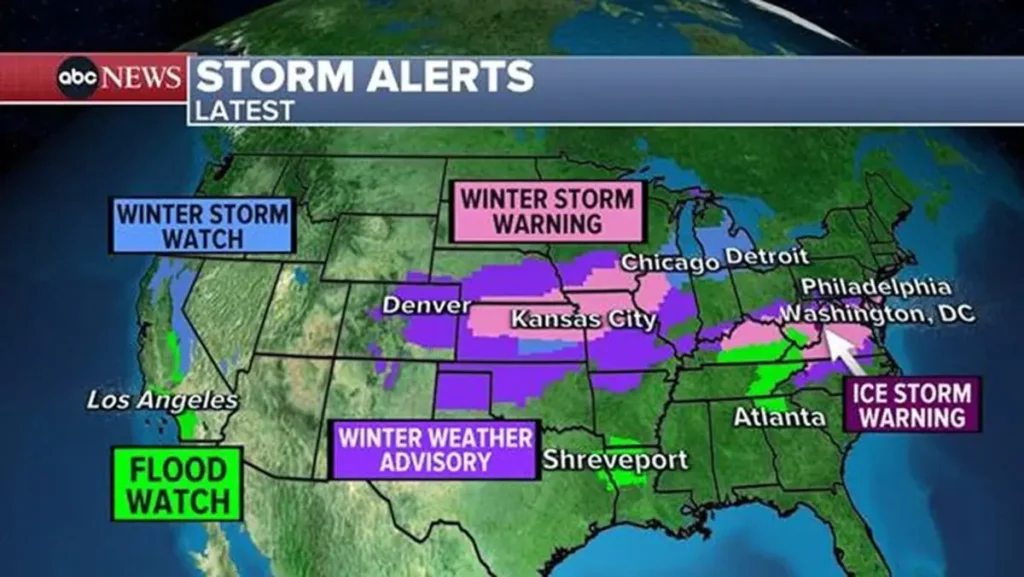
    The nation’s capital is bracing for a stormy midweek stretch as a powerful weather system pushes through the Mid-Atlantic. The National Weather Service (NWS) has issued a Washington DC weather warning for heavy rain, strong winds, and possible thunder through Thursday morning.

    Residents across the District, Northern Virginia, and Maryland suburbs are urged to prepare for localized flooding, gusty winds, and morning commute disruptions. While this isn’t a tropical storm or hurricane, the system has enough energy and moisture to create conditions that resemble one.

    So, what exactly is coming — and how should you prepare? Let’s break it down.


    The Storm Setup: What’s Happening in the Atmosphere

    Meteorologists describe this system as a classic fall frontal storm — a combination of warm, humid air from the south meeting colder air sliding down from the Great Lakes. When these two collide, the result is intense rainfall bands and embedded thunderstorms.

    According to NWS Sterling, VA, the heaviest rain will occur late Wednesday evening into early Thursday, with rainfall totals between 2 to 4 inches, and localized pockets possibly exceeding 5 inches.

    Strong southerly winds will gust 35 to 45 mph, especially near the Potomac River and higher elevations. Those gusts could knock down small tree limbs, cause brief power outages, and make travel hazardous on bridges and overpasses.

    More from Blogs: Hurricane Melissa 2025 Tracker: Your Real-Time Path & Impact Guide


    Washington DC Weather Warning 2

    Timeline: When and Where the Worst Weather Will Hit

    Time (EST)Expected ConditionsImpact Level
    Wednesday 4 PM – 8 PMLight rain begins, increasing cloudsLow
    Wednesday 9 PM – 2 AMHeavy downpours, isolated thunderHigh
    Thursday 2 AM – 7 AMStrongest winds, flash flooding riskHigh
    Thursday 8 AM – NoonShowers taper off, gusts persistModerate
    Thursday AfternoonClearing skies, cooler air moves inLow

    The peak intensity will likely occur overnight Wednesday into early Thursday, coinciding with the morning rush hour.

    Low-lying areas such as Rock Creek Park, Georgetown waterfront, Alexandria Old Town, and Southeast DC neighborhoods are especially vulnerable to flooding.


    Local Alerts and Warnings

    As of Wednesday afternoon:

    • Flood Watch: In effect for the entire DC Metro region.
    • Wind Advisory: Active until Thursday 10 AM.
    • Thunderstorm Risk: Slight to moderate chance, mainly overnight.

    The NWS urges residents to avoid travel during heavy rainfall, never drive through flooded roadways, and secure outdoor furniture or decorations before winds intensify.

    “This system may not be tropical, but it carries tropical-level moisture,” said meteorologist Andrew Snyder from the NWS Sterling office. “Residents should treat this as a serious rainfall event.”

    (Source: National Weather Service).


    How This Storm Compares to Previous DC Weather Events

    Washington DC is no stranger to heavy rain systems — from Hurricane Ida’s remnants in 2021 to June 2023’s flash floods that swamped parts of downtown.

    However, meteorologists note that this week’s storm stands out for its long duration and widespread coverage. Unlike a quick summer thunderstorm, this one will linger for nearly 12–18 hours, saturating soil and overwhelming drainage systems.


    What to Expect: Impacts Across the DC Metro

    1. Flooding and Standing Water

    Expect ponding on major routes like I-66, I-395, and the George Washington Parkway. Commuters should allow extra time, especially Thursday morning.

    2. Transit Delays

    Metro officials have warned of potential slowdowns on outdoor rail segments. Bus routes near flood-prone intersections may also face diversions.

    3. Power Outages

    With winds reaching 40+ mph, tree branches may fall onto lines, especially in suburban Maryland and Northern Virginia. Have flashlights and phone chargers ready.

    4. Flight Disruptions

    Reagan National (DCA) and Dulles (IAD) could experience delays or temporary ground stops, particularly late Wednesday night.


    Safety Checklist: Preparing for the Storm

    Here’s a quick, practical checklist every DC-area household can use:

    Secure outdoor furniture, trash bins, and Halloween decorations.
    Charge phones, laptops, and power banks.
    Keep flashlights and extra batteries accessible.
    Check sump pumps and clear gutters

    Avoid parking under trees or power lines.
    Have non-perishable food and bottled water on hand.
    Download the FEMA and NWS apps for live alerts.

    If you live in a basement or flood-prone area, move valuables to higher ground and consider sandbags or water barriers as a precaution.


    The Role of Climate Change in DC’s Storm Patterns

    Scientists have observed a clear trend: storms in the Mid-Atlantic are becoming more intense and wetter.

    A 2024 report by NOAA found that Washington DC now sees 20% more heavy rainfall events compared to the 1980s. Warmer air holds more moisture, leading to heavier downpours during frontal systems like this one.

    This means that storms once considered “rare” are now appearing multiple times a year, testing the region’s stormwater infrastructure.


    Looking Ahead: When Will the Weather Clear?

    By Thursday afternoon, drier and cooler air will move in behind the front. Skies should gradually clear, and temperatures will settle in the upper 50s by evening.

    Friday looks calmer, with partly sunny skies and highs near 60°F, marking a refreshing change after the storm.

    The weekend forecast currently calls for mild, breezy, and mostly dry conditions — a welcome relief for anyone planning outdoor events.


    How Local Agencies Are Responding

    • DC Water has activated its flood response crews and is monitoring drainage tunnels across the city.
    • Pepco has staged extra power restoration teams in anticipation of outages.
    • DDOT (District Department of Transportation) has warned residents to report blocked storm drains and avoid underpasses during peak rainfall.

    Emergency shelters are also on standby for any localized flooding emergencies.


    Comparing This Storm to Others in the Region

    EventYearPeak RainfallKey Impact
    Hurricane Ida Remnants20213.5 inFlash floods, Metro delays
    Flash Flood Storm20232.8 inMajor street closures
    This Week’s Storm2025Up to 5 inExtended rain, strong winds

    This comparison shows that while the 2025 storm may not be the most extreme in speed or strength, it’s one of the most prolonged and widespread.


    Tips for Commuters

    • Leave early Thursday morning. Roads will be slower than usual.
    • Use Metro where possible — but check for alerts before leaving.
    • Watch for hydroplaning on major roads.
    • Work remotely if your job allows.

    Safety is far more important than being on time.


    What Residents Are Saying

    Many locals have already noticed the gusts picking up and the smell of rain in the air.

    “I’ve lived here for 12 years, and this feels like one of those nights you just stay home and listen to it pour,” said Erin M., a Georgetown resident. “We’ve had storms before, but the warnings this time seem stronger.”

    For many DC residents, this storm is a reminder of the city’s ongoing struggle with aging drainage systems and the reality of heavier rainfall events.


    Expert Insight

    Meteorologist Lydia Patterson of Weather Channel’s Mid-Atlantic team said:

    “The key difference this time is duration. It’s not one burst of thunder and done — this is sustained rainfall for hours. The flooding risk grows with each hour the rain continues.”

    (Source: The Weather Channel).


    The Bottom Line

    This storm won’t go down as a hurricane, but its impact on Washington DC weather could be just as disruptive.
    Heavy rain, gusty winds, and thunder will make for a rough night across the region — but preparedness can make all the difference.

    By Thursday afternoon, conditions will improve, and the focus will shift to cleanup and recovery. Until then, stay indoors, stay informed, and stay safe.


    FAQs

    1. What time will the heaviest rain hit DC?
    Between 9 PM Wednesday and 7 AM Thursday, according to NWS forecasts.

    2. Will schools close due to the storm?
    As of now, schools remain open, but check local announcements Thursday morning.

    3. Is this storm related to a hurricane?
    No. It’s a frontal system, not tropical, though moisture from the Atlantic is enhancing rainfall.

    4. How much rain is expected?
    2–4 inches for most areas, with isolated totals near 5 inches.

    5. When will it clear?
    Rain should taper off by Thursday afternoon, followed by cooler and drier air.

    Nvidia Becomes a $5T Powerhouse: What This Means for AI’s Future

    0

    Nvidia’s $5T Powerhouse Leap Explained: The Rise of the AI Superpower

    When Nvidia first started out making graphics cards for gamers, few imagined it would one day join the world’s most valuable companies. Yet here we are — Nvidia has crossed the $5 trillion mark, becoming the most valuable semiconductor company in history.

    This isn’t just a financial milestone; it’s a reflection of how artificial intelligence (AI) has transformed from a research field into the backbone of modern technology. Nvidia’s $5 trillion valuation puts it in a rare league, rubbing shoulders with Apple, Microsoft, and Saudi Aramco. But what does this mean for AI’s future, and why has Nvidia become the face of this new industrial revolution?

    Let’s break down what’s driving this massive valuation, how Nvidia reached this point, and what it signals for investors, competitors, and the world of technology.


    The Journey to $5T Powerhouse

    Nvidia’s journey from a GPU maker to a global AI infrastructure leader is one of the most dramatic success stories in tech. Founded in 1993 by Jensen Huang, Chris Malachowsky, and Curtis Priem, the company’s early focus was simple — make faster, better graphics processors.

    By 2020, Nvidia’s graphics processing units (GPUs) were already dominating gaming and professional visualization. But the real inflection point came with AI acceleration.

    In 2016, Nvidia released its Pascal architecture, which powered early AI training models. Researchers discovered that GPUs — originally built for gaming — could handle the intense parallel computing required for training neural networks far more efficiently than CPUs.

    That discovery changed everything. Nvidia’s chips quickly became the engine behind AI models from OpenAI, Google DeepMind, Meta, and countless startups.

    More from Blogs: Is 1X Technologies the Future of Home Robotics? A Deep Dive into NEO


    The AI Revolution and Nvidia’s Dominance

    Today, Nvidia is the foundation of the AI economy. From ChatGPT to self-driving cars, almost every major AI application relies on Nvidia hardware.

    The company’s H100 and GH200 Grace Hopper chips are the gold standard for AI workloads. Major cloud providers — Amazon Web Services (AWS), Google Cloud, Microsoft Azure — purchase these chips in massive quantities to power data centers.

    According to Reuters, over 80% of the world’s AI computing runs on Nvidia GPUs. This dominance gives Nvidia a unique advantage: it controls the essential tool for AI innovation.

    Jensen Huang calls Nvidia’s products “the picks and shovels of the AI gold rush.” And he’s right. Every new AI startup, from Anthropic to Stability AI, depends on Nvidia hardware to bring ideas to life.


    Market Valuation: Why $5 Trillion Matters

    Crossing $5 trillion isn’t just symbolic — it reshapes the market. Nvidia now sits alongside Apple and Microsoft, each valued around $3–5 trillion, and far ahead of traditional rivals like AMD or Intel.

    Let’s look at a quick snapshot:

    CompanyMarket Cap (2025)Primary Growth Driver
    Nvidia$5 trillionAI hardware & data centers
    Apple$4.6 trillionDevices & ecosystem
    Microsoft$4.9 trillionCloud & AI software
    Amazon$2.1 trillionE-commerce & AWS
    Google (Alphabet)$2.7 trillionSearch & AI integration

    Unlike Apple and Microsoft, Nvidia’s business model isn’t tied to consumers — it’s infrastructure. It sells the tools that make AI possible, from chips to software frameworks like CUDA and TensorRT.

    This infrastructure-first model means its profits scale alongside global AI adoption, not just product sales.


    Why Investors Are Excited in Nvidia’s $5T Powerhouse

    Investors view Nvidia not as a chipmaker, but as a platform company at the heart of the AI boom.

    The numbers tell the story:

    • Revenue in 2024: $125 billion (up 170% year-over-year)
    • Gross margin: Over 76%
    • Data center revenue: Nearly 85% of total sales

    These metrics show a company in hypergrowth mode — but also one building deep economic moats. Its software stack, developer ecosystem, and specialized chip designs make it extremely hard for competitors to catch up.

    For long-term investors, Nvidia represents a pure play on AI’s exponential growth.


    The Competition: Can Anyone Catch Up?

    AMD and Intel

    AMD’s MI300 chips are strong contenders but still lag behind in AI performance benchmarks. Intel, meanwhile, is refocusing on data centers and Gaudi accelerators, but has yet to challenge Nvidia’s dominance.

    Google and Amazon

    Google’s TPUs (Tensor Processing Units) and Amazon’s Trainium chips are used internally, but they haven’t disrupted Nvidia’s hold over the broader market.

    Apple and Microsoft

    These companies use AI to enhance their products and ecosystems, but they rely on Nvidia for hardware in their cloud operations.

    Simply put, everyone is still buying from Nvidia — and that’s a moat no competitor has broken yet.


    What This Means for AI’s Future

    Nvidia’s rise tells us one clear thing: AI isn’t hype anymore — it’s the new electricity.

    As generative AI, robotics, and autonomous systems evolve, Nvidia’s GPUs will remain the computational foundation. The company is already moving into robotics with Isaac Sim, digital twins with Omniverse, and next-generation computing with Blackwell architecture.

    Its technology will shape everything from healthcare imaging to climate modeling to the next wave of humanoid robots.

    But there’s another side — the risk of over-dependence. If Nvidia remains the sole supplier of high-end AI chips, supply constraints and pricing power could slow down innovation globally.


    What Experts Are Saying

    According to Bloomberg, Nvidia’s success has “turned the company into the most important tech supplier since Intel in the 1990s.”
    Reuters reports that its data center customers now include nearly every Fortune 500 company involved in AI.

    Jensen Huang, the company’s CEO, summed it up best:

    “We’re at the beginning of a new industrial revolution, one built on AI computing. The entire world’s industries will be reinvented.”


    The Bigger Picture: Tech Giants at a Crossroads

    Nvidia’s $5 trillion valuation doesn’t just highlight its dominance — it signals a shift in what drives tech value.

    • Apple revolutionized consumer electronics.
    • Microsoft led software and cloud infrastructure.
    • Nvidia is defining the AI hardware era.

    If Apple made technology personal, Nvidia made it intelligent.


    Risks and Challenges in Nvidia’s $5T Powerhouse

    Despite the optimism, no company is invincible. Nvidia faces several challenges:

    • Supply chain risks: Chip manufacturing still depends on partners like TSMC.
    • Regulatory pressure: U.S. export controls could limit access to Chinese markets.
    • Competition from open-source AI: Efficiency in software may reduce hardware demand.

    Still, Nvidia’s strategy — expanding its software ecosystem and partnerships — suggests it’s preparing for these headwinds.


    Closure

    Nvidia’s $5 trillion valuation is more than a headline. It’s a marker of where the tech world is headed. The company’s hardware powers AI’s brain, and its software drives innovation across industries.

    In the long run, this milestone will likely be remembered as the point when AI officially became the world’s most valuable industry.

    For investors, technologists, and even policymakers, Nvidia isn’t just a company to watch — it’s the company defining the next decade of computing.


    FAQs: Nvidia’s $5T Powerhouse

    1. Why is Nvidia’s valuation so high?
    Because it dominates the AI hardware market, supplying GPUs for nearly every major AI system.

    2. Who are Nvidia’s biggest competitors?
    AMD, Intel, and Google with their in-house chips, though none match Nvidia’s ecosystem scale.

    3. How does Nvidia make money?
    Mainly from data center GPUs, software platforms, and automotive AI solutions.

    4. What’s next for Nvidia after $5 trillion?
    New AI architectures like Blackwell, expansion into robotics, and deeper AI-as-a-service offerings.

    5. Is Nvidia overvalued?
    Some analysts think growth expectations are high, but continued AI adoption supports its valuation for now.

    Hurricane Melissa 2025 Tracker: Your Real-Time Path & Impact Guide

    0

    Hurricane Melissa 2025 Tracker: Your Real-Time Path & Impact Guide

    As the 2025 Atlantic hurricane season reaches its peak, one name dominates the headlines: Hurricane Melissa. Rapidly intensifying into a Category 5 storm, Melissa is being called one of the strongest hurricanes to hit the Caribbean in decades.

    If you’re in Jamaica, the Cayman Islands, or Florida, knowing where this storm is heading is not just important — it’s essential. This comprehensive Hurricane Melissa 2025 tracker brings you the latest information, forecasts, and expert insights to help you understand the storm’s trajectory, potential damage, and what to expect next.


    Current Status: Hurricane Melissa’s Real-Time Path

    As of October 29, 2025, the National Hurricane Center (NHC) reports that Hurricane Melissa remains a Category 5 hurricane with sustained winds exceeding 165 mph (265 km/h).

    The storm made landfall in Jamaica on October 27, causing widespread flooding, power outages, and infrastructure damage. It has since moved northwest, passing near the Cayman Islands, and is expected to head toward the Florida Keys by early November.

    Current Coordinates (as of 6:00 a.m. ET):

    • Latitude: 18.9° N
    • Longitude: 81.6° W
    • Maximum Sustained Winds: 165 mph
    • Movement: Northwest at 11 mph
    • Pressure: 924 mb

    Real-Time Tracker Map and Forecast Cone

    The Hurricane Melissa 2025 tracker map shows the storm’s projected path, including forecast cones that illustrate potential shifts in direction. Meteorologists emphasize that even a 20–30 mile deviation can change which areas experience the most severe winds and storm surges.

    You can follow the live forecast cone and radar map on official sources such as the:


    Recent Landfall and Damage Reports

    Jamaica

    Melissa made a direct hit on Jamaica’s southern coast, bringing catastrophic winds and torrential rainfall. Reports indicate:

    • Over 500,000 homes without power
    • Kingston’s Norman Manley Airport temporarily closed
    • Portland Parish and St. Thomas suffered severe coastal flooding
    • Landslides in Blue Mountains region cut off rural access routes

    Prime Minister Andrew Holness declared a national state of emergency, urging residents to avoid low-lying areas and damaged structures.

    Cayman Islands

    As the storm moved northwest, the Cayman Islands faced tropical storm–force winds and 10–15 feet storm surges, particularly along Grand Cayman’s southern coastline. Local officials credited early evacuations for minimizing casualties.


    Predicted U.S. Impact Zones

    According to the latest NOAA updates, Hurricane Melissa could approach South Florida or the Florida Keys by early November, though its exact path depends on an approaching cold front that could shift it northward.

    Potential Impact Areas

    • Florida Keys: Possible Category 2–3 conditions if the storm holds intensity
    • Miami–Dade County: Risk of flooding and tropical-storm winds
    • Tampa Bay Area: Coastal surge threat depending on track
    • Carolinas: Possible remnants and heavy rainfall next week

    Meteorologist Dr. Karen Thompson notes:

    “If Melissa stays over warm waters another 24–36 hours, we could see sustained Category 4 strength at landfall in Florida. It’s a worst-case but plausible scenario.”


    Hurricane Melissa Intensity Timeline

    DateCategoryWind Speed (mph)LocationNotes
    Oct 23Tropical Depression35East of Lesser AntillesInitial formation
    Oct 25Category 180Near Puerto RicoRapid intensification begins
    Oct 26Category 3120Approaching JamaicaStorm strengthens
    Oct 27Category 5165Jamaica landfallMajor destruction
    Oct 28Category 4145Cayman IslandsWeakened slightly
    Oct 29Category 5165Caribbean SeaRe-intensified over warm water
    Nov 1Projected Cat 3120Florida KeysPossible landfall

    Satellite and Radar Overview

    Infrared satellite imagery shows an extremely well-defined eye, with strong convection and symmetrical rotation — classic hallmarks of a mature Category 5 hurricane.

    Meteorologists have observed eyewall replacement cycles that cause brief weakening followed by renewed intensity. This is common in long-lasting major storms like Melissa.

    Radar and satellite feeds show the storm spanning nearly 450 miles in diameter, making it one of the largest systems of the season.

    More from Blogs: Freeze Warning Michigan 2025 Explained: Protect Your Home, Garden, Pets and Cars


    Why Hurricane Melissa Intensified So Rapidly

    The 2025 Atlantic hurricane season has been unusually active due to record-warm sea surface temperatures in the Caribbean and low vertical wind shear — perfect conditions for rapid intensification.

    Ocean heat content near Jamaica exceeded 88°F (31°C), fueling Melissa’s explosive growth from a Category 1 to Category 5 hurricane in less than 36 hours.

    Dr. Paul Nguyen, a climate dynamics expert at NOAA, explains:

    “We’re seeing the long-term effects of warming oceans. Storms like Melissa are no longer rare; they’re becoming the new norm in the Atlantic basin.”


    Preparedness Tips for Residents

    If you’re in the potential path of Hurricane Melissa, it’s crucial to act early. Authorities advise taking these precautions immediately:

    1. Follow evacuation orders issued by local officials.
    2. Prepare emergency kits with water, non-perishables, flashlights, and first aid supplies.
    3. Charge devices and power banks before potential outages.
    4. Move valuables and documents to waterproof containers.
    5. Avoid driving during the storm — flash flooding can occur without warning.
    6. Stay informed using official channels and live updates from the NHC.

    Safety Resources


    Climate Lessons from Hurricane Melissa

    Melissa’s intensity adds to a worrying trend: the increasing frequency of Category 4 and 5 hurricanes. Over the past decade, the Caribbean and Gulf regions have seen more storms maintaining top-tier strength for longer durations.

    Researchers are calling for improved forecasting models, urban resilience planning, and international cooperation for disaster response.

    Hurricane Melissa isn’t just another storm — it’s a signal of what future hurricane seasons could bring.


    The Human Toll: Stories from Jamaica

    In Kingston, residents described 12 hours of relentless wind.

    “It sounded like the island was screaming,” said Marsha Bell, a resident of St. Andrew Parish. “We lost power, but neighbors came together. Everyone helped everyone.”

    Local authorities confirmed that emergency shelters housed over 50,000 evacuees, and rescue operations are ongoing in flood-hit regions.

    These personal accounts remind us that behind the data and forecasts, hurricanes are profoundly human stories of resilience and survival.


    Economic and Environmental Impact

    Preliminary estimates suggest over $3 billion in damages across the Caribbean. The agriculture sector — especially banana and coffee plantations — was hit hard.

    Marine biologists also report coral bleaching and sediment disruption around Jamaica’s southern reefs, another sign of how climate extremes reshape ecosystems.


    Looking Ahead: Will Melissa Hit the U.S. Mainland?

    Forecast models show two main possibilities:

    1. Florida Landfall Scenario (60% probability) – A direct hit around November 1–2.
    2. Atlantic Recurve Scenario (40% probability) – A turn northeast before reaching the coast, moving into open water by November 3.

    The next 48 hours will determine which path unfolds.

    Meteorologists urge residents in southern Florida and the Gulf Coast to monitor local updates closely.


    Frequently Asked Questions

    1. What category is Hurricane Melissa right now?
    As of October 29, 2025, Melissa remains a Category 5 hurricane with sustained winds near 165 mph.

    2. Did Hurricane Melissa make landfall in Jamaica?
    Yes. Melissa struck Jamaica as a high-end Category 5 hurricane on October 27, 2025.

    3. Where is Hurricane Melissa heading next?
    It is tracking northwest toward the Cayman Islands and possibly Florida.

    4. How can I track Hurricane Melissa live?
    Use official tools like the NOAA Hurricane Tracker or National Hurricane Center.

    5. Why did Melissa strengthen so quickly?
    Warm sea temperatures and low wind shear allowed rapid intensification within 36 hours.

    Is 1X Technologies the Future of Home Robotics? A Deep Dive into NEO

    0

    1X Technologies and the Future of Everyday Robots: What You Should Know

    Robots aren’t just for science fiction anymore. 1X Technologies — a fast-growing robotics company backed by OpenAI’s Startup Fund — is building the next generation of humanoid robots meant to live and work alongside people.

    Their newest creation, NEO, might just redefine what “home assistant” means. It’s elegant, intuitive, and designed to help with daily routines in a way no smart device ever has.

    But what makes 1X Technologies special isn’t just the technology. It’s their grounded vision of how robots can fit naturally into human life — safely, intelligently, and meaningfully.

    Let’s take a closer look at how 1X Technologies’ future is unfolding, and why NEO could be the first humanoid robot to make it into everyday homes.


    Robots

    From Halodi to 1X Technologies: Building Toward Human-Centered Robotics

    Founded in 2014 by engineer Bernt Øyvind Børnich, 1X Technologies began as Halodi Robotics in Norway. The company’s early robot, EVE, was designed for security and logistics tasks — practical, not flashy.

    Over time, EVE evolved into something more ambitious. Its success in structured environments like warehouses laid the foundation for a bipedal robot capable of handling unpredictable human spaces — the kitchen, the living room, and beyond.

    By 2022, Halodi rebranded as 1X Technologies, signaling a focus on one-to-one human-robot interaction. “1X” means one extension — one human multiplied by technology. The mission: build robots that extend human ability, not replace it.


    Introducing NEO: The Future You Can Pre-Order

    In early 2025, 1X unveiled NEO, its most advanced humanoid robot yet — a fully bipedal assistant that walks, gestures, and interacts with the physical world like a person.

    Designed for home and personal environments, NEO blends smooth mechanical movement with AI-driven adaptability. It can handle simple domestic tasks, learn from human demonstrations, and interact through natural language.

    What makes this moment even more remarkable? NEO isn’t just a prototype — it’s available for early access purchase and monthly subscription, signaling that humanoid robotics is finally crossing into real consumer territory.

    Here are the official purchase options currently offered by 1X Technologies:

    • Early Access Purchase: A one-time payment of $20,000 for priority delivery in 2026. A $200 refundable deposit is required to place the pre-order.
    • Monthly Subscription: A rental plan at $499 per month, ideal for users who want to experience NEO without a long-term commitment.
    • Availability: Pre-orders are now being accepted directly through the 1X Technologies website.
    • Colors: Available in Tan, Gray, and Dark Brown, designed to blend naturally into modern interiors.

    These flexible options show that 1X isn’t just building robots for tech enthusiasts — it’s creating pathways for everyday users to adopt robotics at their own pace.


    Why NEO Is a Big Deal for Home Robotics

    NEO represents more than a new product — it’s a major step forward for embodied intelligence. Its AI system allows it to learn by example, not just by code. Show it how to set a table or water a plant once, and it can repeat or adapt that task based on context.

    The result is a machine that doesn’t just follow instructions — it understands intention.

    NEO’s smooth, human-like motion is powered by advanced actuators and balance algorithms that let it move safely around people, pets, and furniture. Combined with its soft exterior and minimalist design, NEO feels less like a gadget and more like a helpful presence.


    How 1X Technologies Stands Apart

    While big names like Tesla (Optimus), Agility Robotics (Digit), and Figure AI (Figure 01) dominate headlines, 1X Technologies quietly takes a different path.

    Here’s what sets them apart:

    1. Safety First Design – Every mechanical joint and AI layer is optimized for human-safe interaction.
    2. Practical Use Cases – NEO isn’t meant for factories; it’s meant for homes, offices, and elder care.
    3. Full-Stack Engineering – 1X builds its actuators, software, and AI models in-house, ensuring long-term reliability.
    4. Human-Centered AI – The company focuses on emotional trust and comfort as much as function.

    This makes 1X Technologies’ future less about automation — and more about augmentation.


    Inside NEO’s Design

    NEO’s form factor strikes a rare balance between utility and aesthetic design. Standing at human height, its neutral colors and soft finish make it blend effortlessly into daily life.

    The team designed every motion to feel natural — turning its head, shifting its weight, or picking up an object — mimicking human rhythm and posture.

    The result: interactions that feel familiar, not mechanical.


    The Brain Behind the Robot

    At the heart of NEO is 1X’s embodied intelligence system — a mix of traditional control models and deep learning algorithms.

    Unlike typical robots that rely on rigid programming, NEO uses machine learning to adapt its movements based on feedback from its environment.

    This “see, learn, and repeat” capability allows it to:

    • Understand spatial layouts
    • Adjust to obstacles dynamically
    • Handle delicate objects with controlled pressure
    • Respond to human gestures and voice cues

    Over time, NEO becomes more efficient and responsive through real-world use — learning how to live in your environment, not just navigate it.


    The Human Factor: Safety and Trust

    For 1X, trust is non-negotiable. Their robots are built around compliance control — a system that ensures a human always has physical and digital override authority.

    This means no unpredictable behavior, no unsafe motions, and a design philosophy centered on coexistence.

    As CEO Bernt Øyvind Børnich put it in a recent interview:

    “We’re not building robots to replace people. We’re building them to work with people, safely, every day.”

    That attitude is what gives 1X Technologies’ future credibility in an industry filled with hype.


    Funding and Momentum

    In 2024, 1X secured $100 million in Series B funding, led by EQT Ventures and backed by OpenAI’s Startup Fund, Tiger Global, and others.

    OpenAI’s participation signals a long-term interest in integrating large language models into humanoid robotics. This could allow NEO to understand emotional context and conversational nuance — a leap forward from scripted voice assistants.

    Investors view 1X as one of the most realistic players capable of commercializing humanoids within the decade.

    More from Blogs: Generative AI vs Predictive AI: Understanding the Key Differences and Future Impact


    Realistic Challenges

    Even with all this promise, challenges remain:

    • Affordability – While $20,000 is groundbreaking for a humanoid robot, mainstream adoption will need further cost reduction.
    • Battery Efficiency – All-day operation is still a major technical challenge.
    • Software Adaptability – Teaching NEO to navigate diverse home layouts safely requires continuous AI improvement.
    • Human Comfort – People need time to adjust emotionally to having humanoids in their homes.

    Still, these challenges are more about when, not if, they’ll be solved.


    Expert Opinions

    Industry analysts increasingly see 1X Technologies as one of the most grounded players in humanoid robotics.

    AI ethics researcher Dr. Susan Harper recently said:

    “1X understands that trust and usability are more important than flash. They’re doing what so many others overlook — designing for the human heart as much as the human hand.”

    That human-first approach could define how robots are accepted into society.


    The Competitive Field

    CompanyRobotFocusKey Feature
    1X TechnologiesNEOHome, personal assistanceSafe, adaptive learning
    TeslaOptimusIndustrial tasksIntegration with Tesla ecosystem
    Figure AIFigure 01General-purposeLightweight and agile
    Agility RoboticsDigitWarehouse automationCommercial pilots in logistics

    While others aim at large-scale labor replacement, 1X’s goal is more personal — making robots approachable, useful, and part of daily human life.


    Closure

    1X Technologies is quietly doing what many said was impossible — turning humanoid robots into real products. With NEO now available for pre-order and a flexible subscription model, the company has moved beyond prototypes into early commercialization.

    If they deliver on their promises, 1X won’t just be part of the robotics conversation — they’ll define it.

    Their focus on safety, empathy, and adaptability could make 1X Technologies’ future the blueprint for how robots become part of our daily lives.

    We might soon wake up to a world where a humanoid assistant isn’t a luxury — it’s an everyday partner that learns, listens, and lives with us.


    FAQs

    1. How can I pre-order the NEO robot?
    You can pre-order directly from the official 1X Technologies website with a $200 refundable deposit.

    2. What are the pricing options?
    There’s a $20,000 early access purchase option for 2026 delivery, or a $499 monthly subscription plan.

    3. When will NEO be delivered?
    Priority deliveries for early access buyers are scheduled for 2026.

    4. What colors are available?
    NEO is available in Tan, Gray, and Dark Brown.

    5. What makes 1X Technologies different from other robotics firms?
    Their focus on human safety, embodied learning, and emotional trust sets them apart from competitors chasing raw automation.


    Clippers vs Warriors Game Night Drama: What Stats Don’t Tell You

    0

    Clippers vs Warriors Game Night Drama: The Hidden Truth Behind the Numbers

    When you think of Clippers vs Warriors, stats are the first thing that come to mind — shooting percentages, turnovers, three-point accuracy, and rebounds. But what if the real story lies beyond those numbers? The 2025 game night showdown between the Los Angeles Clippers and Golden State Warriors wasn’t just about who scored more; it was about tension, chemistry, and strategy that data can’t capture.

    This isn’t your typical box-score breakdown. This is about the undercurrents — the emotion behind the drama, the coaching mind games, and how both teams are quietly redefining the West’s basketball identity.


    Setting the Stage: Clippers vs Warriors Game Night

    The Clippers have always fought for recognition in a city ruled by Lakers nostalgia. But against the Warriors, the narrative shifts — it becomes a battle of cultures. Golden State’s free-flowing, selfless system meets LA’s hard-edged, iso-driven approach.

    Coming into this matchup, the Warriors were seen as the steady hands of experience. The Clippers? A bundle of raw power and unpredictability. What unfolded was something that stats could never fully explain: pride, frustration, and pure competitive fire.

    More from Blogs: Inside China’s Silent Crackdown: What the New Influencer Law Really Means


    The Stats Say One Thing, But the Eyes Say Another

    On paper, the game was close. Warriors shot 47% from the field, Clippers 45%. Golden State had a slight edge in assists and three-pointers. But those stats don’t tell you how Draymond Green’s body language changed after Kawhi Leonard’s back-to-back steals. They don’t capture how Steph Curry’s silent leadership kept the Warriors composed after a brutal third-quarter turnover run.

    You can track efficiency, but not energy. You can chart possessions, but not pressure.

    Analytics have changed how we watch basketball, but moments like these remind us — the human factor still rules the game.


    Kawhi Leonard: The Quiet Storm Returns

    Kawhi doesn’t speak much, but his body language tells stories. Against the Warriors, he wasn’t just efficient — he was engaged. After months of quiet stretches, he showed emotion. A stare-down after a clutch three, a rare smile after a steal — these are the moments cameras catch, but spreadsheets ignore.

    His matchup with Andrew Wiggins was one of the night’s defining duels. Wiggins tried to match Kawhi’s rhythm, but every small move — the jab step, the hesitation — exposed gaps in Golden State’s defensive plan.


    Steph Curry: The Calm Within the Chaos

    Steph Curry isn’t just the Warriors’ shooter; he’s their emotional center. When the Clippers went on a 12–0 run late in the second quarter, the Chase Center crowd tensed. Curry didn’t yell or force shots. He kept moving, kept spacing, and found Klay for two clean threes. That’s leadership analytics don’t quantify — the kind that controls tempo without needing a stat column.

    And when the Warriors needed him most, in the dying minutes of the fourth, he didn’t look for a hero shot. Instead, he found Draymond cutting baseline for a layup. That unselfishness is what keeps Golden State’s system breathing.


    Bench Depth and the Real Difference-Maker

    Both teams’ stars got their highlights, but the real difference came from the benches.

    Bones Hyland gave the Clippers momentum with his fearless shooting, while Jonathan Kuminga brought raw athletic energy that tilted pace in Golden State’s favor. What viewers might miss is how these role players shift the psychology of a game.

    A single Hyland three-pointer changes how defenders space. A Kuminga dunk re-energizes the home crowd. These are momentum stats — invisible on the box score but visible in every possession that follows.


    Coaching Chess: Ty Lue vs. Steve Kerr

    Every time these two coaches face off, it feels like a high-speed chess match.

    Tyronn Lue’s philosophy is reactive — he adjusts on the fly. When Kerr sent a small-ball lineup, Lue countered by inserting Norman Powell to stretch the floor. When Kerr rotated Klay onto Kawhi, Lue used screens to create mismatches.

    Kerr, meanwhile, played the patience card. He trusted his system, relying on off-ball movement to create confusion. What emerged was a battle of discipline versus adaptation.

    By the fourth quarter, both benches were standing, communication was constant, and you could feel each coach trying to outthink the other in real time.

    For context on Kerr’s coaching philosophy, you can read this detailed profile on ESPN.


    The Unspoken Rivalry

    There’s something quietly personal about Clippers vs Warriors. It’s not Lakers-level history, but it’s layered — a clash between old dominance and new ambition.

    The Warriors built a dynasty on chemistry and joy. The Clippers are still searching for identity, bouncing between brilliance and breakdown. When they meet, you can see the tension of one era fading and another trying to rise.

    This game night felt like more than a matchup; it felt like a generational handoff being resisted.


    Beyond the Final Buzzer: What the Crowd Felt

    By the final buzzer, the Warriors had edged out a narrow win. But ask anyone who watched closely — it didn’t feel like a loss for the Clippers. It felt like a statement.

    Fans felt the intensity. Social media buzzed not about the scoreline but about the staredowns, the celebrations, the body language. In an age of analytics, emotion still drives fandom.

    Basketball thrives on stories — and this game gave fans one to debate for weeks.


    Lessons Hidden Behind the Numbers

    1. Stats can’t measure leadership – Curry’s influence goes beyond shots.
    2. Chemistry matters more than percentages – The Warriors’ trust defines their dynasty.
    3. Emotion fuels performance – Kawhi’s quiet aggression shifted momentum.
    4. Depth wins modern games – Role players create rhythm.
    5. Adaptability beats planning – Lue’s mid-game changes kept the Clippers alive.

    Numbers explain what happened. Emotion explains why it happened.


    What Fans Miss When They Only Read Box Scores

    Basketball fans love data — and rightly so. But sometimes, focusing only on numbers blinds us to what makes the sport beautiful. The sighs after a missed shot, the tension before free throws, the crowd’s synchronized rise — none of that shows up in analytics.

    This is why basketball still belongs to storytellers as much as statisticians.


    The Broader Picture: Clippers’ Growing Identity

    For the Clippers, this game wasn’t about standings. It was about sending a message — that they’re done being second-tier. You could see it in their hustle, their communication, and how every possession felt personal.

    If they can channel that same emotional energy through the rest of the season, they could surprise everyone in the postseason.


    Warriors’ Legacy: Still Standing Strong

    Golden State, meanwhile, reminded everyone why they’re still relevant after all these years. They might not be the flashiest anymore, but their resilience remains unmatched.

    This wasn’t a game about dominance — it was about endurance. The Warriors proved they still know how to close games, even when outplayed for stretches. That’s the mark of experience.


    Expert Takeaway: Why This Game Matters More Than You Think

    As a long-time NBA analyst, I can say this matchup revealed more than most playoff games. It wasn’t just a mid-season battle; it was a reflection of where both teams stand in their respective arcs.

    The Clippers are climbing toward belief. The Warriors are fighting to sustain relevance. Between them lies the story of every great rivalry — change versus legacy.

    And it’s those emotional undercurrents, not shooting percentages, that define why we watch basketball in the first place.


    FAQs

    1. Who won the latest Clippers vs Warriors 2025 matchup?
    The Warriors edged out the Clippers in a tightly contested game, marked by emotional swings and strategic adjustments.

    2. What made the 2025 Clippers vs Warriors game so dramatic?
    Beyond stats, the game featured high emotional tension, visible chemistry shifts, and real-time coaching battles that defined momentum.

    3. Why is this rivalry gaining attention now?
    With both teams in transitional phases — Warriors aging, Clippers evolving — the matchup symbolizes the Western Conference’s changing guard.

    4. How did Kawhi Leonard perform?
    Kawhi delivered one of his most expressive games this season, showing aggression, leadership, and clutch execution under pressure.

    5. What’s next for both teams?
    The Warriors continue to chase another playoff push, while the Clippers focus on building consistency and defining their new core identity.

    Inside China’s Silent Crackdown: What the New Influencer Law Really Means

    0

    China’s New Influencer Law: Bold Yet Restrictive Reform Reshaping Digital Voices

    In 2025, China took another decisive step toward tightening its control over the online world. The new set of influencer regulations — widely known as the China new influencer law — has sent shockwaves through the country’s $200 billion social media industry.

    This time, the rules go beyond censorship or content moderation. They target the very foundation of who gets to speak online.

    Under the new guidelines, influencers must now hold recognized degrees or government certifications to discuss subjects like finance, law, health, and education. The intent, according to Beijing, is to “protect the public from misinformation.” But critics see it as a calculated move to limit independent voices and centralize expertise under government-approved filters.

    The result? A new digital divide — between certified influencers who can still operate freely and ordinary creators who suddenly find their voices muted.


    The Rise of Influencer Culture in China

    To understand the magnitude of these reforms, it helps to look back at how influencer culture became such a powerful force in China.

    Platforms like Douyin (China’s TikTok), Xiaohongshu (Little Red Book), and Weibo turned content creation into a full-fledged industry. By 2024, influencers were selling everything from cars to skincare products and even luxury homes through live-streaming.

    According to data from China Internet Network Information Center (CNNIC), over 560 million Chinese users regularly consumed influencer-led content.

    These creators weren’t just entertainers — they shaped consumer behaviour, brand perception, and even public opinion. That’s exactly what made them both valuable and dangerous in the eyes of regulators.


    Why the Government Introduced the China New Influencer Law

    The China new influencer law didn’t appear overnight. It followed a string of controversies involving high-profile influencers — from tax evasion scandals to the spread of false medical information during the pandemic.

    The Cyberspace Administration of China (CAC) described the reform as a move to “professionalize and purify” the online ecosystem.

    Official objectives include:

    • Preventing fake financial and health advice that could mislead citizens.
    • Reducing “vulgar” or politically sensitive content.
    • Promoting national values and “social harmony.”
    • Ensuring tax transparency and authentic partnerships.

    But many analysts believe the deeper motive is about control — ensuring that information flows align with government narratives.

    By limiting who can talk about crucial topics, the state effectively filters online authority through a political lens.


    What the New Law Actually Says

    The China new influencer law is part of a broader digital governance strategy rolled out in early 2025.

    Below is a simplified breakdown of key provisions and their impact:

    CategoryRule SummaryImpact on Influencers
    Degree & Certification RequirementInfluencers must have verified academic degrees or government-issued certifications to speak on finance, law, health, and education.Shuts out unqualified voices but limits independent creators.
    Real Name VerificationInfluencers must operate under verified legal identities.Eliminates anonymity, increasing accountability.
    Platform ResponsibilityPlatforms like Douyin and Weibo must review influencer credentials before publishing related content.Slows down content publishing; increases compliance costs.
    Income & Ad DisclosureAll sponsorships, gifts, and brand partnerships must be disclosed.Boosts transparency and tax compliance.
    Political & Cultural AlignmentContent must adhere to “core socialist values.”Limits satire, dissent, and foreign perspectives.
    Cross-Border ActivityForeign influencers and agencies must register with state regulators.Restricts international collaboration.

    In short, China’s new influencer law turns creators into certified professionals — and the government into the gatekeeper of credibility.


    The Degree Mandate: A Turning Point in Digital Speech

    Perhaps the most controversial clause in the law is the requirement for influencers to hold degrees or licenses before discussing certain topics.

    For example:

    • Discussing health without a medical license or public health degree can result in immediate account suspension.
    • Commenting on finance or investments without proper credentials can lead to permanent bans and monetary fines.
    • Offering legal advice or analyzing ongoing court cases requires a law degree and platform approval.

    This rule has forced thousands of creators to either quit, retrain, or shift their focus to “safe” entertainment topics like beauty, travel, or lifestyle.

    Critics say it reduces diversity in online discourse, effectively silencing independent voices that once exposed corruption or malpractice.


    How the Law Has Changed the Influencer Landscape

    Since the enforcement began, Chinese social media has entered a period of “controlled calm.”

    Influencers report longer delays in posting, mandatory review cycles, and reduced brand partnerships. Many brands have frozen campaigns until they understand the compliance rules.

    Some creators — especially in finance and wellness — have returned to traditional jobs or moved their work to foreign audiences via VPNs.

    Others are adapting creatively:

    • Certified influencers are using their degree status as a branding advantage (“licensed expert” tags are trending).
    • Education platforms now offer “influencer certification courses” to help creators regain eligibility.
    • AI compliance tools are emerging to screen influencer scripts before posting.

    The new order has created a clear split between qualified experts and restricted entertainers — reshaping the meaning of online influence itself.


    Government’s Stance: A Push for Authenticity

    From the government’s perspective, the law isn’t about censorship but about credibility.

    Officials claim that unverified influencers have caused financial scams, medical misinformation, and public unrest in the past.

    A statement from the CAC read:

    “The new influencer certification system ensures that professional knowledge shared online is accurate, reliable, and socially beneficial.”

    This resonates with many citizens who have fallen victim to fake financial advice or unsafe health products promoted online.

    However, the question remains — at what cost does authenticity come when it’s defined by the state?


    Impact on Businesses and Brands

    For brands operating in China, the new influencer law means compliance over creativity.

    Companies must now verify that every influencer partner:

    • Holds the necessary degrees or certifications.
    • Registers with local authorities if discussing regulated topics.
    • Abides by “patriotic and cultural” advertising guidelines.

    This has slowed marketing campaigns and raised costs, but it’s also pushed brands to choose higher-quality, vetted creators.

    Foreign companies — particularly in finance and healthcare — have been hit hardest, as they can’t easily verify their influencer partners’ certifications.

    More from Blogs: Cruz Azul vs Monterrey Face-Off: Momentum, Mayhem, Mastery


    The Pros and Cons of the China New Influencer Law

    ProsCons
    Enhances professionalism and trustworthiness.Limits freedom of expression.
    Reduces scams and fake product promotions.Narrows access for independent voices.
    Promotes transparency in income and partnerships.Adds bureaucracy and costs for small creators.
    Improves child protection standards.Enforces political conformity.
    Encourages responsible content creation.Excludes talented but uncertified creators.

    The law’s intentions — safety, professionalism, authenticity — may sound noble. But in practice, its execution risks stifling creativity and innovation.


    International Reaction

    Outside China, the law has drawn mixed reactions.

    Some digital policy experts argue it could serve as a blueprint for global regulation, while others fear it’s a dangerous precedent.

    Western governments are already exploring stricter influencer guidelines — but none have tied them to educational credentials or political vetting.

    Platforms like YouTube, Instagram, and TikTok may borrow certain ideas, such as verified expertise badges, but are unlikely to enforce degrees anytime soon.


    What Creators Around the World Can Learn

    Even if you’re not in China, the China new influencer law offers valuable lessons for global creators:

    1. Build real expertise. The age of uninformed content is ending. Credentials matter more than ever.
    2. Disclose honestly. Transparency about income and partnerships boosts audience trust.
    3. Diversify platforms. Don’t rely solely on one channel or one market.
    4. Stay updated on digital policies. Laws can change faster than trends.
    5. Value credibility over virality. Long-term influence comes from authority, not just attention.

    In short, the internet’s future belongs to knowledgeable, ethical, and adaptable voices.


    The Bigger Picture: Controlling the Narrative

    The China new influencer law reflects a long-term vision — to integrate digital influence into the country’s ideological framework.

    By requiring degrees and certifications, the government has essentially merged education, governance, and social media into one system.

    While this may improve quality control, it also centralizes power in the hands of regulators who decide what qualifies as “expertise.”

    This isn’t just about who can talk — it’s about who defines the truth.


    Conclusion

    China’s new influencer law represents a turning point in the evolution of online speech. It’s bold in its ambition to create an informed digital space, yet restrictive in its execution that sidelines many independent voices.

    By forcing influencers to earn degrees to discuss key topics like finance, health, and law, China has redrawn the boundaries of credibility online.

    For some, it’s a necessary step toward responsibility; for others, it’s a quiet crackdown disguised as reform.

    Either way, the China new influencer law has set a precedent that the world cannot ignore. The next era of social media will belong not just to the loudest voices — but to the most qualified ones.


    Frequently Asked Questions (FAQs)

    1. What is China’s new influencer law?
    It’s a regulation that governs influencer activity, requiring degrees or certifications for creators discussing key topics like finance, law, and health.

    2. Why was this law introduced?
    To reduce misinformation, improve professionalism, and align online content with national values.

    3. When did the law take effect?
    The full enforcement began in January 2025 after pilot programs in late 2024.

    4. Do all influencers need degrees?
    No. Only those discussing sensitive or technical subjects must have formal education or state-approved training.

    5. How are platforms involved?
    Platforms like Douyin and Weibo must verify influencer qualifications before publishing regulated content.

    6. Can foreign influencers operate in China?
    Yes, but they must register with regulators and comply with local certification rules.

    7. What penalties exist for violations?
    Uncertified influencers may face bans, fines, or permanent removal from Chinese platforms.

    Cruz Azul vs Monterrey Face-Off: Momentum, Mayhem, Mastery

    0

    Cruz Azul vs Monterrey Face-Off: Brilliant Yet Brutal Battle

    Few matchups in Mexican football ignite as much anticipation as Cruz Azul vs Monterrey Face-Off. When two powerhouses like these lock horns, it’s never just a game—it’s a statement. For years, their rivalry has embodied everything that makes Liga MX special: fierce competition, tactical genius, and raw emotion. The 2025 season clash between Cruz Azul and Monterrey wasn’t any different—it was a night where momentum, mayhem, and mastery collided.

    Let’s break down what made this battle so electrifying, what it says about both clubs’ future, and why this Cruz Azul vs Monterrey Face-Off will be remembered for years to come.


    The Legacy of Cruz Azul vs Monterrey

    Football in Mexico thrives on rivalries. But the Cruz Azul vs Monterrey Face-Off carries a unique flavor—one born not just of geography but of contrasting football philosophies.

    Cruz Azul, one of Mexico’s most storied clubs, represents persistence and tradition. Monterrey, on the other hand, embodies modern ambition and financial muscle. Their encounters have always felt like old-school resilience meeting new-age sophistication.

    This contrast adds layers to every contest—especially when the stakes are high. Over the years, these clashes have shaped championship races, influenced transfers, and set benchmarks for the Liga MX’s evolution.


    How the Teams Entered the Face-Off

    Before kickoff, both sides were in vastly different psychological spaces.

    • Cruz Azul came off a series of inconsistent performances—some brilliant, others frustrating. They had been battling injuries but found renewed spirit after a crucial away win in León. Their tactical shift toward more compact defending and direct attacks had started paying off.
    • Monterrey (Rayados) entered as favorites. With one of the strongest squads in the league, they boasted names like Rogelio Funes Mori, Luis Romo, and Sergio Canales, who had been instrumental in controlling the midfield tempo. Their confidence was high, their rhythm almost clinical.

    The clash promised fireworks—a struggling giant versus a confident powerhouse.


    The Build-Up: Momentum and Expectation

    The week leading up to the Cruz Azul vs Monterrey Face-Off was buzzing across Mexico. Sports networks replayed their previous encounters, fans debated tactics, and ticket sales skyrocketed.

    Cruz Azul needed redemption. Monterrey wanted dominance.
    Both had something to prove, and both were under pressure for entirely different reasons.

    • For Cruz Azul, a victory meant silencing critics and reviving their campaign.
    • For Monterrey, losing to a mid-table rival would dent their reputation as title favorites.

    When the referee’s whistle blew, the intensity was palpable—even through TV screens.


    First Half: Tactical Chess

    The first half of the Cruz Azul vs Monterrey Face-Off was less chaos and more calculated chess.

    Cruz Azul opted for a 4-2-3-1 formation, compact in midfield and reactive in transition. Their goal was clear: frustrate Monterrey’s creative players and strike on the counter. Monterrey, on the other hand, controlled possession, stretching the field with wide play and relentless pressing.

    For the first 30 minutes, it looked like Monterrey would dominate. Their midfield trio dictated tempo while Cruz Azul chased shadows. But football is a game of moments—and Cruz Azul seized theirs.

    In the 34th minute, Uriel Antuna broke through on a lightning counter, exploiting Monterrey’s high line and slotting the ball past the keeper. The stadium erupted. The underdogs had struck first.

    The goal shifted the energy. Suddenly, Monterrey looked anxious, while Cruz Azul looked alive.


    Second Half: Mayhem Unleashed

    The second half was everything fans love about Liga MX—intense, unpredictable, and thrilling.

    Monterrey responded early. Funes Mori equalized from a set piece, reminding everyone why he remains one of the most dangerous forwards in the league. From there, the game opened up completely.

    Both teams went for it. Tackles flew in, tempers flared, and momentum swung like a pendulum. The 65th to 80th minute was pure mayhem—end-to-end football with both sides creating chances.

    Then came the moment of mastery.

    Cruz Azul’s young midfielder Rodrigo Huescas delivered a curling shot from outside the box in the 82nd minute, catching Monterrey’s keeper off-guard. It was a strike that blended audacity with precision—a symbol of the new generation’s confidence.

    2-1 Cruz Azul. The crowd went wild.


    Tactical Breakdown: Why Cruz Azul Triumphed

    The Cruz Azul vs Monterrey Face-Off wasn’t just about passion—it was about smart execution.

    Tactical ElementCruz Azul ApproachMonterrey ApproachOutcome
    Formation4-2-3-14-3-3Cruz Azul’s compact structure nullified Monterrey’s midfield press
    Possession38%62%Monterrey dominated possession but lacked final-third precision
    Counterattacks83Cruz Azul’s pace exploited Monterrey’s high defensive line
    Key PlayerUriel AntunaFunes MoriAntuna’s pace created chaos throughout
    Shots on Target57Monterrey shot more but Cruz Azul finished better

    The difference lay in efficiency. Cruz Azul didn’t need more chances—they needed smarter ones. Monterrey’s wide play created volume, but Cruz Azul’s direct play created impact.


    Players Who Made the Difference in Cruz Azul vs Monterrey Face-Off

    Uriel Antuna: The game’s MVP. His speed and decision-making punished Monterrey’s defense repeatedly.

    Rodrigo Huescas: The young midfielder’s goal symbolized composure under pressure.

    Carlos Rodríguez: Anchored Cruz Azul’s midfield, breaking plays and transitioning swiftly.

    Luis Romo: Despite the loss, his control and passing range for Monterrey were world-class.


    Fan Reactions and the Emotional Aftermath on Cruz Azul vs Monterrey Face-Off

    The atmosphere after the match was electric. Cruz Azul fans flooded social media celebrating redemption. Memes, chants, and highlights trended nationwide.

    Monterrey fans, while disappointed, acknowledged the quality of football. The loss stung, but it also served as a wake-up call—the kind champions often need mid-season.

    For neutrals, it was a gift: a match that balanced tactics, drama, and emotion perfectly.

    More from Blogs: Inside the Cambridge Shooting 2025 Alert


    What This Means for Liga MX 2025

    This Cruz Azul vs Monterrey Face-Off had broader implications.

    1. Cruz Azul is back in contention. Their tactical discipline and revived energy prove they can still challenge the league’s elite.
    2. Monterrey’s dominance isn’t guaranteed. Their defensive vulnerabilities need urgent fixing if they want to win the title.
    3. Liga MX’s unpredictability thrives. Every week delivers fresh narratives—a reason fans worldwide are tuning in.

    This wasn’t just a game; it was a statement about the evolving balance of power in Mexican football.


    Real-Life Lessons from the Cruz Azul vs Monterrey Face-Off

    Football mirrors life more than we think.

    • Adaptability wins battles. Cruz Azul adjusted mid-season, proving that change, even under pressure, can spark success.
    • Momentum matters more than history. Monterrey’s recent dominance meant little once Cruz Azul found belief.
    • Precision beats possession. In both football and life, it’s not how much you do—but how well you execute.

    Closure

    The Cruz Azul vs Monterrey Face-Off wasn’t just a football match—it was a narrative of belief, brilliance, and resilience. Cruz Azul proved that form is temporary, but class and grit endure. Monterrey, despite defeat, remain one of the most formidable sides in Mexico.

    This clash reminded fans why Liga MX is among the most thrilling leagues in the world—unpredictable, emotional, and fiercely competitive.

    As the season unfolds, both teams will carry lessons from this night. But one truth stands clear—when Cruz Azul and Monterrey face off, Mexican football wins.


    FAQs: Cruz Azul vs Monterrey Face-Off

    1. What was the final score of the Cruz Azul vs Monterrey Face-Off 2025?
    Cruz Azul won 2-1 after an intense 90 minutes.

    2. Who were the standout players in the match?
    Uriel Antuna and Rodrigo Huescas for Cruz Azul, and Luis Romo for Monterrey.

    3. Why was this match significant?
    It shifted the balance of power in Liga MX and revived Cruz Azul’s season.

    4. What formation did Cruz Azul use?
    A disciplined 4-2-3-1 focusing on compact defense and rapid counterattacks.

    5. How did Monterrey lose despite controlling possession?
    Their dominance lacked penetration, and Cruz Azul capitalized on counterattacks.

    6. Could Monterrey bounce back in the next fixture?
    Yes. Their squad depth and experience make them strong contenders for recovery.

    7. Where can I watch the highlights?
    Visit ESPN Deportes for verified highlights and match recaps.

    GST 2.0 Exposed: Lower Slabs, Higher Expenses—What Businesses Aren’t Telling You

    0

    GST 2.0 Exposed: Positive Reform, Negative Reality

    When the government announced GST 2.0, it was projected as a reform that would simplify taxation and bring relief to both consumers and small businesses. The promise was bold — lower tax slabs, streamlined filing, and a system that would boost the economy. But as prices on essential and luxury goods continue to climb, people are beginning to ask: If slabs went down, why is everything getting more expensive?

    This blog takes an in-depth look at GST 2.0 Exposed, exploring how a policy that seemed like a win for everyone has, in reality, made life harder for both businesses and consumers. It dives into the numbers, the hidden mechanisms, and what the data and people on the ground reveal about this reform.


    The Promise of GST 2.0: What It Was Meant to Achieve

    When GST 2.0 was introduced, policymakers called it a “positive shift toward fiscal simplification.” The idea was to lower slabs, minimize confusion, and remove cascading taxes that burdened trade and industry.

    Key highlights of the reform included:

    • Reducing multiple GST slabs to just three tiers (5%, 12%, and 18%).
    • Integrating advanced technology for easier filing and input tax credit claims.
    • Introducing GST 2.0 Portal, promising a faster refund and e-invoicing experience.
    • Lowering tax rates on commonly used goods like home appliances, packaged food, and footwear.

    The message was clear — the government wanted to make business easier and life cheaper. But as soon as new rules rolled out, ground reality began telling a different story.


    The Hidden Impact: When Lower Slabs Don’t Mean Lower Prices

    One of the core criticisms of GST 2.0 is that while the slabs have technically decreased, the effective prices of goods and services have gone up. This has confused consumers and frustrated small businesses alike.

    So, what went wrong?

    The answer lies in three critical changes hidden behind the reform’s optimistic façade:

    1. Increased compliance costs — Businesses now spend more on accountants, GST software, and frequent filings.
    2. Reduced input tax credit eligibility — Many items previously eligible for credits are now partially restricted.
    3. Higher operating margins for intermediaries — Some manufacturers absorbed benefits of lower slabs without passing them to consumers.

    Let’s take a look at how this imbalance plays out in real numbers.


    Real Examples: Goods with Lower GST Slabs but Higher Market Prices

    Product CategoryOld GST Rate (%)New GST Rate (%)Pre-GST 2.0 Average Price (₹)Post-GST 2.0 Average Price (₹)Reason for Price Increase
    Packaged Food (Biscuits, Chips)18122025Distribution costs, input credit restriction
    Footwear (Below ₹1000)1812650720Raw material & transport costs rose
    Two-Wheelers (Budget Segment)281872,00079,000Dealers retained tax benefits
    Home Appliances (Fans, Irons)18121,2001,400Component costs and margins increased
    Restaurant Bills (Mid-range)125400440No input tax credit allowed for restaurants
    Textile Goods (Ready-made garments)125700750Higher logistics and GST filing expenses

    Despite slab reductions, the end-user price either stayed the same or increased due to operational inefficiencies, reduced credits, and compliance costs.

    This table reflects what GST 2.0 Exposed truly means — the disconnect between what’s on paper and what happens in the market.


    Why Are Prices Still Rising Despite Lower Slabs?

    1. Compliance Overload for Businesses
    The most significant hidden cost of GST 2.0 is compliance. Smaller enterprises are forced to hire accountants and invest in digital platforms just to file returns correctly. The supposed simplification has added multiple return layers — GSTR-1, GSTR-3B, and the newly introduced GST ANX forms.

    2. Input Tax Credit (ITC) Restrictions
    Many businesses can no longer claim input tax credits on certain overheads like rent, transport, or promotional expenses. This pushes costs higher, especially for retail and service industries.

    3. Supply Chain Disruptions
    GST 2.0 linked invoice matching and real-time reporting have caused supply chain slowdowns. A small error in vendor filing can block a company’s credit, leading to short-term cash flow issues — costs which are quietly added to final product prices.

    4. Profit Retention at Upper Levels
    Larger companies and distributors often retain a portion of tax benefits instead of passing them to consumers. As a result, price benefits rarely trickle down to end users.

    5. Rising Fuel and Logistics Costs
    Although GST aims to simplify taxation, fuel is still outside GST’s scope, and rising fuel costs indirectly increase the cost of every product transported across states.

    More from Blogs: Inside the Cambridge Shooting 2025 Alert: How Harvard Campus Reacted


    The Illusion of Simplification

    The government branded GST 2.0 as a “simpler, smarter” system, but many business owners call it more complex than before.

    Filing frequency has increased, deadlines are tighter, and penalties for small delays have gone up. Traders in Tier-2 cities, in particular, have been vocal about how compliance has eaten into their profits.

    A small electronics retailer from Pune summed it up well:

    “Earlier, we paid a bit more tax but had peace of mind. Now, we pay less tax on paper but more in everything else — from accounting fees to time lost.”

    This contradiction embodies the theme of GST 2.0 Exposed — a reform designed to ease pressure but delivering new forms of burden.


    The Psychological Effect: Consumer Trust and Market Confusion

    Economic policy isn’t just about numbers; it’s about perception. Consumers expected GST 2.0 to lower prices, and when that didn’t happen, trust took a hit.

    Market experts point out that such a perception gap can affect long-term consumer behavior. When customers believe prices are artificially inflated, they delay purchases, especially for non-essential goods.

    This delay creates a ripple effect: slower sales for retailers, reduced cash flow for distributors, and increased warehousing costs for manufacturers.


    Expert Insights: Why GST 2.0 Needs a Reality Check

    According to tax analysts and economists, the GST 2.0 framework still holds potential — if implemented with clarity and inclusivity.

    Dr. Arvind Menon, a leading economist, told Business Standard,

    “The government’s intention was good, but implementation needs precision. Lower slabs don’t automatically guarantee affordability. Real reform happens when compliance and cost move together.”

    This view aligns with what the market has seen since rollout — a technically “positive” reform with “negative” outcomes in practice.


    The Impact on Small Businesses

    Small businesses were supposed to be the biggest beneficiaries of GST 2.0, but many now struggle to keep up.

    Key challenges faced by small enterprises:

    • Increased paperwork: More returns and reconciliations.
    • Credit mismatch: Input credit blocked due to supplier delays.
    • Higher technology dependency: E-invoicing mandatory even for medium taxpayers.
    • Reduced profit margins: Absorbing compliance and consulting costs.

    These businesses are the backbone of India’s economy, and when they face administrative fatigue, it reflects on pricing across sectors.


    What Can Be Done: Practical Solutions

    The system isn’t beyond repair. Experts suggest several actionable steps to make GST 2.0 genuinely effective:

    1. Simplify filing for small traders — Introduce quarterly filing for businesses under ₹5 crore turnover.
    2. Revisit input credit rules — Restore ITC eligibility on essential services like logistics and rent.
    3. Transparency in rate benefit transmission — Mandate businesses to show how slab reductions are reflected in prices.
    4. Unified digital platform — A single dashboard integrating e-invoice, return filing, and credit reconciliation.
    5. Consumer education — Awareness campaigns on how to identify genuine price benefits under GST 2.0.

    Global Context: What Other Nations Did Right

    Countries like Singapore and Canada introduced similar tax models but focused heavily on post-reform monitoring. In Singapore, for instance, strict auditing ensured that any tax benefit was directly passed to consumers.

    India’s version, though more complex, can learn from these systems by tightening oversight and encouraging transparency.


    Closure

    GST 2.0 Exposed isn’t a story of failure but a mirror reflecting India’s evolving tax ecosystem. It’s a positive reform wrapped in negative implementation hurdles. The ambition was right — simplify taxes and ease life for the public — but the outcome has been mixed.

    As India’s economy grows, real reform will mean addressing these hidden challenges head-on: simplifying compliance, protecting small traders, and ensuring that slab reductions actually reach the end consumer.

    Until then, the message is clear — taxes may have fallen, but expenses haven’t.


    FAQs

    1. What is GST 2.0?
    GST 2.0 is the revamped Goods and Services Tax system introduced to simplify the previous framework by lowering tax slabs and improving digital compliance.

    2. Why are prices rising despite lower GST rates?
    Due to increased compliance costs, limited input credits, and higher logistics expenses, prices have gone up even though slabs were reduced.

    3. Which goods are costlier under GST 2.0?
    Packaged foods, home appliances, footwear, restaurant meals, and garments have become costlier despite lower slab rates.

    4. Who benefits the most from GST 2.0?
    Larger corporations with better compliance systems tend to benefit more than small traders who face administrative costs.

    5. How can consumers track GST benefits?
    Check product invoices for GST rates and compare pre-reform prices. Use government GST portals to verify if the rate changes were applied correctly.

    6. What changes can make GST 2.0 better?
    Simplified return filing, wider ITC availability, and better transparency in pricing mechanisms can make GST 2.0 more equitable.

    7. Will GST 2.0 impact inflation long-term?
    If compliance costs remain unchecked, inflationary pressures could persist despite reduced tax rates.


    If you found this analysis useful, share it — awareness is the first step toward accountability.