
Brilliant Yet Frustrating: Warriors and Lakers Blackout
When the NBA season opens, basketball fans expect excitement, not exasperation. But this year’s curtain-raiser between the Warriors and Lakers turned into a nationwide scramble. As millions tuned in to see Stephen Curry and LeBron James kick off another season, NBC’s broadcast blackout left countless viewers staring at error messages and frozen screens.
It wasn’t just an inconvenience—it was chaos. Social media exploded within minutes, hashtags like #NBCBlackout and #WarriorsLakers trending worldwide. For many, this wasn’t simply about missing a game; it was about being shut out of a shared cultural moment.
The Moment Everything Went Dark
The NBC broadcast failure hit around tip-off time, catching even network insiders off guard. What was expected to be a marquee showcase for the NBA’s two most-watched teams became a fiasco of buffering screens and frantic refreshes. Fans across the U.S. — from Los Angeles to Oakland — suddenly couldn’t access the live feed.
NBC later cited “technical difficulties” linked to a server synchronization issue that disrupted regional streaming and broadcast signals. The network promised an immediate investigation, but the damage was already done.
Viewers missed not only the pregame build-up but also George Kittle’s surprise courtside appearance and the emotional tribute to the late Jerry West — moments that were supposed to set the tone for the new NBA season.
Warriors and Lakers: The Rivalry That Defines a Generation
Few matchups carry the cultural weight of the Warriors and Lakers. This isn’t just about basketball; it’s about identity, legacy, and pride. Every time the two California powerhouses meet, it’s a spectacle.
The Lakers, led by LeBron James and Anthony Davis, represent old-school dominance mixed with Hollywood glitz. The Warriors, anchored by Stephen Curry and Draymond Green, symbolize innovation and modern-era finesse.
Over the past decade, their rivalry has delivered unforgettable storylines—Curry’s shooting revolution, LeBron’s resilience, and playoff duels that kept fans on the edge of their seats.
That’s why the blackout hurt more. This wasn’t just another game—it was an event years in the making.
Why Warriors and Lakers Fans Are Furious
In an era where fans have multiple streaming options, trust in broadcasters remains fragile. The NBC blackout reignited old frustrations about regional restrictions and unreliable coverage.
Many fans already pay premium fees for access to live sports. Missing the most anticipated opener of the season felt like betrayal. Social feeds were flooded with posts like:
“We’re paying for premium sports coverage, not blank screens.”
“All I wanted was to watch Curry vs. LeBron—and NBC failed again.”
This wasn’t merely about lost entertainment; it was about losing connection. In sports, watching live isn’t just viewing—it’s participating. The blackout broke that bond, even if just for a night.
How NBC Responded
Within hours, NBC issued an official apology, citing a “nationwide technical malfunction.” The network stated that engineers had identified the issue and restored most feeds within 40 minutes.
Still, that was little comfort to fans who missed crucial first-half action. NBC promised to provide replays and extended highlights, but those are no substitute for live drama.
Analysts suggest this incident may push the network to reexamine its digital infrastructure, especially as more viewers shift from cable to streaming platforms.
Behind the Scenes: What Caused the Outage
Sources close to the situation revealed that NBC’s content distribution network (CDN) suffered a cascading failure when servers in two data centers went offline simultaneously. That disrupted both cable transmission and streaming services, creating a blackout loop that took nearly an hour to resolve.
While NBC has faced isolated technical glitches before, this was its most visible failure during a high-profile live event since the Tokyo Olympics feed delay in 2021.
Experts believe that as networks lean more heavily on cloud-based streaming, such vulnerabilities will increase unless systems are redundantly distributed.
The Broader Impact on Sports Broadcasting
The Warriors and Lakers blackout was a wake-up call—not just for NBC, but for the entire sports media industry.
Broadcast networks are in a race against time. As audiences migrate to digital platforms, reliability becomes non-negotiable. One glitch can turn excitement into outrage.
In the past, cable outages might have caused regional frustration. But in today’s interconnected ecosystem, a few seconds of downtime can make headlines, spark memes, and erode trust.
The Players’ Perspective
Neither team was oblivious to the uproar. When asked postgame, LeBron James laughed off the situation:
“Guess even the internet wanted to see who’d win this one first.”
Stephen Curry was more reflective, saying:
“Fans deserve better. These games are special moments for everyone watching, and it’s tough when they miss out.”
Both players emphasized that fan engagement drives the league’s energy. The blackout reminded everyone that basketball isn’t just about athletes—it’s about community.
The Game That Few Got to See
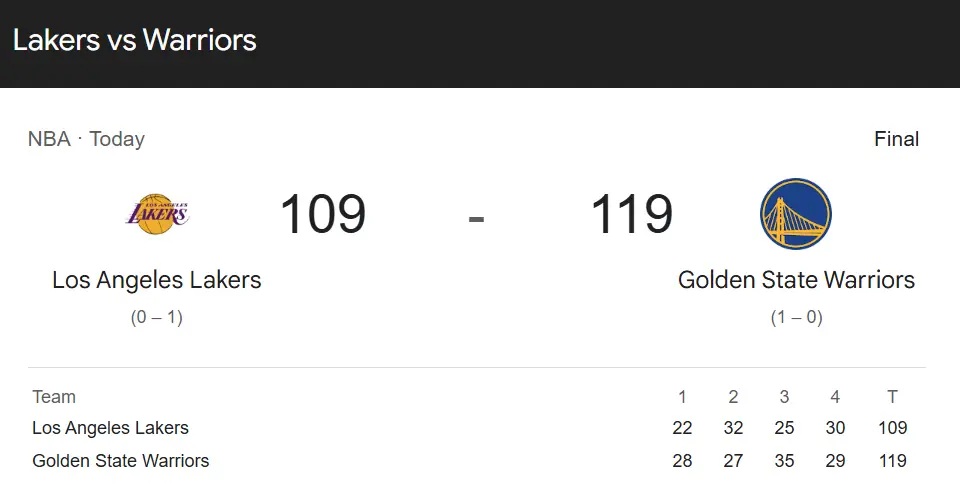
When the feed finally returned, the Warriors led 58–52 at halftime. Curry had already racked up 18 points, while LeBron was keeping the Lakers in it with a mix of strength and strategy.
The second half was a showcase of resilience. Curry hit back-to-back threes in the third quarter, while Davis dominated inside. But the defining moment came late in the fourth when Klay Thompson drained a clutch three to seal a 108–102 Warriors victory.
Unfortunately, much of the early momentum was lost for those affected by the blackout. Viewers felt robbed of the game’s emotional rhythm—a feeling no highlight reel can replace.
How the NBA Reacted
The NBA issued a statement expressing concern over the situation, assuring fans that it would work closely with NBC to ensure more reliable broadcast systems moving forward.
League officials recognize that fan trust is the bedrock of their global growth strategy. As the NBA continues expanding its digital reach, ensuring seamless access has become as important as the game itself.
Lessons from the Blackout
- Infrastructure Must Evolve – Legacy networks must invest in cloud redundancy and distributed streaming technology.
- Transparency Builds Trust – Quick, honest communication with fans helps mitigate backlash.
- Fan-Centric Models Win – Platforms that prioritize accessibility and reliability will shape the future of sports broadcasting.
The NBC blackout may end up being a turning point—a painful but necessary step toward improving how millions experience live sports.
More from Blogs: Clutch King George Springer Sends Blue Jays to World Series with 3-Run Shot
The Silver Lining
Despite the chaos, there’s a strange silver lining. The Warriors and Lakers blackout sparked meaningful conversations about the future of sports viewership.
Fans, analysts, and even tech experts united online to discuss solutions—from decentralized streaming to blockchain-based broadcast authentication.
Moments like these reveal how passionate sports audiences are—and how deeply technology now intertwines with fandom.
What Comes Next
NBC will likely overhaul its digital broadcast systems before the next major game. Internal reports suggest additional data center redundancy and load balancing will be implemented.
The NBA, too, may push for multiple simultaneous broadcast partners for key games to ensure uninterrupted access.
For fans, the hope is simple: never again missing out on the moments that make basketball special.
Why This Matters Beyond Basketball
This incident wasn’t just about the Warriors and Lakers. It symbolized the fragility of our increasingly digital lives. When one network glitch can disconnect millions, it raises questions about resilience in the age of cloud dependence.
It’s also a reminder that in a world obsessed with technology, the most valuable thing remains connection—whether through sports, shared experiences, or collective excitement.
Key Takeaways
The NBC blackout during the Warriors and Lakers season opener will go down as one of the most frustrating sports moments of recent years. But beyond the technical glitch, it highlighted something more profound: how deeply we crave connection through sport.
From living rooms to smartphones, millions waited for the picture to return—not just for the game, but for the joy it brings.
As networks, leagues, and fans adapt to this digital era, one thing is clear—basketball isn’t just a sport; it’s a shared heartbeat. And when that connection breaks, everyone feels it.
FAQs: Warriors and Lakers
1. Why did NBC’s broadcast fail during the Warriors and Lakers game?
The failure occurred due to a technical synchronization issue within NBC’s server network, disrupting both cable and streaming feeds.
2. How long did the blackout last?
The outage lasted roughly 40 minutes, affecting viewers across the United States.
3. Did NBC offer refunds or compensation to subscribers?
NBC has not announced any refunds but promised improved service and full-game replays for affected viewers.
4. Was the game rescheduled or replayed?
No. The game continued as scheduled, with the Warriors winning 108–102.
5. How has the NBA responded to the blackout?
The NBA is collaborating with NBC to strengthen broadcasting reliability and ensure smoother digital delivery.
6. Could such outages happen again?
Yes, though rare, similar incidents can happen unless networks invest in stronger cloud redundancy and system backups.
7. How did fans react to the blackout?
Fans took to social media to vent frustration, with many demanding accountability and improved streaming reliability.

