More
    Home Blog Page 32

    Shocking Twist: Did Lisa Marie Presley Really Die in Debt? The $35 Million Answer

    0

    Did Lisa Marie Presley Die in Debt??

    Yes, Lisa Marie Presley was in millions of dollars of debt at the time of her death. Reports indicate she owed about $4 million to the IRS and a private lender. However, her estate is likely worth much more than her debts because of large life insurance policies and her share in Elvis Presley Enterprises. Her financial problems were linked to poor management of her inherited fortune and high monthly costs.

    Introduction – The Mystery Around Lisa Marie Presley’s Finances

    When news broke of Lisa Marie Presley’s sudden death in January 2023, the world mourned the loss of the only child of Elvis Presley, the King of Rock ‘n’ Roll. But as the grief settled, one burning question started surfacing everywhere — did Lisa Marie Presley die in debt?

    Fans were heartbroken not just because of her passing, but because Lisa Marie had lived a life full of ups and downs — from lavish wealth to financial battles that made headlines. Today, we dive deep into this emotional, shocking, and heartbreaking story that feels more like a Hollywood thriller than real life.


    The Presley Legacy – Born Into a Fortune, But…

    Lisa Marie Presley’s life started with privilege. As the sole heir to Elvis Presley’s estate, she inherited Graceland, millions of dollars in royalties, and a legacy unlike any other.

    But with great fortune came enormous responsibility — and equally massive financial problems. Reports suggest that managing Elvis’s empire was far from easy. Lawyers, managers, and bad business deals chipped away at her wealth over the years.

    YearEventFinancial Impact
    1977Elvis Presley diesLisa Marie inherits estate at age 9
    1993Lisa Marie turns 25Inherits full control of Elvis’s estate
    Early 2000sPoor business deals & management decisionsMillions lost
    2016Divorce & lawsuitsHuge legal fees & settlements
    2023Lisa Marie Presley’s passingEstate estimated at $16M but with debts

    Lisa Marie’s Financial Struggles – The Debt Question

    So, did Lisa Marie Presley die in debt? Unfortunately, the answer seems to lean toward yes — at least partially.

    In legal documents from her divorce battle with Michael Lockwood, Lisa Marie revealed she was $16 million in debt. Most of it was reportedly tied to unpaid taxes, credit cards, and loans.

    Imagine being the daughter of the most famous musician in history, yet struggling financially — it’s heartbreaking. This is where the story starts feeling like a thriller — a woman fighting to keep her father’s legacy alive while battling personal demons, financial lawsuits, and public scrutiny.


    Breaking It Down – Lisa Marie Presley’s Assets vs. Liabilities

    Here’s a look at what insiders reported about Lisa Marie’s financial picture before her death:

    CategoryEstimated Value
    Graceland & Elvis Presley Enterprises$10 – $16 Million
    Music Royalties$1 – $2 Million annually
    Personal Debts$16+ Million
    Liquid AssetsVery limited (reportedly under $500,000)

    This paints a complicated picture. Yes, Lisa Marie Presley had valuable assets, but much of her wealth was tied up in Graceland and Elvis’s brand — not cash.

    Read Also: San Francisco Earthquake: What Happened and What It Means
    Read Also: Adani Power Shares Crash: What Really Happened

    The Emotional Toll – A Life of Pain and Resilience

    Money wasn’t Lisa Marie’s only battle. She dealt with personal tragedies — including the heartbreaking loss of her son Benjamin Keough in 2020 — which devastated her emotionally. Friends say she was never quite the same afterward.

    Add to that her highly publicized divorces, lawsuits, and health struggles — and you have the story of a woman who carried both the weight of Elvis’s legacy and the heavy burden of her own pain.


    The Thriller Ending – Who Controls Graceland Now?

    After Lisa Marie’s death, there was a legal battle over her estate and the future of Graceland. Her daughter Riley Keough is now the sole trustee, ensuring that the Presley legacy lives on.

    Fans worldwide breathed a sigh of relief when Riley stated she would protect Graceland at all costs. This emotional twist feels like the final chapter of a family saga — but in true Presley style, it keeps people talking even now.


    Did Lisa Marie Presley Die in Debt? $4 Million Owed but $35 Million Payout Revealed

    New details are emerging about Lisa Marie Presley’s finances, and they paint a dramatic picture of the singer’s final days. Fans everywhere are still asking, did Lisa Marie Presley die in debt? And according to shocking new reports, the answer is yes — but there’s more to the story.

    TMZ recently reported that Lisa Marie was in roughly $4 million of debt when she passed away on January 12, 2023. Despite being the sole heir to Elvis Presley’s empire, Lisa Marie faced serious financial struggles in her later years — including taxes, legal fees, and other obligations.


    Two Life Insurance Policies Worth $35 Million

    But here’s the twist that feels straight out of a Hollywood drama: Lisa Marie had two major life insurance policies, totaling $35 million. According to reports:

    PolicyAmount
    Policy #1$25 Million
    Policy #2$10 Million
    Total Payout$35 Million

    This massive payout is expected to more than cover her debts and secure her children’s financial future — especially her daughter, Riley Keough, who is now the trustee of Lisa Marie’s estate.


    Attempt to Cash Out Early

    In another heartbreaking detail, reports claim that Lisa Marie tried to cash in one of the life insurance policies early to get $2 million and help settle some of her debts while she was still alive. Tragically, a paperwork mix-up reportedly prevented that payout from ever happening.


    The Emotional Side of the Story about Did Lisa Marie Presley die in debt

    This revelation adds another layer of sadness to Lisa Marie’s story. It shows she was actively trying to get her finances under control but ran out of time. Fans are left wondering what could have been different if that policy had been cashed in — and whether her stress over money contributed to her health issues in her final months.

    FAQs- Did Lisa Marie Presley die in debt

    Q1: Did Lisa Marie Presley die in debt?
    Yes. Reports suggest Lisa Marie Presley had around $4 million in debt at the time of her death in January 2023. However, her estate is expected to receive $35 million from life insurance policies, which more than covers the debt.


    Q2: How much money did Lisa Marie Presley’s estate receive after her death?
    According to multiple reports, her estate will receive $35 million from two life insurance policies — one worth $25 million and another worth $10 million.


    Q3: Who inherits Lisa Marie Presley’s estate?
    Her daughter Riley Keough is now the sole trustee of the estate, including Graceland and Elvis Presley Enterprises.


    Q4: Did Lisa Marie Presley try to cash in her life insurance early?
    Yes. Reports claim she tried to access $2 million from one of her policies to help pay off debts, but due to a paperwork issue, the payout never happened before her passing.


    Q5: What will happen to Graceland after Lisa Marie Presley’s death?
    Graceland will remain in the Presley family. Riley Keough has stated that she will preserve Graceland and her grandfather’s legacy for future generations.
    San Francisco Earthquake: What Happened and What It Means

    0

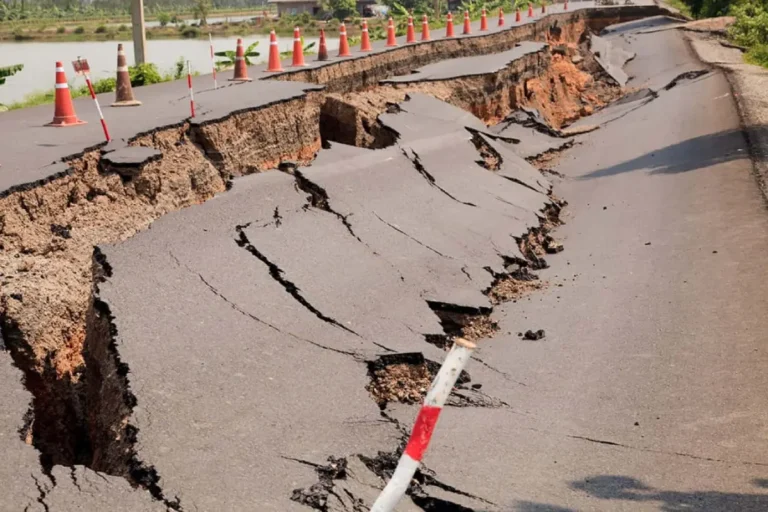
    Early on September 22, 2025, the San Francisco Earthquake centered in Berkeley jolted residents across the Bay Area. What first seemed like a sudden disaster turned out to be a moderate seismic event. It was strong enough to wake people, rattle windows, and spark concern, but it caused no major damage.

    This article breaks down what happened during the San Francisco Earthquake, how it was felt, what experts are saying, and whether residents should expect more activity.


    What Happened in the San Francisco Earthquake

    The San Francisco Earthquake struck at 2:56 a.m. local time. According to the United States Geological Survey (USGS), the magnitude was recorded at 4.3, after being initially reported at 4.6.

    The epicenter was identified in Berkeley, California, near Dwight Way close to the UC Berkeley campus. The quake had a shallow depth of about 7 km (4.8 miles), which made the shaking much more noticeable.

    Residents across San Francisco, Oakland, Albany, Alameda, San Leandro, and other East Bay neighborhoods felt the tremors. Many reported being awakened from sleep, hearing strange noises, and seeing objects tumble from shelves.


    Why the Quake Was Felt So Widely

    The shallow depth and proximity to densely populated areas amplified the San Francisco Earthquake. When seismic energy doesn’t have to travel far through the earth, it reaches buildings and homes more intensely.

    Another factor is the Bay Area’s geology. Structures built near fault lines or on softer soil, especially in reclaimed areas around San Francisco Bay, tend to experience stronger shaking compared to those on bedrock.

    The San Francisco Earthquake also triggered early warning systems like ShakeAlert and the MyShake app, though many people reported that alerts arrived during or after the shaking. For close epicenters, this delay is expected—the ground often moves before warnings can spread.

    More from Blogs: Trent Dilfer Career Journey


    Was There Damage or Risk?

    So far, the San Francisco Earthquake has caused no major injuries or structural damage. Reports mostly mention broken dishes, rattled furniture, and startled residents.

    Still, experts warn that aftershocks are possible. There’s a small but real chance—about 5%—of a larger quake following within days. The Bay Area’s interconnected fault systems mean even modest quakes can occasionally shift stress levels and trigger others.


    Historical Context: Earthquakes in the Bay Area

    In comparison to past disasters, the San Francisco Earthquake is modest. The Loma Prieta earthquake of 1989 registered at magnitude 6.9 and caused significant damage, collapsing freeways and bridges.

    The Hayward Fault, which runs near Berkeley, is one of the region’s most dangerous. Experts expect it will eventually produce a large earthquake. This recent event highlights the reality that the Bay Area remains vulnerable, even if this particular quake was relatively minor.


    Expert Insights on the San Francisco Earthquake

    • Magnitude: Confirmed at 4.3, revised from a preliminary 4.6.
    • Depth: About 7 km, shallow enough to be strongly felt.
    • Assessment: Seismologists classify this as a moderate quake—noticeable but not unusual for the region.

    Experts stress that the San Francisco Earthquake is a reminder of ongoing seismic activity, not an omen of imminent catastrophe. While older or unreinforced buildings may have felt stronger shaking, modern construction codes have greatly reduced risks.


    How Prepared Is San Francisco?

    San Francisco and the East Bay are among the most earthquake-ready regions in the world. Preparedness efforts include:

    • Modern building codes that require seismic retrofitting.
    • Early warning systems such as ShakeAlert and MyShake.
    • Community drills to ensure residents know emergency procedures.
    • Public awareness campaigns teaching the “Drop, Cover, and Hold On” method.

    Still, earthquakes remain unpredictable. The San Francisco Earthquake reinforces the importance of readiness—knowing where to shelter, securing heavy items, and keeping an emergency kit at home.


    Should Residents Be Worried?

    The short answer: no panic is necessary—but vigilance is wise.

    Reasons not to worry:

    • No major damage has been reported.
    • The magnitude was moderate.
    • This level of activity is expected on local faults.

    Reasons to stay cautious:

    • Even moderate quakes can damage older or poorly built structures.
    • Aftershocks remain possible.
    • One quake does not give a full picture of stress on Bay Area faults.

    Safety Tips After an Earthquake

    1. Inspect your home for cracks or damage in walls, ceilings, and foundations.
    2. Avoid elevators until power systems are confirmed stable.
    3. Have a communication backup plan in case phone or internet service is disrupted.
    4. Secure bookshelves, TVs, and heavy items to prevent injuries in future quakes.
    5. Keep emergency supplies ready—water, flashlights, batteries, and first aid kits.

    What This Means for Future Earthquake Risk

    The San Francisco Earthquake serves as a reminder, not a disaster. But it highlights ongoing risks:

    • Monitoring: Scientists will track aftershocks and stress patterns on nearby faults.
    • Policy: Infrastructure retrofits and seismic zoning laws will likely gain renewed attention.
    • Preparedness: Families and businesses may revisit emergency protocols and consider earthquake insurance.

    The San Francisco Earthquake rattled nerves but didn’t cause serious harm. It was a clear reminder that the Bay Area rests on active fault lines and must remain prepared.

    Thanks to improved building codes, seismic monitoring, and public awareness, the city is far more resilient than in decades past. If you felt the shaking, let it be a wake-up call to review your safety plan—not a reason for fear.


    FAQs About the San Francisco Earthquake

    Q1. What was the magnitude of the San Francisco Earthquake?
    It registered at 4.3, after being initially reported as 4.6.

    Q2. Did it cause damage?
    No major damage has been reported, only minor disturbances.

    Q3. Where was the epicenter?
    Near Berkeley, CA, close to Dwight Way and Piedmont Avenue, at a depth of about 7 km.

    Q4. Was it felt in San Francisco?
    Yes. Residents across San Francisco, Oakland, and multiple East Bay areas reported light shaking.

    Q5. Is there a risk of a bigger quake now?
    There is always seismic risk, but no warning of a larger imminent quake. A small chance of stronger aftershocks exists.

    Q6. What should residents do to stay safe?
    Secure homes, prepare emergency kits, know evacuation routes, and follow quake safety guidelines.


    Adani Power Shares Crash: What Really Happened

    0

    Adani Power Shares Crash: Shocking Drop and Strong Recovery

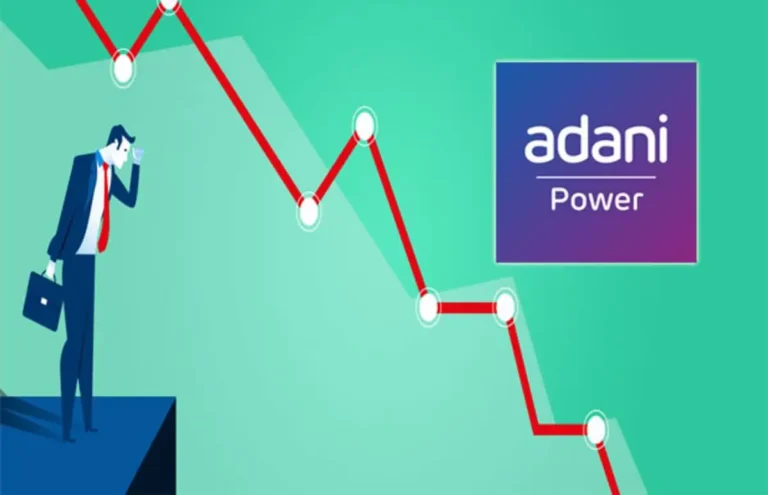
    In recent days, Adani Power’s stock headline looked terrifying — some outlets reported an 80% plunge. Panic spread among investors and commentators. Here’s the thing: that dramatic-looking drop was largely a mechanical effect of a corporate action, not a sudden destruction of shareholder value. Let’s break it down clearly, without the noise.


    What actually happened and Why Adani Power Shares Crash

    Stock split: 1:5 share subdivision

    Adani Power approved a 1:5 stock split — each ₹10 face-value share was divided into five shares with face value ₹2. The split became effective on September 22, 2025.

    When shares trade ex-split, the per-share price falls because one share becomes multiple smaller-valued shares. If you owned one share before, you own five after. Your total holding value (number of shares × price per share) remains essentially the same aside from normal market moves. The near-80% drop reported on the day was the obvious arithmetic result of that adjustment.


    Why the headline looked like Adani Power Shares Crash

    A few things converged to make the split look catastrophic:

    • Raw numbers without context. Seeing a price fall from ~₹716 to ~₹147 is alarming unless you know a split occurred. Many headlines emphasized the percentage drop and not the split logic.
    • Psychological anchoring. Investors tend to latch on to a recent high price. A lower nominal price feels like a loss even when the holding’s total value hasn’t changed.
    • Prior controversy. The Hindenburg episode left the Adani group under heightened scrutiny. Any big move — even a stock split — triggers amplified reactions.

    Other developments that mattered in Adani Power Shares Crash

    The split was the trigger, but the backdrop mattered:

    • SEBI’s ruling. India’s market regulator dismissed significant parts of the Hindenburg allegations against several Adani entities. That regulatory clarity eased a lot of investor fear and helped restore confidence.
    • Brokerage support. Morgan Stanley initiated coverage with an “Overweight” rating and a pre-split target of around ₹818, signaling analyst optimism around capacity expansion and power purchase agreements (PPAs).
    • Pre-split momentum. Adani Power had been up roughly 23% year-to-date before the split, driven by project wins and approvals. The split was also positioned as a liquidity play to attract retail investors.

    What the data shows on Adani Power Shares Crash

    Here’s the practical readout:

    • After adjusting for the split, the stock’s per-share price is lower, but market cap and total shareholder value did not collapse. The drop in per-share price was a math adjustment.
    • Post-split trading actually showed strength: the stock rose roughly 18–20% from its ex-split base, and markets recorded fresh 52-week highs on the split-adjusted scale.
    • Lower per-share prices often attract retail buyers, so liquidity and retail participation typically rise after such moves.

    Should investors be worried about Adani Power Shares Crash

    Short answer: no — not because of the split itself. But remember, markets carry risk.

    Why you can breathe easier:

    • SEBI’s findings removed a lot of regulatory overhang.
    • Broker interest and positive analyst notes point to constructive fundamentals: capacity expansion, PPAs, and margin improvement.

    What to watch:

    • Split-driven volatility: lower-priced stocks can move more sharply on smaller flows.
    • Sector risks: fuel costs (coal/gas), supply constraints, regulatory shifts, and environmental rules can affect power companies materially.
    • Market sentiment: companies that were under scrutiny remain sensitive to news cycles.

    Adani Power Shares Crash


    Practical steps for holders and watchers

    If you own or are thinking about Adani Power shares, keep it pragmatic:

    1. Understand the split mechanics. Your share count increased; per-share price decreased proportionally. Check split-adjusted charts rather than raw numbers.
    2. Follow fundamentals. Track announcements on new projects, PPAs, and coal/fuel costs.
    3. Compare analyst coverage. Morgan Stanley’s ₹818 pre-split target is one view — look for a consensus.
    4. Avoid headline panic. Nightly sensational headlines don’t replace balance-sheet and cash-flow facts.
    5. Diversify. Don’t concentrate risk in a single name or sector.

    More from Blogs: 2025 Toyota 4Runner TRD Pro Review


    Broader market implications about Adani Power Shares Crash

    • Adani group sentiment improved after the regulator’s action, and related stocks saw supportive moves.
    • A well-handled stock split can improve liquidity and broaden retail ownership, which may benefit trading volumes and price discovery.
    • That said, the group remains exposed to macro and regulatory shifts — vigilance is still warranted.

    Quick summary: latest facts (late Sept 2025)

    • Split effective: 1:5 on September 22, 2025 (₹10 → five ₹2 shares).
    • Apparent drop: Nearly 80% in raw per-share terms on the ex-split day — a mathematical result, not a value wipeout.
    • Post-split move: ~18–20% gain from the ex-split base; split-adjusted highs recorded.
    • Regulatory note: SEBI dismissed significant allegations from Hindenburg against several Adani entities.
    • Analyst view: Morgan Stanley initiated “Overweight” with a pre-split target ~₹818.

    The “Adani Power shares crash” was more noise than signal. The dramatic headline stemmed from a stock-split arithmetic change compounded by earlier reputational doubts. The underlying picture — regulatory clarity, analyst interest, and operational momentum — points to recovery rather than collapse. That doesn’t mean the stock can’t be volatile; energy firms face real operational and macro risks. But if you panicked because of the 80% headline, the sensible move is to step back, check split-adjusted figures, and make decisions based on fundamentals, not shock value.

    (This is not financial advice — just a plain reading of events and sensible steps to consider.)

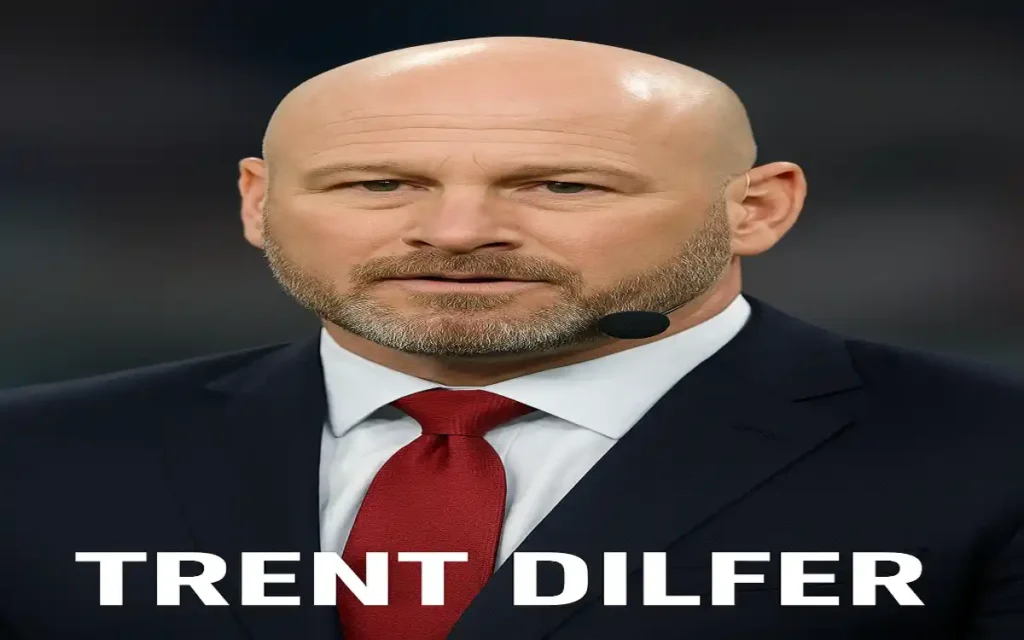
    How Trent Dilfer Career Journey Took Him From NFL Star to UAB Head Coach

    0

    What’s New in Trent Dilfer Career Journey

    • Trent Dilfer is currently the head coach at UAB (University of Alabama at Birmingham), taking over in 2023.
    • In his first two seasons, UAB has a combined record of 7-17, but Dilfer is being retained for a third season thanks to his football IQ, work ethic, and long-term plan for the program.
    • Offensively, the team has posted record-breaking numbers, including a new single-season record for yards per game and standout quarterback play from Jacob Zeno.
    • Several of Dilfer’s players are earning national recognition, with freshmen making All-America lists and excelling in punt returns and receiving stats.

    Trent Dilfer Net Worth in 2025

    Trent Dilfer Net Worth in 2025 is about $12 million. He built this wealth during his 14-year NFL career, his broadcasting roles, and his current coaching job.

    Trent dilfer net worth in 2025:-Key Sources of Income:

    NFL Career: Dilfer played for several teams, including the Tampa Bay Buccaneers, Baltimore Ravens, Seattle Seahawks, Cleveland Browns, and San Francisco 49ers. His contracts, especially the 8-year, $16.5 million deal with the Buccaneers, greatly boosted his earnings.

    Broadcasting: After retiring from playing, Dilfer became an analyst for ESPN and later for Fox Sports 1. His salary during this time was around $1.3 million a year.

    Coaching: Dilfer became the head coach at UAB in 2023. His current contract has a base salary of $1.2 million a year, with extra fees that bring his total annual pay to $1.3 million.

    While some sources estimate Trent Dilfer Net Worth in 2025 between $8 million and $12 million, the $12 million figure is often mentioned and reflects his various income sources over the years.


    Full Specification: Trent Dilfer Career Journey (Key Facts & Stats)

    CategoryDetails / Value
    Birth & Early LifeBorn March 13, 1972, in Santa Cruz, California. Grew up in Aptos, California.
    CollegePlayed at Fresno State, winning WAC Offensive Player of the Year (1993) and Sammy Baugh Trophy. Threw for nearly 3,800 yards and 30 TDs in 1993. Declared for NFL Draft after junior year.
    NFL Draft1994 NFL Draft, 1st Round, 6th overall pick by Tampa Bay Buccaneers.
    NFL Playing Career (Years / Teams)14 seasons: Buccaneers (1994-1999), Ravens (2000), Seahawks (2001-2004), Browns (2005), 49ers (2006-2007).
    NFL Career TotalsAround 20,500 passing yards, 113 touchdowns, 129 interceptions, 55.5% completion rate.
    Major NFL HighlightStarting QB for Baltimore Ravens’ Super Bowl XXXV victory. Pro Bowl selection in 1997.
    Post-NFL WorkAnalyst for ESPN, commentator on NFL games, mentor in Elite 11 QB camps.
    High School CoachingLipscomb Academy head coach (2019-2022), 44-10 overall record, back-to-back state championships.
    College CoachingUAB head coach since 2023, current record 7-17.
    Contract / SalaryAverage salary of about $1.3 million per year, contract through 2027.
    ChatGPT Image Sep 21 2025 12 53 39 AM

    Narrative: The Story of Trent Dilfer Career Journey

    College Hero to NFL Entry

    Trent Dilfer’s football rise started at Fresno State, where he dominated the field during his junior year. He threw nearly 3,800 yards with 30 touchdowns, setting a then-NCAA record for most consecutive passes without an interception (271). He was named WAC Offensive Player of the Year and won the prestigious Sammy Baugh Trophy, cementing himself as one of the top quarterback prospects in the country. After this breakout season, he declared early for the NFL Draft.


    NFL Years: Wins, Losses, and a Super Bowl

    Dilfer was selected 6th overall by the Tampa Bay Buccaneers in the 1994 NFL Draft. He became the starter and led the team through some solid seasons, even earning a Pro Bowl nod in 1997. But the highlight of his NFL career came with the Baltimore Ravens in 2000. Starting as a backup, Dilfer took over midseason and guided the Ravens on a hot streak, culminating in a dominant Super Bowl XXXV victory over the New York Giants. Despite winning the Super Bowl, he wasn’t re-signed and moved on to Seattle, Cleveland, and San Francisco as a mentor and veteran backup. His NFL career totals are solid: more than 20,500 yards passing, 113 TDs, and a Super Bowl ring.


    Transition to Analyst

    After retiring in 2008, Dilfer moved to the broadcast booth. He worked with ESPN and became one of the most respected analysts in football, breaking down games with insight and clarity. Beyond media work, he stayed connected to the game through Elite 11, a quarterback development program that trains high school athletes—helping groom the next generation of signal callers.


    Coaching: High School Success at Lipscomb

    In 2019, Dilfer surprised many by taking the head coaching job at Lipscomb Academy in Tennessee. He quickly turned the program into a powerhouse, compiling a 44-10 record over four years, including a nearly perfect 26-1 mark in his final two seasons. Under his leadership, Lipscomb won state championships and gained national attention, which led to his hiring as UAB’s head coach in 2023.


    Coaching at UAB: Challenges & Opportunities

    Dilfer’s first two seasons at UAB have been a trial by fire. The team has struggled in terms of wins, going 7-17 overall. However, the offense has shown major progress, breaking school records for yards per game and featuring strong quarterback play. Defensive issues and inconsistency have kept UAB from reaching a winning record, but Dilfer has made it clear that he is building for the long term. The athletic department is backing him, pointing to cultural change, recruiting efforts, and player development as signs that the program is on the right track.


    The Cost & Value of This Journey

    Transitioning from media personality to college head coach hasn’t been easy. Dilfer has faced criticism for the team’s record, but he remains committed to turning UAB into a contender. His willingness to embrace challenges and keep pushing forward speaks to his resilience. The value of his journey lies not just in wins and losses, but in the culture he is creating and the lives he is impacting.

    Read Also: MMRV Vaccine Explained: One Powerful Shot, Four Deadly Diseases Defeated
    Read Also: Is 3I/Atlas a Comet, Asteroid, or Something Truly Alien?

    Deep Dive: Trent Dilfer Career Journey & Coaching Numbers

    CategoryValue / Detail
    NFL Regular Season Passing Yards~20,500 yards
    NFL TDs vs INTs113 TDs, 129 INTs
    Completion Percentage~55.5%
    Games Played130
    College 1993 Season~3,799 yards, 30 TDs, few interceptions, multiple awards
    Lipscomb Academy Record44-10 overall, state champion coach
    UAB Record (First 2 Seasons)7-17
    Contract at UAB~$1.3M per year through 2027
    Player DevelopmentQB Jacob Zeno broke school passing records under Dilfer

    Pros & Cons of Trent Dilfer Career Journey

    Pros:-

    • Adaptability: Successfully transitioned from NFL QB to analyst to coach.
    • Leadership: Strong mentor, particularly for quarterbacks.
    • Football IQ: Highly respected for understanding of the game and ability to teach it.
    • Resilience: Bounced back from career ups and downs, continues to grow.
    • Offensive Growth: UAB’s offensive numbers are improving even during rebuilding seasons.

    Cons:-

    • Win-Loss Record: 7-17 is a challenge for fan patience.
    • High Expectations: Comes with pressure because of his name and Super Bowl pedigree.
    • College Transition: Recruiting and NIL management are new areas for him.
    • Consistency Issues: Defense and closing games are still a weak point.

    FAQ – Trent Dilfer Career Journey

    Q1: What is Trent Dilfer best known for?
    He is best known for leading the Baltimore Ravens to a Super Bowl win in 2000 and later becoming a respected football analyst.

    Q2: How many passing yards did he have in the NFL?
    About 20,500 yards over 14 seasons.

    Q3: What is his current record at UAB?
    Through his first two seasons, Dilfer’s record stands at 7-17.

    Q4: Why is he still coaching at UAB despite the losing record?
    The school believes in his long-term vision, player development, and cultural rebuild, expecting improvement in coming seasons.

    Q5: How successful was he as a high school coach?
    Extremely successful, leading Lipscomb Academy to a 44-10 overall record and multiple state titles.

    Q6: What is Trent dilfer net worth in 2025?
    A: Trent Dilfer’s estimated net worth in 2025 is around $12 million, earned through his NFL career, broadcasting, and coaching roles.

    Q7: How did Trent Dilfer make his money?
    A: His wealth comes from multiple sources:

    • NFL Career: 14 seasons with teams like the Tampa Bay Buccaneers, Baltimore Ravens, and others.
    • Broadcasting: Analyst roles for ESPN and Fox Sports 1, earning about $1.3 million per year.
    • Coaching: Head coach at UAB with an annual compensation of approximately $1.3 million.

    Q8: What is Trent Dilfer best known for?
    A: He is best known for leading the Baltimore Ravens to a Super Bowl XXXV victory in 2000, as well as his career as an NFL quarterback and football analyst.

    Q9: What is his coaching record at UAB?
    A: Through his first two seasons (2023–2024), Dilfer has a record of 7-17. Despite this, the administration has retained him due to his long-term vision and player development.

    Q10: How successful was Trent Dilfer in college football?
    A: At Fresno State, he had a standout junior year in 1993 with nearly 3,800 passing yards and 30 touchdowns. He won the WAC Offensive Player of the Year and the Sammy Baugh Trophy for best passer.

    Q11: Did Trent Dilfer succeed as a high school coach?
    A: Yes, at Lipscomb Academy, he posted a 44-10 record over four years, including back-to-back state championships, before moving to college coaching.

    2025 Toyota 4Runner TRD Pro Review: The Ultimate Off-Road SUV Everyone’s Talking About

    0

    2025 Toyota 4Runner TRD Pro: Off-Road Beast or Daily Drive Disaster?

    The 2025 Toyota 4Runner has arrived with a complete redesign, marking the start of its sixth generation. It’s a massive moment for Toyota’s legendary SUV, which has built a reputation for reliability and ruggedness over decades. But this time, Toyota has made big changes under the hood and throughout the cabin—changes that could either excite fans or frustrate purists.

    2025 Toyota 4Runner TRD Pro
    2025 Toyota 4Runner TRD Pro (courtesy-TOYOTA)

    This in-depth review covers everything you need to know about the 2025 Toyota 4Runner, with a focus on the TRD Pro trim. We’ll look at what’s new, how it performs both on-road and off-road, full specifications, pricing, and whether this SUV is still the go-to choice for adventurers—or if it’s becoming too compromised for everyday drivers.


    What’s New in the 2025 Toyota 4Runner

    The 2025 Toyota 4Runner is not just a facelift—it’s a full redesign. Here’s what Toyota changed this year:

    • New Powertrain: The old V6 is gone. The new standard engine is a 2.4-liter turbocharged 4-cylinder producing about 278 hp and 317 lb-ft of torque. Toyota also added a new hybrid option (i-FORCE MAX) that delivers around 326 hp and an impressive 465 lb-ft of torque.
    • Updated Platform: Built on Toyota’s TNGA-F platform (shared with Tacoma and Land Cruiser), it offers better rigidity, ride quality, and improved off-road capability.
    • Expanded Trim Options: There are now nine trims, including SR5, TRD Sport, TRD Off-Road, TRD Pro, Limited, Platinum, and the all-new Trailhunter edition.
    • Improved Towing: The 2025 Toyota 4Runner can now tow up to 6,000 pounds, making it more versatile for people who need to haul boats, trailers, or campers.
    • Tech Overhaul: Toyota added a new infotainment system with a large touchscreen, wireless Apple CarPlay/Android Auto, and an improved safety suite with driver-assist features like Proactive Driving Assist.
    • Interior Upgrades: Materials feel more premium, seating is more comfortable, and there’s available third-row seating on some trims.

    Driving Experience: On-Road vs. Off-Road

    Off-Road Performance

    The 2025 Toyota 4Runner TRD Pro is an off-road monster. High ground clearance (around 10 inches), aggressive all-terrain tires, Fox shocks, and skid plates make it ready for trails right out of the box. Whether it’s rocky climbs, muddy roads, or sandy dunes, this SUV feels unstoppable.

    New Project
    2025 Toyota 4Runner TRD Pro (courtesy-TOYOTA)

    On-Road Performance

    However, daily driving tells a different story. The suspension that makes the TRD Pro a star off-road can feel punishing on paved streets. Drivers report that every bump and crack in the road is transmitted into the cabin, and there’s noticeable body movement over rough pavement. If you’re buying this as a commuter car, be prepared for a firm, somewhat noisy ride.

    Handling and Steering

    Steering is heavy but precise enough for an SUV of this size. It doesn’t feel sporty, but that’s not why you buy a 4Runner. The emphasis is on control and stability, not corner-carving.

    Power and Acceleration

    The turbocharged four-cylinder provides more low-end torque than the outgoing V6, which is helpful for towing and off-road crawling. The hybrid powertrain is the one to pick if you want maximum performance, with significantly more torque available at low RPMs.


    Read Also: EVs vs Traditional Cars: The Essential Deep Dive into the Future of Driving
    Read Also: Automobile Industry in the US and India: A Comprehensive Comparison, Trends, and Future Outlook

    Interior & Comfort

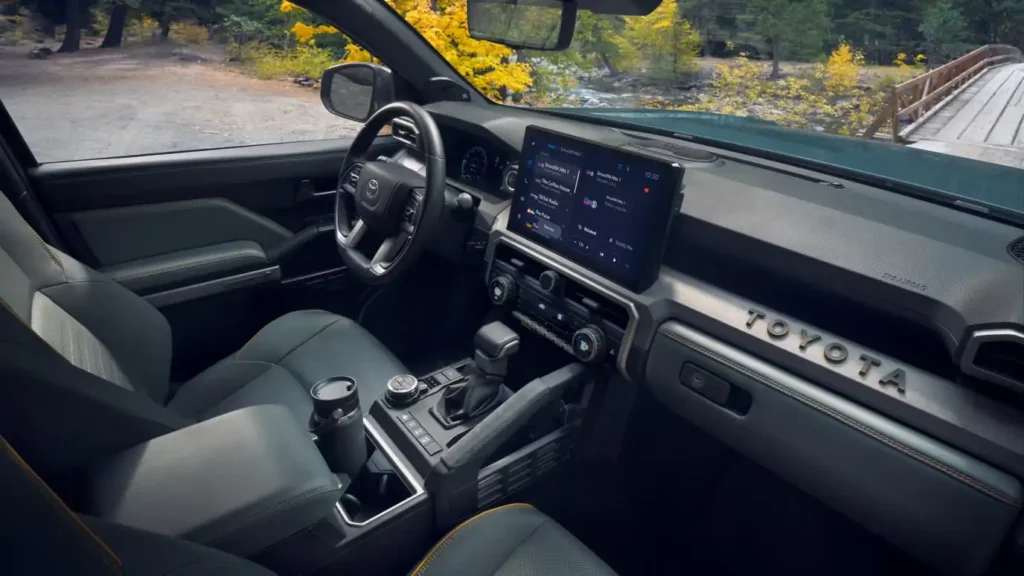
    Toyota clearly listened to customer feedback. The new 4Runner’s interior feels more modern and comfortable than before. Higher trims feature leather upholstery, ventilated seats, and a digital instrument cluster. The infotainment screen is massive and easy to use.

    2025 toyota 4runner inte
    2025 Toyota 4Runner TRD Pro -INTERIOR (courtesy-TOYOTA)

    Space is generous in both rows, and the available third row is a nice bonus for families. Cargo space remains one of the 4Runner’s strong suits, with plenty of room for gear.

    Noise insulation has improved, but in the TRD Pro trim, you’ll still hear more tire and suspension noise due to its off-road hardware.


    Tech & Safety Features

    All trims come with Toyota Safety Sense, which includes:

    • Pre-collision warning with pedestrian detection
    • Adaptive cruise control
    • Lane departure alert
    • Road sign assist
    • Proactive Driving Assist (can be disabled if it feels too intrusive)

    The TRD Pro and higher trims get additional off-road driver aids like Multi-Terrain Select, Crawl Control, and a Multi-Terrain Monitor (a camera system that shows the terrain around your tires).


    2025 Toyota 4Runner Full Specifications

    CategorySpecification
    Engine (Base)2.4L Turbocharged 4-Cylinder, 278 hp, 317 lb-ft torque
    Engine (Hybrid)i-FORCE MAX Hybrid, 326 hp, 465 lb-ft torque
    Transmission8-Speed Automatic
    DrivetrainRWD (base), 4WD (available)
    Towing CapacityUp to 6,000 lbs
    Seating Capacity5 (optional 7 with third-row)
    Fuel EconomyApprox. 20-23 mpg combined (varies by trim)
    Ground Clearance~10.1 inches (TRD Pro)
    Wheelbase112.2 inches
    Length x Width x Height~195 x 80 x 74 inches
    Curb Weight~5,500 lbs (TRD Pro)

    Pricing: 2025 Toyota 4Runner

    The 2025 Toyota 4Runner lineup is priced competitively but climbs quickly as you add trims and options.

    TrimStarting Price (USD)
    SR5~$40,700
    TRD Sport~$47,200
    TRD Off-Road~$50,600
    TRD Off-Road Premium~$56,400
    Limited~$55,400
    Platinum~$62,800
    TRD Pro~$66,900 (fully loaded models cross $70,000)
    Trailhunter~$68,000

    Pros and Cons of the 2025 Toyota 4Runner TRD Pro

    Pros

    • Excellent off-road capability
    • Powerful new engines, especially the hybrid
    • Improved towing capacity
    • Modern tech features and safety systems
    • Rugged styling and proven durability

    Cons

    • Firm, sometimes harsh ride on pavement
    • Expensive at higher trims
    • Fuel economy still lower than many crossovers
    • Large size makes city driving tricky

    Is the 2025 Toyota 4Runner TRD Pro Worth It?

    If your lifestyle involves frequent off-road trips, camping, overlanding, or towing, the 2025 Toyota 4Runner—especially in TRD Pro or Trailhunter form—makes perfect sense. It’s tough, reliable, and capable of handling terrain that would stop most SUVs.

    But if you spend 90% of your time commuting or running errands in the city, you might want to look at other trims or even other vehicles entirely. A Limited trim with softer suspension might suit you better, or a hybrid version that saves fuel and offers a smoother ride.

    The 2025 Toyota 4Runner remains a unique option in a sea of crossovers, delivering true body-on-frame toughness. Just know what you’re getting into: capability comes with compromises.


    FAQ – 2025 Toyota 4Runner

    Q1: What’s new in the 2025 Toyota 4Runner?
    A: The 2025 model gets a full redesign, a new turbocharged 4-cylinder engine, an optional hybrid powertrain, updated tech features, improved towing capacity, and additional trims like the Trailhunter.

    Q2: How much does the 2025 Toyota 4Runner TRD Pro cost?
    A: The TRD Pro starts around $66,900 and can exceed $70,000 with options.

    Q3: Is the ride quality comfortable for daily driving?
    A: The TRD Pro’s suspension is tuned for off-road performance, so the ride can feel stiff on regular pavement. Softer trims like Limited offer more comfort.

    Q4: How does the 2025 4Runner compare to rivals like the Ford Bronco or Jeep Wrangler?
    A: The 4Runner offers Toyota’s legendary reliability and excellent off-road capability, while Bronco and Wrangler provide more customization and slightly better on-road manners in some trims.

    Q5: What is the towing capacity of the 2025 Toyota 4Runner?
    A: It can tow up to 6,000 pounds, making it a solid choice for hauling trailers, boats, and campers.

    Q6: Does the 2025 4Runner have a hybrid version?
    A: Yes, Toyota offers an i-FORCE MAX hybrid option with more power and torque for better performance.

    Q7: Is the 2025 4Runner good for families?
    A: Yes, it has roomy seating, available third row, and excellent safety features, making it a good choice for adventurous families.

    Q8: When will the 2025 Toyota 4Runner be available at dealerships?
    A: Deliveries have already begun in most regions, with more inventory arriving throughout the year.

    MMRV Vaccine Explained: One Powerful Shot, Four Deadly Diseases Defeated

    0

    MMRV Vaccine: What Parents Should Know

    Vaccines are one of the most important tools we have for protecting children from serious diseases. Among the most talked-about childhood vaccines today is the MMRV vaccine. Recommended by the CDC, it combines protection against four illnesses in one shot: measles, mumps, rubella, and varicella (chickenpox).

    For parents, choosing the right vaccine can feel overwhelming. What exactly is the MMRV vaccine? How does it work? Are there risks? Most importantly—should you feel confident it’s safe? Let’s break it all down clearly and based on trusted guidance.


    What Is the MMRV Vaccine?

    The MMRV vaccine is a combination vaccine. Instead of giving a child four separate injections, doctors can use one shot that covers:

    • Measles – can cause fever, rash, pneumonia, or even brain swelling.
    • Mumps – can cause swollen glands, fever, and in rare cases, long-term problems like hearing loss or infertility.
    • Rubella (German measles) – usually mild but very dangerous in pregnancy, leading to birth defects.
    • Varicella (chickenpox) – often thought of as mild, but it can lead to skin infections, pneumonia, or hospitalization.

    By merging these protections into one dose, the MMRV vaccine simplifies the immunization process while offering strong protection.


    CDC Recommendations for the MMRV Vaccine

    The CDC recommends two doses of the MMRV vaccine for children:

    • First dose: at 12 to 15 months of age.
    • Second dose: at 4 to 6 years of age.

    Parents can choose between the MMRV vaccine or separate MMR (measles, mumps, rubella) and varicella vaccines. Both protect children effectively, but there are some differences worth noting.


    MMRV Vaccine vs. Separate MMR and Varicella Shots

    Parents often ask whether the MMRV vaccine or two separate shots are better. Here’s the comparison:

    • MMRV Advantages: fewer injections, simpler schedule, same level of protection.
    • MMRV Considerations: children between 12–23 months have a slightly higher risk of febrile seizures (fever-related seizures) with the combined vaccine compared to separate shots.

    Because of this, the CDC sometimes recommends separate shots for the first dose in younger children. For the second dose, the MMRV vaccine is usually preferred since the risk of febrile seizures is lower in older kids.


    Safety of the MMRV Vaccine

    The MMRV vaccine has been studied extensively and is considered safe. Like all vaccines, it can have side effects, but most are mild.

    Common side effects include:

    • Redness or soreness at the injection site
    • Mild rash
    • Fever

    Less common side effects include:

    • Temporary joint stiffness
    • Febrile seizures (slightly higher in younger children receiving MMRV)

    Serious side effects are very rare. Safety is continuously monitored by the CDC and FDA through systems like VAERS (Vaccine Adverse Event Reporting System).


    Why the MMRV Vaccine Matters

    Protection Against Outbreaks

    Measles and chickenpox can spread quickly, especially in schools or daycare. Vaccinating with MMRV helps prevent outbreaks.

    Herd Immunity

    When most children are vaccinated, they protect those who cannot be—such as infants under 12 months or children with certain medical conditions.

    Long-Term Benefits

    By preventing these diseases, the MMRV vaccine avoids complications that could affect children for life. For example, mumps can rarely cause infertility, and rubella during pregnancy can lead to lifelong disabilities in babies.


    Common Myths About the MMRV Vaccine

    Myth 1: “The MMRV vaccine causes autism.”
    This is false. Large-scale studies with millions of children have found no link between vaccines and autism.

    Myth 2: “Chickenpox is harmless, so the vaccine isn’t necessary.”
    While often mild, chickenpox can lead to severe complications like pneumonia or bacterial infections.

    Myth 3: “Children get too many vaccines at once.”
    Research shows children’s immune systems can handle multiple vaccines safely. Combination vaccines like MMRV reduce the number of injections without reducing safety.

    More from Blogs: Is 3I/Atlas a Comet, Asteroid, or Something Truly Alien?


    Advantages of the MMRV Vaccine

    • One shot instead of two
    • Protects against four diseases
    • Backed by decades of use and research
    • Reduces the risk of outbreaks and protects vulnerable groups

    Disadvantages and Considerations

    • Slightly higher chance of febrile seizures in younger children
    • Not suitable for children with certain immune conditions or allergies
    • Mild side effects like fever and rash may occur, especially after the first dose

    Questions Parents Should Ask the Doctor

    Before deciding on the vaccine, parents may want to ask:

    • Should my child receive MMRV or separate MMR + varicella vaccines?
    • What side effects are most common, and how should I respond?
    • Does my child have any conditions that make one option better than the other?
    • What should I expect after the first dose versus the second?

    Global Perspective

    The MMRV vaccine isn’t only used in the U.S.—many countries have included it in their childhood immunization schedules. With rising measles cases in areas where vaccination rates have dropped, the importance of vaccines like MMRV is more relevant than ever in today’s interconnected world.

    Should You Choose the MMRV Vaccine?

    The MMRV is a safe, effective, and convenient way to protect children against four potentially serious diseases. While there are small risks—such as a higher chance of febrile seizures in very young children—the benefits far outweigh them.

    Following CDC guidelines and consulting with your pediatrician ensures you’re making the best choice for your child. In a world where preventable diseases remain a threat, the MMRV vaccine is an essential step in keeping kids and communities healthy.


    FAQs About the MMRV Vaccine

    Q1: What does MMRV stand for?
    Measles, Mumps, Rubella, Varicella.

    Q2: When should my child get it?
    The CDC recommends doses at 12–15 months and 4–6 years.

    Q3: Is it safe?
    Yes. Studies confirm its safety. Mild side effects are common; serious risks are extremely rare.

    Q4: Why do some children get separate MMR and varicella shots?
    To reduce the slightly higher risk of febrile seizures in children 12–23 months.

    Q5: Can adults get the MMRV vaccine?
    It’s licensed for children 12 months through 12 years. Adults typically receive MMR and varicella separately.

    Q6: Does it provide lifelong protection?
    Two doses offer long-lasting immunity, though in rare cases, boosters may be needed.


    Is 3I/Atlas a Comet, Asteroid, or Something Truly Alien?

    0

    A Fascinating Discovery or Potential Threat?

    3I/Atlas is the latest cosmic object stirring excitement in the astronomy community and among space enthusiasts. Every decade or so, a mysterious celestial visitor makes headlines, capturing imaginations, sparking curiosity, and sometimes fueling unnecessary fear.

    For 2025, It has become that phenomenon. But what exactly is 3I/Atlas, who discovered it, and should we actually be worried? Let’s break it down.


    What is 3I/Atlas?

    3I/Atlas is classified as an interstellar object—meaning it didn’t form in our solar system but traveled here from another star system.

    The “3I” designation stands for Third Interstellar Object, following the famous ‘Oumuamua (1I/2017 U1) and 2I/Borisov. The name “Atlas” comes from the Asteroid Terrestrial-impact Last Alert System (ATLAS) in Hawaii, the survey that spotted it.

    Why does this matter? Because unlike the comets and asteroids we’ve studied for centuries, interstellar objects carry the chemical fingerprints of other suns and planets. In a way, they’re messengers from alien star systems, delivering natural samples right to our cosmic doorstep.

    More from Blogs: Future on Your Face


    Discovery of ATLAS

    The discovery credit goes to the ATLAS survey project, a system designed to scan the skies for asteroids that could threaten Earth.

    In early 2025, astronomers noticed a fast-moving object with a trajectory that didn’t fit the pattern of local solar system bodies. Follow-up observations confirmed it came from interstellar space.

    The team at the University of Hawaii’s Institute for Astronomy played a key role in verifying its orbit. Once confirmed, the International Astronomical Union officially designated it as 3I/Atlas.


    What Do We Know So Far?

    Speed and Trajectory

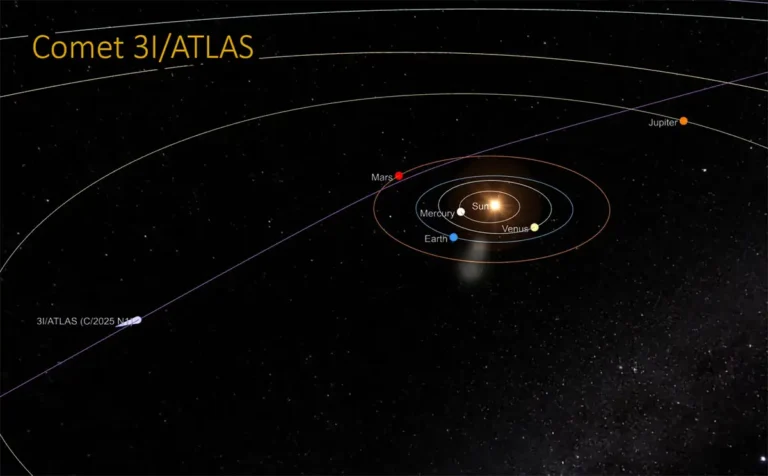
    3I/Atlas is moving at breakneck speeds, far faster than comets trapped by the Sun’s gravity. Its path shows it swooped into the solar system, looped past the Sun, and is now on its way back into deep space.

    Composition and Behavior

    Early observations suggest 3I/Atlas has a comet-like nature, possibly shedding gas and dust as it heated near the Sun. Unlike the cigar-shaped and puzzling ‘Oumuamua, this object seems more “normal,” though its origin beyond our solar system makes it extraordinary.

    Visibility

    Unfortunately, don’t expect to see 3I/Atlas through backyard telescopes. It’s faint, requiring powerful professional observatories to capture data before it vanishes forever into the dark.


    The Hype Around 3I/Atlas

    Whenever something unfamiliar drifts into our solar system, it attracts both scientific excitement and wild speculation.

    Headlines hype it as mysterious. Social media fuels conspiracies. And people inevitably ask:

    • Is it dangerous?
    • Could it be aliens?
    • Is NASA hiding something?

    This mix of wonder and fear reflects human nature. While scientists focus on the rare scientific opportunity, the public often leans into imagination.


    Lies and Misconceptions

    With 3I/Atlas, several myths have already spread. Let’s clear them up:

    • “It’s on a collision course with Earth.” False. Orbital models confirm zero risk.
    • “It’s an alien spacecraft.” No evidence supports this idea—it behaves like a natural comet.
    • “NASA is hiding the truth.” Wrong. Discoveries like this are highly collaborative, with updates shared globally in real time.

    Should We Worry?

    The honest answer: no.

    3I/Atlas poses no danger to Earth. Its orbit doesn’t cross our planet, and its incredible speed makes any long-term capture by our solar system impossible.

    Instead of fearing it, we should recognize the scientific value. Studying 3I/Atlas gives us direct insights into other planetary systems without leaving home.

    Think of it as a free sample from another star system, delivered by the universe itself.


    Why 3I/Atlas Matters for the Future

    The importance of 3I/Atlas extends far beyond a news cycle. Here’s why:

    • Planetary chemistry – It can reveal what distant worlds are made of.
    • Distribution of life’s building blocks – Organic molecules may be common in interstellar space.
    • Planet formation clues – These objects help explain how star systems build comets and asteroids.

    In short, 3I/Atlas could sharpen our understanding of how planets form and even how life might emerge in the galaxy.


    Advantages of Studying 3I/Atlas

    1. Unique insights – A direct look at material from outside our solar system.
    2. Tech progress – Tracking such fast objects pushes telescope innovation.
    3. Global teamwork – Scientists worldwide share data, uniting around the discovery.

    Disadvantages and Challenges

    1. Short window – These objects move fast; we only get months of study.
    2. Too faint – Many telescopes struggle to gather detailed data.
    3. Speculation overload – Conspiracies often drown out real science.

    The Future of Interstellar Object Research

    3I/Atlas marks only the third confirmed interstellar visitor, but the pace of discoveries is quickening. With more powerful telescopes coming online, such as the Vera C. Rubin Observatory, we may detect many more in the near future.

    Some scientists even dream of sending interceptor spacecraft to future interstellar objects, capturing images or samples before they speed away. While 3I/Atlas is already too far and too fast, it paves the way for missions to the next visitor.


    3i Atlas I

    3I/Atlas isn’t a harbinger of doom or a secret alien ship—it’s something much more profound. It’s a natural messenger from another star system, crossing our skies briefly before disappearing into the void.

    While it won’t change daily life or rewrite our science overnight, it reminds us how vast and mysterious the universe is. Instead of worry, this discovery deserves curiosity and awe.

    The next time you hear about 3I/Atlas, think of it not as a threat but as a cosmic postcard, proof that the galaxy is alive with countless wonders still waiting to be found.


    FAQs About 3I/Atlas

    Q1: What does the name 3I/Atlas mean?
    It means “Third Interstellar Object,” discovered by the ATLAS survey in Hawaii.

    Q2: How far is 3I/Atlas from Earth?
    It’s millions of kilometers away, with no risk of collision.

    Q3: Could it be an alien probe?
    There’s no evidence of artificial origin; it behaves like a natural comet.

    Q4: Can I see 3I/Atlas myself?
    No, it’s too faint for amateur telescopes. Only professional observatories can track it.

    Q5: Should we be worried?
    Not at all. Its path doesn’t threaten Earth.

    Q6: Why is 3I/Atlas so important?
    It gives us a rare chance to study material from another star system without leaving our own.


    Robo Shankar’s Inspiring Journey: From Stage Shows to Tamil Cinema Star

    0

    Incredible Journey of Robo Shankar Net Worth Movie Cast Roles & Untold Story of His Rise and Sudden Death

    Robo Shankar, born on 24 December 1978, was more than just a comedian – he was a complete entertainer. Famous for his quirky robot-style dance moves during village stage shows, he quickly earned the nickname “Robo Shankar.” His journey from a small-town mimicry artist to one of Tamil cinema’s most loved comedians is the stuff of inspiration.


    Breakthrough on TV: The Show That Made Him Famous

    Shankar became a household name with STAR Vijay’s hit comedy show Kalakkapovathu Yaaru. His clever one-liners, witty humour, and non-stop energy turned him into a fan favourite. This popularity helped him appear on several other TV shows and as a presenter, strengthening his fan base long before he stepped into films.


    Film Career: Robo Shankar’s Movie Cast Journey

    When it comes to the robo shankar net worth movie cast journey, his big break came with Idharkuthane Aasaipattai Balakumara (2013). Though his first offer was in Rowthiram (2011), those scenes were cut — but destiny brought him back to the big screen.

    From there, Robo Shankar became a regular face in Tamil cinema, starring in:

    • Yaaruda Mahesh
    • Kappal
    • Vaayai Moodi Pesavum (2014) – where critics loved his comic timing
    • Touring Talkies (2015) – playing a surprising negative role
    • Maari (2015) – his most iconic role, filled with memorable one-liners

    He later appeared in major Tamil movie casts alongside Ajith (Viswasam), Vijay (Puli), Suriya (Si3), and Vikram (Cobra). These roles not only showcased his versatility but also significantly boosted robo shankar net worth movie cast discussions among fans.


    Robo Shankar Net Worth (Estimated)

    Here’s an approximate breakdown of Robo Shankar net worth Movie cast based on his career earnings:

    Income SourceEstimated Earnings (INR)Contribution to Net Worth
    Film Roles & Cameos₹3 – 4 CroresMajor share from acting in movies
    Television Shows₹1 – 1.5 CroresComedy shows, hosting, reality TV
    Stage Performances₹30 – 50 LakhsEarly career village & live shows
    Brand Collaborations₹10 – 15 LakhsGuest appearances, endorsements

    💰 Estimated Net Worth: ₹4.5 – 6 Crores
    This made Robo Shankar one of the most successful comedians-turned-actors in the Tamil film industry. His unique presence ensured he stayed in demand, securing his place in every major movie cast lineup for comedy roles.


    Read Also: Davey Johnson Net Worth:-The Brain Behind the Bat
    Read Also: d4vd:The Viral Hitmaker Behind Romantic Homicide

    Television Presence: Staying Connected With Fans

    Even after achieving fame in films, Robo Shankar stayed loyal to television. He frequently appeared on STAR Vijay’s reality shows, comedy skits, and special programs. This helped him maintain a strong connection with his audience and kept his popularity high among family viewers.


    Personal Life, Health Struggles & Sudden Death

    Off-screen, Robo Shankar shared his life with his wife Priyanka Shankar, who made her acting debut in Kanni Maadam (2020). Their daughter, Indraja Shankar, followed in his footsteps with her debut in Vijay’s Bigil and later competed in Zee Tamil’s reality show Survivor.

    In 2023, fans grew concerned when Robo Shankar lost a lot of weight due to jaundice during his health and fitness journey. Despite these struggles, he kept working in both TV and films, proving his dedication to his craft.

    Sadly, Robo Shankar passed away on 18 September 2025 in Chennai after collapsing on a film set earlier in the day. His sudden death sent shockwaves through the Tamil entertainment industry. Fans, colleagues, and celebrities paid heartfelt tributes, remembering his contribution to comedy and cinema.


    Robo Shankar’s Legacy

    Robo Shankar’s story is one of hard work, resilience, and talent. His movie cast success stands as proof that a small-town performer can rise to become a household name. His comedy, timing, and unforgettable expressions will continue to entertain audiences for years to come.


    FAQ – Robo Shankar Net Worth Movie Cast

    1. What was Robo Shankar’s net worth?

    Robo Shankar net worth was between ₹4.5 – 6 Crores, earned through films, TV shows, and stage performances.

    2. Which movies feature Robo Shankar in the cast?

    Robo Shankar appeared in popular Tamil films like Idharkuthane Aasaipattai Balakumara, Vaayai Moodi Pesavum, Maari, Viswasam, Puli, Si3, and Cobra.

    3. When did Robo Shankar pass away?

    Robo Shankar passed away on 18 September 2025 in Chennai after collapsing on a film set earlier in the day.

    4. Who is Robo Shankar’s wife?

    Robo Shankar was married to Priyanka Shankar, who made her acting debut in the film Kanni Maadam (2020).

    5. Did Robo Shankar’s daughter act in movies?

    Yes, his daughter Indraja Shankar made her debut in Vijay’s film Bigil as a football player and later appeared in Zee Tamil’s Survivor.

    Jimmy Kimmel Dating History: From Sarah Silverman to His Wife Molly McNearney

    0

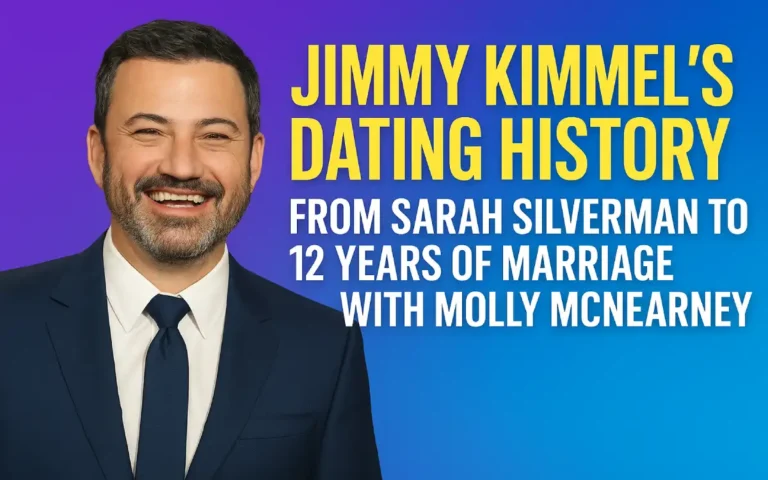
    Jimmy Kimmel Dating History EXPOSED: From Sarah Silverman to 12 Years of Marriage with Molly McNearneyJimmy Kimmel has been a late-night staple for over two decades, entertaining millions with his sharp humor, viral pranks, and unforgettable celebrity interviews. But when he’s not running Jimmy Kimmel Live!, fans often wonder about his personal life — especially his love life. Who has he dated? How long has he been married? And what do we know about his current relationship? Let’s take a deep dive into Jimmy Kimmel dating history, from his early years to his happy marriage today.


    Jimmy Kimmel Dating History :-

    Jimmy Kimmel, 57, is one of America’s most beloved talk show hosts. Born James Christian Kimmel on November 13, 1967, in Brooklyn, New York, he later moved to Las Vegas, where he attended Ed W. Clark High School. Best known for co-creating The Man Show and hosting the long-running late-night hit Jimmy Kimmel Live!, Kimmel is a true Scorpio — witty, sharp, and never afraid to speak his mind.


    Jimmy Kimmel’s Current Relationship – Happily Married to Molly McNearney

    Right now, Jimmy Kimmel is very much off the market. The late-night host has been happily married to Molly McNearney since July 13, 2013. The two first met when Molly worked as a writer on Jimmy Kimmel Live! and their friendship slowly blossomed into romance. After dating for several years, Kimmel popped the question during a romantic safari trip in South Africa in 2012.

    Fast-forward to today — the couple has been married for more than 12 years, sharing two children together: daughter Jane and son William “Billy.” Fans often catch glimpses of Kimmel talking about his family on the show, proving just how important Molly and the kids are to him.


    Before Molly: Jimmy Kimmel’s Marriage to Gina Kimmel

    Before meeting Molly, Jimmy Kimmel was married to Gina Kimmel (née Maddy), his college sweetheart. The two tied the knot in 1988, long before Kimmel became a household name. They were together for 14 years and share two children: Katie and Kevin.

    Their marriage ended in 2002, but the two remain on good terms as co-parents. Gina has since gone on to work as a fashion designer, while Jimmy’s career skyrocketed with the launch of Jimmy Kimmel Live! in 2003.


    Jimmy Kimmel and Sarah Silverman: Comedy Power Couple

    Not long after his divorce, Jimmy Kimmel began dating comedian Sarah Silverman in 2002. Their relationship quickly became one of Hollywood’s most beloved pairings. Both were known for their offbeat, irreverent humor, and they weren’t shy about sharing it with the world.

    Fans still remember Sarah’s viral comedy song “I’m F***ing Matt Damon,” which poked fun at Jimmy during their relationship — and Jimmy’s hilarious comeback song featuring Ben Affleck. The pair dated for about seven years before officially calling it quits in 2009. While the breakup was sad news for fans, they have both spoken publicly about remaining friends.


    Read Also: Davey Johnson Net Worth:-The Brain Behind the Bat
    Read Also: d4vd:The Viral Hitmaker Behind Romantic Homicide

    Relationship Stats at a Glance

    Looking at Jimmy Kimmel dating history, here’s a quick breakdown of his major relationships:
    • Marriages: 2
      • Longest marriage: 15+ years (Molly McNearney, ongoing)
      • Previous marriage: Gina Kimmel (1988–2002)
    • Publicly Known Jimmy Kimmel Dating History: 1 major relationship (Sarah Silverman, 2002–2009)

    That brings Jimmy’s total known relationships to three — two marriages and one long-term romance.


    Who Is Jimmy Kimmel Outside of Dating?

    Born James Christian Kimmel on November 13, 1967, in Brooklyn, New York, Kimmel grew up in Las Vegas, where he attended Ed W. Clark High School. He briefly attended the University of Nevada, Las Vegas, and later Arizona State University before dropping out to pursue a career in radio.

    Kimmel started out as a radio personality before moving into television. His big break came as the co-host of Win Ben Stein’s Money, which won him an Emmy Award. He later co-created The Man Show with longtime friend Adam Carolla.

    But his biggest career milestone came in 2003 with the debut of Jimmy Kimmel Live! on ABC, where he has served as host and executive producer ever since.

    In addition to his late-night hosting duties, Kimmel has become a go-to emcee for Hollywood’s biggest nights. He has hosted the Primetime Emmy Awards three times (2012, 2016, 2020) and the Academy Awards four times (2017, 2018, 2023, 2024).


    Jimmy Kimmel’s Personality and Interests

    Fans know Jimmy Kimmel for his deadpan humor, clever sketches, and ability to get celebrities to laugh at themselves. But off-screen, Kimmel is a family man and a passionate foodie. He’s been open about his love for cooking and often shares stories about barbecuing at home.

    He’s also been outspoken on important social issues, particularly healthcare, after his son Billy was born with a congenital heart condition. His emotional monologues on the subject have resonated with millions of viewers.


    Frequently Asked Questions – Jimmy Kimmel Dating History

    Q1: Who is Jimmy Kimmel married to now?
    Jimmy Kimmel is married to Molly McNearney, a writer and co-head writer for Jimmy Kimmel Live!. They tied the knot on July 13, 2013, and have been happily married for over 12 years.

    Q2: Who was Jimmy Kimmel’s first wife?
    Kimmel’s first wife was Gina Kimmel (née Maddy). The two were married from 1988 to 2002 and share two children, Katie and Kevin.

    Q3: Did Jimmy Kimmel date Sarah Silverman?
    Yes, Jimmy Kimmel was in a relationship with comedian Sarah Silverman from 2002 to 2009. Their relationship was widely publicized and loved by fans for its humor and charm.

    Q4: How many children does Jimmy Kimmel have?
    Jimmy Kimmel has four children — Katie and Kevin from his first marriage, and Jane and William “Billy” with his current wife Molly McNearney.

    Q5: Has Jimmy Kimmel been married more than once?
    Yes. Jimmy Kimmel has been married twice — first to Gina Kimmel and currently to Molly McNearney.

    Q6: How old is Jimmy Kimmel?
    Jimmy Kimmel was born on November 13, 1967, making him 57 years old.


    The Future on Your Face: Meta Ray-Ban Display Smart Glasses

    0

    Meta Ray-Ban: The Future of Smart Glasses

    When you hear Meta Ray-Ban, you think of Ray-Ban’s timeless style fused with Meta’s push into wearable technology. Together, they’ve created something bold: smart glasses that are as much a fashion statement as they are a tech innovation.

    These glasses are not just about looking good. Meta Ray-Ban blends lifestyle with digital convenience, giving us a glimpse of what the future of augmented reality and wearable computing might look like.

    In this blog, we’ll explore what makes Meta Ray-Ban smart glasses unique, their advantages and disadvantages, how they stack up against rivals, and what the future could hold.


    What Are Meta Ray-Ban Smart Glasses?

    The Meta Ray-Ban smart glasses are the result of a partnership between Meta and Ray-Ban. They look like classic sunglasses but come with built-in technology, including:

    • Cameras for photos and videos
    • Voice assistant integration
    • Open-ear audio for music and calls
    • Touch and voice controls
    • Easy content sharing to social platforms

    Unlike bulky AR headsets, Meta Ray-Ban glasses blend into everyday life. You can wear them at a café, on a walk, or while traveling, without standing out as “the person with tech on their face.”


    Why Meta Ray-Ban Matters

    Smart glasses aren’t new. Google Glass tried to break through a decade ago but failed. Meta’s attempt feels different, and here’s why:

    • Style First: With Ray-Ban’s credibility, these glasses don’t scream “tech gadget.”
    • Better Tech: Cameras, microphones, and processors are now small and efficient.
    • Cultural Shift: We already accept wearables like AirPods and smartwatches—glasses are the natural next step.

    When someone wears Meta Ray-Ban, they’re not “wearing a device.” They’re wearing stylish Ray-Bans, just with smarter functionality.


    Advantages of Meta Ray-Ban

    1. Fashion Meets Function

    Unlike many wearables, Meta Ray-Ban doesn’t look like tech gear. They’re stylish, subtle, and wearable anywhere.

    2. Hands-Free Content Creation

    Creators can record or snap photos with a first-person view—perfect for biking, cooking, or traveling without holding a phone.

    3. Built-In Audio

    The open-ear speakers let you listen to music or take calls while staying aware of your surroundings.

    4. Seamless Social Sharing

    Integration with Meta platforms like Instagram and Facebook makes posting content effortless.

    5. Natural Interaction

    Voice commands like “Hey Meta, take a photo” make the experience smooth and intuitive.

    More from Blogs: Super Mario Galaxy Movie


    Disadvantages of Meta Ray-Ban

    1. Privacy Concerns

    The built-in cameras make some people uneasy, fearing they might be recorded without consent.

    2. Limited AR Capabilities

    Despite Meta’s AR vision, current Meta Ray-Ban models lack holograms or immersive visuals.

    3. Short Battery Life

    With audio, video, and connectivity, battery drains quickly—around 4–6 hours of moderate use.

    4. Higher Price

    They cost significantly more than standard Ray-Bans, which may not appeal to everyone.

    5. Dependence on Meta Ecosystem

    The glasses are tightly integrated with Meta’s apps, raising concerns for those wary of Meta’s data practices.


    Meta Glasses vs Other Smart Glasses

    The competition in smart eyewear is heating up:

    • Apple (rumored AR glasses): Likely more powerful, but much more expensive.
    • Snap Spectacles: Fun and creator-focused, but not as fashionable.
    • Google Glass (enterprise): Geared for professional use, not lifestyle.

    Meta’s biggest advantage is style and lifestyle integration. With Meta Glasses, you don’t feel like you’re wearing a gadget—you just look sharp.


    Meta

    The Future of Meta Ray-Ban

    AR Integration

    Future versions may overlay directions, translations, or notifications right in your field of vision.

    Everyday Utility

    Meta Glasses could reduce phone dependency by putting calls, messages, and reminders directly in your glasses.

    Professional Applications

    From surgery to education, smart glasses could enhance precision and teaching in real-world environments.

    Social Impact

    These glasses could change how we record memories—hands-free and in the moment—but they also raise concerns about constant surveillance.


    Advantages vs Disadvantages: The Balance

    Advantages

    • Stylish, wearable design
    • Hands-free content capture
    • Smooth Meta platform integration
    • Built-in open-ear audio
    • Everyday usability

    Disadvantages

    • Privacy concerns
    • Limited AR features (for now)
    • Short battery life
    • High cost
    • Strong reliance on Meta’s ecosystem

    Is Meta Glasses the Future of Wearables?

    Here’s the thing: Meta Ray-Ban smart glasses aren’t the fully immersive AR devices we see in sci-fi. But they are a huge step forward.

    They’re stylish, functional, and practical enough to hint at what’s coming next. Just as smartphones changed how we connect, Meta Ray-Ban could reshape how we capture, communicate, and share.

    Will they replace phones? Probably not yet. But will they change how we interact with tech in everyday life? Absolutely.


    Views on Meta Ray-Ban

    The Meta Ray-Ban smart glasses bring together fashion and function like no wearable before. They’re practical, stylish, and exciting—but they also face tough challenges around privacy, AR limitations, and battery life.

    If you’re curious about the future of technology, Meta Ray-Ban offers a stylish glimpse into what’s next. With continued innovation, they might become as essential as the smartphone did a decade ago.


    FAQs on Meta Ray-Ban

    Q1. What can Meta Ray-Ban smart glasses do?
    They let you capture photos and videos, make calls, listen to music, and share content directly to social platforms.

    Q2. Do Meta Ray-Ban glasses support AR?
    Not yet. Current models focus on cameras, audio, and sharing. Future models are expected to add AR.

    Q3. How long does the battery last?
    Around 4–6 hours depending on usage.

    Q4. Are Meta Ray-Ban glasses safe for privacy?
    They include a small light indicator when recording, but privacy concerns remain.

    Q5. How much do they cost?
    They cost more than traditional Ray-Bans, with pricing depending on model and frame style.