More
    Home Blog Page 30

    Gujarat’s $390M Chip Deal: From Vision to Reality and Its Impact on India

    0

    Gujarat’s $390M Chip Deal

    The announcement that Gujarat’s $390 million chip deal is moving from concept to execution has ignited a wave of optimism across India’s technology and industrial landscape. For decades, India has aimed to cut down its reliance on imported semiconductors and electronics. This deal, anchored in Gujarat, is being hailed as a milestone toward that vision.

    In this blog, we’ll break down the details of the deal, its alignment with India’s semiconductor goals, the challenges ahead, and its long-term implications for Gujarat, India, and the global technology ecosystem.


    Background: Why Gujarat for Chip Manufacturing?

    India’s Semiconductor Ambition

    India has historically struggled to establish a strong foothold in semiconductor manufacturing. Nearly all chips powering consumer electronics, telecom, defense, and industrial systems are imported. The COVID-19 supply chain crisis exposed how vulnerable this dependency makes the country.

    To fix this, the Indian government rolled out targeted policies and incentives to encourage domestic chip manufacturing, assembly, testing, and packaging. Several states pitched for hosting such projects, but Gujarat quickly stood out.

    Why Gujarat?

    Gujarat is already recognized as a powerhouse for industrial growth. Its advantages include:

    • Strategic port access through Kandla and Mundra
    • Strong infrastructure and power availability
    • Political stability with pro-investment governance
    • A record of executing large-scale projects

    When the Gujarat’s $390M chip deal was unveiled, it felt like a natural choice for India’s semiconductor ambitions.


    The Deal in Detail

    What the $390M Investment Covers

    Although complete details aren’t public, reports confirm the deal will focus on:

    • Chip assembly and testing units
    • Potential collaborations with global semiconductor players
    • Infrastructure for clean rooms, water, power, and logistics
    • Joint ventures between government, Indian conglomerates, and foreign firms

    At $390 million, the investment is significant but not sufficient for a full-fledged wafer fabrication plant (which often requires tens of billions). For now, the emphasis appears to be on assembly, testing, and packaging, with room to scale up later.

    Why It Stands Out

    • A signal to global players that India is serious about semiconductors
    • An opportunity for Gujarat to shift from low-end to high-tech manufacturing
    • A trigger for ecosystem benefits such as logistics, support services, and skill-building
    • A steppingstone to attract future multibillion-dollar fabs

    More from Blogs: Grand Blanc Church Michigan Attack


    Expected Impact

    On Gujarat’s Economy

    • Job creation: Thousands of engineers, technicians, and support staff will be needed.
    • Industrial clusters: Ancillary industries like packaging, chemicals, and tooling will sprout around the hub.
    • Infrastructure boost: Power, water, and logistics upgrades will benefit other industries too.
    • Regional uplift: Nearby districts stand to gain through supply chain linkages.

    On India’s Semiconductor Aspirations

    • Reduced imports: Local chip packaging and assembly cut foreign reliance.
    • Technology transfer: Partnerships with global firms build knowledge and expertise.
    • Investment magnet: Success here could attract much larger semiconductor projects.
    • Strategic security: Local chip capability is vital for defense and telecom resilience.

    Challenges and Risks

    Every opportunity comes with hurdles. For Gujarat’s $390M chip deal, the key risks include:

    • Technology gap: Advanced chips at 5nm or below need huge capital and expertise, far beyond $390M.
    • Supply chain reliance: Critical inputs like wafers and photolithography tools may still be imported.
    • Talent shortage: India must train specialized semiconductor engineers and technicians at scale.
    • Policy execution: Bureaucratic delays, inconsistent policies, or land acquisition hurdles could slow progress.
    • Geopolitical risks: Export controls and global trade tensions may affect collaborations.

    Implementation Roadmap

    Phase 1 (0–2 years): Setup

    • Establish assembly and testing units
    • Recruit and train workforce
    • Onboard global partners for know-how

    Phase 2 (2–5 years): Ecosystem Building

    • Develop supply chains for chemicals, packaging, and equipment
    • Strengthen logistics and local vendor networks

    Phase 3 (5+ years): Advanced Manufacturing

    • Explore setting up fabs and R&D centers
    • Position Gujarat as India’s leading semiconductor hub

    Parallel measures must include training centers, R&D tie-ups, and policy stability to sustain momentum.


    India vs Global Leaders

    Compared to Taiwan, South Korea, and the U.S.—which have decades of semiconductor dominance—India is entering late. But being late also allows India to adopt best practices and avoid early missteps.

    While Gujarat’s $390M chip deal won’t make India a semiconductor superpower overnight, it lays the foundation for future progress.


    People, Policy, and Perception

    What Industry Needs

    • Stable and consistent policies
    • Strong IP protection
    • Reduced bureaucracy
    • Global branding of India as a trustworthy chip hub

    Public Sentiment

    For Gujarat’s citizens, this project promises growth, jobs, and pride. Still, it must be inclusive—ensuring fair land use, environmental protection, and benefits that extend to local communities.


    What to Watch Next

    Key milestones to track:

    • Final site announcement in Gujarat
    • Names of Indian and global partners
    • Timelines for construction and commissioning
    • Early recruitment and training drives
    • Government policy updates and incentives
    • Supply chain contracts with ancillary firms

    Key Takeaways

    Gujarat’s $390M chip deal is more than an investment—it’s a signal. It shows India’s determination to enter the semiconductor space, starting small but aiming high.

    Execution will decide its success. If handled well, this deal could unlock future investments, deeper technology collaborations, and stronger supply chains, making India a formidable player in global semiconductors.


    FAQs: Gujarat’s $390M Chip Deal

    Q1: What does Gujarat’s $390M chip deal include?
    It focuses on semiconductor assembly, testing, and packaging, with potential for future expansion into fabrication.

    Q2: Why was Gujarat selected?
    Its strong industrial ecosystem, ports, infrastructure, and track record made it the preferred choice.

    Q3: When will it be operational?
    Assembly facilities typically take 1–2 years, while fabs require much longer.

    Q4: Will this make India self-reliant in chips?
    Not immediately, but it’s a critical step toward reducing import dependency.

    Q5: What are the biggest risks?
    Talent shortages, policy delays, global supply chain reliance, and geopolitical issues are major risks.


    Uncovering the Grand Blanc Church Michigan Attack: Facts, Suspect, and Investigation

    0

    On September 28, 2025, the quiet community of Grand Blanc, Michigan, experienced a violent and tragic event at the Grand Blanc Church. The Church of Jesus Christ of Latter-day Saints, a spiritual hub that typically welcomes hundreds of worshippers on Sunday mornings, became the site of a targeted attack. The incident resulted in four confirmed deaths and eight injuries, leaving families, children, and the wider community in shock and mourning.

    This attack not only exposed vulnerabilities in places of worship but also highlighted the courage, resilience, and unity of a community under extreme pressure. In this detailed account, we explore the incident, the suspect, eyewitness experiences, the ongoing investigation, and the broader impact on the Grand Blanc Church and its congregation.


    Incident Overview: A Targeted Attack on Grand Blanc Church

    Around 10:25 AM, the Grand Blanc Church was hosting its regular Sunday service when Thomas Jacob Sanford, a 40-year-old resident of Burton, Michigan, drove his vehicle into the church’s front doors. Armed with an assault rifle, he began shooting at worshippers. Panic spread through the congregation as families and children scrambled for safety.

    The situation escalated further when Sanford deliberately set fire to the church using gasoline or another accelerant. Flames quickly engulfed parts of the building, and smoke filled the sanctuary, causing partial structural collapse. First responders arrived quickly and confronted the suspect in the church parking lot. Sanford was shot and killed within eight minutes of the attack, preventing further casualties.

    Authorities described the incident as a targeted act of violence, although the motive remains unknown. Investigators continue to examine Sanford’s background, communications, and potential triggers that may have led to this horrific act.


    Meet the Suspect: Thomas Jacob Sanford

    Thomas Jacob Sanford, the perpetrator of the attack on Grand Blanc Church, was a 40-year-old U.S. Marine Corps veteran. He served from 2004 to 2008, including a deployment to Iraq’s al-Fallujah region during Operation Iraqi Freedom. Sanford held the rank of sergeant and specialized in maintaining military vehicle equipment.

    While Sanford’s military service provides context, it does not explain his violent actions. Police are reviewing his phone records, residence, social media activity, and personal relationships to identify any potential motives behind targeting the Grand Blanc Church. Understanding Sanford’s motivations is crucial to preventing similar tragedies in the future.


    Eyewitness Accounts: Courage Amid Chaos

    Eyewitnesses describe a harrowing scene. Congregants recall hearing loud crashing noises as the vehicle struck the church doors, followed by gunfire. One attendee, who asked to remain anonymous, said, “I saw the suspect shooting, and instinctively I grabbed my kids and dove behind the pews. People were screaming, but everyone was trying to help each other.”

    Another witness highlighted the bravery of certain congregants who shielded children and elderly members during the attack. Their quick thinking prevented additional casualties, reflecting the unity and resilience of the Grand Blanc Church community even in extreme fear and confusion.


    Historical Context: Grand Blanc Church and Its Role in the Community

    The Grand Blanc Church has long served as a spiritual and social anchor in the community. For decades, it has hosted religious services, community events, and youth programs. Its congregation spans multiple generations, with families attending together every Sunday.

    The church has also been a symbol of hope and refuge. Attacks like the one on September 28, 2025, are deeply traumatic not only for immediate victims but for the broader community that relies on this sacred space for connection, faith, and support.


    Leadership and National Response

    The attack drew swift condemnation from both local and national leaders. Michigan Governor Gretchen Whitmer expressed her condolences and pledged full support to victims and their families. National figures, including President Donald Trump, referred to the event as a targeted act against Christians and urged solidarity with the affected community.

    Law enforcement agencies, including the FBI, Michigan State Police, and local authorities, coordinated to secure the scene, collect evidence, and assist survivors. Their rapid response prevented additional casualties and demonstrated the importance of coordinated crisis management in incidents of targeted violence.


    The Ongoing Investigation

    The FBI continues to lead the investigation, treating the attack on Grand Blanc Church as a targeted act of violence. Bomb squads and forensic experts were dispatched to examine the scene, ensuring it was safe and gathering critical evidence.

    Investigators discovered improvised explosive devices near the site, raising concerns about potential secondary threats. They are also focusing on the fire’s origin and the accelerants used. Authorities are scrutinizing every aspect of Sanford’s life, from recent communications to social media activity, to determine the motive and prevent similar attacks.

    The Grand Blanc Church building itself sustained significant structural and fire damage. Clearing operations are ongoing, allowing investigators to safely assess the extent of the damage and search for any remaining victims.

    More from Blogs: Falcon 9 Ignites the Sky


    Community Resilience and Healing

    Violence in a place of worship is particularly devastating. The Grand Blanc Church is not just a building—it is a spiritual home, a gathering place for families, and a source of hope and solace. Healing from such an event will require time, empathy, and continued support.

    Faith groups, local organizations, and national leaders are offering assistance, including counseling services, donations, and support networks for families affected by the attack. The bravery of congregants, law enforcement, and first responders continues to be a source of inspiration for the community and a testament to human resilience in the face of tragedy.


    Nationwide Perspective: Attacks on Places of Worship

    The Grand Blanc Church attack is part of a troubling national trend of violence targeting places of worship. Incidents like this remind communities of the need for enhanced security, crisis preparedness, and proactive engagement with law enforcement.

    Religious institutions across the United States have been reviewing security protocols, including surveillance, emergency response training, and access control, to ensure that congregants can worship safely.


    Key Takeaways

    The attack on Grand Blanc Church is a stark reminder of the vulnerability of sacred spaces and the importance of community resilience. As investigators continue their work to uncover the motives and circumstances behind this tragedy, the focus must also remain on healing, empathy, and solidarity.

    By acknowledging the courage of congregants, the dedication of first responders, and the support of leaders, the Grand Blanc community can begin the process of recovery and restoration, reaffirming the enduring power of faith, hope, and unity.


    Frequently Asked Questions (FAQs)

    Q1: What happened at the Grand Blanc Church?
    On September 28, 2025, a shooter drove his vehicle into the Grand Blanc Church, fired an assault rifle at worshippers, and set the building on fire. Four people were killed, and eight were injured. The suspect was killed by police at the scene.

    Q2: Who was the suspect?
    Thomas Jacob Sanford, a 40-year-old US Marine Corps veteran from Burton, Michigan, served from 2004 to 2008 and was deployed to Iraq.

    Q3: What is the status of the investigation?
    The FBI is leading the investigation, treating it as targeted violence. Explosive devices were found, and the fire-damaged church is being cleared for further examination.

    Q4: How has the community responded?
    The Grand Blanc community has shown shock and grief. Congregants acted bravely to protect children and others. Leaders, including the governor and president, have condemned the attack and offered support.

    Q5: Is the Grand Blanc Church safe now?
    The site remains unsafe while investigations continue. Security measures and safety protocols will be strengthened to ensure the protection of the community.

    Falcon 9 Ignites the Sky: SpaceX’s Latest Leap into Orbit

    0

    Space exploration has always captivated humanity, and few names today generate as much excitement as Falcon 9. SpaceX’s recent rocket launch reignited interest in reusable rocketry and commercial space travel. From the thunderous roar at liftoff to the precise landing of the booster, each Falcon 9 launch showcases engineering brilliance.

    The Falcon 9 program goes beyond just sending payloads into orbit. It represents a shift toward affordable space travel, satellite deployment, and even future human missions to the Moon and Mars. In this blog, we’ll explore the recent Falcon 9 launch, its engineering feats, mission objectives, and why each launch brings humanity closer to a multiplanetary future.


    A Technological Marvel

    Falcon 9 is a two-stage, partially reusable rocket designed by SpaceX to transport satellites, cargo, and humans into space. Its name is inspired by the Millennium Falcon from Star Wars and the nine engines on its first stage. Since its first flight in 2010, it has become the backbone of commercial spaceflight.

    Key Features

    • Reusability: The first stage is designed to return and land vertically, significantly reducing launch costs.
    • Payload Capacity: Up to 22,800 kilograms to Low Earth Orbit (LEO) and 8,300 kilograms to Geostationary Transfer Orbit (GTO).
    • Merlin Engines: Nine engines on the first stage generate a combined 1.7 million pounds of thrust.
    • Second Stage: A single-engine stage optimized for orbital insertion.
    • Autonomous Flight: Advanced avionics and software allow precise navigation through complex trajectories.

    It stands out because it combines cutting-edge technology with practical reusability, making space launches more sustainable and frequent.


    SpaceX’s Mission Objectives

    The latest launch aimed to achieve multiple goals:

    • Satellite Deployment: Expanding the Starlink network for global broadband access.
    • International Payloads: Delivering satellites for commercial and government use.
    • Human Spaceflight Preparation: Testing systems essential for future crewed missions.

    Each Falcon 9 launch is a carefully choreographed sequence of precision. Success depends not only on liftoff but also on the booster landing and accurate orbital insertion of payloads.


    The Launch Sequence: Falcon in Action

    Watching a Falcon 9 launch is witnessing a ballet of raw power and precision.

    1. Liftoff: Engines ignite, producing 1.7 million pounds of thrust. The rocket ascends through the dense lower atmosphere.
    2. Max Q: The rocket experiences maximum aerodynamic pressure. Falcon 9’s design ensures structural integrity.
    3. Stage Separation: Roughly two minutes after liftoff, the first stage separates, and the second stage ignites.
    4. Payload Deployment: The second stage places payloads into the intended orbit, whether LEO, GTO, or interplanetary trajectory.
    5. Booster Landing: The first stage performs a controlled descent and lands safely on a drone ship or pad for reuse.

    The precision of Falcon’s launch sequence demonstrates SpaceX’s focus on reliability and innovation.

    More from Blogs: Cowboys Game Drama


    Engineering Highlights

    Several engineering innovations make Falcon 9 exceptional:

    • Merlin Engines: The nine-engine configuration ensures redundancy. Even with an engine failure, the mission can continue.
    • Autonomous Flight Control: Real-time guidance allows precise trajectory adjustments.
    • Grid Fins: Aerodynamic fins control booster descent for pinpoint landings.
    • Thermal Protection: Heat-resistant materials protect the rocket during re-entry.
    • Modular Design: Streamlined payload integration and rapid refurbishment between launches.

    Falcon is more than a rocket—it’s a milestone in aerospace engineering.


    The Latest Falcon 9 Launch: Key Highlights

    The most recent Falcon 9 launch occurred at SpaceX’s historic Kennedy Space Center in Florida. The mission carried a combination of Starlink satellites and commercial payloads.

    Launch Statistics:

    • Date & Time: OCT 02. 10:39 PM
    • Launch Site: Kennedy Space Center, Launch Complex 39A
    • Payload: 50 Starlink satellites + commercial satellite
    • Booster Landing: Successful on drone ship Of Course I Still Love You
    • Orbit: Low Earth Orbit, 550 km

    Fans worldwide watched live as its lifted off, pierced the clouds, and returned its booster safely to Earth.


    The Significance of Falcon 9 in Space Exploration

    It has transformed spaceflight in several ways:

    • Cost Efficiency: Reusable boosters reduce launch costs, making space more accessible.
    • Rapid Launch Cadence: Multiple launches per month are now possible.
    • Commercial Opportunities: Reliable access for both private and government payloads.
    • Crewed Missions: Crew Dragon capsules atop Falcon 9 safely ferry astronauts to the ISS.

    Each launch strengthens SpaceX’s vision for a multiplanetary civilization.


    Starlink and Falcon 9

    This is integral to the Starlink project, deploying satellites that provide global broadband, particularly in remote areas.

    Impact of Starlink Launches:

    • Internet access in underserved regions
    • Low-latency communications for remote industries
    • Revenue to support SpaceX’s Mars ambitions

    Every launch adds dozens of satellites, expanding coverage and reliability.


    Comparing Falcon 9 to Other Rockets

    Falcon 9 is often compared to Atlas V, Delta IV, and Blue Origin’s New Glenn.

    Advantages:

    • Partial reusability lowers costs
    • Higher launch frequency
    • Advanced autonomous booster landings
    • Versatile payload capacity

    These features make Falcon 9 one of the most reliable and cost-effective heavy-lift rockets in the commercial sector today.


    Falcon 9 and the Future of Space Travel

    Falcon 9’s success lays the foundation for ambitious missions:

    • Crewed lunar missions with Starship
    • Mars exploration and eventual colonization
    • Deep-space research and interplanetary cargo delivery

    It is a stepping stone to a new era of space exploration.


    Public Enthusiasm and Global Impact

    Every Falcon launch is a spectacle. Millions tune in worldwide, and the excitement goes beyond entertainment:

    • Inspires future engineers and scientists
    • Promotes STEM education globally
    • Demonstrates the power of human innovation

    Social media, live streams, and news coverage amplify the buzz, turning Falcon 9 launches into global events.


    Key Takeaways

    The Falcon 9 rocket is more than a launch vehicle. It symbolizes a revolution in space exploration. From reusable boosters to rapid satellite deployment, each Falcon 9 launch brings humanity closer to sustainable spaceflight.

    The latest launch confirmed that SpaceX’s technology, ambition, and vision continue to break barriers. With each mission, Falcon 9 lights up the sky and sparks our imagination, showing that the final frontier is closer than ever.

    This stands as a symbol of progress, a triumph of engineering, and proof of what’s achievable when vision meets innovation.


    FAQs

    Q1: What is Falcon 9?
    It is a two-stage, partially reusable rocket developed by SpaceX to transport satellites, cargo, and astronauts into space.

    Q2: What makes Falcon 9 unique?
    Its reusability, nine-engine first stage, autonomous flight control, and modular payload system make its a groundbreaking rocket.

    Q3: How many satellites can Falcon 9 carry?
    It can carry up to 60 Starlink satellites or up to 22,800 kg to Low Earth Orbit.

    Q4: Where do Its boosters land?
    Boosters land on drone ships at sea or on designated ground pads for reuse.

    Q5: What was the latest Falcon 9 launch?
    The latest launch deployed Starlink satellites and a commercial payload, with a successful booster landing on a drone ship.

    Cowboys Game Drama: Dallas vs Green Bay, Overtime Rules, and Who Really Won

    0

    Cowboys Game

    Every time the Cowboys game makes headlines, fans expect excitement. But when Dallas and Green Bay meet, the intensity goes beyond a regular matchup. Their rivalry is steeped in history, controversial endings, and unforgettable moments.

    The latest Cowboys game against the Packers delivered everything fans love about football: explosive drives, last-minute comebacks, and an overtime finish that left millions wondering — who won the Cowboys game today?

    This clash also spotlighted the new NFL overtime rules for 2025, changing how teams plan late in games. Coaches now face decisions that go beyond field goals, with aggressive fourth-down calls and possession strategies at the center. In true Dallas fashion, the outcome was dramatic.

    This blog breaks down what happened in this thriller, explains the NFL overtime rules, looks back at Cowboys–Packers classics, and puts this showdown in perspective.


    Cowboys vs Packers: A Rivalry Written in History

    The Dallas Cowboys and Green Bay Packers aren’t just franchises; they’re institutions. Their rivalry goes back to the 1960s, most famously the Ice Bowl of 1967, one of the coldest games in NFL history. Since then, the two have collided in high-stakes regular season and playoff contests that defined eras.

    • All-time series before 2025: Packers led 22–20
    • Playoff meetings: Packers led 5–4
    • Titles: Cowboys have 5 Super Bowl wins, Packers own 4 Super Bowls and 13 NFL championships

    The Packers vs Cowboys history has always been about big moments. This particular Dallas Green Bay game stood out because it mixed playoff-level intensity with the first big test of the new overtime rules NFL.


    The Build-Up to the Cowboys Game

    Before kickoff, both teams carried storylines:

    • Dallas Cowboys record: 3–1, coming off a big win
    • Green Bay Packers record: 2–2, looking for redemption after a divisional loss
    • Cowboys offense: Averaging 28.5 points per game, top five in the league
    • Packers defense: Ranked top 10 in red-zone stops

    This wasn’t just about the standings. Fans wanted to know whether the Cowboys score today would cement their NFC dominance, or if the Packers score would show they still belong in the contender conversation.

    More from Blogs: Supermassive Black Holes


    First Half: Cowboys Start Fast, Packers Hit Back

    The Cowboys game started with Dallas striking first. Their QB engineered a 75-yard drive, capped by a touchdown to CeeDee Lamb. The Cowboys score jumped to 7–0.

    Green Bay responded immediately. Jordan Love led an 80-yard march ending in a TD. By the end of the first quarter, it was 7–7, signaling a shootout ahead.

    Halftime score:

    • Cowboys 17 – Packers 14
    • Total yards: Dallas 225, Green Bay 198
    • Time of possession: virtually even

    Both offenses clicked, and this was shaping into one of the highest-scoring ties in NFL history — unless someone pulled away.


    Second Half: Momentum Swings

    The third quarter favored Dallas. A long field goal and another touchdown stretched the Cowboys score to 27–17. Momentum was theirs.

    But Aaron Jones flipped the script with a 60-yard run that set up a Green Bay touchdown. Suddenly it was 27–24. The Packers coach dialed up aggressive calls, while Dallas’ defense wavered.

    Heading into the fourth, fans across the country were already searching: “who won the Cowboys game tonight?”


    Fourth Quarter: NFL Drama at Its Best

    Dallas struck first, extending their lead to 34–24. Yet with five minutes left, Jordan Love sparked a rally, including a deep pass to cut the score to 34–31.

    Then came the dagger: with under a minute left, the Packers nailed a 49-yard field goal to tie it 34–34.

    Overtime beckoned, with the spotlight on the NFL overtime rules 2025.


    NFL Overtime Rules 2025 Explained

    Overtime has long frustrated fans. Critics argued the sudden-death format wasn’t fair, which drove the league to revamp the system.

    Key changes in 2025:

    • Both teams are guaranteed a possession, even if the first team scores a TD
    • If still tied, next score wins
    • In playoffs, OT can extend into double overtime
    • Coin toss winner now chooses: first possession or field position

    The new NFL overtime rules were designed to stop debates over fairness. And in this Cowboys vs Packers game, they delivered drama.


    Overtime: A Wild Finish

    Dallas won the toss, chose to receive, and chewed nearly six minutes off the clock. On 4th-and-2 at the Packers’ 30, they converted, then scored a TD. Dallas led 41–34.

    Under old rules, that would’ve been game over. Not anymore.

    Jordan Love took his shot, driving Green Bay 75 yards and tying it 41–41. History was unfolding: could this end in a rare NFL tie or go to double overtime?

    On Dallas’ next drive, disaster struck. A 47-yard FG attempt sailed wide. The Packers answered with a rookie kicker’s clutch 38-yarder.

    Final score: Packers 44 – Cowboys 41.


    Who Won the Cowboys Game?

    The answer is clear — the Green Bay Packers took down Dallas in a stunning OT finish.

    Final stats:

    • Packers 44, Cowboys 41
    • Total yards: Green Bay 472, Dallas 459
    • Time of possession: Packers 33:12, Cowboys 32:48
    • Turnovers: Cowboys 2, Packers 1

    Why the Cowboys Game Mattered

    This wasn’t just another chapter in the rivalry. It was the first big showcase of the new overtime rules NFL 2025.

    Why it mattered:

    • Both teams got fair offensive chances
    • Fans didn’t leave asking, “did the Cowboys win today without touching the ball?”
    • It produced one of the season’s most thrilling finishes

    Debates raged afterward. Some said the Cowboys final score should’ve stood as the win. Others argued the rules now give fans exactly what they want: fairness and excitement.


    Cowboys vs Packers: Where This Game Ranks

    This Dallas Green Bay game deserves a spot alongside:

    • 1967 Ice Bowl – Packers 21, Cowboys 17
    • 2014 Playoff Classic – The Dez Bryant “catch” controversy
    • 2025 OT Shootout – Packers 44, Cowboys 41

    Few rivalries produce this level of drama, and with new NFL overtime rules in play, this matchup will be remembered for years.


    Cowboys Game Drama Lives On

    The Cowboys game against Green Bay offered everything: high scores, late drama, and a dramatic overtime showcase. Dallas may not have claimed the win, but they proved they remain NFC contenders.

    For Green Bay, this victory could define their season. For the league, it was a showcase of why the new overtime rules were implemented — fairness, strategy, and edge-of-your-seat drama.

    So, the next time someone asks, “who won the Cowboys game today?” you’ll know the answer. But you’ll also know this clash was bigger than a box score — it was history, rivalry, and the evolution of NFL football.


    FAQs About the Cowboys Game

    Q1: Who won the Cowboys game today?
    The Green Bay Packers defeated the Dallas Cowboys, 44–41, in overtime.

    Q2: What are the new NFL overtime rules in 2025?
    Both teams are guaranteed one possession. If still tied, the next score wins. In playoffs, overtime can extend into double OT.

    Q3: Did the Cowboys win today?
    No. Despite leading late, Dallas lost after Green Bay scored in overtime.

    Q4: What was the Cowboys vs Packers score?
    Final score: Packers 44 – Cowboys 41.

    Q5: Has there ever been a highest-scoring tie in NFL history?
    Yes. The highest-scoring tie was 1938, Brooklyn Dodgers 23 – Chicago Cardinals 23. This Cowboys–Packers game nearly joined that list if not for the OT finish.

    Supermassive Black Holes: Revolutionary Discoveries Challenge Early Universe Formation Theories

    0

    Recent astronomical breakthroughs are fundamentally reshaping our understanding of supermassive black holes in the early universe, with groundbreaking discoveries revealing that these cosmic giants may be either significantly smaller than previously estimated or capable of growing far faster than theoretical physics allows. These supermassive black holes findings are forcing scientists to reconsider the very foundations of how supermassive black holes formed and evolved during the universe’s infancy.

    GRAVITY+ Technology Reveals Smaller Black Holes Than Expected

    Advanced astronomical instruments are revolutionizing how scientists measure supermassive black holes in distant galaxies. The GRAVITY+ instrument at the European Southern Observatory’s Very Large Telescope in Chile has made the first direct mass measurement of a supermassive black hole located 12 billion light-years away. This supermassive black hole, designated J0920, was found to contain only about 320 million solar masses—approximately four times smaller than theoretical models predicted based on its host galaxy’s characteristics.

    Read Also: How have US tariffs affected commodity prices around the world

    The revolutionary measurement technique directly observed the spiraling motion of hot gas around the supermassive black hole, providing unprecedented accuracy in determining its mass. Professor Seb Hoenig from the University of Southampton emphasized the significance of these findings: “We have been wondering for years how it’s possible we discovered all these fully grown supermassive black holes in very young galaxies shortly after the Big Bang. Our results suggest the methods to weigh these black holes used previously are just not working reliably in the early universe”.

    The GRAVITY+ observations revealed that approximately 80% of gas around the supermassive black hole was being expelled outward at speeds reaching 10,000 kilometers per second, rather than feeding the black hole. This phenomenon, described as resembling “a cosmic hairdryer set to maximum power,” demonstrates how intense radiation around supermassive black holes can blow away approaching matter.

    Super-Eddington Accretion Defies Physical Limits

    Simultaneously, NASA’s Chandra X-ray Observatory has identified supermassive black holes that appear to violate fundamental physics by growing beyond the theoretical Eddington limit. The supermassive black hole RACS J0320-35, formed just 920 million years after the Big Bang, is accreting matter at 2.4 times the Eddington limit while already weighing approximately one billion solar masses.

    Read Also: James Comey Indictment 2025: A Turning Point in Trump’s Political Campaign

    The Eddington limit represents the maximum rate at which supermassive black holes should theoretically be able to consume matter while maintaining stability between gravitational pull and outward radiation pressure. However, super-Eddington accretion allows supermassive black holes to temporarily exceed this limit under specific conditions where asymmetrical material inflow creates powerful outflowing winds.

    Lead researcher Luca Ighina from Harvard & Smithsonian described the discovery’s impact: “It was a bit shocking to see this black hole growing by leaps and bounds”. This super-Eddington accretion phenomenon could explain how supermassive black holes achieved enormous masses so rapidly in the early universe, potentially starting with conventional stellar masses rather than requiring exotic formation mechanisms.

    Fast-Feeding Black Hole Challenges Formation Models

    Another remarkable discovery involves LID-568, a supermassive black hole initially thought to be consuming matter at 40 times the theoretical limit. Located just 1.5 billion years after the Big Bang, this supermassive black hole appeared to defy physics through its extreme feeding rate. However, subsequent research revealed that heavy dust obscuration led to overestimated accretion rates, though the supermassive black hole still demonstrates rapid growth consistent with the Eddington limit.

    The discovery suggests that supermassive black holes can experience significant mass growth during single episodes of rapid feeding, regardless of whether they originated from light stellar-mass seeds or heavy intermediate-mass seeds. Modeling indicates LID-568 likely began as a 100-solar-mass supermassive black hole and initiated its rapid accretion episode approximately 12 million years earlier.

    Revolutionary Impact on Cosmic Evolution Understanding

    These discoveries collectively suggest that scientists may need to fundamentally revise their models of early cosmic evolution and supermassive black hole formation. If confirmed across additional galaxies, the smaller-than-expected supermassive black hole measurements could resolve the longstanding puzzle of rapid early growth—they simply weren’t as massive as previously thought.

    Read Also: Shocking! US Slaps 100% Tariffs on Medicines: Consequences for Patients and Industry

    The findings challenge conventional theories about supermassive black hole formation, which typically require either exotic primordial formation mechanisms or sustained super-Eddington growth over extended periods. Instead, the evidence suggests supermassive black holes may have grown through episodic rapid accretion events while maintaining more modest masses than theoretical models predicted.

    Dr. Ric Davies from the Max Planck Institute emphasized the reliability of these new measurement techniques: “Our result is reliable because it’s based on the actual motion of the gas”. This direct observational approach provides more accurate supermassive black hole mass estimates compared to previous indirect methods that may have systematically overestimated masses in the early universe.

    Implications for Future Astronomical Research

    The revolutionary measurement techniques developed for GRAVITY+ represent a significant advancement in observational astronomy, enabling direct mass measurements of supermassive black holes at unprecedented distances. These capabilities will allow astronomers to study supermassive black hole evolution during the critical “cosmic noon” period when both galaxies and supermassive black holes were rapidly growing.

    Future observations using these advanced techniques will help determine whether the discovered supermassive black holes represent typical examples or exceptional cases. The ability to directly measure supermassive black hole masses in the early universe provides astronomers with crucial data for understanding how these cosmic giants influenced galaxy formation and evolution.

    Read Also: BTS J-Hope Net Worth 2025: The Dance King’s Journey to $40 Million

    The research also highlights the importance of multi-wavelength observations combining optical, X-ray, and radio data to fully characterize supermassive black holes in the early universe. This comprehensive approach will be essential for distinguishing between different supermassive black hole formation scenarios and understanding their role in cosmic evolution.

    Conclusion

    These groundbreaking discoveries about supermassive black holes in the early universe represent a paradigm shift in astronomical understanding. The combination of more accurate mass measurements revealing smaller supermassive black holes and evidence of super-Eddington accretion demonstrates that our models of early cosmic evolution require significant revision. As Professor Hoenig noted, these findings could lead to “a re-evaluation of our models of cosmic evolution,” fundamentally changing how we understand the formation and growth of supermassive black holes in the universe’s first billion years.

    The revolutionary measurement techniques and discoveries about supermassive black holes provide crucial insights into one of astronomy’s most pressing questions: how these massive objects formed so quickly after the Big Bang. As astronomers continue to refine these observations and expand their surveys of early supermassive black holes, our understanding of cosmic evolution will undoubtedly continue to evolve.

    How have US tariffs affected commodity prices around the world

    0

    US Tariffs’ Impact on Global Commodity Prices

    The implementation of US tariffs under the Trump administration has created significant turbulence across global commodity markets, reshaping trade patterns and dramatically affecting prices worldwide.

    How have US tariffs affected commodity prices around the world has become a central question for policymakers and businesses alike, as the impacts have been far-reaching—disrupting everything from industrial metals to agricultural products and energy commodities.

    Read Also: James Comey Indictment 2025: A Turning Point in Trump’s Political Campaign

    Overview of Tariff Implementation

    Since taking office in January 2025, President Trump has implemented an extensive tariff regime that began with a baseline 10% US tariffs on most imports announced on April 2, 2025, with significantly higher rates for specific countries and commodities.

    The tariffs have evolved throughout the year, with some reaching as high as 50% for steel and aluminum imports from most countries (excluding the UK). By August 2025, the US average effective tariff rate had reached 15.8%, a dramatic increase from 2.3% at the end of 2024.

    Industrial Metals: Dramatic Price Volatility

    Steel and Aluminum Markets

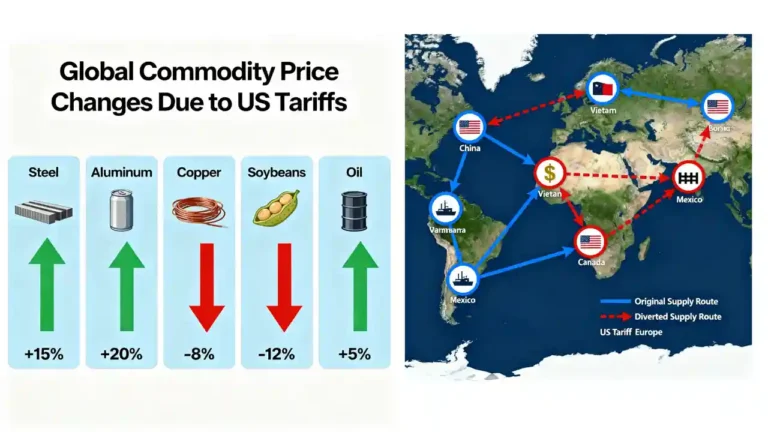
    The metals sector has experienced some of the most dramatic impacts from US tariffs. Steel and aluminum tariffs, which doubled from 25% to 50% in June 2025, have created substantial market disruptions. The price differential between US and EU markets increased by 77% for steel and 139% for aluminum between February and May 2025. BCG estimates that the doubling of tariffs has added $50 billion in tariff costs for these metals alone.

    Read Also: Stranger Things Season 5: Hawkins’ Last Stand

    These tariffs have triggered significant supply chain adjustments, with more investments in US capacity being formalized, including Emirates Global Aluminum’s plans for a new US facility and joint investments by Hyundai Steel and Posco in Louisiana. However, the increased costs driven by steel tariffs are being passed through to downstream industries, affecting construction, manufacturing, and other sectors that rely heavily on these materials.

    Copper Market Chaos

    The copper market has experienced extraordinary volatility due to tariff uncertainty. Initially, expectations of a 50% US tariffs on copper imports triggered massive speculation, with US copper futures surging 13% in a single day on July 8, 2025, reaching record highs above $12,445 per ton. The premium over London Metal Exchange prices reached a record $2,520 per ton, with potential to expand to $5,000 per ton.

    Read Also: BTS Jungkook Net Worth 2025: The Golden Maknae’s Fortune Revealed

    However, the market experienced a dramatic reversal when Trump exempted refined copper from the 50% US tariffs at the last minute. This unexpected announcement triggered a historic 22% single-day collapse in US copper futures – the largest decline since at least 1988. The once-mighty premium US copper held over global benchmarks evaporated as months of speculative gains were unwound in hours.

    Agricultural Commodities: Export Market Disruption

    Soybeans and Grain Markets

    Agricultural commodities have been severely impacted by the escalating trade war, particularly soybeans. The US-China trade tensions have resulted in 125% tariffs between the two nations, leading to an estimated 11.1% decline in US oilseed prices. China has imposed 10-15% US tariffs on US soybeans, corn, and beef, while seeking alternative suppliers primarily from Brazil and Argentina.

    Read Also: Big Surprise as China’s Human Skull Discovery Could Rewrite Human History

    The impact mirrors the 2018-2019 trade war, when US agricultural exports to China plummeted, with losses exceeding $25 billion. Current projections suggest potential soybean export losses of over 25 million metric tons, with up to 90% of corn exports to China at risk. The World Bank forecasts soybean prices will tumble by 17% in 2025, while corn prices are expected to edge down by 2% in both 2025 and 2026.

    Coffee, Cocoa, and Sugar

    Soft commodities have also experienced significant disruption. The US imposed a 50% tariff on Brazilian coffee, sending robusta coffee futures to three-month highs as US roasters scramble for alternative supplies. Vietnam, facing 46% tariffs, could effectively lose its US coffee market due to the massive price disparities with Brazilian sources.

    Cocoa markets have been similarly affected, with key producing nations facing substantial tariffs: 21% on Ivory Coast and 10% on Ghana. London cocoa futures dropped 1.7% following tariff announcements, while sugar prices have declined amid broader commodity market volatility.

    Energy Markets: Reduced Demand Concerns

    Oil Price Suppression

    Oil markets have experienced downward pressure due to trade war concerns about reduced global economic activity. Brent crude has fallen to four-year lows of around $64-68 per barrel, representing a 12% year-to-date decline that correlates directly with escalating US-China tariffs. The International Energy Agency estimates a 2.4 million barrel-per-day reduction in global oil demand since January 2025, with approximately 60% attributable to reduced Chinese industrial activity.

    Read Also: From Pikachu to Protection: Pokémon Company’s Ultimate Homeland Security Initiatives

    The trade war mechanisms affecting oil prices include reduced manufacturing output, decreased shipping activity (with bilateral trade volumes down an estimated $156 billion annually), and currency effects as the US dollar index strengthened 6.3% in Q1 2025. Historical patterns show each 10% increase in tariff exposure correlates with a 4.7% decline in Brent prices.

    Precious Metals: Safe Haven Dynamics

    Gold and silver markets have shown contrasting responses to tariff announcements. Gold has demonstrated resilience as a safe-haven asset, experiencing a V-shaped recovery and reaching lifetime highs following tariff announcements. Single-day price swings exceeding $100 have become common, with increased hedging activity to manage unpredictable movements.

    These trends highlight how have US tariffs affected commodity prices around the world, as precious metals continue to respond sharply to shifting trade policies and investor sentiment.

    How have US tariffs affected commodity prices around the world is clearly visible in these trends, as silver has shown higher volatility, with prices jumping to $35 per ounce before falling to $28 per ounce due to US-China tariff developments. The precious metals markets have also experienced reduced arbitrage opportunities between major trading hubs and widened bid-ask spreads as market makers adjust for increased risk.

    Read Also: Carlos Alcaraz vs Sebastian Baez: Epic Tennis Battle That Shook the Court

    Consumer Price Impact

    The tariff impacts extend directly to consumer prices across various sectors. The 2025 tariffs are expected to result in a 2.3% price level increase in the short run, equivalent to an average $3,800 consumer loss per household. Specific impacts include:

    • Clothing and textiles: 39% higher shoe prices, 37% higher apparel prices
    • Food prices: 3.2% increase in the short run, with fresh produce 7% more expensive
    • Motor vehicles: 12.4% increase in the short run, equivalent to an additional $6,000 for an average new car

    Global Trade Flow Restructuring

    The tariffs have fundamentally altered global trade patterns, forcing companies to reevaluate supply chains and seek alternative sourcing strategies. Countries like Brazil have capitalized on opportunities to increase agricultural exports to China, while other nations have formed strategic alliances to strengthen their positions in global commodity markets.

    Read Also: Flipkart Big Billion Days 2025 Smartphone Sale: Best Mobile Offers, Discounts & Buying Guide

    The restructuring has created both winners and losers: while some countries benefit from trade diversion effects, the overall impact has been to increase costs, reduce efficiency, and create substantial uncertainty in global commodity markets. How have US tariffs affected commodity prices around the world can be seen in this shift, as the effects are likely to persist even if tensions ease, with structural changes in supply chains and sourcing strategies shaping a new normal for global trade relationships.

    The comprehensive impact of US tariffs on global commodity prices demonstrates the interconnected nature of modern trade systems and the far-reaching consequences of protectionist policies. While some domestic industries may benefit from reduced competition, the broader effect has been increased volatility, higher consumer costs, and significant disruption to established global supply chains across virtually all commodity sectors.

    James Comey Indictment 2025: A Turning Point in Trump’s Political Campaign

    0

    The James Comey indictment has become one of the most significant legal events of 2025, marking a sharp escalation in President Donald Trump’s campaign against political opponents. This article delves into the details surrounding the James indictment, the reactions it has sparked, and its larger implications for the U.S. justice system this year.

    What Led to the James Comey Indictment?

    The James Comey indictment centers on allegations that the former FBI Director made false statements and obstructed a congressional proceeding. These charges come from Comey’s 2020 testimony before the Senate Judiciary Committee regarding a leak of classified information linked to investigations into the 2016 election.

    Read Also: Stranger Things Season 5: Hawkins’ Last Stand

    As the statute of limitations was nearing expiration, the indictment was swiftly brought by Lindsey Halligan, a U.S. Attorney appointed by Trump, despite internal Justice Department resistance.

    Trump’s Campaign and the James Comey Indictment

    The James Comey indictment exemplifies how President Trump has actively pursued legal actions against his critics. Trump publicly pressured the Justice Department to prosecute key figures, including Comey, Senator Adam Schiff, and New York Attorney General Letitia James.

    Read Also: Big Surprise as China’s Human Skull Discovery Could Rewrite Human History

    Trump celebrated the James Comey indictment, branding Comey a “dirty cop” and framing the case as long-overdue justice, reinforcing his ongoing strategy of leveraging federal power to target political adversaries.

    Legal and Political Reactions to the James Comey Indictment

    The Comey indictment has drawn varied reactions. Comey maintains his innocence, calling the charges politically motivated and pledging to fight them in court. Legal experts highlight significant hurdles for the case due to questions over evidence and political interference. The indictment process itself has faced scrutiny, including confusion during court proceedings and concerns about Justice Department independence.

    Broader Implications of the Comey Indictment

    Beyond the immediate legal battle, the Comey indictment signals a broader shift in U.S. political and legal norms under President Trump’s administration. It raises profound questions about the politicization of the justice system and the future of the rule of law in America. The implications of the Comey indictment extend far beyond its charges, challenging foundational principles of accountability and fairness in governance.

    Read Also: BTS V New Luxury 5BHK Home in Seoul: Inside the K-Pop Star’s ₹90 Crore Penthouse

    Additional Information on the James Comey Indictment

    Detailed Timeline of Events

    • May 3, 2020: James Comey testifies before the Senate Judiciary Committee, addressing allegations that he leaked classified memos to the press.
    • September 24, 2025: Attorney General Pam Bondi and DOJ leadership announce an investigation into Comey’s testimony, referring the matter to U.S. Attorney Lindsey Halligan for potential prosecution.
    • September 25, 2025: A federal grand jury in the Eastern District of Virginia returns a two-count indictment against Comey for making false statements under 18 U.S.C. § 1001 and obstruction of a congressional proceeding under 18 U.S.C. § 1512(c)(2).
    • September 26, 2025: Comey’s legal team files motions seeking dismissal, citing lack of evidence and political bias within the prosecution.
    • September 27, 2025: The first court hearing takes place. A district judge expresses confusion over procedural filings and sets deadlines for briefs on both sides.

    FAQs About James Comey Indictment

    What is the James Comey indictment about?

    The Comey indictment charges the former FBI Director with making false statements and obstructing a congressional proceeding related to his 2020 testimony about leaking classified information during the 2016 election investigations.

    Who brought the James Comey indictment?

    The indictment was brought by Lindsey Halligan, a U.S. Attorney appointed by President Donald Trump, after internal Justice Department prosecutors reportedly resisted pursuing the case.

    How has President Trump reacted to the James Comey indictment?

    President Trump publicly praised the Comey indictment, calling Comey a “dirty cop” and viewing the charges as overdue justice in his broader campaign to target political opponents.

    Shocking! US Slaps 100% Tariffs on Medicines: Consequences for Patients and Industry

    0

    100% Tariffs on Medicines: What It Means for Patients and the Pharmaceutical Industry

    In a bold and controversial move, former U.S. President Donald Trump announced a 100% tariff on imported branded and patented pharmaceutical products, effective October 1, 2025. This unprecedented step is aimed at boosting domestic drug manufacturing, ensuring that more critical medicines are produced within U.S. borders. However, while the goal may appear strategic from a national manufacturing perspective, the policy has triggered significant concern among patients, healthcare providers, and the global pharmaceutical sector.

    The implications of this tariff are far-reaching. From skyrocketing drug prices to potential shortages, and from financial pressures on multinational pharmaceutical companies to diplomatic tensions across countries, the announcement has set the stage for a complex and evolving scenario.

    This article breaks down the policy, its potential impact on patients and the pharmaceutical industry, global reactions, and what stakeholders can expect in the coming months.


    Understanding the 100% Tariff on Medicines

    The 100% tariff means that any branded or patented medicine imported into the U.S. will face a doubling of costs unless the producing company is actively developing or has an established manufacturing facility within the United States.

    The policy mainly targets countries that export a significant volume of pharmaceuticals to the U.S., such as India, China, and various European nations. These countries supply both active pharmaceutical ingredients (APIs) and finished products, and their role in global supply chains has been critical to maintaining the availability of affordable medicines in the U.S.

    The stated intent of this policy is to encourage pharmaceutical companies to shift production domestically, reducing reliance on foreign suppliers and enhancing national security in the healthcare sector. While this rationale holds strategic merit, the immediate impact on patients and industry dynamics is expected to be profound.


    Impact of 100% Tariffs on Medicines on the Patients

    Increased Drug Prices

    The most immediate and tangible impact for U.S. consumers will be higher medication costs. Consider a commonly prescribed drug that costs $100 for a patient. With the 100% tariff, that price could effectively double to $200 at the point of entry.

    For patients who rely on multiple prescription medications, particularly those managing chronic conditions such as diabetes, hypertension, or autoimmune disorders, this increase could create financial strain. Many patients might have to make difficult choices between medications, healthcare, and other essential expenses.

    Insurance coverage may mitigate some costs, but out-of-pocket expenses are likely to rise, especially for those with high-deductible plans or limited insurance.

    Potential Shortages

    Another major concern is disruption in supply chains. Many critical medications rely on ingredients or finished products manufactured overseas. The tariff could delay imports as companies navigate compliance with new requirements or shift production to U.S.-based facilities.

    Shortages could affect not only everyday medications but also specialty drugs, oncology treatments, and vaccines. Hospitals and pharmacies may experience inventory constraints, forcing them to ration supplies or seek alternative therapies.

    Access to Medications

    Patients with chronic illnesses, rare conditions, or life-threatening diseases could find access to essential medicines limited. The increased costs and potential supply shortages might disproportionately affect low-income and vulnerable populations, exacerbating healthcare inequalities.

    Healthcare providers will need to prepare for patient counseling, alternative medication strategies, and potential advocacy for policy adjustments.


    Impact of 100% Tariffs on Medicines on the Pharmaceutical Industry

    Supply Chain Disruptions

    Pharmaceutical companies that rely on international suppliers for active pharmaceutical ingredients (APIs) and finished products may face delays and increased costs. The tariff changes the economics of importing medications, which may result in production slowdowns or reevaluation of international contracts.

    Companies will also have to invest in domestic infrastructure, which is a time-intensive and expensive process. While this could benefit the U.S. economy in the long term, the short-term operational challenges are significant.

    Pressure on Profit Margins about 100% Tariffs on Medicines

    Companies with limited U.S. manufacturing capabilities may see profit margins shrink due to higher import costs. Firms that previously relied heavily on overseas production could experience financial stress, potentially impacting stock prices and investment plans.

    This financial strain could also affect research and development (R&D) budgets, as companies redirect funds to establish domestic manufacturing and comply with new regulations.

    Shift in Manufacturing Strategies on 100% Tariffs on Medicines

    To mitigate tariff impacts, many pharmaceutical companies may accelerate plans to build or expand U.S.-based production facilities. This could include establishing state-of-the-art plants for drug formulation, packaging, and distribution.

    While this aligns with the policy’s objectives, it also introduces capital expenditure challenges and requires careful planning to avoid disruption in ongoing production.

    More from Blogs: Stranger Things Season 5


    Global Reactions on 100% Tariffs on Medicines by US

    The 100% tariff has drawn strong reactions from international stakeholders, highlighting the policy’s geopolitical and economic implications.

    India

    India is a leading exporter of generic drugs to the U.S., supplying approximately 40% of generic medications. The tariff threatens to make Indian pharmaceuticals less competitive, potentially reducing export volumes.

    Industry associations in India have raised concerns that the tariff could impact affordable drug access for American patients, as Indian generics have historically provided cost-effective alternatives to expensive branded medications.

    Australia

    Australia’s Health Minister criticized the policy as unfair, emphasizing that it could disrupt trade relations. Companies like CSL, however, indicated that the impact would be minimal due to substantial domestic production.

    China

    China has not issued an official response, but the tariff could affect its pharmaceutical exports, particularly raw materials and APIs. Prolonged trade restrictions may also strain U.S.-China economic relations in the healthcare sector.

    European Union

    European pharmaceutical companies, which currently face a 15% tariff, may feel less immediate impact. However, the uncertainty surrounding new tariffs could lead to shifts in investment strategies and re-evaluation of supply chains for U.S. exports.

    Global Market Impact

    Stock markets have responded with volatility in sectors directly tied to pharmaceuticals. Asian and European companies with significant U.S. exposure are adjusting forecasts and seeking alternative markets or production strategies to mitigate risks.


    Preparing for the Impact on 100% Tariffs on Medicines by US

    Healthcare providers, pharmacies, and patients should anticipate changes and plan accordingly:

    1. Providers may need to counsel patients about potential cost increases and alternative treatments.
    2. Pharmacies should monitor inventories and prepare contingency plans for shortages.
    3. Patients should review medication needs, consider early refills, and discuss cost-effective options with their doctors.
    4. Pharmaceutical companies must weigh the benefits of domestic production against the costs and timeline challenges.

    The ripple effect will extend beyond U.S. borders, influencing global trade dynamics, pricing strategies, and international healthcare access.


    Key Takeaways – 100% Tariffs on Medicines by US

    The 100% tariff on imported medicines is a historic shift in U.S. pharmaceutical policy. While it aims to strengthen domestic manufacturing and reduce dependence on foreign suppliers, it carries profound implications for patients, healthcare providers, and the global pharmaceutical industry.

    The policy is likely to result in higher drug prices, potential shortages, and strategic shifts in production and supply chain operations. International stakeholders, including India, China, Australia, and European nations, are closely monitoring developments, as the tariff could reshape global pharmaceutical trade.

    For patients, the changes emphasize the importance of awareness and proactive healthcare planning. For companies, the focus will be on investing in domestic infrastructure and adapting global strategies to maintain market competitiveness.

    Ultimately, the success or disruption caused by this policy will depend on how quickly and effectively stakeholders adapt to the new pharmaceutical landscape.


    FAQs – 100% Tariffs on Medicines by US

    What is the 100% tariff on medicines?
    It is a U.S. policy imposing a 100% duty on imported branded and patented pharmaceutical products unless the manufacturer establishes production in the U.S.

    When does the 100% Tariffs on Medicines will take effect?
    The tariff is effective October 1, 2025.

    Which medications are affected?
    Branded and patented drugs imported into the U.S., including both prescription and specialty medications, are subject to the tariff.

    How will this 100% Tariffs on Medicines affect drug prices?
    Affected drugs may see their import cost double, leading to higher prices for consumers.

    Will there be drug shortages?
    Yes, supply chain disruptions could lead to shortages, particularly for generic and specialty medications.

    How are global companies reacting to this 100% Tariffs on Medicines news by US?
    Companies are reviewing supply chains, accelerating U.S. manufacturing plans, and adjusting investment strategies to mitigate risks.

    Stranger Things Season 5: Hawkins’ Last Stand

    0

    The wait is almost here! Stranger Things Season 5, the last season of the popular Netflix series, will be hitting Indian screens on November 26, 2025. The fans are set for a rollercoaster of emotions and suspense as Hawkins battles its most terrifying threat so far.

    Hawkins in Jeopardy

    The latest trailer is Hawkins in turmoil. The Upside Down is expanding more than ever, and our beloved characters—Eleven, Mike, Max, Lucas, and the rest—have to join hands to defeat the dark forces. There are villains such as Vecna to oppose us, and it looks more perilous than ever.

    Everyone Plays a Part

    This season is action-packed, and each character has a crucial role to play. Millie Bobby Brown, the actress who plays Eleven, describes it’s “more of a mission, more of an adventure.” The stars, including Finn Wolfhard, Winona Ryder, and David Harbour, give fans a promise of a fulfilling and emotional conclusion after more than a decade of the show.

    Behind the Scenes

    A new behind-the-scenes video gives fans a peek at how intense the Stranger Things Season 5 is. The creators, the Duffer Brothers, call this the “biggest season we’ve ever had.” There’s plenty of action, suspense, and even surprises from old villains and new threats.

    When to Watch Stranger Things Season 5

    The season will release in three parts:

    • Volume 1: November 26, 2025 (4 episodes)
    • Volume 2: December 25, 2025 (3 episodes)
    • Volume 3 (Finale): December 31, 2025

    A Heartfelt Goodbye

    Stranger Things Season 5 guarantees a blend of action-packed adventures and tear-jerking moments. The fans will finally witness the end of the story and get the closure the characters have been loved since 2016.

    Prepare for the ultimate showdown as Hawkins confronts the final challenge from the Upside Down. It’s going to be one last adventure you cannot afford to miss!

    Read Also: Flipkart Big Billion Days 2025 Smartphone Sale
    Read Also: Big Surprise as China’s Human Skull Discovery Could Rewrite Human History

    Main Cast of Stranger Things Season 5

    Stranger Things Season 5 features a beloved ensemble of returning stars alongside some exciting new faces, all coming together for the epic and emotional conclusion in Hawkins:

    1. Winona Ryder as Joyce Byers
    2. David Harbour as Jim Hopper
    3. Millie Bobby Brown as Eleven / Jane Hopper
    4. Finn Wolfhard as Mike Wheeler
    5. Gaten Matarazzo as Dustin Henderson
    6. Caleb McLaughlin as Lucas Sinclair
    7. Noah Schnapp as Will Byers
    8. Sadie Sink as Max Mayfield
    9. Natalia Dyer as Nancy Wheeler
    10. Charlie Heaton as Jonathan Byers
    11. Joe Keery as Steve Harrington
    12. Maya Hawke as Robin Buckley
    13. Priah Ferguson as Erica Sinclair
    14. Brett Gelman as Murray Bauman
    15. Cara Buono as Karen Wheeler
    16. Jamie Campbell Bower as Vecna / Henry Creel / One
    17. Amybeth McNulty as Vickie
    18. Linda Hamilton as Dr. Kay

    Additional supporting roles include Nell Fisher (Holly Wheeler), Jake Connelly (Derek Turnbow), Alex Breaux (Lt. Akers), and others, enriching the final season’s expansive cast as Hawkins confronts its darkest hour yet.

    This stunning ensemble promises to deliver a powerful, heartfelt farewell after over a decade of storytelling that has captivated fans worldwide.

    Big Surprise as China’s Human Skull Discovery Could Rewrite Human History

    0

    Human Skull Discovery in China: Could It Rewrite Human History?

    Archaeology often brings surprises, but sometimes a finding truly challenges what we thought we knew. The recent human skull discovery in China is one of those moments. Unearthed at a site already rich in clues about early human life, this skull raises more questions than answers. Could it belong to a previously unknown lineage? Might it connect modern humans to ancient relatives? Or could it reshape our understanding of human history altogether?

    This guide takes you through everything we know so far: the site of the find, why it matters, what experts are saying, and how it could change anthropology.


    The Site of the Human Skull Discovery

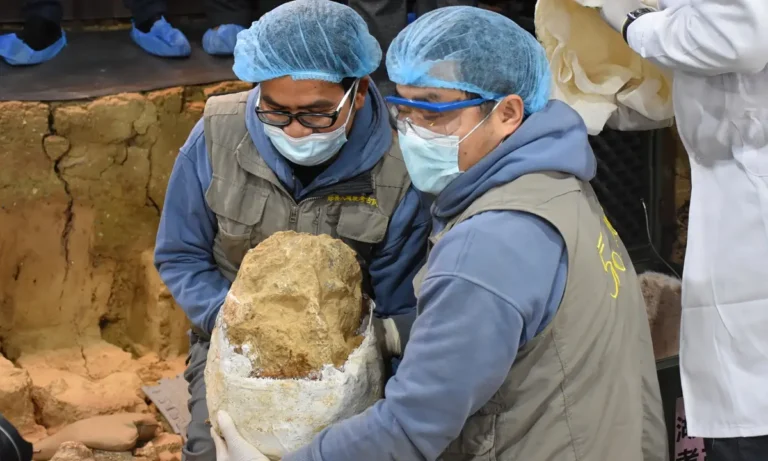
    The skull was uncovered in Henan Province, China—a region with a deep archaeological record. From prehistoric tools to fossils mapping human migration, Henan has consistently offered windows into early human life.

    What sets this discovery apart is the skull’s condition and its puzzling features. Early reports show a fascinating mix: some traits look modern, others far more ancient. This combination is what has sparked debates across the scientific world.


    Why This Skull Is Different

    Most fossil finds can be placed within a known category: Neanderthal, Homo erectus, or modern human. This skull doesn’t fit neatly into any of those.

    • Ancient traits: pronounced brow ridges, thick bone structure.
    • Modern traits: a rounded braincase similar to Homo sapiens.

    The blend suggests it may be either a transitional species or an entirely new branch of humanity. That possibility makes this discovery groundbreaking.


    Could It Belong to the Denisovans?

    One compelling theory is that the skull could belong to the Denisovans, a mysterious human group known mostly from DNA and a handful of fossils in Siberia’s Denisova Cave. Scientists have long suspected Denisovans roamed widely across Asia, but solid fossil evidence has been scarce.

    If DNA testing links this skull to Denisovans, it would mark the most significant proof yet of their presence in China.

    More from Blogs: Carlos Alcaraz vs Sebastian Baez


    Or Is It a Brand-New Species?

    Other researchers suggest it may represent a completely unknown human species—something that lived alongside Homo sapiens, Neanderthals, and Denisovans.

    We’ve already seen surprises before:

    • Homo floresiensis (“hobbits”) in Indonesia.
    • Homo naledi in South Africa.

    Finding another distinct species in China would confirm human evolution as a complex web, not a straight line.


    Dating the Human Skull Discovery

    Preliminary tests suggest the skull may be 200,000–300,000 years old, a critical window when multiple human species coexisted and even interbred. If this estimate holds, it could provide context on whether this fossil represents a transitional group, a regional variation, or something entirely new.


    Why Asia Is Central to Human Evolution

    For decades, Africa has been viewed as the sole “cradle of humanity.” But more recent evidence, including this skull, shows Asia may have played a much bigger role than previously assumed.

    Rather than a one-way migration, Asia may have acted as a crossroads where different human lineages met, mixed, and evolved. This discovery strengthens that theory.


    The Global Impact

    The scientific community is buzzing. Anthropologists, archaeologists, and geneticists all want to study the skull’s unique features. International museums and universities are already requesting scans and models.

    The excitement goes beyond academia. People worldwide are fascinated by the idea that humanity’s story is still unfolding. Could our DNA carry echoes of yet another lost lineage?


    How Human Skull Discoveries Rewrite History

    Every fossil discovery forces a revision of the human family tree. Consider these impacts from this skull:

    • It could shift evolutionary timelines.
    • It may reveal new migration routes.
    • It could confirm yet another lineage contributing to modern human DNA.

    For example, most non-African humans carry Neanderthal DNA, while many in Asia and Oceania have traces of Denisovan DNA. If this skull reveals a new species, it suggests our ancestry is even more intertwined.


    Predictions: What Happens Next?

    Based on similar finds, here’s what’s likely ahead:

    • Detailed analysis: Scanning and comparing with existing fossils.
    • DNA sequencing: If genetic material survives, it could redefine theories.
    • Published results: Expect major journals like Nature or Science to feature it.
    • Scholarly debates: Some will see it as Denisovan, others as something new.
    • New digs: Excavations at the site may uncover additional remains.

    Where to Follow Updates

    You can track developments in:

    • Chinese Academy of Sciences reports
    • Science and archaeology journals
    • News outlets such as BBC, National Geographic, and ScienceDaily
    • ATP YouTube & museum press briefings (for educational breakdowns and visuals)

    Human Skull Discovery Summary

    The human skull discovery in China is more than another fossil—it’s a key to a hidden chapter of our past. Whether Denisovan, a new species, or a transitional form, it’s a game-changer.

    History isn’t a simple story of one species replacing another. It’s a mosaic, with each discovery adding a new piece. This skull may prove to be one of the most important pieces yet.


    FAQs on the Human Skull Discovery

    Q1: Why is this discovery important?
    It could belong to a new species, Denisovans, or a transitional form, each of which reshapes our understanding of evolution.

    Q2: How old is the skull?
    Early estimates suggest 200,000–300,000 years old, but final results are pending.

    Q3: Could it really be Denisovan?
    Yes. DNA analysis may confirm Denisovan ancestry, proving their range stretched into China.

    Q4: What does this mean for human history?
    It shows evolution wasn’t linear. Multiple species lived, migrated, and interbred, shaping who we are today.

    Q5: Will the skull be displayed in a museum?
    Likely yes. After research, replicas or the fossil itself will probably be exhibited in China.