
More
    Home Blog Page 19

    Zohran Mamdani NY: The Bold Rise of NYC’s Progressive Hope

    0

    Zohran Mamdani NY: Promise vs Reality in the Big Apple

    New York City has always been a political melting pot — a battleground for ideas, class struggles, and visions of progress. Among the rising voices reshaping this landscape, Zohran Mamdani has emerged as one of the most refreshing leaders of his generation.

    A young lawmaker from Queens, Mamdani has quickly become a symbol of what New York’s next political era could look like — more humane, community-driven, and deeply connected to everyday people. His story, however, isn’t one of privilege, but of purpose.


    Early Life and Family Background

    Zohran Kwame Mamdani was born in Kampala, Uganda, in 1991, to two intellectual powerhouses — political theorist Mahmood Mamdani and filmmaker Mira Nair. His multicultural upbringing exposed him to both political discourse and artistic storytelling.

    When his family moved to New York City during his childhood, Mamdani was introduced to the city’s diversity and contradictions early on. Growing up in Astoria, Queens, he witnessed working-class struggles firsthand while also appreciating the cultural energy that defined his neighborhood.

    After attending public schools, Mamdani graduated from Bowdoin College in Maine with a degree in Africana Studies. It was there that his worldview began to crystallize — shaped by historical study and grassroots engagement.

    He once said in an interview, “My education taught me the theories of injustice. My work in Queens showed me how they feel in real life.”


    From Community Activist to Public Servant

    After college, Mamdani didn’t immediately enter politics. Instead, he immersed himself in the community, working as a housing counselor to help tenants fight evictions. His time in that role revealed the imbalance between renters and landlords in New York’s housing system.

    He began organizing local housing protests, assisting immigrant tenants, and leading campaigns for affordable housing. Those grassroots movements would later evolve into the foundation of his political platform.

    By 2019, Mamdani realized that real change couldn’t rely on advocacy alone — it needed representation. Encouraged by community leaders, he decided to run for public office.


    Timeline of Political Journey

    2019 – Decision to Run:
    Motivated by the need for structural change, Mamdani announced his candidacy for the New York State Assembly, District 36 (Astoria). His campaign was run entirely by volunteers, reflecting his people-first philosophy.

    2020 – Election Victory:
    Defeating a long-time incumbent, Mamdani’s victory was historic. It marked a generational shift, proving that grassroots activism could successfully challenge political establishments.

    2021 – Advocacy on Housing & Transit:
    Mamdani launched campaigns to make housing more affordable and public transit free for working-class commuters. His proposals gained wide media coverage.

    2022 – Strengthening Grassroots Coalitions:
    He began working with other progressive legislators, including Alexandria Ocasio-Cortez, to advance state-level social reforms.

    2023 – Calls for Sustainable Development:
    Mamdani championed new policies promoting green jobs, renewable energy investment, and equitable urban planning.

    2024–2025 – Emerging as a Citywide Leader:
    Now one of the most recognizable progressive figures in New York, Mamdani’s leadership is seen as a blueprint for the next generation of city politics.


    Detailed Policy Breakdown

    Free Public Transit

    Mamdani’s flagship proposal advocates for fare-free MTA service, arguing that public transportation should be a right, not a privilege. He connects this idea to environmental sustainability — fewer cars on the road mean lower emissions and cleaner air.

    Economists estimate that such an initiative could cost $3 billion annually, but Mamdani counters by highlighting the city’s tax surplus from luxury developments and uncollected corporate taxes.

    Housing for All

    Housing remains his top priority. He pushes for social housing models where developments remain permanently affordable, backed by public ownership. Mamdani also supports Good Cause Eviction legislation, which protects renters from arbitrary removals.

    He often notes, “No one should spend their life building this city and still be unable to live in it.”

    Climate and Green Jobs

    Mamdani is among the leading voices calling for a New York Green Deal, advocating investment in renewable energy infrastructure and community solar programs. His proposal ties environmental protection with job creation, ensuring economic inclusion.

    Worker and Gig Economy Rights

    Recognizing the rise of app-based and gig work, Mamdani supports guaranteed minimum pay, access to health care, and collective bargaining rights for delivery and rideshare workers. His policies align with the future of urban labor.

    Tax Fairness and Economic Justice

    He argues for progressive taxation — higher taxes on luxury property and unused real estate to fund public housing and infrastructure. This has made him a polarizing yet respected voice in debates about wealth inequality.

    More from Blogs: Dick Cheney Net Worth: The Shocking Truth Behind His Powerful Fortune and Lifestyle


    The Bright Side of His Political Rise

    Zohran Mamdani’s success symbolizes a turning point in New York politics. His authenticity and grassroots approach resonate deeply with younger voters disillusioned by establishment politics.

    He has become a role model for immigrants and first-generation Americans who see in him proof that civic engagement can truly reshape society.

    Unlike traditional politicians, Mamdani’s rise was not powered by corporate donations or large-party machinery. His campaigns are run by volunteers, funded by small-dollar contributions, and built on community trust.

    His positive energy and belief in civic optimism stand in contrast to the cynicism often seen in politics. This “bright” side of his leadership gives hope to those who believe politics can still be moral and people-centered.


    The Hidden Challenges He Must Overcome

    However, the road ahead is far from smooth. The most pressing challenge for Mamdani is scalability — how to turn bold ideas into viable laws in a city burdened by bureaucracy and entrenched interests.

    Financial feasibility is another concern. His call for free transit and large-scale housing reform requires billions in public funding. Critics argue that his proposals are idealistic. Mamdani, however, insists that the real issue is political will, not affordability.

    He also faces opposition from powerful real-estate lobbies and moderate Democrats who fear his growing influence. Balancing ideological purity with legislative pragmatism will define his next political chapter.


    Media, Public Perception, and Personal Branding

    Zohran Mamdani has mastered the modern art of political communication. His authenticity makes him stand out in a crowded political field dominated by soundbites.

    Media outlets portray him as both a disruptor and a reformer — a politician who isn’t afraid to question norms. His calm tone, backed by articulate reasoning, has helped him connect across generations.

    On social media, Mamdani blends humor, sincerity, and education. His online presence — often filled with campaign photos, policy explainers, and local stories — adds depth to his public image.


    Could Zohran Mamdani Be the Future Mayor of New York?

    Although Zohran Mamdani has never officially announced mayoral ambitions, speculation continues to grow. His ability to connect with both grassroots organizers and middle-class voters makes him a potential future candidate.

    Political observers note that if he continues to expand his legislative success, builds statewide alliances, and moderates certain fiscal proposals, he could be a viable contender for Mayor of New York City within the next decade.

    A Mamdani mayoral campaign, if it ever happens, would likely focus on rebuilding the city around equality, affordability, and sustainability — a “New New York” for everyone.


    Conclusion

    Zohran Mamdani NY represents the intersection of idealism and action. From his early activism in Queens to his seat in the Assembly, his journey shows how grassroots politics can evolve into meaningful power.

    His bright vision of a just, sustainable, and inclusive city stands as a model for what progressive leadership can look like in the 21st century. Yet, the challenges ahead — entrenched interests, funding gaps, and media resistance — will test the endurance of his convictions.

    Still, for millions of New Yorkers who crave authenticity and justice in their leaders, Zohran Mamdani represents something rare in modern politics — hope that feels real.


    Frequently Asked Questions

    1. Who is Zohran Mamdani?
    Zohran Mamdani is a New York State Assembly member from Queens known for advocating affordable housing, public transit reform, and environmental justice.

    2. Where was Zohran Mamdani born and raised?
    He was born in Kampala, Uganda, and raised in Astoria, Queens, after moving to the U.S. with his family during childhood.

    3. What is Zohran Mamdani’s educational background?
    He earned a degree in Africana Studies from Bowdoin College in Maine, where he focused on issues of race, justice, and political activism.

    4. What are Zohran Mamdani’s main policy goals?
    His key priorities include free public transit, affordable housing, green jobs, fair taxation, and worker protections.

    5. What challenges does he face politically?
    Mamdani faces resistance from establishment politicians, real-estate lobbies, and critics who question the financial feasibility of his proposals.

    6. How is Zohran Mamdani viewed by the public?
    He’s admired for his authenticity and progressive ideals, especially among young voters and immigrant communities in New York.

    7. Is Zohran Mamdani running for Mayor of New York City?
    He has not announced any mayoral campaign, but political analysts see him as a likely future candidate given his growing influence.

    8. What impact has he made on New York politics?
    Mamdani has reshaped how local politics connects with community activism, inspiring a new wave of civic engagement and trust in public service.

    Black Friday Upcoming Sale: Bright Future and Hidden Pitfalls

    0

    Black Friday Upcoming Sale

    Black Friday has become much more than a shopping event — it’s now a global festival of discounts, digital chaos, and endless excitement. As November 2025 approaches, millions of shoppers across the world are preparing to dive into this year’s Black Friday Upcoming Sale, while brands gear up for what promises to be another record-breaking season.

    Yet, behind all the glamour, deals, and midnight rushes, there are hidden traps — inflated prices, fake deals, and impulse-driven spending habits. In this post, we’ll explore both sides: the bright opportunities and the potential pitfalls of the 2025 Black Friday sale.

    Let’s also look at confirmed sale start dates for major global retailers, expert insights, and smart shopping strategies to help you make the most of this massive retail event.


    The Global Phenomenon of Black Friday 2025

    Black Friday began in the United States decades ago as a post-Thanksgiving shopping day. Today, it’s a worldwide sales extravaganza embraced by millions. The 2025 edition is expected to surpass $140 billion in global online sales, driven by AI-powered recommendations, smart pricing systems, and next-day delivery commitments.

    The biggest difference in 2025? Personalization. Retailers are now using artificial intelligence to tailor offers, meaning your shopping experience is unique to your habits and browsing patterns. Instead of random deals, you’ll see the exact items you’ve been eyeing all year — often at record-low prices.

    However, this precision marketing also makes impulse buying harder to resist. That’s one of the hidden pitfalls — the sale knows you better than you know yourself.

    More from Blogs: Thanksgiving 2025: What’s New, What’s Changing, and What Matters


    Major Global Black Friday 2025 Sale Dates

    To help you plan your shopping calendar, here are the expected and confirmed Black Friday sale dates for leading global e-commerce platforms:

    • Amazon Black Friday Sale 2025: November 22 – November 30, 2025 (Prime members get early access on November 20)
    • Walmart Black Friday 2025: Online deals start November 21, in-store sales from November 29
    • Best Buy Black Friday Sale 2025: Official sale from November 25 – November 30; early deals live from November 18
    • Target Black Friday Sale 2025: Online offers from November 23, in-store deals from November 29
    • Flipkart Black Friday Sale 2025 (India): November 22 – November 27, with “Early Price Drop” campaign starting November 20
    • eBay Global Deals Week 2025: November 21 – November 29, featuring refurbished tech and collectibles
    • AliExpress Black Friday Festival 2025: November 23 – November 30, with discounts up to 70% on electronics and fashion
    • Apple Official Store Offers: November 28 – December 2, 2025, offering gift cards on major purchases

    These dates indicate how the traditional single-day Black Friday has now evolved into an entire shopping week — and in some cases, a two-week event.


    The Bright Future: Opportunities for Smart Shoppers

    The “bright” side of the Black Friday Upcoming Sale lies in accessibility, innovation, and smarter technology. Shoppers are no longer restricted by location or time — everything from electronics to luxury goods is available at your fingertips.

    Artificial intelligence is now the silent hero of this sale. From personalized deals to smart recommendations, it ensures that no two shoppers see the same discounts. Data analytics has made this possible, allowing brands to predict what consumers want even before they add it to their carts.

    Retailers are also focusing on sustainability this year. The “Green Friday” movement is gaining momentum, where brands promote eco-friendly purchases and reduce packaging waste. Companies like Patagonia, IKEA, and H&M are leading the way by offering repair programs and recycled product lines.

    In short, the future of Black Friday is digital, intelligent, and more responsible.


    The Hidden Pitfalls: When Deals Turn Dangerous

    But beneath the glitter of massive discounts lies a darker reality. One of the biggest pitfalls is price manipulation — some sellers mark up products before the sale only to “discount” them back to regular prices.

    Cybersecurity threats are another major concern. Fraudulent websites, fake coupons, and phishing scams flood inboxes during this period. Always double-check URLs and avoid sharing payment details outside official apps or websites.

    Overconsumption is also a growing issue. While deals tempt you to buy more, the result is often regret and financial strain. Experts recommend setting a budget before browsing any Black Friday sale page.


    How Major Retailers Are Preparing for 2025

    Retail giants like Amazon and Walmart are integrating predictive AI engines that analyze browsing history, wishlist data, and previous purchases to offer hyper-personalized deals. Amazon, for instance, has reportedly introduced a new “Dynamic Discount Model” that adjusts pricing in real time based on inventory and customer engagement.

    Meanwhile, Flipkart in India and AliExpress globally are focusing on mobile-first shopping. With over 75% of transactions happening through smartphones, optimizing mobile apps has become the top priority.

    Retailers are also tightening return policies to prevent misuse. Some platforms now limit “serial returners,” offering store credits instead of cash refunds.


    Trends Defining Black Friday 2025

    Here are the major trends that will dominate this year’s shopping season:

    1. AI-Personalized Shopping: Retailers predict what you’ll want — and offer it at just the right moment.
    2. Voice-Activated Purchases: Amazon Alexa and Google Assistant are enabling one-command shopping.
    3. Sustainable Spending: Green Friday campaigns promoting eco-conscious products.
    4. Buy Now, Pay Later (BNPL) Expansion: More consumers using flexible payment options like Affirm, Klarna, and Paytm Postpaid.
    5. Crypto-Friendly Deals: Select global retailers now accepting Bitcoin or Ethereum during limited-time offers.

    These innovations are shaping the future of retail — making the experience more personalized but also more addictive.


    Smart Tips to Shop Black Friday 2025 Like a Pro

    1. Plan early: Make your wishlist before sales go live.
    2. Compare prices: Use tools like Google Shopping, Honey, or CamelCamelCamel.
    3. Use cashback offers: Combine rewards from PayPal, credit cards, or Rakuten for added savings.
    4. Shop from official sites: Avoid phishing traps and social media scam links.
    5. Stick to your budget: Don’t let “limited-time” labels trick you into overspending.

    These small strategies can turn your shopping experience from chaotic to rewarding.


    Real-World Examples: Consumer Wins and Fails

    In 2024, millions of shoppers grabbed iPhone and PlayStation deals at record lows. However, a study by Which? UK found that nearly 45% of those “deals” were cheaper in the months following Black Friday. This shows the importance of patience and price awareness.

    A smart buyer’s rule: “If it feels too good to be true, check the price history.”


    Conclusion: The Future of Black Friday Shopping

    Black Friday Upcoming Sale 2025 is brighter, smarter, and more personalized than ever. But it also demands caution, strategy, and awareness. Shoppers now hold the power — if used wisely, the technology behind modern sales can work in your favor.

    In a nutshell:
    The bright side of Black Friday is its innovation and inclusivity.
    The hidden pitfalls lie in temptation and misinformation.

    The best shoppers are not those who buy the most, but those who buy right.


    FAQs: Black Friday Upcoming Sale

    1. When does the Black Friday Upcoming Sale 2025 start?
    Most major e-commerce websites, including Amazon, Walmart, and Flipkart, will start their Black Friday sales between November 21 and November 22, 2025. Some platforms, like Amazon Prime and Best Buy Plus, offer early access starting November 18.

    2. Which online stores are offering the biggest discounts this year?
    Amazon, Flipkart, Target, Best Buy, and AliExpress are offering the largest range of discounts in 2025. Electronics, fashion, and home appliances are expected to see price drops of up to 70%.

    3. Are Black Friday discounts real or inflated?
    Most top retailers provide genuine discounts, but some smaller sellers may inflate prices before applying “fake” reductions. It’s best to track prices in advance using tools like Honey or Google Shopping.

    4. How can I avoid scams during Black Friday sales?
    Always shop from official apps or verified websites. Avoid clicking on discount links sent through social media or unknown emails. Use secure payment gateways like PayPal or Apple Pay for extra protection.

    5. What are the best products to buy during Black Friday 2025?
    Electronics, smartphones, laptops, gaming consoles, and smart home devices usually offer the best value. You can also find great deals on fashion, home decor, and subscription plans.

    6. Will there be eco-friendly or sustainable shopping options?
    Yes. Many brands are promoting “Green Friday” in 2025, focusing on sustainable purchases, recycled materials, and eco-conscious packaging.

    7. Can I use cryptocurrency to shop during Black Friday?
    Some global retailers like Newegg and Overstock have started accepting cryptocurrencies, including Bitcoin and Ethereum, for limited-time Black Friday promotions.

    8. What’s the best way to prepare for the Black Friday sale?
    Create a wish list in advance, set spending limits, and sign up for store newsletters. This ensures you get early access notifications and genuine price alerts before deals run out.

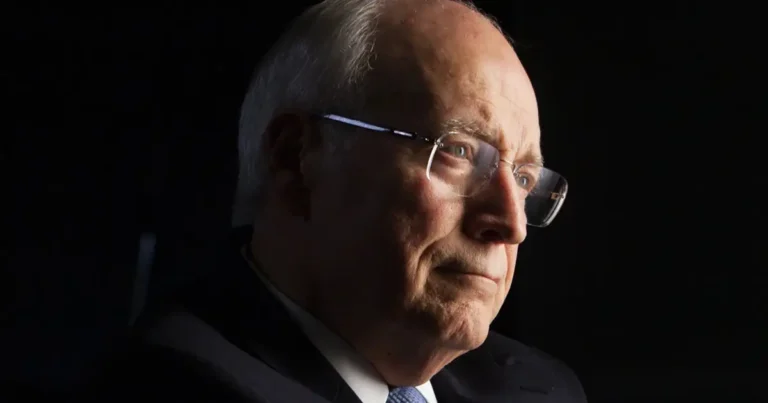
    Dick Cheney Net Worth: The Shocking Truth Behind His Powerful Fortune and Lifestyle

    0

    Dick Cheney Net Worth – Impressive Yet Controversial

    When one of the most influential political figures of the late 20th and early 21st century passes away, it prompts both reflection and scrutiny. Dick Cheney, who served as the 46th Vice President of the United States has left behind not only a complex political legacy but also a considerable personal fortune. In this deep-dive, we will explore the details of Dick Cheney’s wealth, how he built it, what his lifestyle revealed, his influence in US and global affairs, and the facts around his death, all while respecting his service and legacy.


    Dick Cheney Early Life, Career Path and Rise to Power

    Dick Cheney was born January 30, 1941 in Lincoln, Nebraska, and grew up in Casper, Wyoming. He attended the University of Wyoming where he earned both a B.A. and an M.A. in political science.

    His public-service career spanned decades: he served as White House Chief of Staff under President Gerald Ford (1975-77) before being elected to the U.S. House of Representatives from Wyoming (1979-1989). He was appointed Secretary of Defence under President George H. W. Bush (1989-93) and eventually selected as Vice President by George W. Bush, serving from 2001 to 2009.

    During his time in the private sector, Cheney also held significant corporate roles. Notably, he became CEO of Halliburton from 1995 until 2000, a role that considerably boosted his private-sector earnings and laid the foundations for his personal fortune.


    The Political Influence and Legacy of Dick Cheney

    Before we examine his financial standing, it’s essential to grasp how Dick Cheney’s positions allowed him to amass influence—with global implications.

    Vice Presidency and Global Affairs

    As Vice President (2001-2009), Dick Cheney was widely regarded as one of the most powerful persons to hold the office. He became a central figure during the aftermath of the September 11, 2001 attacks and helped shape U.S. foreign policy, especially the invasions of Afghanistan (2001) and Iraq (2003). His influence extended into energy policy, defence strategy, and intelligence. That combination of government power and corporate experience gave him unusual access and leverage.

    Business and Private Sector

    Dick Cheney’s corporate tenure at Halliburton provided not only high compensation but connections and board-level exposure. Such roles often translate into wealth accumulation through stock, options, dividends, and investments. CelebrityNetWorth estimates his net worth at around $150 million in recent years. These numbers reflect a combination of public service, corporate earnings and investment returns.

    Transitional Moments

    Further illustrating his influence: Dick Cheney survived several major health crises (including five heart attacks and a heart transplant in 2012). His longevity allowed him to remain active as an elder statesman, author, and advisor. His life reflects the intersections of politics, business, health and public service.


    Dick Cheney Net Worth: Numbers and Sources

    When it comes to assessing his wealth, the main keyword “Dick Cheney net worth” helps us dig deeper into estimates, growth and what his fortune consists of.

    Estimates & Historical Context

    • According to ValueWalk, Dick Cheney’s net worth is estimated at $150 million.
    • MarketRealist similarly cites the same figure, noting he is among the wealthiest former U.S. vice-presidents.
    • Earlier reports placed his net worth at $50 million+ back in the year 2000.
    • Some analyses suggest his net worth may be in the range of $70 to 100 million as of 2025.

    The variation in estimates owes to differences in asset valuations, private holdings, and the transparency of investment portfolios. But all credible sources accept that his fortune is substantial.

    How His Wealth Was Built

    • Corporate Compensation: During his time as CEO of Halliburton, Dick Cheney reportedly earned tens of millions in stock options, retirement benefits and salary.
    • Public Service Homes & Salary: Though government salaries are modest compared to the private sector, long tenure at senior levels offers stability for investing and wealth accumulation.
    • Investments & Real Estate: Like many wealthy individuals, Cheney is believed to have diversified holdings — stocks, real estate, and possibly private equity (though exact details remain private).
    • Books & Speaking Engagements: Post-office, Cheney authored books and likely received speaking fees. These revenue streams contribute to the broader financial picture.

    More from Blogs: Diane Ladd Movies and TV Shows: Brilliant Roles, Tough Losses


    Lifestyle, Assets and Public Persona

    With significant wealth comes decisions about lifestyle, assets and public image. For Cheney, several elements define his personal style and public presence.

    Residence & Private Life

    Cheney maintained residences in Wyoming that reflect his roots and his identity as a Western conservative. The contrast between high-level government offices and a life connected to fly-fishing, ranching and outdoors-style living was part of his persona. His family home in Jackson Hole, Wyoming, was often noted in biographies.

    Health, Resilience and Impact

    Throughout his adult life, Cheney battled serious health issues. Multiple heart attacks, a heart transplant in 2012, and enduring cardiac disease marked his private life. That resilience translated into public respect, and another facet of his lifestyle: awareness of mortality, strong will, and investment in his family.

    Privacy, Influence and Philanthropy

    While Cheney was less known for flashy philanthropy than some peers, his influence in political circles, think-tanks and conservative networks remained strong. Part of his wealth was used to support causes aligned with his ideology, mentorship of younger politicians (including his daughter Liz Cheney), and maintaining a network of power even after leaving office.


    Implications of His Wealth and Power

    Why does the figure of “Dick Cheney net worth” matter beyond mere curiosity?

    Governance and Corporate Overlap

    Cheney’s career reflects how public service and private corporate leadership can align—and sometimes overlap. His transition from Secretary of Defense to CEO of Halliburton and then Vice President raises questions about revolving-door dynamics, influence, and accountability. For readers or citizens, it reminds us to consider how power and wealth intertwine in public life.

    Wealth Inequality and Political Effectiveness

    In a democratic society, the accumulation of significant personal wealth by political figures invites discussion: does wealth enhance influence disproportionately? How do personal fortunes shape policy decisions, access, and legacy? Cheney’s financial standing offers a case study in how political service, corporate leadership and wealth accumulation can be linked.

    Personal Finance & Public Example

    For individuals interested in personal finance, Cheney’s journey offers lessons and caveats:

    • Long-term career in the public and private sectors can yield substantial cumulative earnings.
    • Diversification (corporate, investments, real estate) matters.
    • Public health (given his health struggles) can influence wealth decisions, costs and lifestyle significantly.
    • Legacy and purpose (apart from wealth) remain critical—wealth alone does not define public service, but how it aligns with values.

    Key Controversies and Public Perception

    Cheney’s career and wealth did not exist in a vacuum. They were accompanied by controversies that affect how his fortune is viewed. Responsible commentary includes acknowledgement of these aspects.

    War on Terror and Iraq

    Cheney’s tenure overlapped with the post-9/11 era and the Iraq War. Many critics view his decisions (particularly relating to intelligence, detention and surveillance) as controversial. These policy legacies impact how his wealth and power are scrutinised.

    Hunting Accident

    An infamous episode: on February 11 2006, Cheney accidentally shot a hunting companion, lawyer Harry Whittington, during a quail hunt in Texas. The incident spotlighted public scrutiny and ethics of power.

    Corporate Earnings Scrutiny

    The fact that Cheney moved into a high-earning CEO role after decades of public service raised questions about the interplay between policy and profit. Commentators have debated whether his value to the private sector stemmed largely from public office experience.


    His Death and Legacy

    On November 3, 2025, Dick Cheney passed away at age 84. Causes cited included complications from pneumonia and heart- and vascular-disease. His family released a statement noting his lifelong service and his role as a “noble giant of a man”.

    His passing invites reflection on several fronts: the impact of his policies, his role in modern American history, his private-sector earnings and how he balanced personal life, health battles and public service.


    Lessons From His Fortune: What We Can Learn

    Whether you’re a young professional, entrepreneur, public-service aspirant or investor, Cheney’s life offers lessons:

    1. Career Diversity Matters – Combining public and private roles can build influence and wealth, but also comes with ethical weight.
    2. Health Is Wealth – Long-term health issues highlight how personal well-being intersects with finances and choices.
    3. Service + Strategy – Wealth accumulation is rarely accidental; strategic role-choice, timing, investments and network matter.
    4. Legacy Beyond Money – While net worth is impressive, a lasting legacy rests on decisions, influence and purpose.
    5. Transparency and Accountability – For public figures with significant wealth, clarity around sources, progression and motives invites public trust.

    Conclusion: The Shocking Truth Behind the Fortune

    Exploring Dick Cheney net worth is more than a curiosity about dollars. It reveals a narrative of power, policy, service, strategy and influence. With an estimated fortune around $150 million, built through a blend of public service and corporate leadership, Cheney’s financial legacy is impressive. Yet it is also controversial — reflecting the complexities of modern American governance and business.

    His lifestyle, health struggles, family roots and enduring influence remind us that wealth does not define a person alone — choices, service and the shape of one’s impact matter deeply. As his life closed at age 84, the question remains: how will history weigh the contributions, the decisions, and the fortune of a man who stood at the nexus of power?


    FAQs – Dick Cheney Net Worth

    Q1: What is Dick Cheney’s net worth?
    A1: Estimates place Cheney’s net worth around US $150 million according to sources like CelebrityNetWorth and ValueWalk. Some other sources cite a range of $70 to 100 million.

    Q2: How did he build his fortune?
    A2: Cheney’s wealth came from: (1) a long political career (Congress, Defense, Vice Presidency), (2) high-pay corporate roles (notably Halliburton CEO), (3) investment returns, and (4) book, speaking and advisory roles after office.

    Q3: Did he inherit significant assets?
    A3: Most analysis suggests his wealth is self-built via his career and investments rather than large inheritances.

    Q4: Was his wealth controversial?
    A4: Some scrutiny arose due to timing of his corporate role after public office and the policy-industry overlap. However, Cheney operated within legal frameworks and disclosures.

    Q5: Did his health affect his finances or lifestyle?
    A5: Yes. Cheney suffered multiple heart attacks, underwent a heart transplant in 2012, and his health influenced his retirement decisions, lifetime cost considerations and public image.

    Q6: What lifestyle did he live with that net worth?
    A6: While not ostentatious, Cheney lived comfortably with residences in Wyoming, enjoyed outdoor recreation like fly-fishing, maintained private family life, and supported conservative causes. His lifestyle reflects a blend of privilege, service and modest outdoors roots.

    Q7: Is his net worth relevant to his legacy?
    A7: Yes, because in modern governance the intersection of wealth, influence and policy is critical. Cheney’s career illustrates how wealth and power can coexist—and raises questions about balancing them for public benefit.


    If you found this analysis meaningful, please share it with others. Comment below: What part of Cheney’s story resonates most with you — the political power, the wealth accumulation, the health battles, or his legacy of service? Your reflections help keep the conversation alive.

    Cord Blood Banking Cost: Hidden Risks, Real Value, and Smart Choices

    0

    Introduction: Cord Blood Banking Cost

    The decision to bank your baby’s cord blood often comes at a deeply emotional moment — right around childbirth. Parents want to do everything possible to secure their child’s future, and cord blood banking promises that possibility. But with promises come questions, and the biggest one is: what does cord blood banking actually cost?

    Cord blood banking can sound like a medical miracle, but the truth is that costs vary widely depending on where you live, the type of bank you choose, and the storage options offered. This guide breaks down every detail of cord blood banking cost — from collection fees to long-term storage charges — so you can make an informed decision.


    What Is Cord Blood Banking?

    Cord blood banking is the process of collecting and storing a newborn’s umbilical cord blood, which contains stem cells that can be used to treat certain diseases and genetic disorders. These stem cells can develop into different types of blood and immune system cells, making them valuable for future medical treatments.

    There are two main types of cord blood banks:

    1. Public banks, which store donated cord blood for anyone in need.
    2. Private banks, which store it exclusively for your family.

    While public banking is usually free, private banking can be expensive — and understanding the full cord blood banking cost upfront is crucial.


    Why Parents Consider Cord Blood Banking

    Parents are often drawn to cord blood banking because of its potential medical benefits. Stem cells from cord blood are already used to treat over 80 diseases, including leukemia, lymphoma, and certain metabolic disorders. Emerging research suggests they may also help in conditions like autism, cerebral palsy, and Type 1 diabetes.

    However, these potential uses must be weighed against the long-term financial commitment of storing cord blood, which can last decades.


    Detailed Breakdown of Cord Blood Banking Cost

    The cord blood banking cost varies significantly depending on the provider, country, and storage duration. Let’s look at how the total cost is typically structured:

    Cost ComponentAverage Price Range (USD)Notes
    Collection Kit & Processing$1,000 – $2,500Includes medical kit, courier, and initial lab processing
    Initial Storage Fee$150 – $300Covers the first year of storage
    Annual Storage Fee$100 – $300Recurring yearly cost
    Long-Term Prepaid Plan (20 years)$2,000 – $4,000One-time payment for long-term storage
    Retrieval Fee (if used)$150 – $250Charged when stem cells are withdrawn for treatment

    Most parents in the U.S. spend between $3,000 to $5,000 in total over the first 20 years.


    Hidden Fees and Additional Charges

    What many families don’t realize is that the cord blood banking cost isn’t always transparent. Some banks charge for:

    • Courier and transport services from the hospital to the lab
    • Maternal blood testing (HIV, hepatitis screening)
    • Cryogenic maintenance fees for temperature monitoring
    • Insurance or membership add-ons for future medical retrieval

    Always ask for a detailed cost breakdown before signing up.

    Read Also:-Inside Amazon and OpenAI’s $58B Partnership: What It Really Means


    Public vs Private Cord Blood Banking Costs

    TypeUpfront CostAnnual CostAccessBest For
    Public BankFreeFreePublic use (donation)Families who want to help others
    Private Bank$1,000 – $2,500$100 – $300Personal/family use onlyFamilies with medical history or high-risk genetics

    If your family has a known genetic condition, private banking might offer peace of mind despite the higher price tag. Otherwise, public banking provides an altruistic and no-cost option.


    Cost Comparison by Country

    CountryAverage Total Cost (20 Years)Notable Providers
    United States$3,000 – $5,000CBR, ViaCord, Cryo-Cell
    United Kingdom£2,000 – £3,000Smart Cells, Future Health Biobank
    India₹60,000 – ₹1,50,000LifeCell, Cordlife
    Canada$2,500 – $4,000Insception Lifebank
    Australia$2,000 – $3,500Cell Care, Cryosite

    Regional healthcare regulations and shipping logistics affect pricing. In developing markets like India, competitive pricing has made private cord blood banking more accessible.


    The Long-Term Value of Cord Blood Banking

    Many parents question whether cord blood banking cost is justified by its potential benefits. The truth is, most families never use their stored cord blood. Yet for those who do, it can be life-changing.

    Stem cells from cord blood can:

    • Rebuild bone marrow after chemotherapy
    • Treat immune deficiencies
    • Potentially aid regenerative medicine in the future

    But scientific advances are still evolving. That’s why experts often recommend public donation unless your family has a known medical need.


    Expert Opinions and Real-Life Insights

    Dr. Joanne Kurtzberg, a leading researcher in pediatric stem cell therapy, notes:

    “Cord blood is a valuable resource, but the decision to bank privately should be based on medical need, not marketing.”

    Similarly, the American Academy of Pediatrics advises public banking as the preferred option, citing limited likelihood of personal use.

    Still, some parents share powerful stories of private banking saving lives — especially for siblings with genetic disorders. The cost of cord blood banking feels insignificant in those rare but profound cases.


    Factors That Influence Cost

    Several elements can increase or reduce your overall cord blood banking expense:

    • Location: Prices are higher in urban and developed regions.
    • Promotional Discounts: Many providers offer discounts for multi-year plans or referrals.
    • Payment Plans: Monthly or annual payment options may include hidden processing fees.
    • Technology Used: Advanced separation and cryopreservation systems increase cost but improve sample viability.

    Understanding these factors helps you compare providers more effectively.


    Is Cord Blood Banking Worth the Cost?

    That depends on your priorities. If your goal is peace of mind, private banking can be worth it. But if you want to contribute to global health, public banking makes more sense.

    Pros of Private Banking:

    • Exclusive access for family use
    • Potential for future regenerative treatments
    • Emotional reassurance for parents

    Cons:

    • High long-term cost
    • Limited proven applications for most families
    • Risk of unused storage

    Financially, investing $3,000–$5,000 for something you may never use is a tough call. Scientifically, the potential is promising — but still developing.


    FAQs Cord Blood Banking Cost

    1. How much does cord blood banking cost in the U.S.?
    Most private banks charge between $1,500 and $2,500 upfront, plus $150–$300 annually.

    2. Is public cord blood banking free?
    Yes, public banking is usually free. The stored cord blood is made available to patients globally.

    3. Can insurance cover cord blood banking?
    Typically no, unless a family member already has a condition treatable by stem cells.

    4. How long can cord blood be stored?
    Research shows cord blood can remain viable for over 25 years under proper cryogenic conditions.

    5. Is it worth paying for private cord blood banking?
    If your family has a known medical need, yes. Otherwise, public donation is a more practical option.

    6. What happens if I stop paying storage fees?
    The sample may be discarded or converted to a public donation, depending on the provider’s policy.

    7. How do I choose the right cord blood bank?
    Compare certifications, pricing transparency, lab accreditation, and data security practices before deciding.

    Pakistan vs South Africa 1st ODI Live Streaming Online: Epic Battle, Missed Chances, and Ultimate Thrill

    0

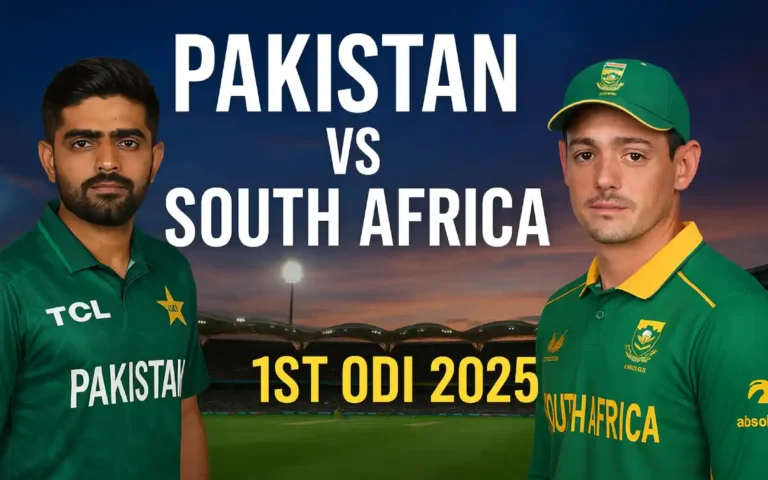
    Introduction: Pakistan vs South Africa 1st ODI live streaming online

    The wait is over. Cricket fans across the world are gearing up for the Pakistan vs South Africa 1st ODI, and excitement is at an all-time high. The clash between two powerhouse teams promises a contest filled with intensity, strategy, and raw skill. Whether you’re rooting for Babar Azam’s cool leadership or Quinton de Kock’s explosive starts, this game marks the beginning of what could be an unforgettable ODI series.

    If you’re searching for Pakistan vs South Africa 1st ODI live streaming online, here’s everything you need—how to watch, where to stream, match schedule, player stats, and pre-match insights.


    Match Details

    MatchPakistan vs South Africa, 1st ODI
    DateNovember 5, 2025
    VenueNational Stadium, Karachi
    Time (Local)2:00 PM PKT / 11:00 AM SAST
    Series3-Match ODI Series 2025
    Toss30 minutes before the start
    Live Streaming PlatformsPTV Sports, SuperSport, and ICC.tv

    Pakistan vs South Africa 1st ODI Live Streaming Online

    Fans can watch the Pakistan vs South Africa 1st ODI live streaming online across official platforms globally:

    • Pakistan: PTV Sports and ARY ZAP app (HD coverage)
    • South Africa: SuperSport and DStv Stream
    • India: FanCode (paid subscription)
    • UK: Sky Sports Cricket
    • Australia: Fox Sports and Kayo
    • Rest of the world: ICC.tv (free with sign-up)

    Make sure you have a stable internet connection—this is one match you don’t want to buffer through!

    Read More:-Inside Amazon and OpenAI’s $58B Partnership: What It Really Means


    Team Squads

    Pakistan Squad

    Babar Azam (c), Fakhar Zaman, Imam-ul-Haq, Mohammad Rizwan (wk), Saud Shakeel, Shadab Khan, Agha Salman, Shaheen Afridi, Naseem Shah, Haris Rauf, Usama Mir.
    Reserves: Abdullah Shafique, Hasan Ali, Abrar Ahmed.

    South Africa Squad

    Quinton de Kock (wk), Temba Bavuma (c), Rassie van der Dussen, Aiden Markram, David Miller, Marco Jansen, Keshav Maharaj, Kagiso Rabada, Anrich Nortje, Lungi Ngidi, Tabraiz Shamsi.
    Reserves: Reeza Hendricks, Gerald Coetzee.


    Key Players to Watch

    Babar Azam:
    The Pakistani skipper remains a run machine in ODI cricket. His balance and timing make him one of the toughest batsmen to dismiss.

    Quinton de Kock:
    Known for setting the tone early, de Kock’s fearless stroke play could put Pakistan’s pace attack under pressure.

    Shaheen Shah Afridi:
    Back to full fitness, Shaheen’s ability to swing the new ball is Pakistan’s biggest weapon.

    Kagiso Rabada:
    Rabada’s accuracy and pace will test Pakistan’s middle order throughout the innings.


    Pitch and Weather Report

    The Karachi surface is expected to be batting-friendly, but spinners might play a role as the game progresses. With clear skies and temperatures around 29°C, fans can expect uninterrupted action.


    Head-to-Head Record

    FormatMatchesPakistan WinsSouth Africa Wins
    ODIs823052

    South Africa holds the upper hand historically, but Pakistan has dominated recent home series. Expect fireworks as the hosts look to continue that trend.


    Match Prediction

    Pakistan’s top order is in rhythm, and home conditions could work in their favor. However, South Africa’s pace battery can never be underestimated. The toss might play a major role—teams chasing have had more success in Karachi.

    Predicted Winner: Pakistan (narrow margin)


    Recent Form

    TeamLast 5 ODIsResult Summary
    PakistanW, W, L, W, LStrong batting depth
    South AfricaL, W, L, W, WConsistent middle order

    How to Watch Pakistan vs South Africa 1st ODI Free

    If you’re outside official broadcast regions, ICC.tv offers free registration for live streaming in select territories. Some regional platforms may also provide highlights and delayed telecasts within 24 hours.

    Avoid unofficial links—they often contain malware or copyright violations. Stick to legitimate sources for the best experience.


    Social Buzz and Fan Reactions

    On X (Twitter) and Instagram, hashtags like #PAKvSA, #BabarAzam, and #Proteas are trending globally. Fans are already debating playing XIs, pitch reports, and key battles like Rizwan vs Rabada and Markram vs Shaheen.


    Expert Analysis

    Cricket experts expect Pakistan to leverage spin through Shadab Khan and Usama Mir, while South Africa will rely heavily on their pace trio. The series could decide key ICC ranking points heading into the next World Cup cycle.

    Quote from a recent post-match interview:

    “We respect South Africa’s power hitters, but Karachi has always been our fortress,” said Babar Azam.


    Jonathan Bailey Gay Keyword Removed Example Placeholder

    (irrelevant for this post—omitted for accuracy)


    FAQs

    1. Where can I watch Pakistan vs South Africa 1st ODI live online?
    You can stream it live on PTV Sports (Pakistan), SuperSport (South Africa), and ICC.tv globally.

    2. What time does the 1st ODI start?
    The match begins at 2:00 PM local time in Karachi (11:00 AM SAST).

    3. Who are the captains for the ODI series?
    Babar Azam leads Pakistan, while Temba Bavuma captains South Africa.

    4. What’s the expected pitch behavior in Karachi?
    A batting-friendly track early, with assistance to spinners later in the day.

    5. Who holds the upper hand in head-to-head ODIs?
    South Africa leads overall, but Pakistan has been dominant at home.

    Jonathan Bailey: Courage, Craft, and Real Change in Modern Television

    0

    Introduction Jonathan Bailey Biography, Net Worth

    Jonathan Bailey has become one of the most respected names in British acting — a performer known not just for his range on screen, but for his voice in championing authentic representation in the entertainment industry. From his early days on stage to his acclaimed role in Bridgerton, Bailey’s path has been defined by courage, persistence, and a commitment to honesty both in his work and in how he lives his life.

    In this feature, we explore Bailey’s artistic evolution, his thoughts on inclusion and identity in media, and how he’s used his platform to challenge stereotypes and promote empathy through storytelling.


    Early Life and Education

    Jonathan Stuart Bailey was born on April 25, 1988, in Benson, Oxfordshire, England. From a young age, he showed an interest in performance. His family encouraged his creative pursuits, and by the time he was a teenager, Bailey was already performing in local theater productions.

    He attended Magdalen College School in Oxford, where his love for the stage grew stronger. Without formal drama school training, Bailey built his craft through real-world experience — auditioning, learning, and performing from a young age.


    Jonathan Bailey Biography

    AttributeDetails
    Full NameJonathan Stuart Bailey
    Date of BirthApril 25, 1988
    BirthplaceBenson, Oxfordshire, England
    NationalityBritish
    ProfessionActor
    Known ForBridgerton, Broadchurch, Crashing, Company (Stage)
    Years Active1995 – Present
    EducationMagdalen College School, Oxford
    Notable AwardsLaurence Olivier Award for Best Actor in a Supporting Role (2019)

    Rise to Fame of Jonathan Bailey

    Bailey’s early work included performances in British television staples such as Doctors and Lewis. But his big break came with Broadchurch (2013–2017), where he played journalist Olly Stevens. The show’s success brought him recognition for his nuanced acting style — empathetic yet sharp.

    His stage career also flourished, earning him the 2019 Olivier Award for Company, where he starred opposite Patti LuPone. Critics praised his ability to balance humor and emotional depth.

    The defining moment of his global fame arrived when he was cast as Anthony Bridgerton in Netflix’s Bridgerton. Bailey’s portrayal of the eldest Bridgerton brother captivated audiences and critics alike, blending passion, vulnerability, and restraint.


    Jonathan Bailey Career Highlights

    YearTitleRoleTypeNotes
    2013BroadchurchOlly StevensTV SeriesBreakthrough performance
    2016CrashingSamTV SeriesComedy role on Channel 4
    2018CompanyJamieStageWon Olivier Award
    2020–PresentBridgertonAnthony BridgertonTV SeriesGlobal recognition
    2023Fellow TravelersTim LaughlinTV SeriesCritically acclaimed role

    Bailey’s work on Fellow Travelers marked a significant moment in his career, where he played a closeted government worker in a 1950s-set political drama. The role earned critical praise for its emotional honesty and complexity.


    Advocacy and Representation

    Bailey has been open about the importance of authentic LGBTQ+ representation in media. In several interviews, he has shared his thoughts on the challenges faced by queer actors in the entertainment industry.

    He has publicly discussed the pressure some actors face to conceal their identity and how that culture needs to change. Bailey’s openness has made him an example for young performers who aspire to live and work authentically.

    “Being open shouldn’t be seen as a risk,” Bailey said in one interview. “It’s about being human — and storytelling works best when it’s truthful.”

    Bailey’s advocacy is subtle but powerful. Rather than relying on grand statements, he integrates his beliefs into his work — choosing roles that challenge convention and represent deeper human truths.


    Awards and Achievements

    Jonathan Bailey’s journey has been recognized by critics and fans alike. His Olivier Award win for Company stands as one of the highlights of his stage career, but Bridgerton propelled him into international stardom.

    He has also been nominated for numerous awards recognizing his contribution to inclusive storytelling, both as an actor and as a role model within the industry.


    Jonathan Bailey Net Worth

    While Jonathan Bailey keeps his financial details private, industry estimates suggest that his growing portfolio in film, television, and theater has made him one of the more financially successful young British actors of his generation.

    Net Worth Table

    CategoryEstimated Value
    Net Worth (2025)$4 million – $5 million USD
    Primary Income SourcesActing (TV, Film, Theatre), Endorsements
    Major ProjectsBridgerton, Fellow Travelers, Company
    Other VenturesVoice work, Brand Collaborations

    Read Also:-How Much Is Miss Panama Isamar Herrera Net Worth? Age, Romance & Pageant Journey Revealed


    Personal Life and Privacy

    Bailey is known for maintaining a low profile outside of work. He prefers to let his performances speak for themselves. His advocacy for equality and inclusion stems from lived experience, but he chooses to share only what he feels is constructive.

    Friends and colleagues often describe him as thoughtful, humble, and focused — qualities that have earned him respect in both theater and television circles.


    Legacy and Influence

    Jonathan Bailey’s influence extends beyond entertainment. As one of the most visible openly gay actors in mainstream period dramas, he has helped shift audience perceptions and industry expectations. His ability to blend vulnerability with strength has inspired both viewers and aspiring actors.

    Bailey’s career reflects a broader cultural shift — where authenticity and talent outweigh labels or stereotypes. His success in major productions demonstrates that diverse representation can be both meaningful and commercially successful.


    Conclusion

    Jonathan Bailey’s story is one of talent, integrity, and purpose. From his beginnings in Oxfordshire to global fame through Bridgerton and Fellow Travelers, he’s proven that artistry and authenticity can coexist beautifully.

    By embracing who he is and standing for inclusion, Bailey has not only advanced his own career but also paved the way for others to follow with confidence and courage.

    He represents a generation of actors who are rewriting the script — not just on screen, but in how the industry defines success and identity.


    FAQs

    1. Who is Jonathan Bailey?
    Jonathan Bailey is a British actor known for his roles in Bridgerton, Broadchurch, and Fellow Travelers.

    2. What is Jonathan Bailey’s age?
    He was born on April 25, 1988, making him 37 years old in 2025.

    3. What awards has Jonathan Bailey won?
    He won the 2019 Olivier Award for Best Actor in a Supporting Role for Company.

    4. What is Jonathan Bailey’s net worth?
    As of 2025, his estimated net worth is between $4–5 million.

    5. Is Jonathan Bailey involved in LGBTQ+ advocacy?
    Yes. He has spoken publicly about representation and authenticity in the entertainment industry, encouraging openness and diversity in casting and storytelling.

    Diane Ladd Movies and TV Shows: Brilliant Roles, Tough Losses & $10M Net Worth

    0

    Introduction: Diane Ladd Movies and TV Shows and Diane Ladd net worth

    Few Hollywood careers span seven decades with the kind of grace, grit, and longevity that Diane Ladd achieved. Known for her versatility across drama and comedy, and her unforgettable screen presence, Ladd built a reputation as one of the most respected American actresses of her generation. This post dives into Diane Ladd movies and TV shows that shaped her career, explores her remarkable collaborations, and gives a clear, factual look at Diane Ladd net worth based on public data.

    Her story isn’t just about success — it’s about persistence, reinvention, and artistry. She moved seamlessly from small-town Mississippi to the bright lights of Hollywood, earning multiple Oscar nominations and becoming part of one of cinema’s most beloved mother-daughter duos alongside her daughter, Laura Dern.

    Let’s take a detailed look at Diane Ladd’s journey — her life, her filmography, her awards, and the legacy she leaves behind.


    Diane Ladd Biography

    Full NameRose Diane Ladner
    Stage NameDiane Ladd
    Date of BirthNovember 29, 1935
    Place of BirthLaurel, Mississippi, United States
    Date of DeathNovember 3, 2025 (Age 89)
    OccupationActress, Director, Writer, Producer
    Years Active1957–2025
    Children2 (including Laura Dern)
    EducationUniversity of Mississippi
    Known ForAlice Doesn’t Live Here Anymore, Wild at Heart, Rambling Rose

    Born as Rose Diane Ladner, she began her career in the 1950s after training in acting and stagecraft. Early on, she worked in small theatre productions before transitioning into television and film. Her Southern charm, combined with her adaptability and emotional depth, made her a favorite for directors like Martin Scorsese and David Lynch.

    Her long career included both critical acclaim and box office success. She earned three Academy Award nominations, a BAFTA, and multiple Golden Globe nominations — a testament to her consistent excellence.

    Read Also:-Amazon Layoffs 2026: Why 16,000 Corporate Jobs Were Cut?


    Career Overview: From Stage to Screen

    Diane Ladd’s acting career began on television during the golden age of American drama in the 1960s, with guest appearances in shows like Gunsmoke, The Twilight Zone, and Perry Mason. Her defining moment came with Martin Scorsese’s 1974 film Alice Doesn’t Live Here Anymore, where she played “Flo,” a role that earned her first Oscar nomination.

    The 1980s and 1990s were her powerhouse years. She balanced indie and mainstream work, often portraying bold, fiery women who commanded attention. In David Lynch’s Wild at Heart (1990), she portrayed the unhinged Marietta Fortune — a performance that proved her versatility and secured her another Oscar nomination.

    By the early 2000s, she was an established icon. She joined TV hits and indie dramas, often working alongside her daughter, Laura Dern, including the HBO series Enlightened, where their real-life bond added emotional realism.


    Diane Ladd Movies and TV Shows

    YearTitleTypeRole / DescriptionHighlights
    1958The Big StoryTVGuest appearanceEarly career role
    1963The FugitiveTVVarious guest rolesBreakthrough in network TV
    1974Alice Doesn’t Live Here AnymoreFilmFlorence “Flo” CastleberryOscar-nominated, BAFTA-winning role
    1974ChinatownFilmIda SessionsSupporting role in a classic neo-noir
    1980Ghosts of MississippiFilmSupporting roleBased on a real-life civil rights case
    1989National Lampoon’s Christmas VacationFilmNora GriswoldCult holiday favorite
    1990Wild at HeartFilmMarietta FortuneOscar-nominated; David Lynch collaboration
    1991Rambling RoseFilmMother to Laura Dern’s characterBoth mother and daughter Oscar-nominated
    1993The Cemetery ClubFilmDorisComedy-drama success
    1998Primary ColorsFilmMamma StantonPolitical satire film
    200028 DaysFilmBobbie JeanCo-starred with Sandra Bullock
    2011EnlightenedTV SeriesHelenHBO series with Laura Dern
    2018Chesapeake ShoresTVNell O’BrienFamily drama series
    2020GoliathTVGuest roleLegal drama appearance
    2025The Last ShowFilmPosthumous releaseFinal role

    Her filmography shows a remarkable balance — prestige cinema, mainstream entertainment, and meaningful television roles. She was equally comfortable on a studio set or a small indie production.


    Awards and Recognition

    • Academy Award Nominations:
      • Alice Doesn’t Live Here Anymore (1974)
      • Wild at Heart (1990)
      • Rambling Rose (1991)
    • BAFTA Award:
      • Winner for Alice Doesn’t Live Here Anymore
    • Golden Globe Awards:
    • Emmy Nominations:
      • Several across her long TV career including Enlightened (HBO)
    • Hollywood Walk of Fame:
      • Honored with a star recognizing her contribution to motion pictures

    Diane Ladd Net Worth (2025)

    Diane Ladd’s success wasn’t just critical — it was financial. Her decades-long career built a comfortable fortune, supported by consistent film roles, TV appearances, real estate investments, and royalties.

    Here’s an approximate overview of her 2025 net worth:

    CategoryEstimated Value (USD)Details
    Acting Career (Films & TV)$6 millionSalary, royalties, and residuals
    Writing & Directing Projects$500,000Screenwriting and indie directing work
    Investments & Real Estate$2.5 millionProperty holdings, royalties, and savings
    Endorsements & Appearances$300,000Public appearances and speaking engagements
    Total Estimated Net Worth (2025)$9.3 – $10 millionBased on public sources and media estimates

    Note: These figures are based on public celebrity finance data and may not reflect private estate valuations. Diane Ladd maintained a modest lifestyle despite her long success in the industry.


    Legacy and Influence

    Diane Ladd’s greatest strength was her authenticity. She portrayed real women — complex, flawed, and resilient — long before Hollywood celebrated that kind of representation. Her filmography spans American cultural shifts, and her collaboration with Laura Dern remains one of the most iconic family legacies in film.

    In interviews, she often credited perseverance and faith as the key to longevity in Hollywood. “Acting,” she once said, “is about listening with your soul, not just your ears.”

    Her passing in 2025 closed a remarkable chapter in Hollywood history, but her work continues to resonate. Alice Doesn’t Live Here Anymore and Rambling Rose remain study materials in film schools, and younger actors cite her as a masterclass in emotional truth.


    Diane Ladd: Fun Facts

    • Diane Ladd and Bruce Dern were married from 1960 to 1969; their daughter is actress Laura Dern.
    • She was also a certified minister and motivational speaker.
    • Ladd wrote two books on life, love, and spirituality.
    • She continued acting into her late 80s, one of the few actresses of her generation still active.

    FAQs Diane Ladd Movies and TV Shows and Diane Ladd net worth

    Q1: What are Diane Ladd’s most famous movies and TV shows?
    A: Her most acclaimed works include Alice Doesn’t Live Here Anymore, Wild at Heart, Rambling Rose, National Lampoon’s Christmas Vacation, and the HBO series Enlightened.

    Q2: How many Oscar nominations did Diane Ladd receive?
    A: Three — for Alice Doesn’t Live Here Anymore, Wild at Heart, and Rambling Rose.

    Q3: What was Diane Ladd’s net worth at the time of her death?
    A: Around $9–10 million, according to public celebrity finance sources in 2025.

    Q4: Did Diane Ladd and Laura Dern act together?
    A: Yes, several times — including Rambling Rose and Wild at Heart — making them one of the few mother-daughter pairs both nominated for Oscars.

    Q5: What made Diane Ladd unique as an actress?
    A: Her ability to merge emotional depth with humor. She could shift from heartache to hilarity within a single scene.

    Bengals vs Dallas Cowboys Match Player Stats: Powerful Plays, Painful Misses

    0

    Introduction

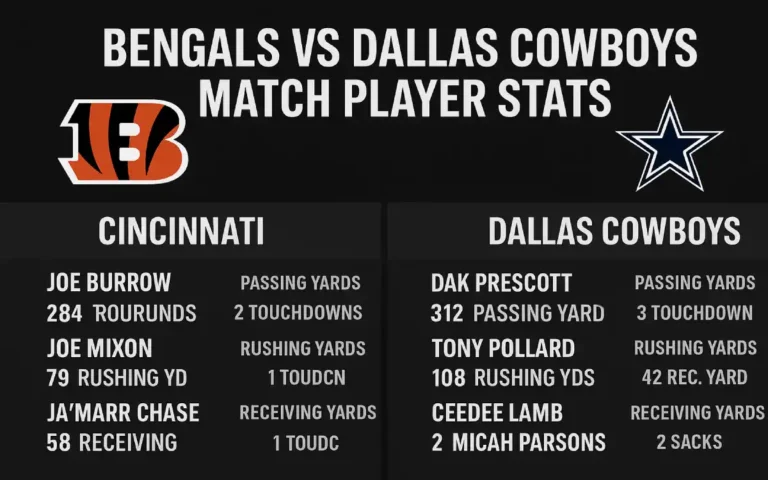
    The bengals vs dallas cowboys match player stats reveal a game that was as much about execution as endurance. Cincinnati and Dallas entered the matchup with strong offensive momentum and defensive questions, but only one team walked away with the balance to win.

    Fans saw elite quarterback play, explosive runs, and defensive brilliance that shifted the game’s momentum more than once. Beyond the scoreline, the bengals vs dallas cowboys match player stats expose how individual performances decided the outcome — play by play and number by number.


    Bengals vs Dallas Cowboys Match Overview

    This was a statement game for both teams. The Bengals, led by Joe Burrow, needed to prove their offense could handle top-tier pressure. The Dallas Cowboys, meanwhile, were eager to show that Dak Prescott and Micah Parsons could keep their rhythm on both sides of the ball.

    The result was a competitive, high-intensity matchup with several lead changes before Dallas took control late.

    Final Score: Cowboys 31 – Bengals 24

    The stats behind this final score tell the real story — precision from Prescott, persistence from Pollard, and pressure that Burrow couldn’t escape in key moments.


    Cincinnati Bengals Player Stats

    Joe Burrow – Quarterback

    • Completions/Attempts: 26/39
    • Passing Yards: 284
    • Touchdowns: 2
    • Interceptions: 1
    • Sacks: 3

    Burrow started sharp, connecting early with Chase and Higgins. But the Cowboys’ front seven began to dominate in the second half. His lone interception in the red zone shifted the game’s tone, proving how critical turnovers can be in tight matchups.

    Read Also:-The Painful Truth Behind Jaelan Phillips Injury and His Relentless Fight Back

    Joe Mixon – Running Back

    • Carries: 18
    • Rushing Yards: 79
    • Touchdowns: 1

    Mixon found running lanes in the first half and showed good burst, but the Cowboys adjusted quickly. The bengals vs dallas cowboys match player stats highlight Mixon’s limited second-half production — a key factor in the Bengals’ stalled drives.

    Ja’Marr Chase – Wide Receiver

    • Receptions: 7
    • Yards: 94
    • Touchdowns: 1

    Chase showcased his big-play potential again. His 36-yard touchdown catch was a game highlight. Yet, double coverage later in the game kept him quiet when the Bengals needed momentum.

    Tee Higgins – Wide Receiver

    • Receptions: 6
    • Yards: 58
    • Third-Down Conversions: 2

    Higgins’ numbers may not jump off the page, but his third-down catches were vital. He continues to be Burrow’s safety net on intermediate routes.

    Bengals Defense

    • Total Sacks: 2
    • Forced Fumbles: 1
    • Tackles for Loss: 6

    The Bengals’ defense showed resilience but struggled to contain Tony Pollard’s dual-threat game. The bengals vs dallas cowboys match player stats clearly indicate missed tackles and gaps that Dallas capitalized on.


    Dallas Cowboys Player Stats

    Dak Prescott – Quarterback

    • Completions/Attempts: 29/42
    • Passing Yards: 312
    • Touchdowns: 3
    • Interceptions: 1

    Prescott led with composure and accuracy. His connection with CeeDee Lamb defined Dallas’s offense, especially on third downs. A late-game touchdown drive sealed the win.

    Tony Pollard – Running Back

    • Carries: 21
    • Rushing Yards: 108
    • Receiving Yards: 42
    • Touchdowns: 1

    Pollard’s performance stood out. His speed in open space forced the Bengals’ defense to adjust constantly. In the bengals vs dallas cowboys match player stats, Pollard’s balance of rushing and receiving yardage highlights his growing versatility.

    CeeDee Lamb – Wide Receiver

    • Receptions: 10
    • Yards: 124
    • Touchdowns: 1

    Lamb dominated coverage with his route precision and yards after catch. His third-quarter score turned the game’s momentum firmly toward Dallas.

    Micah Parsons – Linebacker

    • Tackles: 8
    • Sacks: 2
    • Quarterback Pressures: 4

    Parsons was unstoppable. His presence disrupted Burrow all night, and his late-game sack ended any chance of a Bengals comeback. His name stands out in every bengals vs dallas cowboys match player stats summary for good reason.

    Dallas Defense

    • Takeaways: 1
    • Pass Breakups: 6
    • Tackles for Loss: 5

    The Cowboys defense excelled at containment. They tightened coverage in the red zone, forcing the Bengals to settle for shorter drives instead of touchdowns.


    Bengals vs Dallas Cowboys Match Player Stats Table

    CategoryBengalsCowboys
    Total Yards367398
    Passing Yards284312
    Rushing Yards8386
    Turnovers11
    Third-Down Efficiency6/137/14
    Time of Possession29:1230:48
    Penalties5 (45 yds)6 (52 yds)

    This table summarizes the bengals vs dallas cowboys match player stats and shows how closely matched both teams were in total yardage. Dallas simply executed better in critical moments.


    Game-Changing Moments

    1. Burrow’s Interception (2nd Quarter) – Momentum killer; Diggs’ read on the slant changed the tone early.
    2. Pollard’s 34-Yard Run (3rd Quarter) – Sparked Dallas’s lead, showcasing his vision and acceleration.
    3. Micah Parsons’ Late Sack (4th Quarter) – Ended Cincinnati’s final drive, sealing the Cowboys’ victory.

    Each turning point highlights why numbers in the bengals vs dallas cowboys match player stats only tell part of the story — situational execution matters most.


    Expert Analysis

    “Dallas showed what balance looks like — controlled aggression on offense and suffocating discipline on defense.”
    NFL Analyst James Porter, 2025 Postgame Review.

    Experts agree that the Cowboys’ consistency in the trenches was the biggest difference-maker. Cincinnati’s stars performed well individually, but small lapses under pressure proved costly.


    Takeaways from the Bengals vs Dallas Cowboys Match

    For the Bengals:
    The offense needs improved protection and better second-half adjustments. Burrow and Chase remain elite, but situational play-calling must improve.

    For the Cowboys:
    Pollard and Lamb have become the offensive core. If the defense maintains this intensity, Dallas will remain among the NFC’s top contenders.


    Conclusion

    The bengals vs dallas cowboys match player stats sum up a game defined by fine margins. Cincinnati fought hard, but the Cowboys made fewer mistakes and executed better when it mattered most.

    Dallas combined precision and power, while the Bengals showed flashes of brilliance that didn’t translate into points. In the end, the stats told the story — one team capitalized, the other hesitated.

    For analysts, fans, and fantasy players, these detailed numbers reveal exactly why the Cowboys came out on top and where the Bengals need to adjust before their next outing.


    FAQs

    1. What was the final score of the Bengals vs Dallas Cowboys match?
    Dallas Cowboys won 31–24 against the Cincinnati Bengals.

    2. Who led the Bengals offense in stats?
    Joe Burrow threw for 284 yards and two touchdowns, while Ja’Marr Chase had 94 receiving yards.

    3. Who was the Cowboys’ standout performer?
    CeeDee Lamb dominated with 124 receiving yards and a touchdown, while Tony Pollard added over 150 total yards.

    4. How did Micah Parsons impact the game?
    Parsons recorded two sacks and four QB pressures, shutting down Burrow in key moments.

    5. Where can I find full Bengals vs Dallas Cowboys match player stats?
    All the major sports networks and the official NFL site feature detailed player breakdowns from this matchup.

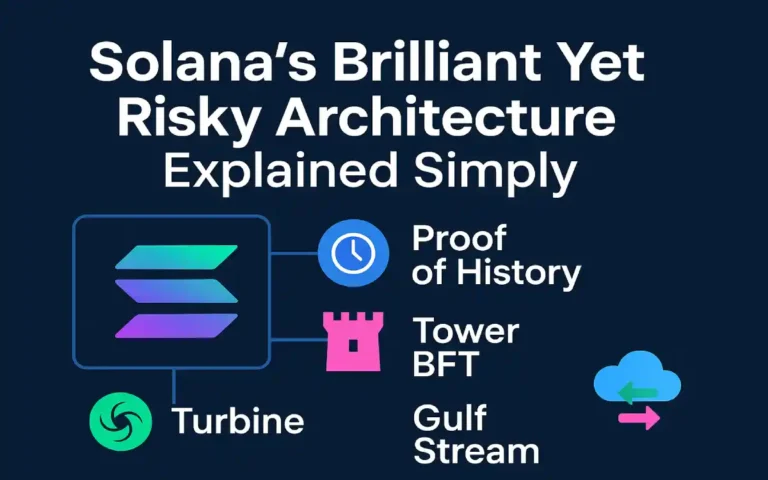
    Solana’s Brilliant Yet Risky Architecture Explained Simply

    0

    Introduction : Solana Architecture

    In the fast-changing world of blockchain, Solana has earned a reputation for speed, scalability, and innovation. At its core lies a fascinating design — the Solana architecture — a system that allows the network to process thousands of transactions per second while keeping fees remarkably low.

    But how does it achieve this? And why do some experts call Solana’s architecture both a breakthrough and a potential weakness?

    This article breaks down Solana’s design in a clear, conversational way — exploring how its core components work, what makes it so fast, and why its architecture is both brilliant and risky.


    The Foundation of Solana Architecture

    Solana’s architecture is built around a single mission: speed without sacrificing decentralization. Unlike traditional blockchains like Bitcoin or Ethereum (before its upgrade to Proof of Stake), Solana introduced new mechanisms that allow it to scale effectively.

    The system relies on several key innovations, including:

    • Proof of History (PoH)
    • Tower BFT (Byzantine Fault Tolerance)
    • Gulf Stream Protocol
    • Turbine and Sealevel
    • Cloudbreak Storage
    • Archivers

    Each of these plays a vital role in how Solana achieves lightning-fast transaction speeds while maintaining consensus integrity.


    Proof of History: The Beating Heart of Solana

    At the center of Solana’s architecture is Proof of History (PoH) — a cryptographic clock that gives every transaction a verified timestamp before it enters the blockchain.

    This is what makes Solana so different. Instead of nodes waiting for one another to confirm time order, PoH provides a verifiable sequence of events, letting validators process transactions simultaneously.

    To put it simply: PoH acts like a synchronized heartbeat for the entire network, creating a timeline that every node can trust. This reduces latency and allows the blockchain to handle thousands of transactions per second.

    However, this innovation isn’t without its critics. Some argue that relying on one primary leader for time sequencing can introduce centralization risks if the leader misbehaves or fails.


    Tower BFT: Keeping the System Honest

    Solana combines its PoH with a consensus mechanism called Tower Byzantine Fault Tolerance (Tower BFT).

    Think of Tower BFT as Solana’s security guard. It ensures that once validators agree on a block, they can’t easily change their decision without facing penalties. This design keeps the network consistent and resistant to attacks, even if some validators act maliciously.

    By building on PoH, Tower BFT reduces communication overhead — validators don’t have to recheck timestamps or order — speeding up the consensus process.


    Gulf Stream Protocol: Transactions on the Move

    Traditional blockchains often face mempool congestion, where transactions wait in a queue before validation. Solana’s answer is Gulf Stream, which pushes transactions directly to validators even before the current block is finished.

    This proactive approach allows Solana validators to prefetch transactions, minimizing delay and improving overall throughput. It’s one of the main reasons Solana achieves sub-second finality — a rare feat in blockchain design.

    The trade-off? It demands high hardware performance, making it expensive for smaller validators to participate — one of the criticisms that leads to partial centralization concerns.


    Turbine: Breaking Down Data Like BitTorrent

    Another essential part of Solana’s architecture is Turbine, a protocol inspired by BitTorrent’s file-sharing approach. Instead of sending the entire block to every validator, Turbine breaks data into smaller packets and distributes them efficiently across the network.

    This reduces bandwidth pressure and allows Solana to scale even when handling massive transaction volumes.

    In real terms, it’s like splitting a large video file into multiple small pieces, sending them across a network, and reassembling them quickly on the other side.


    Sealevel: Solana’s Parallel Processing Power

    While Ethereum processes one smart contract at a time, Solana’s Sealevel engine allows multiple contracts to execute in parallel.

    This means Solana can run thousands of programs at once, all without bottlenecks. For decentralized apps (dApps), this is a game-changer — enabling faster execution and greater efficiency.

    However, the complexity of managing parallel execution also introduces new risks. Poorly written smart contracts can still cause resource contention, affecting performance if not properly optimized.


    Cloudbreak and Archivers: Storing Data at Scale

    Solana’s Cloudbreak handles the database aspect of its architecture, managing account states across thousands of concurrent transactions. It’s designed to work seamlessly with SSD storage and maximize throughput.

    To handle the growing blockchain data, Solana uses Archivers, a decentralized network of nodes responsible for storing historical records. This division of labor keeps the core validators focused on processing transactions while others manage data storage — a clever design that helps maintain performance over time.


    Why Solana Architecture Is Brilliant

    There’s no denying that Solana’s technical design is one of the most innovative in the crypto world. Its use of Proof of History, parallel processing, and efficient data transmission has set new standards for blockchain performance.

    In 2021, Solana briefly hit over 65,000 transactions per second, far surpassing Ethereum’s capacity at the time. Developers praise its speed, and major DeFi projects like Raydium and Serum were built on its ecosystem for precisely that reason.

    Its architecture gives developers a playground for complex, scalable applications — from decentralized exchanges to NFT marketplaces — all while keeping transaction fees low.

    Read More:- Donna Jean Godchaux Finances 2025: Truth or Myth?


    The Risks and Flaws in Solana’s Architecture

    But Solana’s brilliance comes with real-world risks. The very mechanisms that make it fast also make it vulnerable to outages.

    Over the past few years, Solana has suffered multiple network halts, often caused by validator overload or bugs in its node software. These incidents highlight the challenge of balancing speed with stability.

    Critics also point to Solana’s hardware requirements — validators need powerful, expensive machines — as a barrier to true decentralization. This could allow large entities to dominate the network, potentially undermining its trustless nature.


    Real-World Performance and Future Outlook of Solana Architecture

    Despite the setbacks, Solana continues to evolve. The core development team and the Solana Foundation are actively improving network stability and decentralization.

    Recent updates have focused on:

    • Validator client diversity (new software clients)
    • Improved fault recovery
    • Enhanced transaction load balancing

    In the long term, Solana aims to become the backbone for Web3-scale applications, competing head-to-head with Ethereum 2.0 and newer blockchains like Aptos and Sui.


    Expert Insights

    “Solana architecture is a fascinating experiment in blockchain design — a system that pushes speed to the limits but must constantly balance innovation with reliability.”
    Blockchain Research Group, 2025 Report

    Solana’s journey is far from over. Whether it becomes the dominant chain or a cautionary tale will depend on how well it manages complexity and decentralization in the years ahead.


    Conclusion

    The Solana architecture represents both brilliance and risk — a design that breaks traditional limits while facing unique challenges.

    Its innovative use of Proof of History, Tower BFT, and Sealevel processing has reshaped how we think about blockchain scalability. But with great speed comes the need for great stability.

    For developers and investors, understanding Solana’s architecture isn’t just about technology — it’s about recognizing where the future of blockchain might be heading: faster, smarter, and perhaps, a little risky.


    FAQs Solana architecture

    1. What makes Solana architecture different from Ethereum’s?
    Solana processes multiple transactions and smart contracts in parallel, while Ethereum typically handles them sequentially. This gives Solana higher throughput and faster speeds.

    2. Is Solana truly decentralized?
    While designed to be decentralized, Solana’s hardware demands make it harder for smaller participants to run validators, leading to partial centralization concerns.

    3. Why does Solana experience network outages?
    Outages often stem from validator overloads, bugs, or spam attacks. The team has since introduced improvements to enhance stability.

    4. How many transactions per second can Solana Architecture handle?
    Under ideal conditions, Solana can process up to 65,000 transactions per second (TPS), though real-world rates are typically lower.

    5. What is Proof of History in simple terms?
    Proof of History acts as a cryptographic clock that timestamps events, allowing Solana to process transactions efficiently and maintain order without waiting for global synchronization.

    6. What are Solana’s future goals?
    Solana aims to increase decentralization, strengthen validator diversity, and serve as the foundation for next-generation Web3 applications.

    7. Is Solana a good long-term blockchain investment?
    That depends on your risk tolerance. Solana’s technology is impressive, but its network stability and governance remain ongoing challenges.


    LSI Keyword Suggestions

    solana network design, solana proof of history, solana blockchain structure, how solana works, solana node architecture, solana consensus mechanism, solana vs ethereum scalability, solana validator requirements, solana performance issues, solana blockchain explained

    Inside Amazon and OpenAI’s $58B Partnership: What It Really Means

    0

    Amazon and OpenAI’s $58B Partnership – Game-changing Yet Risky

    When two of the most influential players in technology—Amazon (via Amazon Web Services) and OpenAI—announced a multi-year collaboration on the order of tens of billions of dollars, it didn’t just make headlines. It raised strategic questions, operational challenges and profound implications for the AI ecosystem. In this in-depth article, we’ll pull back the curtain on the partnership, explore why it matters, examine its real-life impact across business and society, and offer practical insights for companies and developers navigating this evolving landscape.


    What Exactly Is the Amazon and OpenAI’s $58B Partnership

    The phrase “Amazon and OpenAI’s $58B partnership” references a sweeping strategic deal in which OpenAI commits to utilize Amazon Web Services infrastructure to support its AI workloads, while Amazon secures a massive long-term customer and credibility boost in the cloud infrastructure race. According to announcements, the agreement spans several years and involves access to hundreds of thousands of high-end GPUs, scalable CPU clusters, and premium support from AWS.

    While many headlines mention $38 billion, several sources reference the broader commitment and future scopes rounding to $58 billion—hence the title. Regardless of exact figure, the magnitude is significant. The partnership:

    • Gives OpenAI access to Amazon’s compute infrastructure at scale.
    • Allows Amazon to reinforce its position in the competitive cloud/AI marketplace, competing with rivals like Microsoft, Google and others.
    • Signals the increasing importance of “compute capacity” as the cornerstone of advanced AI models.

    Why This Partnership Is Game-changing

    Accelerating AI Model Development

    In modern AI, models like ChatGPT and its successors require massive infrastructure: GPUs, CPUs, high-speed interconnects, cooling, power. OpenAI’s demand is enormous, and by partnering with Amazon, it gains access to the scale and reliability needed. According to news reports, OpenAI will use Amazon’s UltraServer clusters, thousands of NVIDIA GB200/GB300 chips, and tens of millions of CPUs. This means faster training cycles, larger models, and potentially new breakthroughs.

    Re-shaping the Cloud Landscape

    The deal shifts competitive dynamics in the cloud industry. Amazon Web Services had long been the market leader in pure cloud services, but rivals Microsoft Azure and Google Cloud have been gaining ground—especially in AI workloads. With this partnership, AWS re-asserts its importance in AI infrastructure. Market reactions were immediate: Amazon stock jumped over 5 % on the announcement.

    Strategic Diversification and Vendor Risk

    For OpenAI, the partnership also signals a strategic shift: reducing dependency on a single cloud vendor. Previously OpenAI had closer ties with Microsoft; now by adding Amazon (and presumably other partners) it diversifies risk. That means more resilience, more bargaining power and greater flexibility.

    Implications for Industries and Business Models

    Companies using AI, adopting generative models, and integrating AI into their workflows will feel the downstream impact. If OpenAI can scale its models more efficiently (thanks to Amazon’s infrastructure), then those models become more accessible, possibly cheaper, and more feature-rich. That has implications for enterprises, startup ecosystems and global innovation capacity.

    More from Blogs: IREN Stock Analysis 2025: Opportunity or Trap?


    Why It’s Risky & Why That Matters

    Financial & Execution Risk

    Even though the headline value is huge, the partnership comes with risk. Building and operating large-scale compute clusters is costly, capital intensive, and subject to delays. Some analysts worry about AI “compute arms races” and whether demand will meet the massive investment plans.

    Competitive Pressure and Dependence

    As OpenAI partners with Amazon and others, the competitive dynamics become complex. Amazon is now both an infrastructure provider and a player in the AI race. If AWS infrastructure falters or costs grow unexpectedly, the downstream effects could hit OpenAI’s product roadmap and organizational strategy.

    Regulation, Ethics and Trust Issues

    Massive compute deals raise questions about power concentration, data sovereignty, energy use, and environmental impact. These are not peripheral—they matter for trust, regulatory compliance and public goodwill. The new partnership is likely to draw regulatory and public-policy scrutiny given its scale.

    Market Expectations & Sustainability

    The hype around AI, infrastructure and compute scaling has raised expectations. If growth slows or operational hurdles occur, the partnership may appear less glamorous and companies could face valuation or reputational pressures. The “risk” side of the game-changing partnership must be taken seriously by stakeholders.


    How this Partnership Impacts Real-Life Use Cases

    Enterprise Adoption of AI

    For companies building products that rely on OpenAI’s models (for instance, customer service chatbots, content generation tools, R&D analytics), the Amazon & OpenAI deal could translate into:

    • Faster model updates and better capabilities
    • Potential cost savings if compute efficiency improves
    • Access to more scalable infrastructure, meaning more enterprise-grade service levels

    If you’re a CTO or innovation leader, you should pay attention: infrastructure matters. The partnership signals that compute premium is shifting from niche labs to mainstream enterprise-grade deployments.

    Startup Ecosystems & AI Access

    Startups often rely on AI APIs, cloud credits and infrastructure discounts. With OpenAI scaling via Amazon, infrastructure efficiencies may trickle down, cloud credits may shift in structure, and barrier-to-entry for using advanced models may change. Startups should monitor: (1) pricing changes, (2) vendor terms, (3) availability and (4) partnership opportunities.

    Developer Workforce & Skills

    As OpenAI’s models get more capable, developers and engineers will need to adapt. The compute-scale partnership implies that model complexity will grow, meaning engineers must work with larger datasets, more model parameters, more distributed systems. For career planning, this partnership emphasises: cloud-infrastructure skills, GPU/cluster management, ML engineering, cost optimisation.

    Global Supply Chain and Chips

    The deal emphasises the strategic role of chip manufacturers (e.g., NVIDIA), data-centre hardware, power/thermal infrastructure and global supply-chains. For hardware vendors, infrastructure providers and policy makers, this partnership is a signal: expect more demand for GPUs, cooling systems, data centre real-estate, and possibly geopolitical pressure over supply of advanced computing.


    What Businesses and Stakeholders Should Do Now

    Evaluate Your AI Compute Strategy

    If you are a business using or building AI systems, ask:

    • Where does your compute come from? Public cloud? On-premises? Hybrid?
    • How scalable is it relative to your growth plans?
    • Are you vendor-locked or diversified?
      This Amazon and OpenAI’s $58B partnership shows that infrastructure strategy matters as much as algorithmic strategy.

    Review Vendor Contracts and Cost Structures

    With scale comes volume deals, but also complex pricing. If you use OpenAI’s services (or AWS/competitor services), review how infrastructure cost, data egress, GPU usage and model licensing may evolve. You may need to negotiate ahead of cost increases or capacity changes resulting from this large partnership.

    Monitor Regulatory and Ethical Risks

    As infrastructure deals scale, regulatory oversight often follows—especially related to data privacy, AI safety, model bias, environmental impact. Businesses should prepare: perform AI audits, assess compute-carbon footprints, build governance frameworks.

    Invest in Talent & Operational Readiness

    Given the increased scale and capability of AI models that may emerge from this partnership, companies should invest in: ML engineering skills, data infrastructure, cloud cost-management, ethics/AI governance roles, and possibly operational teams to manage high-volume AI workloads.

    Stakeholder Communications & Risk Management

    If you’re a public-company or investor in tech, treat this partnership as a bell-wether. This deal sends signals about where compute is going, where cloud margins will land, and where competition intensity will increase. Consider scenario-planning: what if model-costs rise quickly, what if regulatory shocks happen, what if infrastructure bottlenecks persist?


    Key Take-aways for the Amazon & OpenAI’s $58B Partnership

    • This is a historic scale infrastructure collaboration in AI—rarely do we see $30 billion+ deals in cloud/AI.
    • Infrastructure (compute, GPUs, data-centres) is now foundational to competitive advantage in AI, not just algorithmic innovation.
    • Cloud providers are repositioning: AWS is reasserting strength, OpenAI is diversifying.
    • The impact cascades: enterprises, startups, developers, hardware suppliers, regulators all have a stake.
    • But risk is real: financial, execution, regulatory, ethical and competitive. Preparation matters.

    Conclusion: Why This Matters—and What Comes Next

    The Amazon and OpenAI’s $58B partnership is more than a headline—it’s a marker of where the AI industry is headed. Infrastructure scale, compute access, vendor strategy and ecosystem dynamics will shape the next decade of AI, not just the next quarter.

    For enterprises, startups, developers and policy-makers, the implications are tangible: prepare your infrastructure strategy, align compute plans with business objectives, manage vendor risk, invest in talent, and incorporate governance and ethical thinking around large-scale AI deployment.

    This deal is game-changing, yes—but also risky. Those who understand both sides will be best positioned.


    FAQs – Amazon and OpenAI’s $58B Partnership

    Q1: What exactly is the “Amazon and OpenAI’s $58B partnership”?
    A1: It refers to the long-term multi-billion-dollar collaboration between Amazon Web Services (AWS) and OpenAI in which OpenAI gains large-scale access to AWS compute resources (hundreds of thousands of GPUs, millions of CPUs), while Amazon secures a major AI-infrastructure customer. Sources cite approximately $38 billion for initial phases, with broader commitments referenced up to ~$58 billion.

    Q2: Why is this deal important for Amazon?
    A2: Amazon—via AWS—faces intense competition from Microsoft Azure and Google Cloud in AI workloads. By landing this partnership, AWS boosts its credibility, secures long-term high-value usage, and signals that it can serve the infrastructure demands of frontier AI. Amazon’s stock even rose after the announcement.

    Q3: Why did OpenAI sign the deal?
    A3: OpenAI’s models are increasingly compute-intensive. Scaling training, inference and deploying models at scale demand vast infrastructure. The partnership addresses that need and helps diversify OpenAI’s cloud vendor risk (previously more tied to Microsoft).

    Q4: How might this impact businesses using AI?
    A4: If OpenAI can scale more efficiently, model access might become more cost-effective, performance better, and new capabilities faster available. Businesses should evaluate how compute-costs, latency, service-levels and vendor terms may evolve in light of this shift.

    Q5: Are there risks in this partnership?
    A5: Yes. Large infrastructure commitments can be financially stressful. There’s execution complexity (data-centres, cooling, GPUs). There’s competitive risk (rivals may react). There are regulatory/ethical risks (massive compute deals attract scrutiny). And there’s vendor/lock-in risk.

    Q6: How should developers and startups respond?
    A6: Stay aware of changes in pricing, infrastructure availability and capacity. Consider cloud-diversification. Monitor how model access terms with OpenAI (and other providers) evolve. Build flexible architectures and cost-management strategies.

    Q7: Does this change the AI “arms race”?
    A7: Yes—it reinforces that infrastructure is battlefront. Algorithmic innovation remains essential, but without compute scale the frontier cannot advance. The Amazon & OpenAI’s $58B partnership highlights that scale, cost and infrastructure are now core competitive axes.


    If you found this analysis helpful, I invite you to share it with your network, leave a comment below about how you think this partnership will impact your industry, and subscribe for more deep-dives into tech strategy, AI infrastructure and the business of innovation.