
More
    Home Blog

    What Happens If You Stop Paying Your Credit Card? Smart Truth, Harsh Consequences

    0

    What Happens If You Stop Paying Your Credit Card in the US

    If you’re even thinking about this question, chances are you’re under pressure.

    Maybe the minimum payment jumped. Maybe interest rates are eating your paycheck. Or maybe you’re choosing between rent and your credit card bill.

    It’s more common than people admit. With average credit card interest rates hovering above 20 percent in recent years, even responsible borrowers can fall behind fast. But stopping payment completely has serious financial consequences.

    Let’s walk through what actually happens if you stop paying your credit card in the US — month by month — and what your realistic debt relief options are before things spiral.


    First, Understand How Credit Card Debt Works

    Credit cards are unsecured debt. That means there’s no collateral like a car or house backing it. Because of that, lenders charge higher interest rates to offset risk.

    If you miss payments, the bank can’t repossess property. But they can:

    • Charge late fees
    • Raise your interest rate (penalty APR)
    • Report you to credit bureaus
    • Send your account to collections
    • Sue you for the balance

    That last part surprises many people. Yes, credit card companies can file a debt collection lawsuit.

    Now let’s break down the timeline.


    Month 1: You Miss Your First Payment

    The moment you skip a payment, a few things happen quickly.

    • You’re charged a late fee (typically up to $30–$41 depending on the card issuer).
    • Interest continues to accrue daily.
    • Your account becomes “past due.”

    However, most credit card companies do not report a missed payment to credit bureaus until you are 30 days late.

    If you catch up within a few weeks, the damage can be limited.

    Credit Score Impact (Early Stage)

    If the missed payment passes the 30-day mark, your creditor reports it to the three major credit bureaus: Experian, Equifax, and TransUnion.

    Your credit score can drop:

    • 60–100+ points if you previously had good credit
    • Less if your credit was already damaged

    Payment history makes up 35 percent of your FICO score. That’s why even one late mark hurts.


    Month 2–3: 60 to 90 Days Late

    At this stage, the situation escalates.

    You may notice:

    • Repeated phone calls from the issuer
    • Letters demanding payment
    • Penalty APR activated (sometimes 29.99% or higher)
    • Additional late fees

    Your credit report now shows 60-day and then 90-day delinquency. Each update makes lenders see you as higher risk.

    If you apply for a mortgage, auto loan, or personal loan during this period, approval becomes difficult.

    This is when many borrowers start searching for:

    • Credit card debt relief programs
    • Debt consolidation loans
    • Hardship programs

    And this is a critical decision point.


    Month 4–6: Account Charged Off

    If you stop paying for about 180 days, the credit card company will likely “charge off” your account.

    A charge-off does not mean the debt disappears.

    It means the creditor writes it off as a loss for accounting purposes. The balance is still legally owed.

    After charge-off:

    • Your credit score drops significantly
    • The account may be sold to a debt collection agency
    • Collection calls intensify

    A charge-off remains on your credit report for seven years from the first missed payment.

    This is where long-term financial consequences begin.


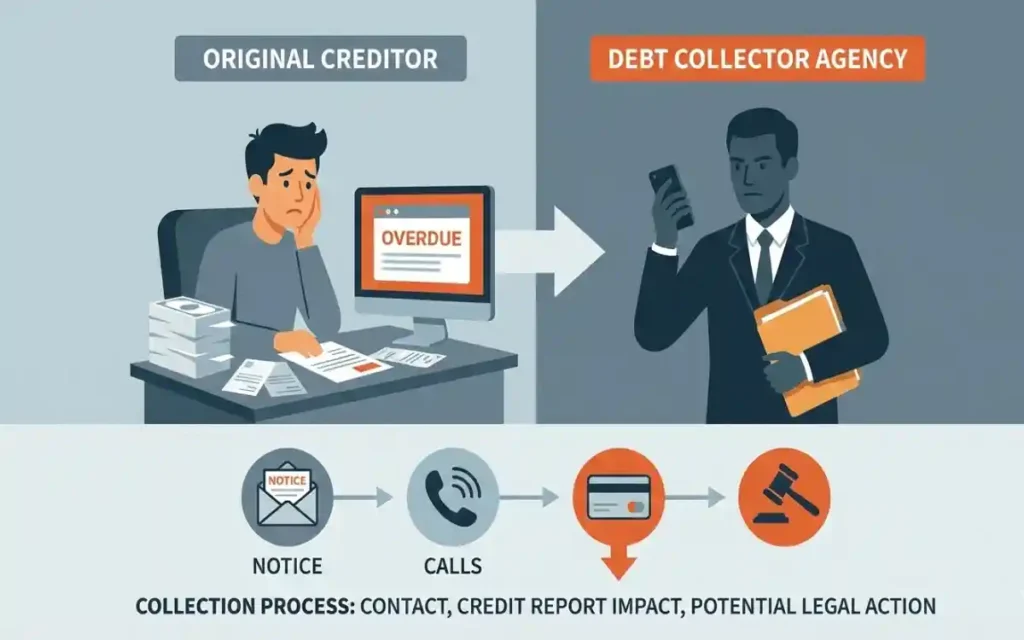
    What Happens When Your Debt Goes to Collections

    Once a collection agency owns or manages the debt, things change.
    What Happens When Your Debt Goes to Collections

    Collectors may:

    • Call and send letters regularly
    • Offer settlement discounts
    • Report the collection account on your credit report

    A collection account damages your credit score further, even if the original charge-off is already listed.

    You may receive settlement offers like:

    • “Pay 50% to close the account”
    • “Lump sum discount”

    While tempting, settlements have tax implications. Forgiven debt over $600 may be considered taxable income by the IRS.

    This is rarely mentioned in shallow articles, but it matters.

    More from Blogs : Apple Foldable Phone – Why World is Eager for the Future


    Can You Be Sued for Credit Card Debt?

    Yes.

    If the balance is large enough, the creditor or collection agency may file a lawsuit.

    This usually happens within the statute of limitations, which varies by state (often 3–6 years).

    If you ignore a lawsuit:

    • The court may issue a default judgment
    • Your wages could be garnished (depending on state law)
    • Bank accounts could be levied

    This is where legal risk becomes real.

    High balances and strong income increase the likelihood of a lawsuit. Smaller debts sometimes stay in collections without court action, but there’s no guarantee.


    Long-Term Credit Damage

    Stopping credit card payments can affect:

    • Mortgage approval
    • Apartment rental applications
    • Car financing rates
    • Insurance premiums
    • Employment background checks

    Many employers run credit checks for finance-related roles.

    Even after you pay or settle, the negative mark remains for up to seven years.

    That’s why understanding debt management strategies early is smarter than ignoring the problem.


    What Are Your Options Before It Gets That Far?

    If you’re struggling, you have options that don’t involve completely stopping payment.

    1. Hardship Programs

    Many credit card issuers offer temporary hardship plans if you call before defaulting.

    They may:

    • Reduce interest rates
    • Waive late fees
    • Set up structured repayment

    This preserves your relationship with the lender.


    2. Debt Consolidation Loan

    A debt consolidation loan combines multiple high-interest credit cards into one lower-interest personal loan.

    This works best if:

    • Your credit score is still decent
    • You have stable income

    It can reduce interest costs significantly.

    Credit Counseling and Debt Management Plans

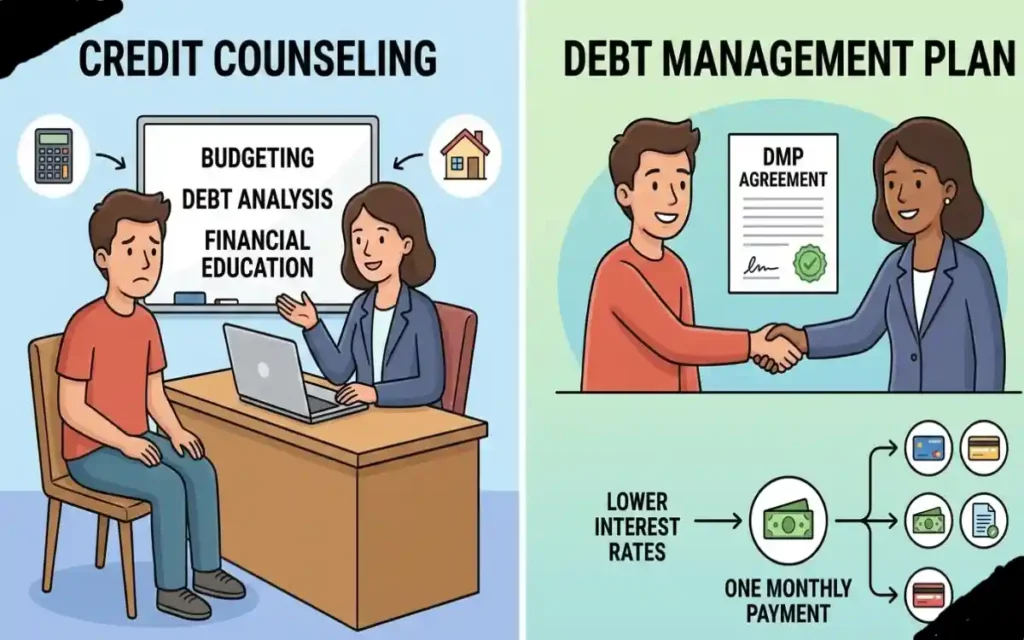
    3. Credit Counseling and Debt Management Plans

    Nonprofit credit counseling agencies can negotiate lower interest rates on your behalf.

    You make one monthly payment to the agency, and they distribute it to creditors.

    This can help avoid charge-offs and lawsuits.


    4. Debt Settlement

    Debt settlement companies negotiate to pay less than what you owe.

    However:

    • Your credit score will drop
    • Fees can be high
    • Tax consequences may apply

    It’s usually considered when you’re already severely behind.


    5. Bankruptcy (Last Resort)

    Filing Chapter 7 or Chapter 13 bankruptcy can discharge or restructure credit card debt.

    But bankruptcy stays on your credit report:

    • 10 years for Chapter 7
    • 7 years for Chapter 13

    This is a serious legal decision that requires consulting a bankruptcy attorney.


    Is It Ever Smart to Stop Paying?

    In rare situations, some financial advisors discuss “strategic default” when bankruptcy is inevitable.

    But for most people, simply stopping payments without a structured plan leads to:

    • Credit score collapse
    • Collection stress
    • Legal risk

    The emotional toll alone can be exhausting.

    If you’re overwhelmed, the smarter move is to explore formal debt relief options rather than silent default.


    How to Minimize Damage If You’ve Already Stopped Paying

    If you’re already 60+ days behind:

    1. Stop ignoring calls.
    2. Ask about hardship options.
    3. Request written settlement offers.
    4. Avoid giving collectors direct bank access.
    5. Consider speaking with a consumer law attorney if sued.

    Taking action reduces long-term harm.


    The Bigger Financial Lesson

    Credit card debt is expensive because it’s convenient.

    Minimum payments create the illusion of control while interest compounds quietly.

    Stopping payments feels like relief in the moment. But without a plan, it often creates larger problems down the road.

    The key is not panic. It’s strategy.


    My Opinion

    If you stop paying your credit card in the US, the process unfolds predictably:

    • 30 days: Late mark hits your credit
    • 60–90 days: Deeper delinquency
    • 180 days: Charge-off
    • Afterward: Collections or lawsuit risk

    The financial consequences are real, but so are your options.

    If you’re struggling, the smartest move is early communication and structured debt relief planning.

    Avoid silence. Avoid denial. Take control before the timeline controls you.

    Inside the Epstein Files: A Clear Breakdown for First-Time Readers

    0

    Epstein Files Decoded: Separating Facts From Online Speculation

    The phrase Epstein Files Decoded has quietly become one of the most searched yet least clearly explained topics on the internet. Many people arrive with questions rather than conclusions. They want clarity not sensationalism. They want to understand what the Epstein files actually contain why they matter and what has been verified so far.

    For first time readers the confusion is understandable. Headlines often skip context. Social media posts blend facts with speculation. Long legal documents are difficult to interpret without background. This guide exists to solve that problem.

    This article breaks down the Epstein files in simple language using only verified public information. It explains where the files came from what is inside them what they do not prove and why they remain significant today. The goal is not to persuade but to inform.

    If you have ever felt overwhelmed or misled while searching for answers this Epstein Files Decoded guide is written for you.


    What Are the Epstein Files Decoded In Simple Terms

    Epstein Files Decoded refers to a collection of court released documents related to investigations legal cases and testimonies connected to Jeffrey Epstein. These files became public through official legal processes not leaks or anonymous claims.

    The files include depositions emails court filings flight records and witness statements. They were released over time primarily through civil lawsuits and unsealed court records.

    What is important to understand early is this distinction. The Epstein files are documents. They are not verdicts. They do not automatically prove guilt or innocence for every name mentioned.

    Epstein Files Decoded means reading these records with context and legal understanding rather than jumping to conclusions based on headlines.

    Read Also: Amazon Layoffs 2026: Why 16,000 Corporate Jobs Were Cut?


    Why People Struggle To Understand The Epstein Files

    Most readers face three major challenges when exploring the Epstein files.

    First the volume of information is massive. Thousands of pages exist across multiple cases. Second legal language creates confusion. Statements are often sworn testimonies but not final judgments. Third online amplification distorts reality. Viral posts often extract one sentence without surrounding context. This is why Epstein Files Decoded guides are necessary. Without interpretation many readers misread what the documents actually say.


    A Brief Timeline That Led To The Epstein Files

    Understanding the timeline helps explain why these files exist.

    Early Investigations

    Jeffrey Epstein was first investigated in the mid 2000s following allegations involving minors. These investigations resulted in controversial plea agreements.

    Federal Prosecution

    In later years federal prosecutors reopened investigations leading to new charges.

    Civil Lawsuits

    Multiple victims filed civil suits. During these cases courts ordered the release of sealed documents.

    Unsealing Of Records

    Judges ruled that certain records should be made public in the interest of transparency. This process resulted in what we now refer to as the Epstein files. Epstein Files Decoded requires seeing these documents as part of a long legal journey not a sudden revelation.


    What The Epstein Files Actually Contain

    The Epstein files include several types of records.

    Witness depositions where individuals describe experiences or interactions. Email exchanges submitted as evidence. Flight logs documenting travel records. Court motions and legal arguments. Affidavits submitted under oath.

    It is critical to understand that appearing in a document does not equal wrongdoing. Many names appear because they were mentioned not because they were charged.

    This distinction is central to any responsible Epstein Files Decoded analysis.


    What The Epstein Files Do Not Prove

    One of the most misunderstood aspects is what these documents do not establish. They do not automatically confirm criminal guilt for every individual named. They do not represent court verdicts. They do not replace judicial trials. They often reflect allegations rather than proven facts.

    Responsible readers must separate documentation from adjudication. Epstein Files Decoded emphasizes verified interpretation rather than assumption.


    Why Transparency Matters In The Epstein Files

    Public trust in institutions relies on transparency. Courts released these files because secrecy no longer served justice. Transparency allows journalists researchers and citizens to examine evidence independently. However transparency also creates responsibility. Information must be consumed thoughtfully.

    This is why Epstein Files Decoded content focuses on clarity accuracy and restraint.


    The Role Of Media And Public Perception

    Media coverage plays a powerful role in shaping how people perceive the Epstein files. Some outlets focus on shock value and Others provide legal context. Readers must evaluate sources carefully. A helpful approach is to cross reference multiple reputable publications rather than relying on social media summaries.

    Epstein Files Decoded means prioritizing primary documents and established reporting.


    How To Read The Epstein Files Without Misinformation

    Here are practical tips for readers.

    Focus on original court documents rather than screenshots. Read full testimonies not single quotes. Understand the difference between allegations and convictions. Check dates and legal outcomes. Avoid accounts that promise secret lists or hidden truths without evidence. This approach protects readers from misinformation while exploring Epstein Files Decoded responsibly.


    Why The Epstein Files Still Matter Today

    The Epstein files matter for several reasons. They highlight systemic failures in accountability. They expose how power and wealth can delay justice. They influence ongoing discussions about victim rights. They shape reforms around transparency and prosecution practices.

    Epstein Files Decoded is not about dwelling on scandal. It is about understanding lessons society must not ignore.


    Lessons For Institutions And Individuals

    From these records several broader lessons emerge. Institutions must ensure consistent enforcement of law. Victims must be heard and protected. Transparency must be balanced with due process. Public discourse must resist sensationalism.

    Epstein Files Decoded helps transform confusion into constructive awareness.


    Common Misconceptions About The Epstein Files

    Many misconceptions continue to circulate. That all names listed are criminals. That files were secretly leaked. That the documents prove global conspiracies. None of these claims are supported by verified records.

    This is why careful reading matters.


    The Importance Of Verified Sources

    Trustworthy understanding comes from credible sources.

    Court documents. Established investigative journalism. Official legal statements. Expert legal analysis.

    Epstein Files Decoded relies on publicly available verified information rather than speculation.


    Why First Time Readers Should Start With Context

    Jumping directly into viral excerpts creates misunderstanding. First time readers should begin with timelines summaries and explanations. This article serves as that starting point.

    Epstein Files Decoded is designed to inform not inflame.


    Understanding Without Assumptions

    The Epstein Files Decoded journey is about clarity not chaos. These documents exist because courts valued transparency. They contain information not conclusions. They require careful reading not emotional reaction.When approached responsibly the Epstein files provide insight into legal systems accountability failures and the importance of truth grounded in evidence.

    If this guide helped you understand the topic better consider sharing it with others who want clarity over confusion. Thoughtful discussion strengthens public awareness.

    The Strategic Pivot: Amazon Slashes 16,000 Jobs to Reshape its AI-Driven Future

    0

    Amazon Layoffs 2026: The Strategic Anatomy of 16,000 Job Cuts and the War on Corporate Bureaucracy

    The dawn of 2026 has brought a seismic shift to the tech landscape as Amazon officially confirms the elimination of 16,000 corporate roles. This massive reduction is far from a standard cost-saving exercise; it represents the heartbeat of CEO Andy Jassy’s aggressive “Anti-Bureaucracy Drive”. By stripping away layers of management, Amazon aims to rediscover its “Day 1” roots—becoming leaner, faster, and fundamentally pivoted toward a future dominated by Artificial Intelligence.

    This latest announcement follows a significant workforce reduction of 14,000 positions in late 2025, bringing the total number of corporate exits to approximately 30,000 in a remarkably short span. As the global economy monitors these developments, the focus remains on why the world’s largest e-commerce entity is willing to sacrifice human capital for structural agility.

    The Philosophical Shift: Why Amazon is Cutting 16,000 Jobs

    The primary catalyst behind this decision is a fundamental evolution in Amazon’s operational philosophy. For nearly a decade, the company’s explosive growth necessitated a massive influx of talent. However, this expansion led to what CEO Andy Jassy describes as “excessive management layers” that inadvertently suffocated the company’s ability to move at light speed.

    The War on Corporate Bureaucracy

    Amazon’s leadership has identified that the organization became “top-heavy” during the pandemic-era hiring surge. By removing 16,000 roles—specifically targeting middle-management tiers—Amazon is attempting to solve several internal crises:

    • Management Flattening: The goal is to significantly increase the ratio of individual contributors to managers, ensuring that those doing the work are closer to the decision-makers.
    • Eliminating Red Tape: Multiple layers of approval often delayed customer-facing improvements; this drive is designed to remove those bottlenecks.
    • Decentralized Decision Making: By empowering lower-level employees, Amazon hopes to foster a culture where innovation doesn’t require five levels of executive sign-offs.
    Amazon Layoffs 2026 1

    The AI Pivot: Headcount vs. Compute Power

    While 16,000 employees are departing, Amazon is not in a state of total contraction. Instead, it is undergoing a massive capital reallocation. The company is redirecting billions of dollars originally designated for corporate salaries into the development of Generative AI and infrastructure.

    Beth Galetti, Amazon’s Senior VP of People Experience and Technology, noted that the organization is strengthening itself by removing bureaucracy to invest heavily in areas that define the next decade, specifically AI. In the modern tech war, “compute power” and AI talent are becoming more valuable to investors than a massive general corporate headcount.

    Mapping the Impact: Who is Affected by the 2026 Layoffs?

    Unlike the localized cuts seen in 2023 and 2024—which focused heavily on the Alexa, Devices, and Physical Stores divisions—the 16,000 job cuts in 2026 are widespread across the entire corporate umbrella.

    • Middle Management Tiers: This group faces the most significant impact as reporting lines are streamlined.
    • Corporate Strategy Teams: Teams that were tasked with restructuring plans in 2025 are now seeing those plans reach their final execution phase.
    • Administrative Overhead: Roles that supported the “management layers” are also being dissolved as those layers disappear.

    For the employees involved, the transition is structured but difficult. U.S.-based staff typically receive a 90-day window to apply for other internal roles. Those who do not find a new position receive severance packages, career transition support, and extended health benefits.

    The “Day 1” Mentality: Sustainability in a High-Interest Era

    For the US audience and global investors, these cuts signal a “Day 1” mentality reset. Amazon is admitting that the inefficiencies created during 2020-2022 are no longer sustainable in a high-interest, AI-competitive environment.

    • Efficiency Over Size: In 2026, tech giants are being judged by their “revenue per employee” rather than total staff count.
    • The End of Managerial Bloat: Amazon’s move sets a potential precedent for other Fortune 500 companies to flatten their organizational charts to remain competitive against lean, AI-native startups.

    Navigating the Future: Is This a Recurring Cycle?

    One of the most persistent fears within Amazon’s remaining workforce is the “rolling layoff” culture. However, leadership has attempted to differentiate this structural overhaul from standard monthly cuts. Galetti clarified that this 16,000-role reduction is intended as a one-time structural reset to build a foundation for the next decade of growth.

    Despite these assurances, the company has emphasized that every team must continue to evaluate its ownership, speed, and capacity. This suggests that while “broad” cuts may pause, the demand for high performance and efficiency will remain permanent.

    Broader Implications for the US Tech Labor Market

    The 16,000 job cuts at Amazon represent a calculated, albeit painful, pivot. By stripping away the bureaucracy built up over the last decade, Amazon is betting that a leaner, more agile workforce can out-innovate competitors in the age of Artificial Intelligence. For employees, it is a period of high-stakes transition; for Amazon, it is the beginning of a more disciplined era of corporate governance.

    The shift highlights a new reality in Silicon Valley and beyond: the era of “hiring for the sake of growth” has been replaced by “hiring for the sake of specialized innovation.” As Amazon retools its workforce, the ripples will be felt across every sector of the American corporate world.

    Amazon Layoffs 2026: Why 16,000 Corporate Jobs Were Cut?

    0

    Amazon layoffs 2026 :-16000 Job Cuts at Amazon

    In a bold move to reshape its corporate structure, Amazon has confirmed a massive reduction of 16000 corporate roles. This latest round of layoffs is not just a cost-cutting measure; it is the centerpiece of CEO Andy Jassy’s aggressive “Anti-Bureaucracy Drive” aimed at making the tech giant leaner, faster, and more focused on the AI-driven future.

    This announcement follows a previous round of 14,000 cuts in late 2025, bringing the total workforce reduction to approximately 30,000 corporate positions in just a few months.

    The Numbers: Amazon Job Cuts at a Glance

    To understand the scale of this restructuring, here is a comparison of Amazon’s recent workforce reductions:

    YearJob CutsPrimary ReasonFocus Areas
    Late 202514,000Post-Pandemic CorrectionDevices & Alexa Division
    Early 202616,000Anti-Bureaucracy DriveMiddle Management & HR
    Total~30,000Structural OverhaulCorporate & Support Roles

    Why is Amazon Cutting 16,000 Jobs Now?

    The primary driver behind this decision is a fundamental shift in Amazon’s operational philosophy. For years, the company’s rapid growth created what Jassy describes as “bureaucracy” that slowed down innovation.

    According to internal memos, the company has become too “top-heavy.” By eliminating 16,000 roles, Amazon aims to achieve three specific goals:

    1. Reduce Management Layers: The goal is to increase the ratio of individual contributors to managers. Fewer managers mean faster approvals.
    2. Speed Up Innovation: Removing “red tape” allows teams to launch customer-facing improvements without needing sign-offs from multiple VPs.
    3. Increase Ownership: Lower-level employees are being empowered to make decisions, aiming to restore Amazon’s “Day 1” mentality.

    Why is Amazon Cutting 16000 Jobs?

    The primary driver behind this decision is a fundamental shift in how Amazon operates. For years, the company’s rapid growth led to what Jassy describes as “excessive management layers” that slowed down decision-making.

    Amazon corporate restructuring
    Amazon corporate restructuring

    Read Also: Amazon Fresh and Go Store Closures: What You Need to Know About the Massive Grocery Shift

    Read Also:-The Kim Davis Story: Courage, Controversy, and Conviction

    1. The War on Bureaucracy

    Amazon’s leadership believes that the company has become too “top-heavy.” By eliminating 16,000 roles—many of which are middle-management positions—Amazon aims to:

    •Reduce Management Layers: Increasing the ratio of individual contributors to managers.

    •Speed Up Innovation: Removing the “red tape” that often delays new projects and customer-facing improvements.

    •Increase Ownership: Empowering lower-level employees to make decisions without needing multiple levels of approval.

    1. The AI Pivot

    While roles are being cut in some areas, Amazon is aggressively hiring in others. The company is redirecting billions of dollars into Artificial Intelligence (AI).

    “We are strengthening our organization by reducing layers and removing bureaucracy to invest heavily in the areas that will define our future, particularly AI,” noted Beth Galetti, Amazon’s Senior VP of People Experience and Technology.

    Who is Affected by the Layoffs?

    GeminAmazon layoffs 2026i Generated Image h34zdeh34zdeh34z

    The 16000 job cuts primarily target corporate and “white-collar” positions. Unlike previous layoffs that focused on specific divisions like Alexa or Devices, this round is more widespread across the corporate organization.

    •Management Roles: A significant portion of the cuts are aimed at reducing the number of managers to streamline reporting lines.

    •Corporate Staff: Teams that were finalizing restructuring plans from the previous year are now seeing those plans executed.

    •Support for Employees: Most U.S.-based employees will have 90 days to find new internal roles. Those who do not transition will receive severance packages, career support, and continued benefits.

    Is This a Recurring Cycle?

    One of the biggest concerns for remaining employees is whether these layoffs will become a regular occurrence. Amazon leadership has attempted to quell these fears.

    Galetti clarified in a memo that this is not intended to be a “recurring cycle” of broad reductions. Instead, it is a one-time structural overhaul to reset the company’s foundation for the next decade of growth. However, she emphasized that every team will continue to evaluate its “ownership, speed, and capacity” to ensure they are operating efficiently.

    The Strategic Outlook: A Leaner Amazon

    For the US audience and investors, these 16000 job cuts signal a “Day 1” mentality reset. Amazon is admitting that its pandemic-era hiring spree created inefficiencies that are no longer sustainable in a high-interest, AI-competitive environment.

    •Efficiency is King: Even the world’s largest retailers are not immune to the need for structural efficiency.

    •AI Over Headcount: Tech giants are willing to sacrifice headcount to fund the massive compute and talent costs of the AI race.

    •The End of Middle Management? Amazon’s move could set a precedent for other Fortune 500 companies to flatten their organizational charts.

    The 16000 job cuts at Amazon represent a painful but calculated pivot. By stripping away the layers of bureaucracy that have built up over the last decade, Amazon is betting that a smaller, more agile workforce can out-innovate the competition in the age of AI.

    For the employees leaving, it marks a difficult transition. For Amazon, it marks the beginning of a more “deliberate” and disciplined era of corporate governance.

    Amazon Fresh and Go Store Closures: What You Need to Know About the Massive Grocery Shift

    0

    Amazon Fresh grocery stores US closure

    Amazon has officially announced a seismic shift in its brick-and-mortar strategy. In a move that has sent ripples through the retail industry, the tech giant is shuttering all Amazon Fresh and Amazon Go physical locations across the United States.

    This decision marks the end of an era for Amazon’s experimental physical grocery formats, as the company pivots toward a more “deliberate” strategy focused on Whole Foods Market and high-speed delivery.

    The Core Announcement: What’s Closing?

    Amazon is pulling the plug on its physical supermarket and convenience store chains to streamline its grocery operations.

    Amazon grocery strategy shift 1
    Amazon grocery strategy shift

    •Amazon Fresh: All 57 physical supermarket locations are closing.

    •Amazon Go: All 14 convenience store locations are being shuttered.

    •Timeline: Most stores are scheduled to close their doors by February 1, 2026.

    •Exception: Some California locations may have a slightly different timeline, but the overall exit is definitive.

    Why is Amazon Closing These Stores?

    Despite years of investment and the introduction of “Just Walk Out” technology, the physical Fresh and Go formats struggled to find a sustainable economic model.

    “While we’ve seen encouraging signals in these formats, we haven’t yet created a truly distinctive customer experience with the right economic model needed for large-scale expansion,” stated Jason Buechel, CEO of Whole Foods and VP of Worldwide Grocery at Amazon.

    Read Also: Inside Amazon and OpenAI’s $58B Partnership: What It Really Means

    Read Also: Walmart Stock Plunge: Bold Strategy Meets Hard Reality

    Key Factors Behind the Decision:

    1.Economic Viability: The high cost of maintaining physical stores didn’t align with the growth needed for large-scale expansion.

    2.Strategic Realignment: Amazon is moving its grocery logistics under the broader Worldwide Operations division to leverage its massive fulfillment network.

    3.Focus on Strengths: The company is doubling down on what works—Whole Foods and rapid delivery.

    Amazon Go closing 1

    The Future: Whole Foods and “One Grocery”

    The closure of Fresh and Go stores doesn’t mean Amazon is leaving the grocery business. In fact, the company is expanding its footprint through other channels.

    1. Massive Whole Foods Expansion

    Amazon plans to open over 100 new Whole Foods Market stores in the coming years. This includes the new “Daily Shop” format—smaller, quick-stop versions of Whole Foods designed for urban environments.

    1. Conversion of Locations

    Not all closed Fresh stores will go dark forever. Amazon has confirmed that various locations will be converted into Whole Foods Markets, bringing the premium brand to neighborhoods previously served by Fresh.

    1. The “Amazon Fresh” Brand Lives On

    The Amazon Fresh brand isn’t disappearing; it’s going digital-only. Customers can still shop for Amazon Fresh groceries online for fast, convenient home delivery.

    Impact on Employees

    The restructuring has unfortunately led to layoffs across the grocery organization. Amazon has stated it is working to help impacted employees find new roles within the company, offering:

    •90 days of full pay and benefits.

    •Career transition services.

    •Severance packages for those who do not transition.

    A Necessary Pivot

    For the US consumer, this means the “Amazon Fresh” sign will soon vanish from local strip malls, replaced by the familiar green of Whole Foods or the convenience of a delivery van.

    Amazon’s “One Grocery” mindset is now clear: Quality over quantity. By integrating grocery logistics into its core delivery network and expanding its most successful physical brand, Amazon is betting that it can win the grocery war from the warehouse, not the storefront.

    Ajit Pawar Dies Along With Six Others in Plane Crash Reports Confirm Tragic Incident

    0

    Ajit Pawar Dies Along With Six Others During the Fatal Plane Crash

    In a deeply saddening turn of events, Ajit Pawar dies along with six others in a devastating plane crash that occurred near Baramati in Maharashtra on the morning of January 28, 2026. The aircraft carrying the Deputy Chief Minister of Maharashtra crashed while attempting to land, killing all on board and leaving a state in mourning.

    This tragic incident has not only shaken the political landscape of Maharashtra but has also led to national expressions of grief and concern. Ajit Pawar was a seasoned politician with a long track record of leadership, and his sudden death has created a void in both governance and public service.

    In this article, we will explore the details of the crash, what is known so far from official sources, the legacy of Ajit Pawar, reactions from leaders and citizens, and some reflections on aviation safety and emergency response. All information in this report comes from credible news organizations and official confirmations.


    The Incident What Happened on That Fateful Day

    On the morning of January 28, a chartered aircraft carrying Ajit Pawar and others was en route from Mumbai to Baramati, a city in Pune district, where Pawar was expected to attend several public events related to local elections.

    The Crash

    The aircraft, reportedly a Learjet 45 registered VT-SSK, encountered difficulties as it was attempting to land at Baramati Airport. According to the Directorate General of Civil Aviation (DGCA) and multiple news outlets, the plane lost control during the landing phase and crashed near the runway.

    Visual footage from the site showed debris strewn across the area, smoke and fire at the crash location, and emergency teams rushing to the scene.

    Casualties Confirmed

    The DGCA confirmed that all six people on board were killed in the crash. Among the victims were Ajit Pawar, his security personnel, two crew members, and at least one aide. There were no survivors.

    Read Also: Is Charlie Kirk Still Trending? Why He’s Still Trending Across America


    Who Was Ajit Pawar A Life in Public Service

    Ajit Anantrao Pawar, born on July 22, 1959, was a prominent Indian politician and leader of the Nationalist Congress Party (NCP). He was serving as the Deputy Chief Minister of Maharashtra at the time of his death. Pawar’s political career spanned decades, during which he was known for his administrative strength and ability to navigate complex political landscapes.

    Political Influence and Legacy

    Pawar played a key role in Maharashtra’s governance, serving multiple terms and holding important portfolios in the state government. His leadership was instrumental in agricultural development, industrial policy, and infrastructure projects across the state. He enjoyed significant public support, especially in regions like Baramati, which he represented with deep local connections.

    Political analysts note that his sudden death is not just a loss for his party but a significant moment in Maharashtra’s political history, given his influence and prominence.


    Eyewitness Accounts and Ground Reports

    Eyewitnesses at the crash site reported hearing a loud impact and seeing the aircraft engulfed in flames shortly after it came down near the runway. Locals who rushed to help described the scene as chaotic, with debris scattered across the field and emergency responders working to secure the area.

    Emergency services, including police and fire teams, were on the scene within minutes. Rescue operations were carried out, but officials confirmed that all six occupants had succumbed to their injuries.


    Official Responses and Investigations

    Directorate General of Civil Aviation

    The DGCA has taken over the investigation into the crash. Preliminary information suggests that the aircraft lost control during landing, but the exact cause — whether technical failure or environmental factors — is still under review. Authorities have assured that a thorough and transparent inquiry will be conducted.

    Political Leadership

    Prime Minister Narendra Modi and Union Home Minister Amit Shah were among the first national leaders to receive news of the crash. They contacted Maharashtra Chief Minister Devendra Fadnavis to get updates on the situation and expressed their condolences.

    Leading political figures across parties have paid tribute, acknowledging Pawar’s contributions and the gravity of the loss.


    Reactions From Citizens and Colleagues

    Social media platforms and news outlets were flooded with reactions from citizens, party workers, and opinion leaders. Many described the tragedy as a profound loss for Maharashtra and India’s political fabric.

    Priyanka Chaturvedi, MP and former colleague, expressed deep sorrow, noting that despite political differences, she had worked with Pawar and respected his dedication to public service.

    Public mourning was reported in Baramati and other parts of the state, where citizens lit candles and gathered at local memorials to pay their respects.


    The Human Dimension The Families Behind the Headlines

    Behind every tragic news report are families coping with unimaginable grief. While official statements have focused on facts and protocol, the emotional impact on Pawar’s family — including his wife and children — is profound. Leaders have requested privacy and respect for the family during this difficult time.

    This personal side of the tragedy is being sympathetically covered by various media outlets, emphasizing not just the event but the human cost of such sudden losses.


    Aviation Safety Context and What It Means

    Air travel in India is generally considered safe, with safety records improving steadily over the years. However, incidents like this highlight how critical emergency procedures and aircraft maintenance are, especially for smaller charter flights. Experts say that every crash prompts important reviews of protocols and safety standards.

    With the DGCA leading the investigation, broader lessons may emerge about how to further reduce risks and enhance pilot training, aircraft checks, and emergency response readiness.


    Political Implications and Governance Impact

    The death of a Deputy Chief Minister mid-term raises questions about governance continuity and political stability. Maharashtra is one of India’s most populous and economically significant states, and such a loss in leadership can have ripple effects across administration, development initiatives, and election dynamics.

    Political commentators predict a period of transition as parties mobilize to fill leadership roles and maintain policy momentum.


    Remembering Ajit Pawar A Legacy of Service

    Ajit Pawar’s legacy is rooted in public service, policy leadership, and local engagement. Leaders from various political backgrounds have spoken about his commitment to constituency work, his role in state development projects, and his ability to connect with ordinary citizens.

    His contributions to agricultural reforms, infrastructure policy, and governance reforms are likely to be remembered and studied by future generations of leaders.


    A Loss Felt Across Maharashtra and Beyond

    The news that Ajit Pawar dies along with six others in a plane crash has stunned Maharashtra, India, and many who followed his political journey. What started as a routine flight to attend public engagements ended in a tragedy that will reverberate for weeks and months to come.

    Through this article we have presented confirmed facts, eyewitness accounts, leadership reactions, and broader reflections on aviation safety and political impact. In times like these, the memory of a leader’s work and public service becomes a source of solace and inspiration.

    If you found this reporting informative, please share it responsibly to keep others updated with verified and accurate information.

    Why Japan and US Are Betting Big on Synthetic Diamonds

    0

    Japan and US Betting Big on Synthetic Diamonds Explained

    Japan and US betting big on synthetic diamonds is not just another industrial investment story. It signals a deeper shift in how advanced economies are securing their technological future. What was once seen as an alternative to natural diamonds for jewelry has now become a critical material for next generation technologies.

    Synthetic diamonds are no longer limited to luxury markets. They are increasingly essential for semiconductors, electric vehicles, quantum computing, defense systems, and advanced medical equipment. This is why governments and corporations in Japan and the United States are committing massive capital toward scaling synthetic diamond production.

    For everyday readers, this raises important questions. Why are two of the world’s largest economies investing so heavily now. What problem are synthetic diamonds solving that traditional materials cannot. And what risks come with betting billions on a technology that is still evolving.

    This article explains the story clearly and practically. It looks at the economic logic, the geopolitical motivations, the technological advantages, and what this trend means for industries and individuals alike.


    Japan and US Betting Big on Synthetic Diamonds Because Technology Demands Have Changed

    The global technology landscape has changed dramatically over the last decade. Devices are becoming smaller, faster, and more powerful. At the same time, energy efficiency and heat management have become critical challenges.

    Why traditional materials are no longer enough

    Silicon has long been the backbone of electronics. But as chips become denser, silicon struggles with heat dissipation and power efficiency. This creates bottlenecks in performance, especially for data centers, electric vehicles, and AI driven workloads.

    Synthetic diamonds offer unique properties that directly address these problems.

    They have
    Exceptional thermal conductivity
    Extreme hardness and durability
    High electrical insulation
    Resistance to radiation and corrosion

    These characteristics make synthetic diamonds ideal for next generation electronics.

    A shift from luxury to infrastructure

    While natural diamonds remain associated with jewelry, synthetic diamonds are increasingly seen as infrastructure materials. They function more like advanced ceramics or specialty semiconductors than gemstones.

    This functional role is a key reason Japan and US betting big on synthetic diamonds is being driven by industrial policy rather than fashion trends.

    Read Also: Why Silver Prices Are Soaring And What Comes Next


    Japan and US Betting Big on Synthetic Diamonds to Secure Supply Chains

    One of the most important motivations behind this investment is supply chain security.

    Lessons learned from recent disruptions

    Global supply chains have proven fragile. Events such as pandemics, trade restrictions, and geopolitical tensions have exposed how dependent industries are on a small number of suppliers.

    Advanced materials are especially sensitive. If production is concentrated in limited regions, it creates strategic vulnerabilities.

    By investing heavily in domestic and allied production, Japan and the United States aim to reduce reliance on uncertain external sources.

    Synthetic diamonds as a strategic material

    Synthetic diamond production requires specialized equipment, expertise, and energy intensive processes. Scaling it domestically ensures control over quality, availability, and pricing.

    This approach mirrors broader efforts to localize semiconductor manufacturing and battery production.


    The Science Behind Synthetic Diamonds Made Simple

    Understanding why this investment matters requires a basic grasp of how synthetic diamonds are made.

    How synthetic diamonds are produced

    There are two primary methods

    High pressure high temperature process
    Chemical vapor deposition

    The chemical vapor deposition method is particularly important for electronics. It allows precise control over diamond purity, thickness, and structure.

    This precision is essential for industrial and scientific applications.

    Why synthetic diamonds outperform alternatives

    Unlike many materials, synthetic diamonds combine strength and efficiency without trade offs. They conduct heat better than copper while remaining electrically insulating.

    This makes them ideal for managing heat in high power electronics.


    Japan and US Betting Big on Synthetic Diamonds for Semiconductor Independence

    Semiconductors are at the heart of modern economies. From smartphones to defense systems, nearly everything depends on them.

    Heat management is the hidden challenge

    As chips become smaller, heat becomes the limiting factor. Overheating reduces performance and lifespan.

    Synthetic diamond substrates and heat spreaders significantly improve thermal performance. This allows chips to operate faster and more reliably.

    Supporting next generation chip design

    Emerging technologies such as gallium nitride and silicon carbide benefit directly from diamond integration. These materials already outperform silicon, but diamond enhances them further.

    This is why synthetic diamonds are becoming part of long term semiconductor roadmaps.


    Economic Opportunity Driving Japan and US Betting Big on Synthetic Diamonds

    Beyond strategic security, there is a clear economic incentive.

    A growing global market

    The synthetic diamond market is projected to grow steadily over the next decade. Demand is rising across electronics, energy, healthcare, and aerospace.

    Early investment positions companies and countries to lead in high value manufacturing rather than importing finished components.

    Job creation and advanced manufacturing

    Synthetic diamond facilities require skilled labor, research capability, and precision engineering. This creates high quality jobs and strengthens domestic innovation ecosystems.

    For regions facing industrial transition, this represents a valuable opportunity.


    Environmental Advantages Strengthen the Case

    Environmental considerations also play a role.

    Lower environmental impact compared to mining

    Traditional diamond mining involves land disruption, water use, and energy intensive operations. Synthetic production, while energy demanding, is more controllable and scalable.

    As renewable energy becomes more integrated, the environmental footprint of synthetic diamonds is expected to decrease further.

    Supporting clean energy technologies

    Synthetic diamonds directly support clean energy systems by improving efficiency and durability. This alignment strengthens their appeal in sustainability focused policy frameworks.


    Japan and US Betting Big on Synthetic Diamonds Despite Real Risks

    No major investment is without risk. Understanding these challenges is crucial.

    High production costs

    Synthetic diamond manufacturing requires significant capital and energy. Maintaining cost competitiveness remains a challenge, especially as global energy prices fluctuate.

    Technology maturity

    While promising, some applications are still in development. Scaling from laboratory success to mass production is not always smooth.

    Delays or technical setbacks could impact returns on investment.

    Market uncertainty

    Demand forecasts depend on broader technology adoption. If certain industries slow or shift direction, projected demand could change.

    These risks explain why careful planning and long term commitment are essential.


    How This Trend Affects Everyday People

    While the topic may seem technical, its impact reaches everyday life.

    Better electronics and vehicles

    Improved heat management leads to faster devices, longer battery life, and more reliable electric vehicles.

    Economic stability through advanced industries

    Countries investing in high value materials reduce dependence on volatile commodity markets. This supports more stable economic growth over time.

    Investment awareness

    Understanding why Japan and US betting big on synthetic diamonds matters helps individuals make sense of broader market trends in technology and materials.


    What Comes Next for Synthetic Diamonds

    The current wave of investment is only the beginning.

    Integration into more industries

    Beyond electronics, synthetic diamonds are expected to expand into medical imaging, water purification, and quantum technologies.

    Collaboration between public and private sectors

    Government support combined with corporate innovation will shape how quickly production scales and costs decline.

    Long term strategic relevance

    As technology continues to demand materials that are faster, stronger, and more efficient, synthetic diamonds are likely to become a foundational component.


    Conclusion Why This Investment Signals a Deeper Shift

    Japan and US betting big on synthetic diamonds is not about gemstones. It is about securing technological leadership in a world where materials determine performance, security, and competitiveness.

    This investment reflects lessons learned from recent disruptions and a recognition that advanced materials underpin modern economies. While risks exist, the strategic logic is clear.

    Synthetic diamonds represent a bridge between scientific innovation and industrial resilience. Understanding this shift offers valuable insight into where technology and policy are headed next.

    If this article helped you see the bigger picture, share it and join the conversation. Informed discussions shape better decisions for everyone.

    Frost and Freeze Warning USA 2026: Weather Forecast, Safety Tips, and Regional Breakdown

    0

    What’s the Difference Between a Frost and Freeze Warning?

    Let’s clear that up first because most people use the terms interchangeably — and that’s where confusion starts.

    • Frost Advisory: Temperatures dip near freezing (33–36°F). Light frost forms on surfaces. Short-lived but can damage sensitive plants.
    • Freeze Watch: Temperatures are expected to hit freezing (32°F or below) within 24–48 hours. Time to start prepping.
    • Freeze Warning: Freezing temperatures are imminent. Damage to vegetation, pipes, and outdoor systems is likely if you don’t act.

    In short: frost affects the surface; freeze affects everything exposed to the air and ground.


    2026 U.S. Freeze and Frost Outlook

    Cold air outbreaks in 2026 are starting early across the Midwest, Northeast, and interior South.
    According to AccuWeather and NOAA models, this fall and early winter could bring sharper overnight temperature drops than in 2025.

    • The Great Lakes and Midwest are expected to lead the season in early frost formation.
    • The Northeast and New England may see widespread freeze warnings by late October.
    • The Appalachians and interior South will likely follow in early November.
    • The Rockies and northern Plains are already showing below-freezing overnight lows.

    Regional Breakdown

    RegionExpected First Freeze2026 StatusVulnerable Areas
    NortheastLate Sept–Early OctActive freeze watchesVermont, New York, Maine, Pennsylvania
    Midwest / Great LakesMid–Late SeptMultiple freeze warnings issuedMichigan, Wisconsin, Minnesota
    SoutheastOct–NovEarly frost advisories in highlandsCarolinas, Tennessee, Georgia mountains
    South / Gulf CoastNov–DecNot yet impactedNorth Texas, northern Louisiana
    West / RockiesSept–NovNormal patternColorado, Utah, Idaho
    SouthwestNov–DecLimited exposureHigh deserts in Arizona, Nevada

    Safety Tips for Homeowners and Gardeners

    1. Protect Plants and Lawns

    • Cover garden beds with burlap, cloth, or frost blankets at night.
    • Move potted plants indoors or close to walls for retained heat.
    • Avoid pruning just before a freeze — it makes plants more vulnerable.
    • Water before dusk: moist soil traps more warmth than dry ground.

    2. Keep Pipes and Faucets from Freezing

    • Wrap outdoor faucets with insulated covers.
    • Open cabinet doors under sinks to let warm air circulate.
    • Let faucets drip slightly to prevent pressure buildup.
    • Shut off and drain irrigation systems before the first hard freeze.

    3. Safeguard Your Home

    • Seal window drafts and gaps in attic or basement walls.
    • Replace cracked weatherstripping around doors.
    • Maintain indoor temps of at least 55°F even when away.
    • Store salt or sand for icy walkways.

    4. Protect Vehicles

    • Check antifreeze and battery condition.
    • Keep your gas tank at least half full to reduce condensation.
    • Use windshield covers overnight to prevent frost buildup.

    5. Care for Pets and Livestock

    • Bring pets indoors when temperatures fall below 40°F.
    • Provide insulated bedding and unfrozen water for livestock.
    • Avoid metal bowls outdoors — they freeze quickly and can harm animals.

    Monitoring and Alerts

    The National Weather Service (NWS) issues Frost Advisories and Freeze Warnings for every U.S. region.
    You can track updates through:

    • weather.gov/alerts
    • Local NWS office social media feeds
    • The NWS mobile app or third-party weather apps with real-time alerts

    Climate and Future Trends

    Even though average winters have warmed slightly over the past few decades, sharp short-term freezes have become more erratic.
    NOAA’s climate data shows freeze–thaw cycles now fluctuate more within each season — meaning one week may feel spring-like and the next brings sub-freezing nights.

    The EPA’s Freeze-Thaw Indicator notes a shift toward fewer frozen days overall, but higher intensity during cold snaps.
    That makes early warnings and quick action even more important.

    Frost and Freeze Warnings USA 2026 mark the true start of the cold season.
    They signal it’s time to act — not panic, just prepare.
    Protecting your home, garden, and family from early cold snaps can save you money, stress, and damage before winter fully sets in.

    So when you see “Freeze Warning” on your forecast this year, take it seriously.
    The air might look calm and still, but the chill it brings can be costly if ignored.

    More from Blogs: Jonathan Rinderknecht Arrest


    FAQs: Frost and Freeze Warning USA

    1. What temperature triggers a frost warning in the U.S.?

    A frost advisory is usually issued when nighttime temperatures are forecast to drop between 33°F and 36°F under clear skies and calm winds. These are ideal conditions for frost to form on exposed surfaces.


    2. What’s the difference between a freeze warning and a hard freeze warning?

    A freeze warning means the temperature will fall to 32°F or lower for several hours.
    A hard freeze warning (sometimes still used by NWS regions) indicates temperatures below 28°F, cold enough to kill most seasonal crops and damage underground plumbing.


    3. How long does a freeze warning last?

    Typically 6 to 12 hours, covering overnight and early morning periods. Warnings expire once temperatures rise above freezing again.


    4. How can I prevent my garden plants from dying during a frost?

    Use breathable coverings like burlap or frost cloths, not plastic sheets.
    Anchor covers to the ground to trap heat.
    Remove them after sunrise once the temperature climbs above 36°F to avoid moisture damage.


    5. Can frost form when the air temperature is above freezing?

    Yes. Frost forms on surfaces that cool below 32°F, even if the air temperature reads 33–35°F.
    Clear, calm nights with high humidity are ideal conditions.


    6. Do freeze warnings apply to indoor plants or only outdoor ones?

    Primarily outdoor plants, but indoor plants near windows can also suffer if glass panes get extremely cold.
    Move them a few inches away from windows or use curtains as insulation.


    7. When will most U.S. regions see their first freeze in 2026?

    Based on historical NOAA data, most northern states experience their first freeze by late September to early October, while southern states may not see one until November or even December.


    8. How do I protect my pipes if a freeze hits unexpectedly?

    Wrap exposed pipes with towels or insulation.
    Let faucets drip slightly overnight to keep water moving.
    If you lose heat, open cabinet doors under sinks to circulate warm air.


    9. Are freeze warnings dangerous for people or just for plants?

    Both.
    While frost mainly affects plants, prolonged freezes can create ice hazards, carbon-monoxide risks (if heating sources are misused), and hypothermia threats for people and pets.


    10. Where can I find current freeze warnings in my state?

    Visit weather.gov/alerts or search your local National Weather Service office (e.g., “NWS Chicago freeze warning”).
    Many local news outlets and weather apps also mirror these alerts in real time.


    11. Does climate change mean fewer freeze warnings in the future?

    Not necessarily.
    While average global temperatures are rising, weather variability has increased.
    That means shorter winters but sharper cold spells — so freeze warnings remain vital for preparedness.


    Why Silver Prices Are Soaring And What Comes Next

    0

    Why Silver Prices Are Soaring – Simple Reasons Behind the Rally

    Silver prices are soaring and this is no longer a quiet move noticed only by commodity traders. From everyday investors to industrial buyers and even central banks watching inflation trends, silver has moved back into the spotlight. What makes this moment unique is that the rally is being driven by multiple forces at the same time, not just speculation or short term hype.

    In past cycles, silver often followed gold. Today, silver is behaving differently. Industrial demand is rising sharply, supply growth is constrained, and global economic uncertainty is pushing investors toward tangible assets. These combined pressures are reshaping how silver is priced and perceived.

    For ordinary people, this raises practical questions. Should silver be part of your investment strategy now. Is this rally sustainable or is it setting up for a sharp correction. And most importantly, what comes next after silver prices are soaring this fast.

    This article breaks it all down in simple language while offering real insights grounded in market behavior, history, and current economic signals.


    Silver Prices Are Soaring Because Demand Has Fundamentally Changed

    Silver is no longer just a precious metal used for jewelry or coins. Over the last decade, its role has shifted dramatically, and that change is now fully reflected in prices.

    Industrial demand is reshaping the silver market

    More than half of global silver demand now comes from industrial uses. This is a critical shift.

    Silver is essential in
    Solar panels
    Electric vehicles
    Semiconductors
    Medical equipment
    High end electronics

    The global push toward renewable energy has increased silver consumption per year, especially from solar manufacturers. Each solar panel requires silver paste, and with governments pushing clean energy targets, this demand is structural, not temporary.

    Unlike gold, silver gets consumed. Once used in industrial processes, much of it is not economically recoverable. This creates a long term supply drain that the market can no longer ignore.

    Green energy is not a trend it is policy

    Countries are committing billions to clean energy infrastructure. These are policy driven decisions with long time horizons. As a result, silver demand from the green energy sector is expected to remain strong even during economic slowdowns.

    This is one of the strongest reasons silver prices are soaring and staying elevated.

    Read Also: NASA Innovations Earn a Spot Among TIME’s 2024 Inventions List


    Silver Prices Are Soaring While Supply Growth Remains Weak

    Rising demand alone does not push prices higher unless supply fails to keep up. In silver’s case, supply has been struggling for years.

    Silver mining is not expanding fast enough

    Unlike gold, silver is rarely mined on its own. Most silver comes as a byproduct of mining other metals like copper, zinc, and lead. This means silver supply depends on the economics of entirely different industries.

    When copper or zinc production slows, silver output falls as well, even if silver demand is rising.

    Additionally, new mining projects take years to come online. Environmental regulations, permitting delays, and rising operational costs have made expansion slower and more expensive.

    Recycling cannot close the gap

    Silver recycling exists, but it cannot fill the growing demand gap. Industrial silver is often embedded in products in ways that make recovery inefficient or unprofitable.

    As a result, above ground silver inventories have been declining. This tightness is now visible in pricing.


    Inflation Fears Are Pushing Investors Toward Silver

    Inflation may fluctuate month to month, but long term concerns remain strong. Rising living costs, currency depreciation fears, and large government debt levels are shaping investor behavior.

    Silver as an inflation hedge

    Historically, silver has performed well during periods of high inflation. While gold is often the first asset people think of, silver offers a lower entry point and higher volatility.

    This makes silver attractive to retail investors who want exposure to hard assets but cannot allocate large sums to gold.

    Currency uncertainty is playing a role

    When trust in fiat currencies weakens, tangible assets gain appeal. Silver benefits from this shift, especially in emerging markets where currency volatility is more pronounced.

    This financial backdrop helps explain why silver prices are soaring even when other asset classes struggle.


    Silver Prices Are Soaring Faster Than Gold And That Matters

    One of the most telling signals in the current market is silver’s outperformance relative to gold.

    The gold silver ratio is signaling change

    The gold silver ratio measures how many ounces of silver it takes to buy one ounce of gold. Historically, extreme highs in this ratio often precede strong silver rallies.

    Recently, this ratio has started to compress, meaning silver is gaining value faster than gold. This suggests that silver is entering a phase where it attracts both industrial and investment demand simultaneously.

    What this means for investors

    When silver outperforms gold, it often indicates rising risk appetite combined with inflation concerns. This dual appeal is rare and powerful.

    However, it also means volatility can increase quickly.


    The Role of Financial Markets And Speculation

    No discussion of silver would be complete without acknowledging the influence of financial markets.

    Futures and ETFs amplify price movements

    Silver futures markets and exchange traded funds make it easy for large volumes of money to move in and out quickly. This can exaggerate price swings in both directions.

    While speculation is not the root cause of the rally, it can accelerate momentum once prices start rising.

    Retail participation has increased

    More retail investors are accessing silver through digital platforms. This democratization of access adds another layer of demand, especially during periods of economic uncertainty.


    Silver Prices Are Soaring But Volatility Is the Price of Opportunity

    Silver has always been more volatile than gold. That has not changed.

    Why silver swings more than gold

    Silver is a smaller market with less liquidity. Large trades can move prices significantly. Combined with its industrial nature, silver reacts to both economic data and market sentiment.

    This volatility is a double edged sword. It offers higher upside potential but also sharper corrections.

    Understanding the risk

    Investors should not treat silver as a stable store of value in the short term. Price pullbacks are normal and can be severe.

    Those entering the market must be prepared for fluctuations and avoid emotional decision making.


    How Everyday People Are Using Silver Today

    Silver is not just for traders or institutions.

    Physical silver ownership is rising

    Coins and bars are increasingly popular among individuals looking for tangible assets outside the financial system.

    This trend reflects broader concerns about financial stability and digital risk.

    Silver in long term portfolios

    Some investors use silver as a small allocation within diversified portfolios. It acts as a hedge against inflation and systemic risk rather than a core holding.


    Silver Prices Are Soaring What Comes Next

    The most important question now is not why prices have risen but what lies ahead.

    Short term outlook

    In the short term, silver may experience pullbacks as traders take profits. This is normal after strong rallies.

    However, structural demand drivers remain intact.

    Medium to long term outlook

    As long as
    Green energy investment continues
    Industrial demand remains strong
    Supply growth stays constrained

    Silver prices are likely to remain supported at higher levels than in previous years.

    That does not mean prices will rise in a straight line. But the long term floor appears higher.


    Practical Tips For Navigating The Silver Market

    For readers wondering how to respond to this environment, here are practical considerations.

    Avoid chasing spikes

    Entering after sharp price jumps increases risk. Gradual accumulation reduces timing risk.

    Understand your purpose

    Are you investing for inflation protection, diversification, or short term gains. Your strategy should reflect that goal.

    Balance emotion with discipline

    Silver attracts strong opinions. Staying disciplined matters more than predicting short term moves.


    What This Silver Rally Really Means

    Silver prices are soaring not because of a single event but because of a rare alignment of forces. Industrial transformation, inflation concerns, constrained supply, and changing investor behavior have converged.

    This rally reflects deeper shifts in how silver is used and valued. While volatility will remain part of the journey, silver’s role in the global economy has evolved.

    For investors and observers alike, silver is no longer just a shadow of gold. It is a metal with its own powerful story unfolding.

    If you found this analysis helpful, share it with others who are trying to understand the silver market. Thoughtful discussion and informed decision making matter more than ever in times like these.

    Gates Foundation Partners With OpenAI to Trial AI Healthcare Solutions in Africa

    0

    Gates Foundation Partners With OpenAI for AI Testing in African Healthcare

    Across much of Africa, healthcare workers face a daily reality that is difficult to imagine from the outside. Clinics operate with limited staff. Patient volumes are high. Medical records are often fragmented. Access to specialists can be measured in days of travel rather than minutes. These challenges are not new, but the tools available to address them are evolving rapidly.

    Against this backdrop, the announcement that Gates Foundation Partners With OpenAI to trial artificial intelligence driven healthcare solutions in Africa has drawn global attention. The collaboration signals a growing belief that advanced digital tools, when used responsibly, can help strengthen healthcare delivery in regions where resources are stretched thin.

    This initiative is not about replacing doctors or automating care. It is about supporting frontline health workers, improving information flow, and addressing long standing gaps in access and efficiency. Understanding why Gates Foundation Partners With OpenAI matters requires a closer look at the healthcare context in Africa, the role of artificial intelligence, and how carefully designed pilots can create meaningful impact.


    Why Gates Foundation Partners With OpenAI at This Moment

    Healthcare systems across many African countries have made significant progress over the past two decades. Vaccination rates have improved. Maternal health outcomes have advanced. Yet structural challenges remain.

    Some of the most pressing issues include:

    Shortage of trained healthcare professionals
    Limited access to clinical decision support
    Gaps in medical data and record keeping
    Language and communication barriers
    High administrative workload for clinicians

    When Gates Foundation Partners With OpenAI, the goal is to explore whether artificial intelligence can help ease some of these pressures without introducing new risks. Timing matters. Digital infrastructure has improved. Mobile connectivity has expanded. Governments and health organizations are increasingly open to technology driven solutions.

    This moment represents a convergence of need and capability.

    Read Also: AI Driven Medical Diagnosis Is Changing How Doctors Detect Diseases Early


    Gates Foundation Partners With OpenAI and the Healthcare Context in Africa

    Africa is not a single healthcare environment. It includes urban hospitals, rural clinics, community health programs, and cross border initiatives. Any technology introduced must be adaptable to diverse conditions.

    The Bill & Melinda Gates Foundation has decades of experience supporting public health programs across the continent. Its focus has consistently been on evidence based interventions, local partnerships, and long term sustainability.

    The OpenAI brings technical expertise in language models and AI systems that can process large volumes of information, support decision making, and assist with communication.

    When Gates Foundation Partners With OpenAI, it combines deep public health experience with advanced technology development.


    What the AI Healthcare Trials Aim to Explore

    The collaboration is centered on pilot programs rather than immediate large scale deployment. This cautious approach reflects lessons learned from previous digital health initiatives.

    The trials are expected to focus on areas where AI can provide support rather than authority. Potential areas of exploration include:

    Clinical decision support for frontline health workers
    Summarizing and organizing medical information
    Supporting training and continuous learning
    Enhancing patient education and communication
    Reducing administrative burden

    By testing these use cases in real healthcare settings, the partnership can evaluate what works, what does not, and what needs adaptation.


    How Gates Foundation Partners With OpenAI to Support Frontline Workers

    Frontline health workers are often the backbone of healthcare delivery in Africa. They manage high patient loads while working with limited tools.

    One potential benefit when Gates Foundation Partners With OpenAI is the use of AI to assist with information access. For example:

    A nurse could receive guidance based on standard treatment protocols
    A community health worker could clarify symptoms and referral criteria
    Medical notes could be summarized more efficiently

    These applications do not replace training or clinical judgment. They act as reference and support tools, especially in settings where specialist advice is not readily available.


    Language and Communication Challenges in Healthcare

    Africa is home to thousands of languages and dialects. Communication barriers can complicate diagnosis, treatment, and patient education.

    AI systems developed by OpenAI have shown potential in multilingual understanding and translation. When Gates Foundation Partners With OpenAI, one area of interest is whether AI can help bridge communication gaps between healthcare providers and patients.

    Clear communication improves:

    Treatment adherence
    Patient trust
    Health education outcomes

    Testing these capabilities in real world settings is essential before broader use.


    Gates Foundation Partners With OpenAI and Data Responsibility

    Healthcare data is sensitive. Patient privacy and data protection are critical considerations.

    The Gates Foundation has consistently emphasized ethical standards and responsible data use in its programs. Any initiative where Gates Foundation Partners With OpenAI must align with local regulations, global best practices, and community expectations.

    Key principles include:

    Data minimization
    Transparency in how tools are used
    Clear boundaries on decision making authority
    Human oversight at all stages

    These safeguards are central to building trust.


    Learning From Past Digital Health Initiatives

    Africa has seen many digital health projects over the years. Some succeeded. Others struggled to scale or sustain impact.

    Common challenges included:

    Lack of local ownership
    Poor integration into existing workflows
    Insufficient training
    Technology designed without user input

    The partnership where Gates Foundation Partners With OpenAI aims to avoid these pitfalls by focusing on co design, pilot testing, and continuous evaluation.


    Why Pilot Programs Matter

    Large scale technology rollouts carry risk, especially in healthcare. Pilot programs allow controlled experimentation.

    When Gates Foundation Partners With OpenAI, pilot trials serve several purposes:

    Assess real world usefulness
    Identify unintended consequences
    Understand training needs
    Measure impact on outcomes

    Only after these steps can informed decisions be made about expansion.


    Potential Benefits of AI in African Healthcare

    If implemented responsibly, AI supported tools can address some persistent challenges.

    Possible benefits include:

    Faster access to clinical guidance
    Improved consistency in care delivery
    Reduced paperwork burden
    Better use of limited human resources

    These benefits matter most in underserved areas where every efficiency gain can translate into improved care.


    Concerns and Caution Around AI Healthcare Solutions

    Despite optimism, caution is necessary. AI systems are only as reliable as the data and design behind them.

    Potential risks include:

    Over reliance on technology
    Bias in training data
    Misinterpretation of outputs
    Erosion of clinical autonomy

    When Gates Foundation Partners With OpenAI, the emphasis on human oversight and evaluation is essential to managing these risks.


    The Role of Governments and Local Health Systems

    Sustainable healthcare innovation depends on alignment with national health strategies. Governments, health ministries, and local institutions play a central role.

    The Gates Foundation has a track record of working closely with governments. Any initiative where Gates Foundation Partners With OpenAI is expected to complement, not bypass, existing systems.

    Local engagement ensures relevance and accountability.


    What This Partnership Means for Global Health Innovation

    The significance of this collaboration extends beyond Africa. It represents a broader shift in how global health organizations evaluate emerging technologies.

    Key signals include:

    Greater openness to AI as a support tool
    Increased emphasis on ethical deployment
    Focus on measurable outcomes rather than hype

    If successful, the lessons learned when Gates Foundation Partners With OpenAI could inform similar efforts in other low and middle income regions.


    Transparency and Public Accountability

    Public trust depends on transparency. Clear communication about goals, methods, and findings is essential.

    The Gates Foundation regularly publishes updates on its initiatives. Information about digital health programs is available through its official resources
    https://www.gatesfoundation.org

    Open communication helps stakeholders understand both progress and limitations.


    How Healthcare Workers May Experience These Tools

    From the perspective of a healthcare worker, technology must save time, not add complexity.

    Successful tools introduced when Gates Foundation Partners With OpenAI will likely share common traits:

    Simple interfaces
    Clear outputs
    Minimal training requirements
    Integration into daily routines

    Listening to user feedback is crucial.


    Measuring Success Beyond Technology

    Success should not be measured only in technical performance. Healthcare outcomes matter most.

    Key indicators include:

    Improved patient understanding
    More timely referrals
    Reduced errors
    Higher worker confidence

    These metrics reflect real world impact.


    Ethical Considerations and Human Judgment

    No AI system should operate without human oversight. Clinical decisions involve context, empathy, and ethical judgment.

    The approach taken when Gates Foundation Partners With OpenAI recognizes this reality. AI tools are positioned as assistants, not authorities.

    This distinction is critical to maintaining ethical healthcare practice.


    Long Term Implications for Healthcare Access

    If pilots demonstrate value, AI supported healthcare tools could expand access in underserved areas.

    This does not eliminate the need for investment in infrastructure, education, and workforce development. Technology complements these efforts rather than replacing them.

    The partnership where Gates Foundation Partners With OpenAI fits within a broader ecosystem of health system strengthening.


    Why Gates Foundation Partners With OpenAI Matters

    The decision that Gates Foundation Partners With OpenAI to trial AI healthcare solutions in Africa reflects a thoughtful, cautious approach to innovation.

    It acknowledges the urgency of healthcare challenges while respecting the complexity of real world delivery. It combines technological capability with public health experience. Most importantly, it prioritizes learning before scaling.

    For readers, this initiative is worth watching not because it promises quick fixes, but because it represents a responsible attempt to use new tools where they are needed most.

    If this article helped you understand the significance of this partnership, share your thoughts in the comments. Informed discussion is essential as healthcare innovation evolves.