
Hyundai Nexo Hydrogen Car – Real Range, Clean Energy Promise
When you hear the words “hydrogen car,” many images of future mobility come to mind. Yet for the Hyundai Nexo hydrogen car, the image is already here: an SUV that runs on hydrogen, emits only water vapour, refuels in minutes, and signals a bold step toward zero-emission mobility. However, the road ahead remains steep. In this article, we’ll dive into the Nexo’s history, specs, real-world viability, infrastructure challenges, and what this means for drivers and the automotive industry.
A Brief History of the Hyundai Nexo
Hyundai introduced the Nexo in 2018 as a next-generation fuel-cell electric vehicle (FCEV). It replaced the ix35 Fuel Cell and became the flagship for Hyundai’s hydrogen strategy. The early version offered around 414 miles (WLTP) range and a refill time similar to conventional gasoline vehicles.
In April 2025 Hyundai revealed the all-new Nexo with upgraded fuel-cell stack, expanded tank capacity and projected range of up to 826 km (about 514 miles) on the WLTP cycle. The launch indicates Hyundai sees hydrogen as a core pillar in its “Art of Steel” design language and future mobility vision.
Key historical milestones:
- 2018: First generation launched in South Korea; global availability followed.
- 2019-2023: Sales growth of early FCEV models; Nexo reaches more markets.
- 2025: Unveiling of second-generation Nexo with improved specs and design.
- 2026 (expected): Wider global rollout with enhanced capabilities.
What Makes the Hyundai Nexo Hydrogen Car Stand Out
Fuel-Cell Technology and Zero Emissions
The core innovation of the Hyundai Nexo hydrogen car is its fuel-cell powertrain. Hydrogen stored in high-pressure tanks reacts with oxygen in the fuel cell stack, generating electricity that powers an electric motor. The only tail-pipe emission is water vapour.
Compared with battery-electric vehicles (BEVs), that translates into extremely rapid refuelling (around five minutes) and minimal discharge wait times. For drivers used to waiting for charging, this is a compelling advantage.
Performance and Range
The specs of the current generation Hyundai Nexo hydrogen car are impressive:
- Tank capacity: ~6.69 kg hydrogen (for 2025-model)
- Projected range: Up to 826 km (WLTP) for the new model.
- Previous generation: about 414 miles (or ~666 km) WLTP for earlier version.
- Fast refill time: About five minutes.
Design and Features
The Hyundai Nexo hydrogen car also brings advanced design and premium features:
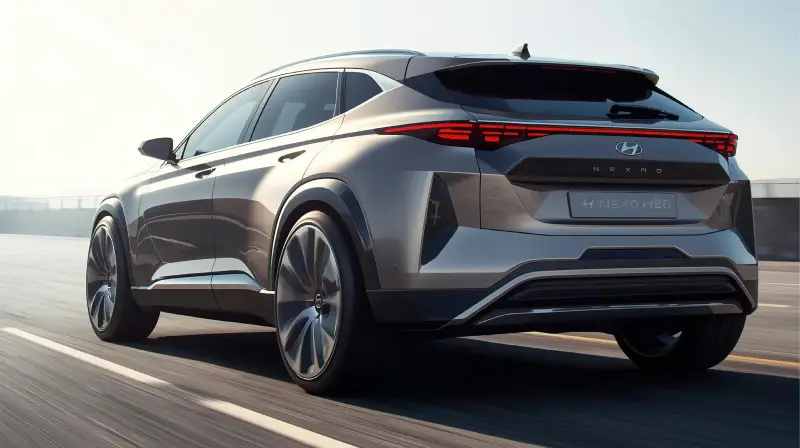
- “Art of Steel” styling language for the new generation.
- High-tech interior with digital displays, premium materials and safety features.
- Practical SUV form-factor: doors, seating for five, cargo capacity aimed at mainstream utility.
Safety and Practicality
Safety remains a major factor. The earlier Nexo achieved top ratings in safety tests like Euro NCAP. Also, the hydrogen tanks and vehicle structure incorporate robust materials and safety systems.
More from Blogs: Huawei Maextro S800 Review: What Sets It Apart
Real-World Viability: Where the Hyundai Nexo Hydrogen Car Excels
Long-Distance Travel without Range Anxiety
For drivers who cover long distances or dislike charging downtime, the Hyundai Nexo hydrogen car represents a near-ideal solution: long range + fast refill + zero emissions. It addresses common real-world problems for commuters, road-trip drivers and fleet operators.
Stealth Mode Zero Emissions
For eco-conscious buyers, the Nexo allows a premium SUV experience with hydrogen power instead of gasoline or diesel. Cities with strict emission standards or limited parking/vehicle access may favour such vehicles.
Quiet, Comfortable Drive
The fuel-cell drivetrain is inherently smooth and silent, creating a refined experience. Drivers accustomed to luxury SUVs will feel at home rather than in a niche “eco-car”.
The Challenge Side: Why the Road Is Still Steep
Infrastructure Constraints
Perhaps the biggest barrier for the Hyundai Nexo hydrogen car is the hydrogen refuelling infrastructure. While Hyundai cites fast refill times, many markets still lack sufficient stations. For example, in countries like the UK, hydrogen pump availability remains extremely low.
Cost and Business Case
Hydrogen fuel-cell technology remains costlier than battery or internal combustion in many contexts. Also, the economics of hydrogen production, storage and transport add complexity. Some reviews emphasise that while technology is advanced, the cost case is still constrained.
Market Niche vs Mainstream
Despite its advances, the Hyundai Nexo hydrogen car is still a niche product; rollout and consumer uptake depend heavily on local incentives, regulatory frameworks and ecosystem readiness. Many buyers may prefer BEVs or hybrids until hydrogen infrastructure is more widespread.
Safety Recall Note
While hydrogen cars are generally safe, the Nexo has had recalls—e.g., around 1,600 vehicles recalled in the U.S./Canada over a pressure-relief device concern. This reminds buyers to consider long-term safety, service support and brand responsiveness.
Hyundai Nexo Hydrogen Car: Key Specifications At-a-Glance
| Specification | Value (2025/2026 Model) |
|---|---|
| Powertrain Type | Hydrogen Fuel-Cell Electric Vehicle (FCEV) |
| Hydrogen Tank Capacity | Approx. 6.69 kg hydrogen |
| Projected Range (WLTP) | Up to ~826 km (~514 miles) |
| Refill Time | Around 5 minutes |
| Drive Layout | Front-wheel drive (for current model) |
| Seating Capacity | 5 adults |
| Estimated Price | India: ₹ 65 lakh (ex-showroom, estimated) |
| Safety Rating | 5-star Euro NCAP (earlier version) |
What This Means for Buyers and Industry
For Prospective Buyers
If you are considering the Hyundai Nexo hydrogen car, ask yourself:
- Do you have reliable access to hydrogen refuelling stations locally?
- Are you comfortable with newer technology and potentially higher upfront costs?
- Do you drive long distances and want quick refills rather than charging downtime?
- Will you benefit from incentives, low-emission zones or tax advantages in your region?
For Automotive Industry and Mobility Strategy
The Hyundai Nexo hydrogen car signals the following trends:
- Automakers view hydrogen as a valid alternative alongside BEVs, especially for long-range and premium vehicles.
- Infrastructure investment (fuel stations, hydrogen production) is a rate-limiting step.
- Consumer acceptance will depend not only on vehicle features, but on ecosystem readiness and real-world practicality.
Tips for Future-Focused Drivers
- Check local infrastructure first: Before committing, map out hydrogen stations in your region and their reliability.
- Understand ownership costs: Fuel, service, insurance and resale value may differ from conventional or battery-electric SUVs.
- Track government incentives: Some markets offer subsidies or tax breaks for fuel-cell vehicles—these change frequently.
- Think long term: If you plan to keep the vehicle for many years, consider the brand’s hydrogen strategy, service network and software support.
- Compare alternatives: A BEV or plug-in hybrid might currently be more practical if infrastructure is weak—choose based on your real-world driving and access.
The Road Ahead for the Hyundai Nexo Hydrogen Car
Hyundai’s next-generation Nexo launch shows serious intent: improved range, refined styling and stronger positioning. The 2025 global reveal highlights the pursuit of hydrogen as part of Hyundai’s broader zero-emission strategy.
In the next few years:
- Wider roll-out of hydrogen SUVs to new markets.
- Growth in refuelling infrastructure, especially in Asia, South Korea, Europe.
- Technology cost reductions as scale increases.
- Potential for hydrogen expansion into trucks, buses and heavy transport—leveraging Nexo’s platform mentality.
For the Hyundai Nexo hydrogen car to truly achieve mainstream status, hydrogen visibility, pricing, station networks and consumer trust must align. But if they do, we may look back at this vehicle as one of the pioneering chapter-openers in hydrogen mobility.
Closure:
The Hyundai Nexo hydrogen car stands at an intriguing cross-roads of innovation and practicality. Its silent innovation lies in fuel-cell technology, fast refuelling and long range—a convincing solution for drivers tired of charging stress and fossil fuels. But the steep challenge is real: infrastructure gaps, higher initial cost, and the niche status of hydrogen cars today.
For the forward-thinking buyer, the Nexo offers a premium, future-oriented SUV with zero emissions and a compelling story. For the industry, it signals that hydrogen is not just a concept—it’s arriving, and global manufacturers are betting on it.
If you’re navigating your next vehicle purchase or considering how mobility will evolve, the Hyundai Nexo hydrogen car is worth attention.
FAQs: Hyundai Nexo Hydrogen Car
1. What is the Hyundai Nexo hydrogen car?
The Hyundai Nexo is a hydrogen fuel-cell electric vehicle (FCEV) SUV that uses hydrogen and oxygen in a fuel-cell stack to generate electricity and power an electric motor. It emits only water vapour and boasts fast refuelling and long range.
2. How far can the Nexo travel on a single tank?
The new generation Hyundai Nexo hydrogen car is projected to travel up to ~826 km (WLTP) under ideal conditions. Earlier models achieved around 414 miles (~666 km).
3. How long does it take to refuel hydrogen?
Approximately five minutes for a full refill, making it competitive with gasoline refuelling times.
4. What is the estimated price in India?
Estimated ex-showroom price is around ₹ 65 lakh in India, with the caveat that widespread availability depends on infrastructure.
5. What are the main challenges for Nexo buyers?
Key challenges include limited hydrogen refuelling stations, higher cost of ownership in some markets, and lower resale value risk due to early-adopter status.
6. Is hydrogen car technology safe?
Yes, modern hydrogen FCEVs like the Hyundai Nexo include robust safety systems, high-pressure tank design, and have achieved high safety ratings. However, there have been recalls (e.g., in U.S./Canada) over a pressure-relief device in some Nexo models.
7. Is the Hyundai Nexo hydrogen car the same as a battery-electric vehicle (BEV)?
No. While both are electric at the motor level, the Hyundai Nexo hydrogen car uses hydrogen fuel cells for power generation and refuels in minutes; BEVs use stored batteries and recharge via cable, which typically takes longer.
Share this post with others interested in sustainable mobility, leave a comment with your thoughts on hydrogen cars vs electric vehicles, and let’s keep exploring the future of transport.

