
China US Trade War – Who’s Really Ahead?
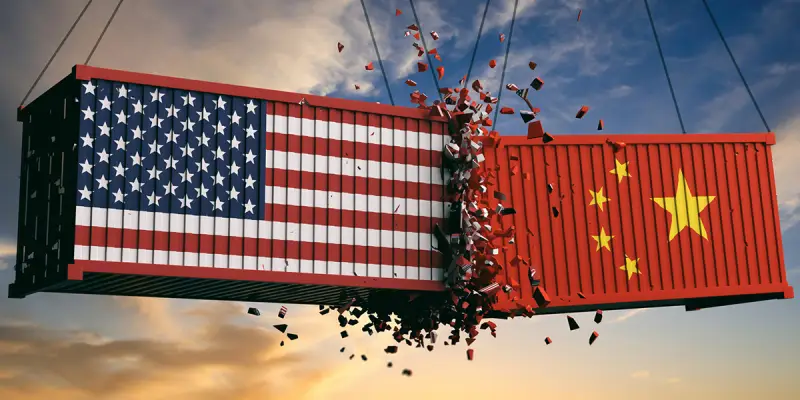
The phrase China US Trade War evokes headlines, tariffs, political brinkmanship—and yet beneath that noise lies a far more nuanced story. While the spotlight often shines on the U.S. tariffs and countermeasures, the numbers suggest that China may hold a quiet advantage in this economic conflict. This blog post will explore what the data actually reveal, dissect the real-life consequences for businesses and consumers, and offer practical guidance for navigating this complex landscape.
The Origins of Conflict: How the Trade Frictions Began
The most recent phase of the China US Trade War began in 2018 when the U.S. imposed tariffs on roughly US $350 billion of Chinese imports and China retaliated on about US $100 billion in U.S. exports. These measures were framed as efforts by the U.S. to correct what it considered unfair Chinese trade practices—intellectual-property theft, forced technology transfer, and over-capacity in manufacturing.
From the beginning, the trade war was not just about trade balances—it was also about global industrial leadership, supply-chain dominance and geopolitics. The initial U.S. rationale was: reduce dependence on Chinese manufacturing, create jobs at home, and restore balance. But as the measures took hold, key issues emerged.
The Data: Where China Appears to Be Gaining the Upper Hand
Trade Surplus Trends
China recently described its trade surplus with the U.S. as “inevitable,” while warning it would defend its interests if pushed. Data show that the U.S. goods trade deficit with China expanded to US $295.4 billion in 2024, up from US $279.1 billion in 2023. This widening gap undermines one of the fundamental aims of the U.S.: to shrink the deficit.
Supply-Chain Resilience & Diversification
Research indicates China has embedded itself more deeply into upstream global value chains even as the U.S. sought diversification. A recent study found China’s involvement in intermediate shipments to Asia and Europe increased, while many U.S. firms shifted to “China + 1” markets—but these remained closely tied to Chinese upstream supply.
Tariff Impacts and Manufacturing Shifts
Although China’s manufacturing PMI dropped to 49 in April 2025, showing contraction for the first time since December 2023, it still managed to maintain export power and adapt to changing demand.
Trade Diversion Effects
While the U.S. targeted Chinese goods, much of the effect was trade diversion—not elimination. Goods destined for the U.S. were increasingly routed through third-party countries or manufactured in alternative hubs, reducing the direct impact on China.
More from Blogs: Inside China’s Bold Space Mission: The Heavenly Palace Experiment
Real-Life Problems for Stakeholders
U.S. Manufacturers and Consumers
For U.S. companies, tariffs often mean higher input costs, disrupted supply chains and uncertainty. A study found that U.S. goods industries delayed investment and hiring amid the trade war.
Consumers also feel the impact: when tariffed goods cost more, the burden often shifts to the end-user.
Chinese Firms and Workers
On the Chinese side, while the country has shown agility, it’s not immune to pressure. Manufacturing contraction, delayed orders and export slowdowns pose risks. The advantage may be quiet, but it’s not without tension.
Smaller Businesses and Global Supply Chains
Businesses in countries outside the U.S. and China find themselves squeezed. When supply chains realign, they may bear the cost or find new opportunity—but the transition is disruptive.
Why China Holds the Edge—and Why It’s Not Invincible
Focused Export Strategy
China’s export engine remains robust. It leverages scale, logistics infrastructure and manufacturing depth. At the same time, while U.S. firms try to move out of China, they often end up shifting to other places still linked to China’s supply chain.
Domestic Support and Flexibility
China has been able to adjust state-led investments, subsidies and infrastructure responses to moderate the pain of external shocks. This flexibility gives it an edge in absorbing trade-war stress.
Global Market Expansion
Instead of relying solely on U.S. markets, China is expanding into Asia, Africa and Latin America. This hedging strategy dilutes U.S. leverage over time.
But the edge is not unassailable. Rising costs, aging demographics, debt challenges and climate pressure all threaten China’s long‐term growth model. Meanwhile, the U.S. still holds advantages in technology, innovation and services.
Practical Solutions for Businesses Navigating the Trade War
For U.S. Companies
- Review your supply chain: Identify reliance on Chinese inputs and explore “China + 1” strategies, but recognise they may still link back to China’s ecosystem.
- Consider cost pass-through: When tariffs increase, determine how much cost you can absorb or pass to consumers.
- Diversify markets: Don’t just look at China and the U.S.—emerging markets may offer growth with less tariff risk.
For Chinese or China-Linked Firms
- Leverage your export advantage—but invest in domestic innovation to avoid being locked into low-margin manufacturing.
- Monitor U.S. policies closely: Sanctions or insulation strategies may shift rapidly.
- Build brand resilience: As Chinese firms move up the value chain, global perception and intellectual property become more important.
For Governments and Policymakers
- Focus on structural reform: Tariffs may manage symptoms, but addressing issues like workforce training, innovation, and infrastructure will matter more.
- Coordinate internationally: Trade wars rarely end well for one side—global value chains mean many countries are interconnected.
- Communicate policy clearly: Businesses need predictability more than surprise tariffs.
Future Outlook: What the Next Phase Might Look Like
- Negotiation resets:
With both sides showing willingness to explore new terms, some tariffs may ease—but structural issues remain. - Technological competition:
The trade war may evolve into a tech war, where semiconductors, AI and rare-earths matter more than simple goods. - Supply-chain realignment:
A slow but steady shift may happen where China remains dominant upstream while parts of assembly migrate elsewhere—but linked ecosystems persist. - Trade war winners and losers:
There may be no clear winner in the sense of mutually identical gains, but China currently shows a quiet edge. The U.S. faces a bigger challenge to reverse structural trends.
Closure: China US Trade War
The phrase China US Trade War might strike as combative, but when you dig into the data, you see a subtler story: China has carved out a quiet advantage, leveraging scale, supply-chain depth and strategic diversification. The U.S. faces a more overt challenge—reshaping industry, supply chains and policy in an increasingly multipolar world.
For businesses, policymakers and citizens, the key take-away is this: structure your strategy around adaptability, not just tariffs. Diversify your supply chains, prepare for structural shifts and recognise that the next phase isn’t about a tit-for-tat tariff battle—it’s about value-chain leadership, innovation and global positioning.
FAQs: China US Trade War
1. What is the main goal of the China US trade war?
The core aim for the U.S. has been to reduce the trade deficit, protect intellectual property rights, and rebalance manufacturing. For China, it’s been about defending economic growth, sustaining exports and shifting up the value chain.
2. Is China winning the trade war against the U.S.?
While “winning” is a loaded term, the numbers suggest China currently holds a quiet advantage: a widening trade surplus, deeper supply-chain embedding and diversified export markets.
3. How are Chinese exports still strong despite tariffs?
China leverages scale, alternative trade routes, and state-backed infrastructure—combined with manufacturers who pivot to other trade partners or supply-chain adjustments.
4. What are the risks for the U.S. in this trade war?
U.S. risks include higher consumer prices, disrupted supply chains, slower manufacturing growth, and diminished leverage if Chinese firms expand elsewhere.
5. How should small businesses respond to the trade war?
Small firms should not ignore the trade situation but focus on agility: diversify suppliers, increase value rather than just volume, and build resilience against shocks.
6. Can this trade war end soon?
A full end is unlikely in the near term because structural issues—like tech dominance, manufacturing strategy and global supply-chain reallocation—take years to resolve.
7. How does the trade war affect global economies beyond the U.S. and China?
Many economies feel supply-chain shifts, trade diversion and investment redirection. Some may benefit from new manufacturing relocation; others face increased uncertainty and overlap of risk.
If you found this analysis useful, please share it with your network, leave a comment with your perspective on the trade war, and let’s keep the conversation going about what comes next for the U.S., China and the global economy.

