
More
    Home Blog Page 7

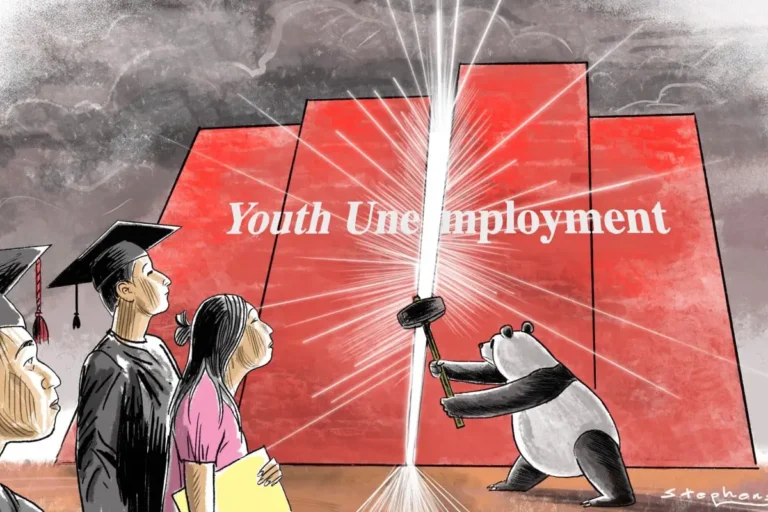
    China Youth Unemployment Challenge: What it Means for America’s Future

    0

    China Youth Unemployment Challenge: Why the US Should Pay Attention

    As Americans, we often focus on the headlines closer to home – gas prices, job growth, interest rates. It’s natural to think about our own economy and the opportunities (or challenges) facing our young people. But what happens when a major global player, an economic powerhouse like China, faces a massive and sustained internal crisis? Specifically, what happens when millions of its young, educated citizens can’t find work?

    This isn’t just an abstract concern. China’s youth unemployment rate hit record highs in 2023, signaling deep structural issues within its economy. This isn’t just a number; it represents real people, real struggles, and potentially real instability that can send shockwaves across the Pacific, impacting everything from your consumer goods to global trade routes.

    Understanding this challenge is crucial for every American, whether you’re a business owner, an investor, or simply a consumer. This article will break down the causes, explore the far-reaching economic impact, delve into the long-term implications, and provide practical steps for how you, as an American, can navigate the potential fallout. Let’s peel back the layers and understand why China’s job market woes matter to your future.

    China Youth Unemployment Challenge: A Growing Crisis

    For most Americans, the idea of a graduating class facing widespread joblessness hits close to home. We’ve seen recessions and tough job markets here in the U.S., but the scale of China Youth Unemployment Challenge is unprecedented in recent history. China is the world’s second-largest economy, and its internal struggles rarely stay internal for long. The sheer size of its population and its interwoven role in global supply chains mean that when China sneezes, the world often catches a cold.

    The Squeeze on Graduates

    In June 2023, China’s official youth unemployment rate for those aged 16-24 reached a staggering 21.3%, a new record high before the government controversially suspended the publication of these statistics. To put that in perspective, imagine one out of every five young people you know, right here in your American hometown, unable to find a job after high school or college. This rate is significantly higher than the U.S. youth unemployment rate, which hovered around 7-8% during the same period.

    This crisis is fueled by several factors:

    • Education-Job Mismatch: China’s higher education system has rapidly expanded, producing millions of graduates each year, many with degrees in humanities or social sciences, while the job market often demands vocational skills or expertise in cutting-edge tech.
    • Tech Industry Crackdown: A regulatory blitz by the Chinese government starting in 2020 targeted major tech companies, online education, and real estate. This crackdown led to widespread layoffs and stifled innovation in sectors that traditionally absorbed many young graduates.
    • Economic Slowdown: China’s post-pandemic recovery has been weaker than expected, exacerbated by a struggling property sector and subdued consumer confidence. Fewer jobs are available in general, intensifying competition for entry-level positions.

    More from Blogs: China Export Strategy: What American Businesses Need to Know for 2025–26

    Official Data Disappearance: What It Means

    The decision by China’s National Bureau of Statistics (NBS) to stop releasing youth unemployment data after July 2023 sent a ripple of concern globally. While the official reason cited was a need to “improve and optimize” survey methods, many analysts and international observers view it as an attempt to mask worsening economic conditions. This lack of transparency makes it harder for international businesses and policymakers, including those in the U.S., to accurately assess China’s economic health and make informed decisions.

    The situation has led to some interesting social phenomena within China. Terms like “tang ping” (lying flat), a philosophy of minimal effort and withdrawing from the rat race, and even “full-time children,” where adult graduates live at home and are supported by their parents, have gained traction. These aren’t just quirky trends; they reflect a profound disillusionment and a sense of hopelessness among a significant segment of China’s youth, a stark contrast to the once-prevailing narrative of boundless opportunity. [Related: Understanding Global Economic Indicators]

    Economic Impact: Ripples Across the Global Economy

    A common misconception among Americans might be, “China’s youth unemployment is their problem, not ours.” However, in our interconnected world, nothing truly stays isolated. China’s economic health directly influences the global economy, and by extension, our wallets and job markets here in the United States.

    Supply Chain Vulnerability and Consumer Prices

    China is often referred to as “the world’s factory.” Everything from your smartphone to your sneakers, from car parts to pharmaceutical ingredients, often has a component or assembly line in China. When China’s economy slows due to internal issues like high unemployment, several things can happen:

    • Reduced Production: A weaker economy can lead to less demand internally, which might indirectly impact production levels for export goods.
    • Disrupted Supply Chains: Economic instability can create bottlenecks or inefficiencies, potentially leading to delays in getting products to American shelves.
    • Shifting Costs: While a weaker Chinese economy might, in some scenarios, lead to cheaper labor, the overall instability often translates to higher risk premiums for companies, which can ultimately be passed on to American consumers in the form of higher prices for imported goods.

    Decreased Consumer Demand

    With millions of young people out of work, China’s vast domestic consumer market weakens. This matters because American companies, from Apple to Starbucks to Boeing, rely on Chinese consumers to buy their products and services. A dip in Chinese consumer spending means less revenue for these U.S. giants, which can impact their stock performance, their ability to invest in growth, and even their employment levels here in America.

    For American readers specifically, consider the implications for industries like:

    • Technology: Less demand for smartphones, computers, and software.
    • Luxury Goods: Chinese consumers are major buyers of high-end American and European brands.
    • Agriculture: China is a significant importer of American agricultural products like soybeans and corn.

    Historically, when large economies face downturns, the global effects are undeniable. For instance, the 2008 financial crisis originating in the US quickly became a global recession. While the current situation in China is different in origin, the principle of interconnectedness remains. The challenge for many American companies is finding ways to diversify their market exposure and reduce over-reliance on any single economy, especially one facing significant internal economic impact.

    Economic Indicator China (2023 Peak est.) United States (2023 Avg.)
    Youth Unemployment (16-24) ~21.3% (June 2023) ~8.0% (Year Avg.)
    Overall GDP Growth ~5.2% (Official target) ~2.5% (Actual)

    (Data sources: NBS China, U.S. Bureau of Labor Statistics, IMF)

    Long-Term Implications: A Shifting Landscape

    The youth unemployment crisis in China isn’t just a temporary blip; it has profound long-term implications that will reshape China internally and influence the global stage for decades. For Americans, understanding these shifts is key to anticipating future economic and geopolitical landscapes.

    Demographic Shifts and Social Stability

    China is already grappling with a rapidly aging population and declining birth rates – a significant demographic shift. High youth unemployment exacerbates this. A generation struggling to find work means fewer people getting married, buying homes, and starting families, further deepening the demographic crisis. This pressure on the younger generation also poses a risk to social stability, as widespread discontent among youth can challenge government authority over time. This isn’t just a humanitarian concern; it could lead to unpredictable policy decisions by the Chinese government, with potential global repercussions.

    Innovation and Tech Development

    Historically, young, educated talent fuels innovation. When a large segment of this population is underemployed or unemployed, the engine of innovation slows. The tech industry crackdown, while aimed at control, has also stifled the entrepreneurial spirit that once made China a leader in certain tech sectors. This could impact the pace of technological advancements globally, and potentially give American tech companies a competitive edge if China’s internal issues persist.

    Cost Implications for U.S. Businesses and Consumers

    The long-term effects could impact American businesses operating in or trading with China. Persistent economic weakness could mean a less reliable market for US exports. Conversely, if China struggles to produce goods efficiently due to internal unrest or an unskilled workforce, companies might seek alternative manufacturing hubs, which could involve new costs and supply chain adjustments that ripple down to American consumers. While this might lead to some ‘reshoring’ efforts, it’s a complex and often expensive process for US businesses.

    Warning: Common U.S. Pitfalls to Avoid

    A significant pitfall for American businesses and policymakers is underestimating the depth and persistence of these challenges in China. Over-reliance on a single market, whether for sales or manufacturing, can expose companies to undue risk. Diversification of supply chains and market reach is paramount.

    Checklist for Observing Long-Term Trends:

    • Monitor China’s GDP growth: Is it meeting official targets?
    • Watch for policy shifts: Does the government introduce significant stimulus or further crackdowns?
    • Observe birth rates and demographic reports: Are these trends stabilizing or worsening?
    • Track foreign direct investment (FDI) in China: Are international companies still investing heavily?

    These indicators will provide crucial insights into whether China is effectively addressing its social stability challenges or if they are deepening.

    Navigating the Future: What Americans Can Do

    While the challenges facing China’s youth might seem distant, their potential impact on your daily life and future investments is very real. As an American, you can take proactive steps to understand, prepare for, and even mitigate some of these global economic shifts.

    Step-by-Step Guide for Americans

    1. Stay Informed and Vigilant

      Make it a habit to follow global economic news from reputable American and international sources. Publications like The Wall Street Journal, The New York Times, Bloomberg, and Reuters offer in-depth analyses. Understanding geopolitical and economic trends beyond U.S. borders provides valuable context for your financial and career decisions.

      Pro tip for Americans: Look for objective reporting that details facts and multiple perspectives, rather than solely relying on opinion pieces or sensational headlines.

    2. Review Your Personal and Business Investments

      If you have investments, particularly in mutual funds or ETFs, check their exposure to the Chinese market. A financial advisor can help you understand your portfolio’s diversification. Consider whether you are comfortable with the level of risk associated with companies heavily reliant on the Chinese economy, especially those in the tech or real estate sectors that have faced significant government intervention.

    3. Support Supply Chain Diversification

      As a consumer, be aware of where your products come from. As an advocate, support policies and businesses that are working towards more resilient and geographically diverse supply chains. This reduces over-reliance on any single nation, including China, and can help stabilize prices and product availability in the long run.

      Pro tip for Americans: Look for “Made in USA” or products sourced from other allied nations when possible, supporting local economies and reducing geopolitical supply chain risks.

    4. Champion American Innovation and Competitiveness

      The U.S. continues to be a global leader in innovation. Supporting domestic research and development, STEM education, and entrepreneurial ventures strengthens America’s economic foundation. This helps us remain competitive and less vulnerable to external economic shocks, driving our own global economy standing.

    5. Understand Geopolitical Risks

      Economic instability often goes hand-in-hand with geopolitical tensions. Be aware of how the U.S. government is responding to China’s economic and political shifts. This can influence trade policies, international relations, and ultimately, American business opportunities and risks.

    Tools and Resources Available in the USA

    For Americans, a wealth of resources exists to help you navigate these complex issues:

    • Financial Advisors: Certified Financial Planners (CFPs) can offer personalized advice on portfolio diversification and risk management.
    • Government Reports: Agencies like the U.S. Department of Commerce and the U.S. Trade Representative publish reports on international trade and economic conditions.
    • Academic Institutions & Think Tanks: Organizations like the Council on Foreign Relations, Brookings Institution, and various university research centers provide expert analysis on China and global economics.

    Realistic Expectations and Timeline

    The challenges in China are structural and deeply ingrained; they will not resolve quickly. This requires ongoing vigilance, not a one-time adjustment. Expect the situation to evolve over several years, requiring Americans to remain informed and adapt their strategies as new information emerges. Budget considerations for diversification might include minor transaction fees if adjusting investments, but the long-term benefit of resilience often outweighs these small costs.

    FAQs

    Q: What is China’s current youth unemployment rate?
    A: China’s official youth unemployment rate (ages 16-24) reached a record 21.3% in June 2023. However, the government stopped releasing this data after July 2023, citing a need to optimize survey methods.

    Q: How does China’s youth unemployment affect American jobs?
    A: It can indirectly affect American jobs by reducing demand for U.S. exports to China, impacting revenue for American companies reliant on the Chinese market, and potentially leading to supply chain disruptions that affect various industries.

    Q: Should I be worried about my investments?
    A: It’s wise to review your investment portfolio for exposure to Chinese markets or companies heavily reliant on China. A financial advisor can help assess your risk level and suggest diversification strategies to protect your assets.

    Q: What is “lying flat” (tang ping)?
    A: “Lying flat” is a social trend in China where young people reject intense work culture and consumerism, opting for a minimalist lifestyle with minimal effort and ambition, often due to disillusionment with limited economic opportunities.

    Q: Will this lead to social unrest in China?
    A: Widespread youth unemployment can be a factor contributing to social discontent. While the Chinese government employs strict controls, persistent economic hardship and lack of opportunity could pose challenges to long-term social stability.

    Q: How does China’s education system contribute to the problem?
    A: China’s rapidly expanded higher education system produces millions of graduates, many with degrees that don’t align with current job market demands for vocational or specialized tech skills, creating an education-job mismatch.

    Q: What role does the tech industry crackdown play in this crisis?
    A: The Chinese government’s regulatory crackdowns on major tech companies, online education, and real estate led to significant layoffs and reduced hiring in sectors that historically absorbed many young graduates, worsening the job market.


    China Export Strategy: What American Businesses Need to Know for 2025–26

    0

    China Export Strategy: What It Means for the US

    Remember that feeling when you couldn’t find your favorite gadget or a crucial part for your small business, all because of a far-off supply chain hiccup? Or maybe you’ve noticed prices climbing on everyday goods, making your dollar stretch a little less each month. For many American households and businesses, the global supply chain, heavily reliant on China, has felt anything but predictable lately.

    It’s a common challenge: a recent survey showed that 70% of US businesses experienced supply chain disruptions in the past year, often linked to international manufacturing. But what if the very foundation of this global system is quietly changing? What if China, long known as the ‘world’s factory,’ is deliberately shifting its export strategy in ways that will profoundly impact American shelves, wallets, and workplaces by 2025 and 2026?

    This article isn’t about predicting the future with a crystal ball. Instead, it’s about understanding the verifiable trends and policy signals indicating a significant evolution in China export strategy. We’ll explore why these changes are happening, how they’ll affect American businesses and consumers, and, most importantly, what practical steps you can take today to prepare. Get ready to navigate a new era of global trade with confidence. [Related: The Future of Global Supply Chains]

    China Export Strategy: A New Era for American Buyers

    For decades, many American businesses, from huge corporations to mom-and-pop shops, have relied on China for manufacturing a vast array of products. The allure was simple: cost-effectiveness and massive production capacity. But as we look towards 2025–26, that relationship is clearly evolving, making understanding China export strategy more vital than ever for American buyers.

    The landscape for American buyers is already shifting. Inflation, a persistent concern for many US households, has driven up the cost of imported goods. This, coupled with the memory of recent supply chain bottlenecks (think empty car lots or delayed electronics during the pandemic), has pushed US businesses to critically re-evaluate their sourcing. The focus is no longer solely on the cheapest price, but increasingly on reliability, diversification, and even geographic proximity.

    Rising Costs and Shifting Priorities

    We’re seeing a clear trend where the cost of manufacturing in China is rising, fueled by increasing labor costs, stricter environmental regulations, and a focus on higher-value production within China itself. For American importers, this means the ‘China price’ they once knew is becoming less competitive. This isn’t just a slight increase; it’s a fundamental recalibration.

    For example, a small textile importer in North Carolina, Sarah, used to exclusively source activewear from Chinese factories. “For years, it was a no-brainer,” she shares. “But over the last three years, my unit costs have gone up over 20%. When you add shipping and tariffs, my margins are razor-thin. I can’t keep passing that kind of increase directly to my customers here in the US.” Sarah’s story is a common one, driving many to seek alternatives.

    Diversification Efforts by US Companies

    In response, many US companies are actively pursuing diversification. This doesn’t necessarily mean abandoning China entirely, but rather spreading their risk. Instead of 100% reliance on one region, businesses are exploring options in countries like Vietnam, India, Mexico, or even bringing some production back home to the United States.

    Consider the electronics industry: Many American companies are now exploring “China + 1” strategies, meaning they maintain some production in China but also establish significant manufacturing bases in at least one other country. This strategy aims to build supply chain resilience and mitigate geopolitical risks.

    Practical steps for American businesses to adapt:

    • Conduct a thorough supply chain audit: Understand your current dependencies and identify single points of failure.
    • Explore alternative sourcing regions: Research manufacturing capabilities in countries like Mexico (nearshoring) or Southeast Asia.
    • Re-evaluate inventory management: Consider holding slightly larger buffer stocks of critical components to guard against disruptions, balancing this with carrying costs.

    According to the U.S. Census Bureau, the US trade deficit with China, while still substantial, saw its lowest level in over a decade in 2023, signaling early shifts in trade patterns as companies adjust their sourcing strategies. This isn’t just a blip; it’s a trend that analysts expect to continue into 2025–26.

    Understanding the Global Trade Shifts Impacting China

    Many Americans hold the misconception that China’s economic model is static, perpetually focused on exporting cheap goods to the world. However, this perspective overlooks the profound internal and external pressures that are reshaping global trade shifts and, consequently, China’s export strategy itself. China isn’t just reacting; it’s proactively reorienting its economic engine.

    More from Blogs: Trump, Xi Agree to Cut Tariffs: A New Phase in USA and China Trade Relations

    Beyond ‘Made in China’ Supremacy

    For years, the phrase ‘Made in China’ was synonymous with affordability and mass production. But China’s government has made it clear that its future lies in higher-value manufacturing, technological innovation, and domestic consumption. Initiatives like ‘Made in China 2025’ (though officially de-emphasized, its spirit lives on) aim to move China up the industrial value chain, focusing on advanced robotics, aerospace, new energy vehicles, and biotechnology. This means less capacity for low-end, high-volume exports and more focus on complex, high-tech products for both domestic use and more strategic international markets.

    What does this mean for American businesses? It implies that sourcing simple, labor-intensive products from China might become more difficult and expensive, while advanced components or finished goods in strategic sectors might still be available, albeit at a premium reflecting their increased value and technology.

    The ‘Dual Circulation’ Strategy Explained

    One of the most significant concepts driving China’s economic transformation is its “dual circulation” strategy, introduced in 2020. This strategy emphasizes strengthening domestic demand and technological self-reliance (“internal circulation”) while still engaging with international trade and investment (“external circulation”). Think of it like this: instead of primarily exporting to fuel growth, China wants its massive domestic market to be the primary engine.

    For American readers specifically: This strategy directly impacts the availability and pricing of goods for export. As China prioritizes its domestic market, certain products might first go to Chinese consumers, or manufacturers might be incentivized to meet domestic demand before fulfilling export orders. This is a crucial element influencing China’s export strategy for 2025-26, signaling a shift from ‘export first’ to ‘domestic first, export second’ for many industries.

    Old China Export Model (Pre-2020) New China Export Model (2025–26 & Beyond)
    Focus on mass production of low-cost goods. Emphasis on high-value, tech-intensive manufacturing.
    Export-driven growth primary. Domestic consumption & technological self-reliance (“dual circulation”) primary.
    Cheap labor, competitive pricing for exports. Rising labor costs, focus on advanced industries.
    Global supply chain integration, ‘world’s factory’. Strategic decoupling, supply chain resilience, domestic market priority.

    Case Study: Tech Reshoring in America

    An American company, ‘InnovateTech Solutions’ based in Austin, Texas, specializing in smart home devices, faced severe delays and cost spikes from its Chinese manufacturer during the pandemic. Recognizing the shift, they invested in a new assembly line in Mexico in 2023, while also starting to procure some specialized components from domestic US suppliers. By diversifying their supply chain to include nearshoring and partial reshoring, InnovateTech aims to reduce lead times by 30% and mitigate geopolitical risks, even if the initial setup costs were higher. This strategic move aligns with the broader global trade shifts away from singular dependency.

    Actionable tips for leveraging these shifts:

    • Seek direct communication with Chinese suppliers: Understand their long-term plans and if their product focus aligns with your needs.
    • Explore regional trade agreements: The USMCA (United States-Mexico-Canada Agreement) offers tariff benefits for North American production, making nearshoring more attractive.
    • Invest in localized production feasibility studies: Can some of your components or assembly be done closer to home?

    Navigating Supply Chain Resilience and Its Costs for US Businesses

    The concept of supply chain resilience has moved from a buzzword to a fundamental necessity for American businesses. This shift directly influences how US companies interact with China’s export strategy. Building resilience often comes with an initial cost, but the long-term benefits in stability and risk mitigation are proving invaluable.

    The Tariff Tango and US Import Rules

    American businesses must stay acutely aware of legal and regulatory considerations, particularly tariffs, which remain a significant factor in US-China trade. The Section 301 tariffs, originally implemented in 2018, continue to apply to hundreds of billions of dollars worth of Chinese imports. While there have been exclusions and adjustments, these tariffs add substantial costs to goods, directly impacting the final price for American consumers.

    Beyond tariffs, US import regulations cover everything from product safety standards (e.g., CPSC for consumer products) to intellectual property protections. As China moves into higher-tech manufacturing, safeguarding IP becomes even more critical for American innovators. Businesses need robust contracts and intellectual property strategies when sourcing from any international partner, especially as geopolitical tensions persist.

    Investing in Resilient Supply Chains

    The cost implications in USD for enhancing supply chain resilience are real. Moving production, even partially, from China to another country or back to the US involves significant upfront investment:

    • R&D and Sourcing Costs: Identifying new suppliers, qualifying factories, and redesigning products for new manufacturing processes can be expensive.
    • Logistics and Transportation: While nearshoring might reduce shipping times, initial freight costs from new regions could vary.
    • Infrastructure and Labor: Setting up new facilities or training a new workforce, particularly for reshoring efforts, requires substantial capital and time.

    However, many US companies are realizing that the “total cost of ownership” goes beyond just the unit price. It includes the cost of potential disruptions, reputational damage, and inventory holding costs. Investing in resilience is increasingly seen as an insurance policy against future shocks.

    Time investment for busy Americans: Shifting supply chains is not an overnight task. For small and medium-sized businesses (SMBs), it can take anywhere from 12 to 24 months to identify, vet, and fully transition to new suppliers, especially for complex products. Larger corporations might have dedicated teams, but even they face multi-year timelines for significant reconfigurations.

    Success Stories from US Individuals/Companies

    Take the story of ‘Liberty Gear,’ a small outdoor equipment manufacturer in Colorado. Facing consistent delays and quality control issues from their Chinese supplier post-pandemic, the founder, Mark, decided to bring the stitching and assembly of their camping backpacks to a workshop in Denver in 2023. While the labor costs were higher in USD, he streamlined operations, cut lead times from 90 days to 30, and gained significant marketing advantage by proudly proclaiming “Assembled in USA.” “The initial investment was a leap of faith,” Mark notes, “but the control, quality, and consumer appeal have made it worth every penny.”

    Checklist for US Companies to Assess Supply Chain Risks:

    1. Do you have single points of failure in your supply chain (e.g., only one supplier for a critical component)?
    2. Are you fully aware of the geopolitical risks associated with your current sourcing regions?
    3. Have you factored in tariffs, freight increases, and potential delays into your product’s total cost?
    4. Do your contracts with international suppliers adequately protect your intellectual property?
    5. Have you explored government incentives or grants for reshoring or nearshoring efforts in the US?

    Warning about common US pitfalls: Underestimating the time and resources required for diversification is a major pitfall. Another is focusing purely on direct cost savings without accounting for the hidden costs of risk, lead time, and lack of control that often accompany long, complex supply chains.

    An Implementation Guide for American Businesses in 2025–26

    As China’s export strategy continues its quiet transformation, American businesses need a clear roadmap to navigate the changing landscape. Preparing for 2025–26 requires proactive planning and strategic adjustments to your supply chain.

    Step 1: Audit Your Current Supply Chain

    Start by gaining a deep understanding of your existing dependencies. Map out every supplier, sub-supplier, and logistics route. Identify where your critical components or finished goods originate and assess the associated risks, including geopolitical, environmental, and financial factors.

    Pro tip for Americans: Use software tools or consult with a supply chain specialist to identify vulnerabilities in your current setup, especially those relying heavily on single regions.

    Step 2: Diversify Your Sourcing Portfolio

    Don’t put all your eggs in one basket. Actively seek out alternative suppliers in different countries. Consider nearshoring to Mexico or Canada, exploring options in Southeast Asia (like Vietnam or Thailand), or even looking into reshoring some production back to the USA.

    Pro tip for Americans: Attend US trade shows and industry conferences to network with potential domestic and North American suppliers. Organizations like the US Commercial Service can also help identify new international partners.

    Step 3: Invest in Technology and Automation

    To remain competitive, particularly if you’re considering reshoring, leverage automation and advanced manufacturing technologies. Robotics, AI-driven inventory management, and digital twins can significantly boost efficiency, reduce labor costs, and improve quality control in US-based operations.

    Step 4: Build Stronger Supplier Relationships

    Beyond transactional dealings, cultivate deeper, more collaborative relationships with your key suppliers, both new and old. This involves regular communication, shared forecasting, and potentially even joint R&D efforts. Strong relationships can provide better insights into potential disruptions and foster faster problem-solving.

    Step 5: Re-evaluate Inventory Management Strategies

    Traditional “just-in-time” inventory models might need adjustment. While lean inventories save money, they expose businesses to higher risks during disruptions. Consider strategic stockpiling of critical, long-lead-time components or finished goods to create a buffer against unforeseen supply chain shocks. This helps maintain supply chain resilience.

    Step 6: Understand Trade Policies and Regulations

    Stay informed about evolving US trade policies, tariffs, and import regulations. This includes understanding the benefits of free trade agreements (like USMCA) and potential changes in tariff structures. Work with customs brokers and trade lawyers to ensure compliance and optimize costs.

    Timeline with Realistic Expectations:

    Implementing significant supply chain changes is a marathon, not a sprint. Expect initial analysis and identification of new partners to take 3-6 months. Vetting and qualifying new suppliers can add another 6-12 months. Full transition and operational optimization may take 18-36 months. Start small, test pilot programs, and scale up gradually.

    Budget Considerations:

    Allocate funds for:

    • Research & Development: For exploring new materials or production methods.
    • New Supplier Vetting: Site visits, audits, sample production.
    • Logistics Adjustments: New shipping routes, warehousing.
    • Technology Investment: Automation, software for supply chain visibility.
    • Working Capital: For potentially higher inventory levels.

    These investments, while substantial, are increasingly viewed as essential for long-term stability and competitiveness in a global economy where China export strategy is undeniably transforming.

    FAQs: China export strategy

    Q1: Will products from China become more expensive for American consumers?
    A: Yes, for many categories, especially lower-end goods, rising labor costs, increased focus on domestic consumption, and potential tariffs mean prices are likely to increase or products may be sourced from other regions.

    Q2: Is “Made in USA” going to be more common?
    A: There’s a growing trend towards reshoring and nearshoring, driven by supply chain disruptions and government incentives. While not all production will return, “Made in USA” and “Made in North America” labels are expected to become more prevalent in certain sectors.

    Q3: How does this affect my small business that imports from China?
    A: Your small business should prepare for potential cost increases, longer lead times, and a need to diversify suppliers. Start exploring alternative sourcing locations and building stronger relationships with existing partners.

    Q4: What industries are most affected by China’s changing strategy?
    A: Industries heavily reliant on low-cost, mass-produced goods like textiles, basic electronics, and some consumer goods will see significant shifts. High-tech sectors might face challenges in accessing advanced components if China prioritizes domestic use.

    Q5: Should I be worried about product availability in the coming years?
    A: Not necessarily worried, but aware. By diversifying your supply chain and building resilience, American businesses can mitigate risks to product availability. Consumers may see different brands or countries of origin on their favorite products.

    Q6: What is “dual circulation” and why does it matter to Americans?
    A: Dual circulation is China’s economic strategy focusing on domestic demand and technological self-reliance first. It matters because it means China may prioritize its internal market, potentially reducing export availability or increasing costs for American buyers.

    Q7: Where can I find US suppliers for my business?
    A: You can explore resources like the National Association of Manufacturers (NAM), Thomasnet.com, the U.S. Chamber of Commerce, and local manufacturing associations. Attending industry-specific trade shows in the US is also highly recommended.

    AI Quiet Revolution: Reshaping White-Collar Jobs in the US for Your Future

    0

    AI Quiet Revolution: Is your Job Safe

    You settle down at your desk with your morning coffee, ready to tackle a mountain of emails, reports, and data entry. Suddenly, a new tool pops up, offering to summarize those lengthy emails, draft initial reports, or even analyze complex spreadsheets in minutes. Sound like science fiction? For millions of Americans in white-collar professions, this scenario is rapidly becoming an everyday reality. Artificial intelligence, or AI, isn’t just a futuristic concept for robots and self-driving cars; it’s quietly, yet profoundly, transforming the very fabric of office work across the United States.

    Many of us wonder, Will AI take my job? or How can I keep up with all this new technology? You’re not alone. A recent survey by PwC found that 50% of US employees are concerned about AI’s impact on their jobs. But here’s the exciting truth: AI is less about replacement and more about *reshaping* – creating new opportunities, enhancing productivity, and changing what it means to be a professional in the 21st century. This article will guide you through these changes, helping you understand how AI is quietly reshaping white-collar jobs in the US, and how you can prepare to thrive in this evolving landscape.

    Let’s dive in and uncover the practical insights you need to embrace this quiet revolution.

    How AI Quiet Revolution Reshaping White-Collar Jobs in the US: The Silent Revolution

    For many Americans, the idea of Artificial Intelligence at work still feels distant, something for tech giants in Silicon Valley. But the reality is that AI tools are already embedded in the software we use daily, from customer relationship management (CRM) systems to accounting platforms. This isn’t a sudden storm but a steady tide, subtly altering job descriptions, requiring new skills, and fundamentally changing how we approach tasks.

    The importance of understanding this shift for Americans cannot be overstated. Our economy thrives on innovation, and adapting to AI is crucial for maintaining a competitive edge in the global marketplace. Current trends in the USA show a significant uptake in AI adoption. A 2023 report by IBM indicated that 42% of companies in the US are actively exploring or implementing AI, up from 35% in 2022. This shows a rapid acceleration, meaning AI isn’t just coming; it’s already here, working alongside you.

    AI as Your Co-Pilot: Enhancing, Not Erasing

    Think of AI less as a competitor and more as a sophisticated co-pilot. It excels at tasks that are repetitive, data-intensive, or require rapid analysis. Here are a few examples from American workplaces:

    • Legal Professionals: Paralegals and attorneys in firms from New York to Los Angeles are using AI to sift through thousands of legal documents and precedents in minutes, dramatically reducing the time spent on discovery. This frees up human experts to focus on complex legal strategy and client interaction.
    • Marketing & Communications: Marketing managers in mid-sized businesses in cities like Atlanta or Denver are leveraging AI to generate initial content drafts, personalize email campaigns for diverse audiences, and analyze consumer behavior data to pinpoint trends. This allows them to create more effective campaigns faster.
    • Financial Analysts: Wall Street and Main Street financial advisors alike are deploying AI tools to identify market trends, perform risk assessments, and even personalize investment advice for clients. Instead of crunching numbers manually for hours, analysts can gain deeper insights and respond to market shifts more quickly.

    My friend Sarah, a marketing coordinator in Austin, Texas, used to dread the monthly task of compiling social media performance reports. It took me nearly two full days, she told me. Now, with an AI analytics tool, I get a comprehensive report in about an hour. I can actually spend my time strategizing new campaigns, which is what I love to do! Sarah’s story isn’t unique; it’s a testament to how AI can transform tedious tasks into opportunities for more meaningful work.

    Boosting Productivity, Not Replacing You (Yet)

    Practical steps for implementation involve looking at your current workflow and identifying where AI can lend a hand. Start by:

    1. Identifying Repetitive Tasks: Which parts of your job are consistent, rule-based, and don’t require complex human judgment or creativity?
    2. Exploring AI Tools: Research AI-powered software specific to your industry. Many common platforms (like Microsoft 365 or Google Workspace) are integrating AI features.
    3. Learning & Experimenting: Don’t be afraid to try out new tools. Most have user-friendly interfaces, and a little experimentation can go a long way.

    The goal isn’t to replace your critical thinking but to augment it. AI can handle the grunt work, allowing you to focus on the truly human aspects of your role: creativity, critical thinking, emotional intelligence, and complex problem-solving. This shift, according to a report by McKinsey & Company, could increase global labor productivity growth by 0.8 to 1.4 percentage points annually, significantly boosting economic output for nations like the US.

    More from Blogs: AI Boom Billionaires: How Artificial Intelligence Created a New Class of Tech Titans

    Understanding AI’s Impact on the US Workforce: Debunking Myths

    The chatter around AI can be intense, often fueling misconceptions that lead to fear and resistance. Many Americans hear AI and immediately picture robots taking over every desk. However, the reality of AI’s impact on the US workforce is far more nuanced, focusing heavily on augmentation rather than outright replacement for most white-collar roles.

    The Augmentation, Not Replacement, Narrative

    One of the biggest misconceptions is that AI will take all jobs. While some highly routine tasks or data entry positions may be automated, the broader trend, especially in white-collar sectors, is that AI tools are designed to assist and enhance human capabilities. They remove the drudgery, freeing up professionals to focus on higher-value activities that require uniquely human skills.

    Consider the difference between a traditional workflow and an AI-augmented one:

    Task/Role Before AI Integration After AI Integration
    Content Creator Manually researching topics, drafting articles from scratch, proofreading. AI assists with rapid research, generates first drafts/outlines, provides grammar/style suggestions. Creator refines, adds human insight.
    Customer Service Rep Responding to every query, searching knowledge bases for answers. AI chatbots handle routine queries. Rep focuses on complex issues, empathy, and unique problem-solving. AI provides instant info during calls.
    HR Manager Screening hundreds of resumes, answering basic employee questions. AI screens resumes for best fit, provides quick answers to FAQs. HR focuses on strategic talent acquisition, employee development, and sensitive matters.

    This comparison shows a shift in focus, not an elimination of the role. Employees become more strategic, more creative, and more valuable when AI handles the grunt work.

    Beyond the Hype: Real-World AI in Your Office

    Let’s look at a quick case study from the heartland. Midwest Accounting Solutions, a firm with 30 employees in Omaha, Nebraska, initially hesitated with AI. Their lead accountant, Mark, believed it was just for big tech companies. However, after a free trial of an AI-powered expense management software, they saw a massive change. What used to take junior accountants 10-15 hours a week – categorizing receipts, flagging discrepancies – was reduced to less than two hours. This didn’t lead to layoffs. Instead, those junior accountants were trained in advanced financial analysis and client advisory services, allowing the firm to expand its offerings and grow its client base. They realized AI wasn’t a threat but a pathway to higher-value work.

    Actionable tips for harnessing this shift:

    • Focus on Skill Development: Prioritize learning how to *use* AI tools, prompt them effectively, and interpret their outputs.
    • Embrace Hybrid Roles: Expect your job to evolve. The most successful professionals will be those who can seamlessly integrate AI into their daily tasks.
    • Cultivate Soft Skills: As AI handles data, human skills like empathy, negotiation, creativity, and leadership become even more critical and valuable.

    For American readers specifically: Our culture often celebrates ingenuity and the ability to adapt. This moment with AI is no different. Rather than fearing change, view it as an opportunity, much like the internet revolution or the advent of personal computers. Those who learned to leverage new technologies quickly often found themselves at the forefront of innovation and career growth. This entrepreneurial spirit is key to thriving in the AI age.

    Navigating the Future of Work in America: Legality, Costs, and Success Stories

    As AI becomes more ingrained in our daily professional lives, it brings with it important considerations beyond just productivity. For Americans, understanding the legal, ethical, and financial landscape is crucial for responsible and successful AI integration.

    Data Privacy and Ethics in the AI Age

    One of the paramount concerns is data privacy. When you feed sensitive company or client information into an AI, where does that data go? Who owns the output? In the USA, various regulations come into play:

    • HIPAA (Health Insurance Portability and Accountability Act): If you’re in healthcare, using AI with patient data requires strict adherence to HIPAA compliance to protect sensitive health information.
    • CCPA (California Consumer Privacy Act) / CPRA (California Privacy Rights Act): For businesses dealing with California residents, using AI for data processing must align with these robust consumer privacy laws. Many other states are following suit.
    • Company Policies: Many US companies are rapidly developing internal guidelines on AI usage, especially regarding confidential information. Always check your employer’s stance before using external AI tools for work tasks.

    Ethical AI use also covers bias. If an AI is trained on biased data, its outputs can perpetuate or even amplify those biases, which can have serious legal and social repercussions, especially in areas like hiring, lending, or even legal judgments. Awareness and critical evaluation of AI outputs are essential.

    Investing in Your AI Future: Time and Money

    The cost implications in USD for AI tools vary wildly. Some basic AI features are free, like those integrated into Google Docs or Microsoft Word. Other specialized tools can range from $20 to $100 per month for individual subscriptions, and hundreds or even thousands for enterprise-level solutions. For businesses, the investment in AI software often pays for itself quickly through increased efficiency and reduced labor hours.

    Then there’s the time investment for busy Americans. We’re all juggling work, family, and personal lives. How do you find time to learn new AI skills? The good news is that many learning resources are flexible and accessible:

    • Online Courses: Platforms like Coursera, LinkedIn Learning, and Udemy offer hundreds of AI courses, many of which can be completed on your schedule. Look for courses like AI for Non-Technical Professionals or Prompt Engineering Basics.
    • Webinars and Workshops: Many industry associations and software companies offer free or low-cost webinars specifically on AI integration in your field.
    • Company Training: More and more US companies are offering internal training programs as they realize the importance of upskilling their workforce. Ask your HR department!

    Success Stories from US Individuals/Companies

    Across America, individuals and companies are finding success by embracing AI. Take Maya, a graphic designer in Portland, Oregon. She used to spend hours resizing images and creating endless variations for social media. By integrating an AI design assistant, she now completes those tasks in minutes. It felt like I got an extra day in my work week, she shared. Now I can take on more creative projects and even do some freelance work. Her employer benefited from faster turnaround times and Maya’s increased capacity for innovative designs.

    Or consider QuickServe Logistics, a medium-sized freight company based in Indianapolis. They implemented an AI-powered system to optimize delivery routes, predicting traffic patterns and weather delays. This led to a 15% reduction in fuel costs and a 20% improvement in delivery times within six months, directly boosting their bottom line and customer satisfaction.

    Checklist: Before Adopting a New AI Tool

    • ✓ Does it comply with US data privacy laws relevant to your industry?
    • ✓ Does your company have an AI usage policy?
    • ✓ What are the true costs (subscription, training) vs. potential benefits?
    • ✓ Is the data you’re feeding it sensitive or confidential?
    • ✓ How will you verify the accuracy of the AI’s output?
    • ✓ Is there a clear use case that genuinely saves time or improves quality?

    Warning about common US pitfalls: Don’t assume AI is a silver bullet. Over-reliance without human oversight can lead to errors, biased outcomes, and a loss of critical thinking skills. Also, ignoring the investment in training your team is a recipe for frustration and failed adoption. AI is a tool; its effectiveness depends on the skilled hands that wield it.

    Your Implementation Guide for USA: Embracing AI in Your Career

    Feeling ready to integrate AI into your professional life? Great! Here’s a practical, step-by-step guide designed with the busy American professional in mind. Remember, this isn’t about becoming an AI programmer; it’s about becoming an AI-empowered professional.

    Step 1: Assess Your Current Workflow

    Start by taking a close look at your daily, weekly, and monthly tasks. List everything out. Where do you spend the most time? What tasks are repetitive, require little creativity, or involve processing large amounts of data? These are often prime candidates for AI assistance.

    Pro tip for Americans: Think about your “time suck” tasks. We’re a culture that values efficiency, so identifying these bottlenecks is your first step to regaining precious hours.

    Step 2: Identify Potential AI Tools

    Based on your assessment, research AI tools relevant to your industry or specific tasks. Many general-purpose tools are easy to start with:

    • For Writing & Content Creation: ChatGPT, Google Bard, Jasper AI, Copy.ai
    • For Data Analysis & Spreadsheets: Microsoft Excel’s AI features, Google Sheets’ smart fill, specialized analytics platforms
    • For Presentations: Tome, Beautiful.ai
    • For Scheduling & Administration: Calendly (with AI features), various email assistants
    • For General Productivity: Microsoft Co-pilot (integrating AI across Microsoft 365), Notion AI

    Look for tools that integrate with software you already use.

    Step 3: Start Small and Experiment

    Don’t try to overhaul your entire workflow at once. Pick one or two specific tasks where AI could make an immediate difference. For example, instead of writing an entire email from scratch, use an AI to draft a polite follow-up. Instead of manually summarizing a long report, ask an AI to give you the key takeaways.

    Step 4: Learn and Upskill

    This is where your investment of time truly pays off. Many of the tools mentioned offer free tutorials or quick-start guides. Additionally, consider online courses:

    • Coursera/edX: Offer university-level courses on AI basics and applications.
    • LinkedIn Learning: Has numerous short courses on specific AI tools and prompt engineering – learning how to effectively communicate with AI.
    • Community Colleges: Many local community colleges across the US are now offering vocational courses in digital skills and AI literacy.

    Step 5: Integrate Into Your Workflow

    Once you’re comfortable with a tool, make it a regular part of your process. Set aside specific times to use it, or create mental prompts (e.g., Before I write this email, I’ll ask AI for a draft). The more you use it, the more natural it becomes, and the more benefits you’ll see.

    Step 6: Stay Updated and Network

    AI technology is evolving rapidly. Follow industry news, subscribe to newsletters from AI companies, and join professional groups (online or local) where AI in your field is discussed. Learning from peers and sharing experiences is invaluable.

    Pro tip for Americans: Leverage our strong networking culture. Attend industry events, connect on LinkedIn, and ask colleagues how they’re using AI. You might discover innovative uses you hadn’t considered.

    Timeline with Realistic Expectations:

    • Weeks 1-4: Exploration and initial experimentation with one or two tools. Notice small gains in efficiency.
    • Months 2-6: Deeper integration of tools, completing basic online courses. Start seeing significant time savings (measured in hours per week).
    • Months 7-12+: Confident use of multiple AI tools, able to teach others, proactively identifying new AI opportunities. Potential for career advancement or new role responsibilities.

    Budget Considerations:

    For individuals, start with free tiers or trials. Many companies also have budgets for professional development or software, so ask your manager if they’ll cover the cost of a course or a tool subscription. Investing $50-$100 a month in AI tools or training can easily pay for itself in increased productivity and career opportunities.

    FAQs:

    Here are some common questions Americans are asking about AI in the workplace:

    1. Will AI take my white-collar job?
    No, for most white-collar jobs, AI is more likely to augment your role rather than replace it entirely. It will automate repetitive tasks, allowing you to focus on higher-level, strategic, and creative work that requires human judgment.

    2. What are the most common AI tools used in US offices?
    Tools like ChatGPT, Google Bard, Microsoft Co-pilot, Jasper AI, and AI-powered features within existing software like Microsoft 365 or Salesforce are becoming increasingly common for tasks like content generation, data analysis, and workflow automation.

    3. How can I learn AI skills without a tech background?
    Focus on “prompt engineering” and AI literacy rather than coding. Online platforms like Coursera, LinkedIn Learning, and community colleges offer many non-technical courses on how to effectively use AI tools in various professions.

    4. Is AI integration expensive for small US businesses?
    It can range from free trials and low monthly subscriptions (starting at $20-$50/month per user) for basic tools to several hundred or thousands for enterprise solutions. The key is to start small and demonstrate ROI before scaling.

    5. Are there ethical concerns I should be aware of with AI?
    Yes, primary concerns include data privacy (HIPAA, CCPA compliance), potential biases in AI outputs, and the ethical use of AI-generated content. Always verify AI outputs and adhere to your company’s policies regarding confidential information.

    6. What industries in the US are most affected by AI?
    Industries like legal, marketing, finance, customer service, human resources, and administrative roles are currently seeing significant shifts as AI automates data processing, content generation, and routine analysis, improving efficiency across the board.

    7. How long will it take to see the benefits of AI in my role?
    You can start seeing small benefits within weeks of experimenting with basic AI tools. More significant time savings and workflow improvements typically emerge within 2-6 months as you gain proficiency and integrate AI more deeply into your daily tasks.

    Conclusion

    The quiet revolution of AI is not a distant threat but a present reality that is actively reshaping white-collar jobs in the US. From legal firms in bustling urban centers to marketing agencies in suburban communities, AI is becoming an indispensable partner, handling the tedious and data-heavy tasks, and unlocking new levels of productivity and creativity for human professionals.

    For Americans, this means an exciting opportunity, not a reason for dread. By understanding **how AI is quietly reshaping white-collar jobs in the US**, embracing continuous learning, and proactively integrating AI tools into your workflow, you can future-proof your career. The narrative isn’t about AI taking over; it’s about humans and AI collaborating to achieve more than ever before. So, step forward, learn, adapt, and seize the incredible opportunities that this new era of work presents. Your future, empowered by AI, is waiting.

    Why US Tech Companies Are Rethinking Remote Work: Navigating 2025-26

    0

    Why US Tech Companies Are Rethinking Remote Work: Find out Real Reasons

    It’s 8 AM on a Monday, and you’re just finishing your coffee, ready to jump into your first Zoom meeting from your home office in Austin, Texas. For the past few years, this has been the norm for millions of American tech professionals, offering unparalleled flexibility and a reprieve from the daily commute. But lately, you’ve been hearing whispers, seeing headlines, and maybe even getting emails from your own company about “return-to-office” or “hybrid-first” initiatives. You’re not alone.

    Across the United States, a significant shift is underway. While remote work soared during the pandemic, many US tech companies are rethinking remote work in 2025-26, prompting a re-evaluation of how teams collaborate, innovate, and connect. According to a recent survey by Stanford University, only 12% of US firms expect to be fully remote by 2025, a stark contrast to pandemic-era predictions. This article will dive deep into why this pivot is happening, what new models are emerging, and how you, as an American tech professional, can navigate these changes successfully.

    The Shifting Landscape: Why US Tech Companies Are Rethinking Remote Work

    The honeymoon phase with fully remote work, for many American tech giants, appears to be winding down. What started as a necessity during the pandemic quickly became a preferred mode of operation for many, promising flexibility and a wider talent pool. However, as we look towards 2025-26, companies are increasingly weighing the long-term benefits against unforeseen challenges, leading many to wonder why US tech companies are rethinking remote work policies.

    Current trends across the USA reveal a clear lean towards hybrid models. Major players like Google, Amazon, and Meta, after initial forays into fully remote or highly flexible arrangements, have begun to issue stricter return-to-office mandates. For instance, Amazon recently reinforced its policy requiring corporate employees to be in the office at least three days a week, citing the importance of in-person collaboration for innovation. These moves are not arbitrary; they stem from a growing concern about several key areas.

    The Quest for Enhanced Collaboration

    One of the primary drivers behind the shift is the perceived impact on collaboration. While virtual tools are powerful, they often lack the spontaneity and nuanced communication that naturally occur in an office environment. Think about those “water cooler” moments, the impromptu brainstorms, or the quick desk-side chats that often spark new ideas.

    • Spontaneous Innovation: Many leaders believe that serendipitous encounters foster creativity and problem-solving, which are harder to replicate virtually.
    • Faster Decision-Making: In-person discussions can often lead to quicker alignment and decision-making, reducing email chains and scheduled virtual meetings.

    More from Blogs: Apple TV Pluribus Ultimate Review: Powerful Storytelling Uneven Moments

    Reigniting Company Culture

    Maintaining a strong company culture, particularly for rapidly growing US tech firms, has proven challenging in a fully distributed setup. Culture is often built on shared experiences, team traditions, and a sense of collective identity, which can erode without physical presence. A recent Gartner study (2023 data) indicated that 60% of HR leaders believe hybrid work negatively impacts company culture if not managed effectively.

    I remember my early days at a bustling startup in San Francisco. The energy was palpable, the camaraderie was built over shared lunches and after-work events. When we went fully remote, while productive, that intangible sense of collective purpose and belonging became harder to maintain. It’s not just about getting work done; it’s about feeling part of something bigger.

    Practical steps for companies: To address these concerns, companies are implementing structured hybrid schedules, investing in office redesigns to promote collaboration, and enhancing in-person team-building events. For employees, this means preparing for a more blended work week, perhaps requiring two to three days in the office, and focusing on leveraging those in-person days for maximum impact.

    Navigating Hybrid Work Models: A Balancing Act for American Tech

    As US tech companies are rethinking remote work, the term “hybrid” has become the industry’s new buzzword. However, it’s often misunderstood. A common American misconception is that hybrid simply means “you come in some days, I come in other days,” with no underlying strategy. This couldn’t be further from the truth. Effective hybrid work is a deliberate strategy, not a casual compromise.

    When comparing different approaches, it’s clear that no one-size-fits-all solution exists. Full remote work offers maximum flexibility but can challenge culture and collaboration. Full return-to-office might boost in-person interaction but sacrifices flexibility and broad talent reach. Well-structured hybrid models aim to capture the best of both worlds, fostering connection while retaining autonomy.

    Beyond the ‘Three Days a Week’ Mandate

    Many US tech companies initially rolled out a “three days a week in-office” policy. However, true hybrid effectiveness goes deeper. It involves defining why people need to be in the office on specific days, designing meeting structures that are inclusive of both in-person and remote participants, and equipping workspaces with the right technology. Microsoft, for example, has been a pioneer in evolving its hybrid approach, investing heavily in technologies like Microsoft Teams Rooms and Viva to ensure equitable experiences for all employees, regardless of location.

    Here’s a quick look at the pros and cons of different models:

    Work Model Pros Cons
    Full Remote Maximum flexibility, broader talent pool, reduced overhead for companies. Culture erosion, collaboration challenges, potential for isolation.
    Structured Hybrid Blends flexibility with in-person connection, aids culture, supports collaboration. Requires careful planning, potential for ‘two-tier’ employee experience, increased commute for some.
    Full In-Office Strong culture, spontaneous collaboration, easier supervision. Limited talent pool, long commutes, less flexibility, higher real estate costs.

    Leveraging Technology for Seamless Hybrid

    The success of hybrid work hinges on technology. Companies are investing in tools that bridge the gap between physical and virtual spaces: advanced video conferencing systems, interactive whiteboards, and intelligent scheduling software. For American readers specifically, this means understanding how your company uses these tools and proactively engaging with them. It also means advocating for the right tech if your current setup isn’t meeting hybrid demands.

    Actionable tips for professionals: If your company is embracing hybrid, consider creating a dedicated workspace at home that minimizes distractions. When in the office, prioritize face-to-face meetings for critical discussions and team-building. Use your remote days for focused work that requires deep concentration. Become proficient in the collaboration tools your company uses, whether it’s Slack, Teams, or Jira. Remember, the goal is to make your work visible and impactful, regardless of your physical location on any given day.

    The Financial and Legal Implications of Workplace Evolution

    The decision by US tech companies to rethink remote work isn’t just about culture and collaboration; it has significant financial and legal ramifications. This workplace evolution requires careful consideration of budgets, legal compliance, and the investment of time from both leadership and employees.

    Understanding State-Specific Labor Laws

    In the United States, labor laws can vary significantly from state to state. For companies with a distributed workforce, this presents a complex legal landscape. Issues like state income tax obligations, unemployment insurance, workers’ compensation, and even local leave policies become more intricate when employees reside in different states than the company’s main office. For instance, a tech company based in California might face different regulatory hurdles for an employee working remotely from Texas or New York.

    Additionally, workplace safety and accessibility laws, such as the Americans with Disabilities Act (ADA), traditionally apply to physical office spaces. As more employees return to the office, companies must ensure their facilities meet current ADA standards. Companies must also review their remote work policies to ensure they comply with wage and hour laws, especially regarding non-exempt employees and tracking work hours.

    Budgeting for the Blended Workforce

    The financial impact of this shift is multifaceted. Many companies initially believed remote work would lead to massive savings on real estate. While some downsizing occurred, the move to hybrid often means maintaining a physical footprint, albeit a reconfigured one, while also investing in remote infrastructure. Consider the following cost implications:

    • Real Estate: Instead of vast cubicle farms, companies are designing more flexible “hoteling” systems, collaboration hubs, and specialized meeting spaces. This still involves significant costs, though perhaps structured differently.
    • Technology & Infrastructure: Upgrading office AV systems, ensuring robust cybersecurity for remote connections, and providing high-quality remote work equipment (laptops, monitors, internet stipends) can add up to hundreds of thousands or even millions of USD for larger firms.
    • Employee Benefits & Perks: The shift can impact benefits. Some companies might reduce remote stipends as employees spend more time in the office, reallocating funds to in-office perks like catered lunches or improved amenities.

    Warning about common US pitfalls: One major pitfall for US companies is implementing a return-to-office policy without proper consultation or flexibility. A sudden, top-down mandate without acknowledging employees’ improved work-life balance or addressing concerns about commutes (which can easily be 1-2 hours each way in major US tech hubs like Seattle or Boston) can lead to significant talent attrition and a dip in morale. Another pitfall is uneven application of policies, leading to perceptions of unfairness among different teams or departments.

    Time Investment for Busy Americans

    The transition to hybrid models demands a substantial time investment. Leadership teams spend countless hours developing and communicating new policies, reconfiguring office layouts, and retraining managers. HR departments are busy updating policies, handling compliance issues, and addressing employee concerns.

    For employees, the time investment includes adjusting commute schedules, re-establishing routines, and potentially re-optimizing home workspaces. This isn’t a quick flip of a switch; it’s a gradual evolution that could take 6-12 months for a company to fully implement and for employees to adapt to.

    Success stories: While challenging, many US companies are finding success. Take a look at firms like HubSpot, which embraced a “hybrid-flexible” model early on, allowing employees to choose a fully remote, hybrid, or in-office experience. Their transparent communication and investment in tools to support each model have contributed to high employee satisfaction and continued growth.

    Checklist for Companies Considering a Shift:

    • Conduct employee surveys to gather feedback.
    • Perform a legal review of state and federal compliance.
    • Assess current office infrastructure and technology.
    • Develop clear, written hybrid work policies.
    • Train managers on managing hybrid teams effectively.
    • Communicate changes transparently and repeatedly.

    Crafting Your Future: An Implementation Guide for American Tech Professionals

    As US tech companies are rethinking remote work, the ball is now in your court to adapt and thrive. Don’t view these changes as setbacks, but rather as an opportunity to refine your skills and strengthen your career trajectory. Here’s a step-by-step guide to help American tech professionals successfully navigate the evolving workplace.

    Step 1: Understand Your Company’s Stance and Policies

    First and foremost, get clear on your employer’s specific policies for 2025-26. Are they moving to a mandatory in-office schedule, a structured hybrid model, or maintaining flexibility? Don’t rely on rumors. Attend town halls, read company communications, and ask your manager for clarification. Understanding the expectations is your starting point for planning.

    Step 2: Invest in Your Hybrid Skillset

    The hybrid environment demands a unique blend of skills. Sharpen your remote collaboration tools proficiency, but also enhance your in-person communication and networking abilities. This might include:

    • Digital Fluency: Mastering tools like Slack, Zoom, Microsoft Teams, and project management software.
    • Self-Management: Excelling at time management, task prioritization, and self-motivation.
    • Active Listening: Crucial for both virtual and in-person meetings to ensure understanding.
    • Strategic Networking: Intentionally connecting with colleagues when you are in the office.

    Consider online courses from platforms like Coursera or LinkedIn Learning to brush up on these areas. Many US companies even offer stipends for professional development, so check your benefits package!

    Step 3: Optimize Your Work Environments

    Whether you’re working from a home office in Portland, Oregon, or commuting to an office in New York City, ensure both environments support your productivity and well-being.

    • Home Office: Invest in ergonomic equipment, good lighting, and a reliable internet connection.
    • Office Days: Plan your in-office days strategically. Schedule meetings that benefit from face-to-face interaction and use this time for team building.

    Step 4: Master the Art of Intentional Presence

    When you are in the office, make it count. Don’t just sit silently at your desk. Engage in conversations, attend optional meetings, and be visible to your team and leadership. This “intentional presence” can significantly boost your perceived engagement and contribution, especially in a hybrid setup.

    Step 5: Proactively Manage Your Schedule and Boundaries

    Hybrid work can blur the lines between work and personal life. Establish clear boundaries. For example, specify your ‘in-office’ days on your calendar, communicate your availability, and dedicate specific times for focused work versus collaborative tasks. This is especially important for busy Americans juggling family and other commitments.

    Pro tip for Americans: Consider leveraging pre-tax commuter benefits if your employer offers them. If you’re looking for flexible office space on remote days, co-working spaces like WeWork or Industrious are available in most major US cities and can offer a change of scenery and networking opportunities.

    Step 6: Communicate Openly and Often

    Transparency is key. Regularly check in with your manager about your workload, challenges, and successes. If you have concerns about the new policies, present them constructively and be open to finding solutions. Good communication will help you stay aligned with company goals and expectations.

    Timeline with realistic expectations: The transition won’t be immediate. Expect your company to refine its policies over the next 6-12 months. Be patient, adaptable, and proactive in demonstrating your value, whether you’re at your desk at home or in the office. Budget considerations might include an extra $100-$300 USD per month for commuting, depending on your location and mode of transport, plus potentially $50-$150 USD for home office upgrades.

    FAQs: US Tech Companies Remote Work

    Q: Is fully remote work dead for US tech companies?
    A: While a significant number of US tech companies are rethinking remote work, it’s not entirely dead. Some smaller companies and specific roles may remain fully remote, but the prevailing trend for larger firms is a shift towards hybrid models for 2025-26.

    Q: What’s the main reason US tech companies are rethinking remote work?
    A: The primary drivers are concerns about maintaining strong company culture, fostering spontaneous innovation, enhancing team collaboration, and ensuring equitable employee experiences, all of which leaders believe are better supported by some in-person presence.

    Q: How can I prepare for a potential return-to-office or hybrid mandate?
    A: Start by understanding your company’s specific plans, enhance your hybrid work skills (both digital and in-person communication), optimize your work environments, and proactively manage your schedule and professional visibility.

    Q: Are companies saving money by moving away from fully remote work?
    A: It’s complex. While some real estate savings might occur, companies often reinvest in redesigned offices, advanced hybrid meeting technology, and new employee benefits. The goal is often about optimizing productivity and culture, not just cost savings.

    Q: Will tech salaries change if more companies adopt hybrid models in the US?
    A: Salary structures are more likely to be influenced by geographic cost of living and specific skill sets rather than simply the work model. However, some companies are tying compensation to an employee’s registered work location, which could impact remote workers who relocate to lower-cost areas.

    Q: What are the legal implications for US companies regarding hybrid work?
    A: US companies must navigate complex state-specific labor laws concerning taxes, workers’ compensation, and employment regulations when employees work remotely across different states. They also need to ensure office spaces comply with federal laws like the ADA upon return-to-office mandates.

    The evolving landscape of work in US tech is a testament to the industry’s constant adaptation. As US tech companies are rethinking remote work for 2025-26, the move towards more structured hybrid models isn’t a retreat but a strategic pivot designed to optimize collaboration, strengthen culture, and foster innovation. For American tech professionals, this moment calls for adaptability, proactive skill development, and strategic engagement with new workplace norms. Embrace the change, refine your approach, and you’ll be well-positioned to thrive in this exciting new chapter of work. Your career journey in the American tech sector is dynamic, and by understanding these shifts, you can steer it confidently towards future success.

    USA Student Loan Reset: Your Guide to Missed Opportunities

    0

    USA Student Loan Reset: How will you get effected

    Remember that collective sigh of relief Americans felt during the student loan payment pause? For over three years, millions of us got a much-needed break from monthly bills, allowing us to focus on family, careers, or simply catching our breath. But like all good things, it came to an end. As payments resumed in fall 2023, a new wave of stress and confusion washed over the nation. The Department of Education called it a “reset,” introducing new plans and fresh opportunities. Yet, for many busy Americans, navigating these changes felt overwhelming, and crucial information slipped through the cracks. You might be one of the 43 million Americans burdened by student debt, totalling an astounding $1.77 trillion, who simply missed out on key benefits during this pivotal moment.

    This article is your comprehensive guide to understanding America’s Student Loan Reset. We’ll uncover the overlooked details, highlight valuable programs like the SAVE Plan and Public Service Loan Forgiveness (PSLF), and provide actionable steps to ensure you don’t miss another opportunity to lighten your financial load. Let’s make sense of it all, together.

    USA Student Loan Reset: The Big Picture for Borrowers

    The return to student loan payments was a jarring reality check for millions of Americans. After a historic pause initiated in March 2020, borrowers faced their first bills in October 2023. This wasn’t just a simple restart; it was a significant shift, truly an America’s Student Loan Reset, bringing new rules, new payment plans, and renewed hope for some, alongside continued anxiety for others.

    The current landscape in the USA reveals that many borrowers are still grappling with the changes. Data from the Federal Reserve Bank of New York indicates that student loan debt remains a substantial economic factor for households across the country. As of late 2023, delinquency rates were a concern, underscoring the challenges many faced in resuming payments. It’s vital for every American borrower to understand their current status and available options to avoid falling behind.

    Let’s consider Sarah, a nurse from Phoenix, Arizona, who graduated a decade ago. She initially had her loans on an Income-Driven Repayment (IDR) plan. During the pause, she focused on paying down her car loan. When payments resumed, she simply picked up where she left off, not realizing there were better options. Or consider Michael, a recent graduate from Ohio, who just started his first job. He’s navigating his federal loans for the first time, unaware of how a new plan could dramatically reduce his payments.

    More from Blogs: The Shocking Truth About Federal Student Debt in America

    The End of the Payment Pause

    The cessation of the federal student loan payment pause was widely publicized, but the nuances were often lost. Many borrowers expected to simply pick up their old payment amount. However, several factors made it more complicated:

    • Interest Resumption: Interest started accruing again on September 1, 2023.
    • Payment Due Dates: Payments were due starting in October 2023.
    • “On-Ramp” Period: The Department of Education introduced a temporary “on-ramp” period until September 30, 2024. During this time, missed payments won’t lead to delinquency reporting to credit bureaus, wage garnishment, or collection fees, though interest will still accrue. This was meant to ease the transition, but it’s not a payment holiday.

    Understanding the SAVE Plan

    Perhaps the biggest game-changer in this America’s Student Loan Reset is the new Saving on a Valuable Education (SAVE) Plan. This is an improved Income-Driven Repayment (IDR) plan designed to significantly lower monthly payments for many borrowers. It replaced the REPAYE plan and offers distinct advantages:

    • Lower Monthly Payments: Calculates payments based on 10% of discretionary income (soon to be 5% for undergraduate loans starting July 2024), compared to 10-15% on older plans.
    • Interest Benefit: If your calculated monthly payment doesn’t cover the full accrued interest, the government covers the remaining unpaid interest. This means your loan balance won’t grow as long as you make your reduced payments. This is a massive benefit, preventing balances from ballooning, a common frustration for borrowers.
    • Higher Income Exemption: Discretionary income is calculated more favorably, exempting 225% of the federal poverty line, up from 150% on older plans. For a single borrower in the contiguous U.S., this means about $32,800 in annual income is protected.

    Practical Steps:

    1. Check Your Eligibility: Most federal student loan borrowers with eligible loans can enroll in SAVE.
    2. Estimate Your Payment: Use the Federal Student Aid Loan Simulator to see what your monthly payment could be under SAVE.
    3. Apply Online: You can apply for the SAVE Plan easily through StudentAid.gov. You’ll need to provide income and family size information.

    I remember my cousin, an elementary school teacher in rural Georgia, struggling to make her payments after the pause. She heard about SAVE but thought it was “too complicated.” After a quick call, we walked through the application together. Her payments dropped from $250 a month to just $60. That extra $190 made a real difference in her tight budget, showing how powerful these changes can be if you just take the time to understand them.

    Uncovering Missed Opportunities in Student Loan Forgiveness

    For many Americans, the idea of student loan forgiveness feels like a distant dream, something only for a select few. This common misconception leads countless borrowers to overlook programs that could drastically reduce or even eliminate their debt. The truth is, significant opportunities for forgiveness exist, especially for those in public service or who have been paying for a long time.

    Compared to other countries with free or heavily subsidized higher education, the US system places a substantial financial burden on students. However, the American government has put programs in place to mitigate this, which many unfortunately don’t fully utilize.

    Public Service Loan Forgiveness (PSLF)

    PSLF is a powerful federal program designed to forgive the remaining balance on Direct Loans after 120 qualifying monthly payments while working full-time for a qualifying employer. This means working for federal, state, local, or tribal governments, or for non-profit organizations. Many people in essential roles across the country – teachers, nurses, social workers, firefighters, and even public librarians – qualify, often without realizing it.

    For American readers specifically, remember that many government contractors do NOT qualify for PSLF unless they are directly employed by a qualifying entity. Always verify your employer’s eligibility.

    Key PSLF Actionable Tips:

    • Consolidate Loans: Only Direct Loans qualify. If you have FFEL Program loans or Perkins Loans, you must consolidate them into a Direct Consolidation Loan.
    • Enroll in an IDR Plan: Payments made under an Income-Driven Repayment (IDR) plan are typically qualifying payments. The SAVE Plan is an excellent choice for PSLF-eligible borrowers.
    • Submit an Employment Certification Form (ECF): This is crucial. Submit an ECF annually or when you change jobs. This form verifies your employment and tracks your progress toward the 120 payments. Many borrowers miss this step, only to find out years later that their payments weren’t tracked correctly.

    Case Study: Emily from San Antonio
    Emily, a social worker in San Antonio, Texas, graduated with $60,000 in student debt in 2012. She started working for a local non-profit immediately. For years, she made payments but never bothered with the PSLF forms, assuming it was too complex. During the pandemic pause, she saw a local news segment about PSLF. She finally submitted her ECFs for all her years of employment. To her astonishment, she had already made 110 qualifying payments! A year later, her remaining $28,000 was forgiven. Emily’s story is a powerful reminder that taking action, even if it feels late, can yield massive rewards.

    Income-Driven Repayment (IDR) Forgiveness

    Beyond PSLF, all IDR plans, including the new SAVE Plan, offer loan forgiveness after a certain number of years of payments. This is where many borrowers often get confused, thinking IDR is only for lower payments, not forgiveness. Depending on the plan and whether you have only undergraduate loans or a mix, forgiveness can occur after 20 or 25 years of qualifying payments. For the SAVE Plan, borrowers with only undergraduate loans will see forgiveness after just 20 years (240 monthly payments), and some could even get it in 10 years if their original loan balance was $12,000 or less.

    Key Differences: Old IDR Plans vs. SAVE

    • Older IDR plans (IBR, PAYE, ICR) generally forgive remaining balances after 20-25 years.
    • The SAVE Plan offers significantly lower monthly payments and prevents interest capitalization if your payment doesn’t cover accrued interest.
    • For undergraduate loans under SAVE, forgiveness can come in as little as 10 years for low initial balances.

    Don’t fall for the misconception that student loan forgiveness is out of reach. With programs like PSLF and IDR forgiveness, coupled with the benefits of the SAVE Plan, a debt-free future might be closer than you think. The key is to be proactive and informed.

    Navigating the Complexities of Your Student Loan Reset

    The journey through America’s Student Loan Reset isn’t always a smooth one. It involves understanding various rules, regulations, and financial implications that can feel like a labyrinth. For many Americans, balancing work, family, and daily life leaves little time for deep dives into federal policy documents. However, a basic grasp of these complexities can save you thousands of dollars and countless hours of frustration.

    Federal vs. Private Loans

    It’s crucial to understand the distinction between federal and private student loans. This is a common source of confusion for many American borrowers. Federal loans, issued by the U.S. Department of Education, come with a robust safety net of benefits, including:

    • Access to Income-Driven Repayment (IDR) plans like SAVE.
    • Eligibility for forgiveness programs like PSLF.
    • Options for deferment and forbearance in times of financial hardship.

    Private loans, on the other hand, are issued by banks, credit unions, and other lenders. They generally offer fewer protections, less flexible repayment options, and are not eligible for federal forgiveness programs or the SAVE Plan. If you have private loans, your options for relief during this “reset” are much more limited, usually involving refinancing with a private lender or negotiating directly with them.

    Legal and Regulatory Considerations in USA

    The student loan landscape is governed by federal laws and regulations. The U.S. Department of Education is the primary entity overseeing federal student loan programs. Recent changes, like the implementation of the SAVE Plan or the PSLF Waiver that temporarily eased rules, originate from the Department’s policy directives. State-specific consumer protection laws also play a role, offering an additional layer of safeguard against predatory lending practices or unfair debt collection. Always refer to official government sources like StudentAid.gov for the most accurate and up-to-date information. Be wary of third-party companies promising quick fixes for a fee.

    Cost Implications in USD

    Every repayment plan has different cost implications over the life of the loan. While an IDR plan like SAVE might offer a low monthly payment, it could extend the repayment period, potentially leading to more interest paid overall if you’re not on a path to forgiveness. However, the interest subsidy on the SAVE Plan significantly reduces this risk. For example, if your standard repayment plan has a $300 monthly payment, but your SAVE Plan payment is $100, and $150 in interest accrues each month, the government pays the extra $50 in interest, preventing your balance from growing. This is a huge financial relief for many American households struggling to balance budgets.

    Time Investment for Busy Americans

    Applying for IDR plans or PSLF can seem time-consuming, requiring documentation of income, family size, and employment. However, the initial application for the SAVE Plan on StudentAid.gov often takes less than 30 minutes. The biggest time investment usually comes from gathering necessary documents like tax returns or pay stubs. Once enrolled, you’ll need to recertify your income and family size annually, a process that typically takes less time after the first application. Think of it as an annual financial check-up – a small investment for potentially significant savings.

    Checklist for Your Student Loan Reset:

    • Know if your loans are federal or private.
    • Identify your federal loan servicer(s).
    • Have your FSA ID credentials ready.
    • Gather your most recent tax return or pay stubs.
    • Know your current family size.
    • Understand your employment history for PSLF (if applicable).

    Warning About Common US Pitfalls: Student Loan Scams
    With every major change in student loan policy, opportunistic scammers emerge. They often promise “guaranteed loan forgiveness” or “immediate debt relief” for a fee. Remember, you never have to pay for help with your federal student loans. All official information and application forms are free through StudentAid.gov or your loan servicer. If something sounds too good to be true, it almost certainly is. Protect your personal and financial information!

    Your Step-by-Step Guide to the Student Loan Reset

    Navigating America’s Student Loan Reset doesn’t have to be daunting. By following a clear, step-by-step process, you can ensure you’re taking advantage of every opportunity available to you. This guide is tailored for the average American borrower looking for clarity and action.

    Step 1: Understand Your Loans

    This is foundational. Visit StudentAid.gov and log in with your FSA ID. This portal provides a comprehensive overview of all your federal student loans, including their types (Direct, FFEL, Perkins), original amounts, current balances, interest rates, and loan servicers. This knowledge is your power.

    Pro tip for Americans: Many people consolidate loans without fully understanding the implications. If you have FFEL or Perkins loans and want PSLF, consolidation is essential. But if you have Direct Loans, consolidating might reset your PSLF payment count (though temporary waivers have mitigated this in the past). Always check with your servicer or StudentAid.gov before consolidating.

    Step 2: Identify Your Loan Servicer

    Your loan servicer is the company that handles your billing and other services. Common federal servicers include Aidvantage, Nelnet, MOHELA, and Edfinancial. Your servicer is your primary point of contact for questions about your account. Make sure your contact information (address, phone, email) is up-to-date with them.

    Step 3: Explore Repayment Options, Especially the SAVE Plan

    Don’t assume your old payment plan is still the best. The SAVE Plan offers significant advantages for many. Use the Loan Simulator on StudentAid.gov to compare payments under SAVE versus other IDR plans and the Standard Repayment Plan. If SAVE looks beneficial, apply directly through the StudentAid.gov website. It’s often quicker than you think!

    Step 4: Check for Forgiveness Eligibility

    This is where many Americans miss out. If you work in public service (government, non-profit), diligently explore Public Service Loan Forgiveness (PSLF). If you’ve been paying for many years, check your eligibility for Income-Driven Repayment (IDR) forgiveness. The PSLF Help Tool is an excellent resource.

    Step 5: Update Your Contact Information

    Seriously, do this! The Department of Education and your servicer communicate vital updates via email and mail. If your contact information isn’t current, you could miss crucial notifications about your loans, payment deadlines, or new programs.

    Step 6: Budget for Your Payments

    Once you know your new monthly payment amount, integrate it into your household budget. For many American families, student loan payments are a significant expense. Consider using budgeting apps or spreadsheets to track your income and expenses. If you anticipate difficulty making payments, contact your servicer immediately to discuss options like forbearance or deferment.

    Step 7: Stay Informed and Recertify Annually

    The student loan landscape can change. Regularly check StudentAid.gov for updates. If you’re on an IDR plan, remember to recertify your income and family size annually. Missing this deadline can lead to higher payments or accrued interest capitalization.

    Tools and Resources Available in USA:

    • StudentAid.gov: Your go-to official source for all federal student loan information.
    • Your Loan Servicer’s Website: For account-specific details and payment management.
    • National Association of Consumer Advocates (NACA): Can help if you encounter issues with servicers or scams.
    • Non-profit Credit Counseling Agencies: Organizations like the National Foundation for Credit Counseling (NFCC) offer free or low-cost advice.

    Timeline with Realistic Expectations:

    • Loan Simulator Check: 5-10 minutes
    • SAVE Plan Application: 15-30 minutes (if documents are ready)
    • PSLF Employment Certification: 30-60 minutes (depending on employer responsiveness)
    • Processing Time: Applications can take several weeks to process, so apply well before your payment due date.

    By taking these steps, you’ll be well-prepared to handle the current student loan environment and position yourself for financial success. Don’t let the debt relief opportunities pass you by.

    FAQs

    Q: What exactly is the SAVE Plan?
    A: The Saving on a Valuable Education (SAVE) Plan is a new Income-Driven Repayment (IDR) plan designed by the U.S. Department of Education to significantly lower monthly payments for many federal student loan borrowers, often reducing them to $0 for those with low incomes, and preventing interest growth if payments don’t cover it.

    Q: Did I miss the student loan payment pause?
    A: Yes, the federal student loan payment pause officially ended on August 31, 2023, with payments resuming in October 2023. While there’s an “on-ramp” period preventing harsh penalties until September 2024, interest is still accruing, and payments are due.

    Q: How do I find out who my loan servicer is?
    A: You can find your federal student loan servicer by logging into your account on StudentAid.gov. Your servicer’s contact information and the details of your loans will be listed there.

    Q: Is student loan forgiveness still possible for Americans?
    A: Absolutely! Programs like Public Service Loan Forgiveness (PSLF) and Income-Driven Repayment (IDR) forgiveness (including the new SAVE Plan) are still active and provide pathways to debt relief for eligible borrowers.

    Q: What if I can’t afford my student loan payments?
    A: If you’re struggling, contact your loan servicer immediately. They can discuss options like enrolling in an Income-Driven Repayment plan (like SAVE), forbearance, or deferment, which can temporarily pause or reduce your payments.

    Q: Are there any state-specific student loan help programs in the USA?
    A: Yes, some U.S. states offer their own loan forgiveness or repayment assistance programs, often targeting specific professions like healthcare providers, teachers, or lawyers working in underserved areas. Check your state’s higher education agency or Department of Health for details.

    Q: How long does it take to get forgiveness under the SAVE Plan?
    A: Forgiveness under the SAVE Plan occurs after 20 years of qualifying payments for borrowers with only undergraduate loans, and 25 years for those with any graduate school loans. Some borrowers with original balances of $12,000 or less could see forgiveness in as little as 10 years.

    US EV Slowdown: Navigating the Road Ahead for Buyers & Startups

    0

    US EV Slowdown: Blip or Fact

    Have you been dreaming of a sleek new electric vehicle, imagining silent commutes and waving goodbye to gas stations? Many Americans share that dream. But lately, you might have heard whispers of a EV slowdown – stories about dealerships with overflowing lots or EV startups facing tough times. It’s enough to make anyone pause and wonder what’s really going on.

    The truth is, after years of explosive growth, the electric vehicle market in America is indeed hitting a new, more mature phase. While sales are still growing, the pace has tempered, leading to questions for both prospective buyers and the innovative companies building the future of transportation. For instance, while EV sales in 2023 still jumped over 50% year-over-year, the rate of increase began to decelerate in the latter half, prompting manufacturers to adjust production targets and strategies. This article will cut through the noise, providing clear, factual insights into what this evolving landscape means for your next car purchase and for the daring entrepreneurs shaping the industry.

    Navigating the Current EV Slowdown Landscape

    For many Americans, owning an electric vehicle represents more than just a car; it’s a step towards sustainability, fuel independence, and embracing cutting-edge technology. So, when headlines scream about a EV slowdown, it naturally sparks concern. This shift isn’t a collapse, but a recalibration, significantly impacting our economy, environmental goals, and the job market. Understanding these dynamics is crucial for making informed decisions.

    Why the Hype Met Reality?

    For years, EV adoption surged, driven by early adopters and government incentives. However, we’re now moving past that initial wave. The current trends in the America for late 2023 and early 2024 indicate a moderation in demand, particularly for higher-priced models. For example, Cox Automotive reported a significant increase in EV inventory – reaching over 110 days supply by December 2023, compared to just 29 days a year prior. This build-up signals that supply has started to outpace demand, leading to more cars sitting on dealer lots across the country.

    This inventory glut is forcing major American automakers to adjust. Take Ford, for instance: they recently announced a reduction in production targets for their highly anticipated F-150 Lightning electric pickup, citing slower-than-expected demand. Similarly, General Motors has scaled back some of its ambitious EV production goals and paused production of its Chevrolet Blazer EV to address software issues. Even Tesla, the market leader, has resorted to repeated price cuts to stimulate sales, highlighting the increased competition and price sensitivity in the market.

    Inventory Gluts and Dealership Woes

    The increasing inventory is a double-edged sword. For buyers, it means more choices and potentially better deals. For dealerships, it means increased carrying costs and pressure to move vehicles. Many dealerships, particularly those new to selling EVs, are grappling with the learning curve of servicing these vehicles and educating consumers about charging infrastructure. This often leads to a less-than-ideal buying experience, pushing some potential customers away.

    • Pros for Buyers Now: More negotiation room, increased access to various models, potential for immediate delivery.
    • Challenges for Manufacturers: Need to re-evaluate production forecasts, adapt to shifting consumer preferences, invest more in marketing and education.

    My neighbor, an early adopter who’s been driving an EV for five years, recently told me, “I love my car, but the dealership experience was still a bit clunky, and I hear it hasn’t gotten much smoother for friends buying now. Plus, the charging stations around our town of Boulder, Colorado, are getting busier than ever.” This anecdotal experience underscores the multifaceted nature of the slowdown.

    For Americans considering an EV, these trends suggest a need for thorough research. Look beyond the sticker price. What incentives are available? What’s the total cost of ownership? For startups, the message is clear: innovation alone isn’t enough; market alignment and efficient production are paramount.

    More from Blogs: Tesla Model Y Interior Review: Where Comfort Meets Everyday Tech

    Understanding EV Market Trends USA: Beyond the Headlines

    When you hear about a EV slowdown, it’s easy to jump to conclusions: Is the EV dream dead? Are gas cars making a grand comeback? These are common American misconceptions, but the reality of EV market trends USA is far more nuanced. It’s not a complete halt, but rather a rebalancing, a move from early adoption to a more mainstream, yet cautious, consumer base.

    The Hybrid Revival vs. Pure EV Push

    One significant trend often overlooked is the surprising surge in hybrid vehicle sales. While pure battery-electric vehicle (BEV) growth has decelerated, hybrids are flying off dealer lots. Americans are increasingly drawn to hybrids as a bridge solution, offering better fuel economy without the perceived hassle of charging infrastructure or range anxiety. This comparison highlights a shift in consumer confidence and priorities:

    Feature Pure EV (BEV) Hybrid (HEV/PHEV)
    Initial Cost Often higher, though dropping with incentives. Generally lower than BEVs, higher than ICE.
    Fuel Source Electricity only. Gasoline + Electricity.
    Range Anxiety Present for some, depends on infrastructure. Minimal due to gasoline backup.
    Charging Needs Frequent home/public charging. Limited, mostly regenerative; PHEVs need some plug-in.
    Environmental Impact Zero tailpipe emissions. Lower emissions than ICE, but not zero.

    Consumer Confidence: Range Anxiety and Charging Fears

    A major factor contributing to the slowdown is persistent consumer concern about charging infrastructure and range. While the number of public charging stations in the US has grown significantly – reaching over 170,000 public chargers according to the Department of Energy as of early 2024 – many Americans still worry about charger availability, speed, and reliability, especially on long road trips across states like Texas or Montana. This “range anxiety” is a real barrier for mainstream buyers, particularly those in rural areas where charging options are sparser.

    For American readers specifically: The federal government’s push to build 500,000 EV chargers along major corridors under the Bipartisan Infrastructure Law is crucial here. However, rollout has been slower than anticipated, meaning public perception lags behind the actual, albeit slow, improvements. Many states, like California and New York, are much further along in their charging infrastructure development than others.

    Consider the journey of Rivian, an American EV startup. Initially hailed as a Tesla competitor, especially with its electric truck and SUV, Rivian faced immense production challenges and significant losses. While their products received critical acclaim, scaling production and achieving profitability proved to be a monumental task. They’ve had to adjust pricing, focus on specific markets, and even reduce staff, showing that even with a strong product, the American EV market demands robust execution and financial resilience.

    For buyers, this means considering your daily driving habits carefully. If your commute is 30 miles round trip and you can charge at home, range anxiety might be overblown. For startups, it’s a call to action: address these pain points directly through innovative charging solutions, longer-range batteries, or strategic partnerships that alleviate consumer fears.

    The Ripple Effect: EV Startup Struggles and Policy

    The EV slowdown has profound implications, not just for established automakers, but especially for the innovative American EV startup struggles to carve out their niche. These companies, often fueled by venture capital and big dreams, face a unique set of challenges compounded by market shifts and complex policy landscapes.

    IRA’s Double-Edged Sword for New Entrants

    The Inflation Reduction Act (IRA), passed in 2022, was designed to supercharge the US clean energy sector, including EVs. For buyers, it offers substantial tax credits up to $7,500 for eligible new vehicles. However, the IRA comes with stringent requirements for battery component sourcing and final assembly within North America. While this aims to boost domestic manufacturing, it creates a significant hurdle for many startups that rely on global supply chains or haven’t yet scaled production to meet these localization rules.

    For a nascent EV startup, retooling supply chains to meet IRA requirements can be incredibly costly and time-consuming, sometimes putting them at a disadvantage compared to established players with existing US factories. It’s a fantastic policy for long-term domestic growth, but a short-term struggle for many smaller, agile companies trying to get off the ground.

    Capital Crunch: The High Cost of Innovation

    Building an automobile, even an electric one, requires immense capital investment. Research and development, setting up manufacturing plants, securing raw materials, and building a distribution network can cost hundreds of millions, if not billions, of USD. In a slowing market, investors become more cautious, making it harder for startups to secure the necessary funding rounds.

    Companies like Lucid Motors, for example, known for its ultra-luxury Air sedan, have invested heavily in their Arizona manufacturing facility. While the product is lauded, achieving production scale and sales volume at their price point in a competitive market presents ongoing financial challenges. The time investment from concept to mass production and profitability can be five to ten years, a timeline that tests the patience of even the most committed investors.

    Common Pitfalls for Startups:

    • Underestimating Infrastructure: Failing to plan for robust service networks and charging partnerships.
    • Ignoring Regional Preferences: Thinking a compact EV will sell equally well in bustling New York City and rural Nebraska (where a heavy-duty pickup might be preferred).
    • Over-reliance on VC Funding: Not having a clear path to profitability or diverse funding sources.
    • Supply Chain Vulnerabilities: Not diversifying suppliers, especially for critical battery components.

    Here’s a quick checklist for an aspiring American EV startup:

    • Develop a unique value proposition that addresses a specific market need.
    • Plan for IRA compliance from day one, exploring domestic sourcing.
    • Secure multi-stage funding with clear milestones.
    • Build a resilient supply chain, perhaps with US-based partners.
    • Prioritize a robust service and charging support network.
    • Understand regional market demands and adapt vehicle offerings.

    While stories of struggles are prominent, there are also quiet successes. Companies focusing on niche markets, like electric school buses or specialized delivery vans, are finding sustainable paths by targeting specific commercial clients and leveraging government fleet purchasing programs. The key is strategic focus and operational excellence, even if it means a slower, more deliberate growth trajectory than the early ‘move fast and break things’ mentality.

    A Guide to Navigating the Evolving EV Market for Buyers and Startups

    Whether you’re an American consumer eyeing an EV or an entrepreneur hoping to launch the next big thing, understanding the nuances of the evolving EV market is paramount. This isn’t a market to fear, but one to approach with careful planning and realistic expectations.

    For American Buyers: Making a Smart EV Choice

    Thinking about joining the electric revolution? Here’s a step-by-step guide to help you make an informed decision amidst the current market shifts:

    1. Assess Your Driving Needs and Charging Access

      Realistically evaluate your daily commute and typical travel patterns. How many miles do you drive on average per day or week? Do you have access to a dedicated parking spot at home for installing a Level 2 charger? For most Americans, home charging is the most convenient and cost-effective solution. Consider your local infrastructure – how many public chargers are within a 5-mile radius of your work or frequent destinations? Energy.gov offers great resources on charging basics.

    2. Research Available Models and Incentives

      The US market offers a growing array of EVs, from compact sedans to full-size electric pickups like the Ford F-150 Lightning. Explore vehicles that meet your lifestyle and budget. Crucially, investigate federal tax credits (up to $7,500 under the IRA for new vehicles, subject to income and vehicle price caps), state rebates (like California’s Clean Vehicle Rebate Project or Massachusetts’ MOR-EV program), and local utility incentives. These can significantly reduce the effective purchase price.

    3. Test Drive Multiple EVs (and Hybrids!)

      There’s no substitute for hands-on experience. Drive several different EV models to get a feel for their performance, interior comfort, and technology. Don’t be afraid to test a plug-in hybrid or a regular hybrid as well, especially if range anxiety or upfront cost is a major concern. Many Americans find the instant torque and quiet ride of EVs exhilarating.

    4. Understand Total Cost of Ownership

      The sticker price is just one piece of the puzzle. Factor in potential savings on fuel (electricity is generally cheaper than gasoline), lower maintenance costs (fewer moving parts), insurance costs (can sometimes be higher for EVs), and the cost of home charger installation (typically $500-$2,000 USD). The EPA Green Vehicle Guide can help compare operating costs.

    5. Consider Used EVs

      The used EV market is expanding rapidly, offering excellent value. Many older models, even those a few years old, still have plenty of life left in their batteries and can be purchased at a significant discount. Some used EVs may even qualify for a federal tax credit of up to $4,000, further enhancing their appeal.

    Pro Tip for Americans (Buyers): Check with your local utility company for specific EV programs. Many offer off-peak charging rates, rebates on charger installations, or even free smart charging equipment, which can save you hundreds of dollars per year.

    For American Startups: Charting a Course for Success

    The current market demands strategic thinking and adaptability from EV startups. Here’s a roadmap:

    1. Validate Market Need and Niche

      The ‘build it and they will come’ mentality is risky now. Deeply research your target American customer. Is there a specific niche underserved by legacy automakers? Perhaps specialized commercial vehicles, urban mobility solutions, or ultra-affordable EVs? Focus on solving a clear problem rather than just building another EV sedan.

    2. Secure Funding with Realistic Projections

      Angel investors and venture capitalists are more discerning. Develop a robust business plan with conservative financial projections and a clear path to profitability. Emphasize how your product or service addresses current market challenges like infrastructure, cost, or range anxiety. Be transparent about the long product development cycles and capital requirements.

    3. Focus on Efficient Production and Supply Chain

      Scaling manufacturing is notoriously difficult and expensive. Prioritize modular design, efficient assembly processes, and a diversified supply chain to mitigate risks. Look for opportunities to partner with existing American manufacturing facilities or suppliers to leverage expertise and potentially meet IRA requirements more easily.

    4. Develop Robust Charging Solutions/Partnerships

      Consumer confidence hinges on charging access. Consider developing proprietary charging solutions, partnering with existing charging networks (like Electrify America or EVgo), or even offering home charger installation services as part of your package. This builds trust and alleviates a major customer pain point.

    5. Build Strong Customer Service and Support Networks

      A great product is only half the battle. A dedicated and responsive customer service team, combined with a reliable service network across the USA, will be crucial for retaining customers and building a strong brand reputation. Early adopters often forgive hiccups; mainstream consumers expect seamless support.

    Pro Tip for Americans (Startups): Explore federal and state grants designed to support advanced manufacturing and clean energy development. Organizations like the Department of Energy’s Loan Programs Office can provide significant capital for innovative projects that align with national priorities.

    FAQs: EV Market Slowdown

    Is the EV market really slowing down in the US?
    Yes, the pace of growth for electric vehicle sales in the US has decelerated from its previous rapid expansion, particularly in late 2023 and early 2024, leading to increased inventory on dealer lots.

    Should I still buy an EV in 2024?
    Absolutely. The market slowdown can actually be beneficial for buyers, leading to more choices, potential discounts, and more readily available federal and state incentives. Carefully assess your driving needs and charging options.

    What are the biggest challenges for EV startups?
    EV startups face immense capital requirements, complex supply chain issues, the challenge of scaling production efficiently, and adapting to stringent policy requirements like those in the Inflation Reduction Act.

    How does the IRA affect EV prices for me?
    The Inflation Reduction Act (IRA) offers a federal tax credit of up to $7,500 for eligible new EVs and up to $4,000 for used EVs, significantly reducing the effective purchase price for consumers if the vehicle meets specific manufacturing and battery sourcing criteria.

    Is charging infrastructure improving in the US?
    Yes, the charging infrastructure is continuously growing, with federal and private investments adding more public chargers nationwide. However, the rollout has been slower than anticipated in some areas, and reliability remains a concern for many potential buyers.

    Are hybrid vehicles a better option now?
    For some American buyers, hybrids (both traditional and plug-in) are a compelling option, offering improved fuel economy and reduced emissions without the full commitment to EV charging infrastructure. Their sales are currently surging as a ‘bridge’ technology.

    What states are leading EV adoption?
    States like California, Washington, Oregon, and some Northeastern states such as New York and Massachusetts are leading EV adoption due to strong state-level incentives, robust charging infrastructure, and environmental policies.

    The Road Ahead: Navigating an Evolving Electric Future

    The conversations around the EV slowdown in America might sound concerning, but it’s crucial to understand this as a natural evolution rather than an outright collapse. The American electric vehicle market is maturing, transitioning from early adopters to a broader, more cost-conscious, and practical consumer base. This shift means a more competitive landscape for manufacturers and startups, but also a more refined and accessible experience for buyers.

    For buyers across the USA, this period presents an opportunity to snag a great deal on an EV, with more options and potentially better incentives than ever before. For the innovative startups, it’s a moment to pivot, to focus on efficiency, meet local manufacturing requirements, and truly listen to what American consumers need and want: reliable charging, competitive pricing, and practical vehicles.

    The dream of an electrified America is still very much alive. It’s simply taking a more considered, sustainable path forward, benefiting from lessons learned and adapting to real-world demands. So, whether you’re planning your next vehicle purchase or sketching out a business plan for an EV venture, staying informed and adaptable will be your best guides on this exciting, evolving road ahead. 

    Why Healthcare Costs Keep Rising in the US Despite Innovation

    1

    Why Healthcare Costs Keep Rising in the US Despite Innovation: Your Wallet’s Battle

    You or a loved one needs a medical procedure, and you walk out of the doctor’s office feeling relieved by the care, only to be hit with a bill that makes your jaw drop. Or perhaps you’ve seen your health insurance premiums steadily climb year after year, forcing tough choices in your family budget. You’re not alone in feeling this financial squeeze. It’s a common story across America.

    Despite groundbreaking medical innovations, from life-saving cancer therapies to advanced surgical techniques, healthcare costs in the United States continue their relentless ascent. In 2022, U.S. healthcare spending reached an astounding $4.5 trillion, averaging over $13,493 per person. This figure is significantly higher than any other developed nation, often double or triple what other countries spend per capita, according to data from the Centers for Medicare & Medicaid Services (CMS). This article will pull back the curtain on the complex factors driving this trend, helping you understand why your wallet faces such a continuous battle.

    Understanding Why Healthcare Costs Keep Rising in the US Despite Innovation

    For most Americans, the rising tide of healthcare costs isn’t just an abstract economic statistic; it’s a very real pressure impacting their daily lives. It can mean delaying necessary procedures, struggling with medical debt, or choosing between healthcare and other essential expenses. Many might assume that medical innovation should *reduce* costs over time, making treatments more efficient and accessible. However, in the U.S. system, innovation often acts as a significant contributor to the upward spiral of expenses.

    Current trends in 2024 continue to show upward pressure on healthcare spending. The CMS projects that national health expenditures will grow at an average rate of 5.6% per year through 2031, outpacing the projected growth in the Gross Domestic Product (GDP). This consistent growth means that healthcare will consume an even larger share of our national economy and individual budgets.

    The Double-Edged Sword of Medical Advancement

    Innovation itself is a major factor. While new drugs, devices, and procedures offer incredible benefits, they often come with hefty price tags. For example, consider the evolution of cancer treatment. We’ve moved from broad chemotherapy to highly targeted immunotherapies and gene therapies. These breakthroughs can dramatically improve outcomes and quality of life, but a single course of treatment can cost hundreds of thousands of dollars. Pharmaceutical companies invest billions in research and development, and they price these cutting-edge therapies to recoup those investments and fund future innovations.

    Another example is robotic surgery. While offering precision and potentially faster recovery times, the upfront cost of the robotic system, specialized instruments, and extensive training for surgical teams adds significantly to the procedure’s overall expense. A typical robotic-assisted surgery could easily add thousands of dollars to the hospital bill compared to traditional methods, even if the patient’s recovery is smoother.

    More from Blogs: Healthy Lifestyle: Living Better Every Day

    Administrative Bloat: A Hidden Driver

    One often-overlooked area contributing to escalating costs is the sheer administrative complexity of the U.S. healthcare system. Navigating myriad insurance plans, billing codes, prior authorizations, and claims processing creates a massive administrative overhead. For every dollar spent on healthcare in the U.S., a significant portion—some estimates suggest up to 25-30%—goes towards administrative tasks rather than direct patient care.

    • Billing and Coding: Healthcare providers employ large teams dedicated solely to coding procedures and diagnoses, submitting claims to various insurers, and chasing payments.
    • Insurance Company Overhead: Insurance companies themselves have substantial administrative costs, including marketing, claims processing, and managing complex networks of providers.
    • Regulatory Compliance: Hospitals and clinics spend considerable resources ensuring compliance with federal and state regulations, from HIPAA privacy rules to quality reporting mandates.

    A personal anecdote: My friend, Sarah, recently underwent knee surgery. She spent weeks on the phone before and after the procedure, dealing with her insurance company about pre-authorization, then later disputing a “surprise bill” for an out-of-network anesthesiologist she didn’t choose. Each call, each form, each appeal represents administrative time and cost within the system, even if Sarah herself wasn’t directly billed for it. This labyrinthine system is unique to the U.S. and is a key reason why we spend more on healthcare per capita than other advanced nations, despite comparable health outcomes.

    Practical Steps: Understanding your Explanation of Benefits (EOB) and challenging incorrect bills can feel daunting, but it’s a practical step. Many hospitals now offer patient advocates who can help decipher complex bills and insurance communications. Don’t be afraid to ask for itemized bills and question charges you don’t understand.

    Unpacking US Healthcare Spending: Beyond the Obvious

    When we discuss why healthcare costs keep rising in the US, a common misconception is that the high costs are simply due to better quality or more frequent use of services. While Americans do have access to cutting-edge medicine, the reality is far more nuanced. We actually visit doctors less often and have shorter hospital stays than people in many other developed countries, yet we pay significantly more for nearly every service, from a simple MRI to a surgical procedure.

    The Fee-for-Service Dilemma

    One of the biggest drivers of high US healthcare spending is the prevalence of a “fee-for-service” payment model. In this system, doctors and hospitals are paid for each individual service they provide—each test, procedure, or visit. This model can inadvertently incentivize a higher volume of services, even if they aren’t always the most cost-effective or necessary.

    Compare this to value-based care models, which are gaining traction but still represent a smaller portion of the system. In value-based care, providers are incentivized to keep patients healthy and prevent costly complications, often through bundled payments for episodes of care or capitated payments per patient. This shift aims to reward quality and efficiency, not just quantity.

    • Fee-for-Service: Rewards volume of care. Doctor gets paid for every test ordered.
    • Value-Based Care: Rewards quality and outcomes. Doctor gets paid for keeping you healthy.

    For American readers specifically, understanding your insurance plan’s structure—whether it emphasizes fee-for-service or incorporates elements of value-based care (like Accountable Care Organizations or bundled payments)—can help you make more informed decisions about your medical care. Always ask your doctor why a particular test or procedure is being recommended and if there are less invasive or less costly alternatives.

    Consolidation & Lack of Competition

    Another significant factor is the increasing consolidation within the U.S. healthcare industry. Hospitals are acquiring smaller practices, and large health systems are merging. This reduces competition among providers, giving the remaining entities greater leverage to demand higher prices from insurance companies and, ultimately, from patients. When a major health system dominates a region, it faces less pressure to keep prices competitive.

    Case Study: The Hospital Merger Impact in Anytown, USA
    In a typical mid-sized American city, let’s call it “Anytown, USA,” two of the largest hospital systems merged five years ago. Prior to the merger, there was some healthy competition, leading to relatively stable pricing for common procedures. Post-merger, residents of Anytown quickly noticed price increases for everything from emergency room visits to standard lab tests. With fewer options, insurance companies had less bargaining power, and patients had little choice but to accept the higher costs. Studies have shown that hospital mergers often lead to price increases of 10-20% or more, without significant improvements in quality. [Related: The Impact of Hospital Mergers on Patient Costs]

    Navigating the Labyrinth: Regulation, Pricing, and Your Wallet

    The U.S. healthcare system is a complex web of legal, regulatory, and economic forces that profoundly impact why healthcare costs keep rising in the US. Unlike many other nations where the government plays a central role in price negotiation, America’s fragmented system allows for highly varied and often opaque pricing.

    The Role of Pharmaceutical Patents and Pricing

    One of the most debated aspects of U.S. healthcare costs is the price of prescription drugs. The U.S. allows pharmaceutical companies lengthy patent protection, granting them exclusive rights to sell a drug for an extended period, typically 20 years from the filing date. This monopoly allows companies to set prices largely without competition. While proponents argue this incentivizes innovation, critics point to the staggering prices of new drugs in the U.S. compared to other countries where governments negotiate drug prices directly.

    A classic example is insulin. Despite being discovered over a century ago and being a life-sustaining drug for millions of Americans with diabetes, the price of insulin has soared over the past decades. A vial of insulin that might cost $30 in Canada could easily be priced at $300 in the U.S. due to a combination of patent strategies, lack of robust generic competition for biologics, and supply chain intricacies involving pharmacy benefit managers (PBMs).

    The Impact of Deductibles and Out-of-Pocket Maxes

    For the average American, understanding their health insurance plan’s deductibles, copayments, and out-of-pocket maximums is crucial. In recent years, there’s been a trend towards “high-deductible health plans” (HDHPs), which have lower monthly premiums but require individuals to pay a significant amount out-of-pocket (often $1,500 to $7,000 for an individual, sometimes more for families) before insurance coverage kicks in fully. While intended to encourage consumers to be more cost-conscious, this often shifts a greater financial burden directly onto patients, particularly for those with chronic conditions or unexpected medical emergencies.

    Time Investment for Busy Americans: Navigating health insurance and billing issues can be incredibly time-consuming. It’s not uncommon for individuals to spend hours on the phone with insurance companies, billing departments, or pharmacists trying to resolve discrepancies or understand their coverage. For busy parents or working professionals, this “time tax” on healthcare is a hidden cost that adds to the overall burden.

    Success Story: Negotiating a Medical Bill
    Maria, a school teacher from Sacramento, California, received a $4,000 bill for an emergency room visit after a minor injury. Her insurance only covered a fraction of it, leaving her with a huge balance after her deductible. Instead of paying it immediately, she called the hospital’s billing department, explained her financial situation, and asked for a discount. After a brief negotiation, the hospital agreed to reduce the bill by 30% if she paid it upfront. Many hospitals have financial assistance programs or are willing to negotiate, especially for uninsured or underinsured patients.

    • Before a Procedure Checklist:
    • Understand your insurance benefits and estimated costs.
    • Confirm all providers involved are in-network.
    • Ask for an itemized bill after treatment.
    • Inquire about financial assistance or payment plans if needed.

    Warning about common US pitfalls: Be wary of “surprise billing” – getting an unexpected bill from an out-of-network provider you didn’t choose, often in an in-network facility. The No Surprises Act, enacted in 2022, aims to protect consumers from many of these bills, but it’s still vital to check your EOBs carefully. [Related: Understanding the No Surprises Act]

    Empowering Yourself: Navigating High Healthcare Costs in America

    While the systemic issues driving why healthcare costs keep rising in the US are complex, you’re not powerless as an American consumer. There are proactive steps you can take to better manage your healthcare expenses and advocate for yourself and your family.

    1. Understand Your Insurance Inside and Out

    Your health insurance plan is your primary tool in managing costs. Take the time to understand its details:

    • Deductible: How much you pay before your insurance starts covering costs.
    • Copayments/Coinsurance: Fixed amounts or percentages you pay for services after your deductible.
    • Out-of-Pocket Maximum: The most you’ll pay in a policy year for covered services.
    • In-network vs. Out-of-network: Services from out-of-network providers can cost significantly more.

    Pro tip for Americans: Many insurance companies have online portals or apps that clearly lay out your benefits. Utilize these tools and call your insurer’s customer service line with any questions before receiving care.

    2. Shop Around for Non-Emergency Services

    For elective procedures, lab tests, or imaging (like X-rays or MRIs), prices can vary dramatically even within the same city. Don’t be afraid to compare prices:

    • Call different facilities: Ask for the “self-pay” price or the negotiated rate for your insurance plan.
    • Use price transparency tools: Websites like Healthcare Bluebook, FAIR Health Consumer, or even your insurance company’s tool can provide cost estimates.

    Pro tip for Americans: Facilities affiliated with large hospital systems often charge more. Independent imaging centers or surgical centers can sometimes offer the same quality care at a lower cost.

    3. Negotiate Your Medical Bills

    If you receive a bill that seems too high or is for services you didn’t expect, don’t just pay it. Hospitals and providers are often willing to negotiate, especially if you can pay a portion upfront or set up a payment plan. Ask for an itemized bill, check for errors, and inquire about financial assistance programs.

    4. Utilize Patient Advocacy Resources

    If you’re overwhelmed or unsure how to proceed, consider reaching out to a patient advocate. Many hospitals offer these services for free, or you can find independent advocates who can help you navigate billing disputes, insurance denials, and treatment options. Non-profit organizations also exist to help patients with specific conditions.

    5. Be Mindful of Prescription Drug Costs

    Prescription drugs are a major component of rising costs. Discuss generic alternatives with your doctor. Use discount cards (like GoodRx) or check pharmacy loyalty programs. For expensive specialty drugs, look into manufacturer assistance programs or patient foundations that can help cover costs.

    6. Practice Preventative Care

    While this won’t directly lower specific bill amounts, investing in preventative care (annual physicals, vaccinations, screenings) can help catch health issues early, potentially preventing more serious and expensive problems down the line. Many insurance plans cover preventative services at 100%.

    Timeline with realistic expectations: Managing healthcare costs is an ongoing process, not a one-time fix. Expect to spend a bit of time researching and advocating for yourself, especially if you have an upcoming procedure or an unexpected bill. Building a financial buffer for potential medical expenses, even a few hundred dollars in a savings account, can make a big difference.

    Budget considerations: Factor healthcare expenses into your monthly budget. Beyond premiums, estimate potential out-of-pocket costs based on your deductible and typical medical needs. For those on a tight budget, explore Medicaid eligibility or marketplace subsidies available through Healthcare.gov. [Related: Your Guide to Health Insurance Marketplaces]

    FAQs: Healthcare Costs Keep Rising in the US

    Q: Why are prescription drug prices so much higher in the U.S. than in other countries?
    A: Unlike many other developed nations, the U.S. government does not directly negotiate drug prices, and pharmaceutical companies benefit from extended patent protections, allowing them to set higher prices in the American market to recoup research and development costs.

    Q: Does medical innovation always lead to higher costs?
    A: Not always directly, but often indirectly. While innovation can improve outcomes, new technologies and therapies are frequently expensive to develop and implement, and the U.S. system often prices these innovations to maximize returns rather than cost-efficiency.

    Q: What role does health insurance play in rising costs?
    A: Insurance can mitigate individual risk, but the complex, fragmented insurance system contributes to administrative overhead. Additionally, the prevalence of fee-for-service models and lack of strong negotiating power against consolidated providers can drive up prices that insurers then pass on through premiums.

    Q: Can I really negotiate my medical bills?
    A: Yes, many hospitals and providers are open to negotiation, especially for uninsured or underinsured patients, or for large balances. It’s always worth asking for an itemized bill, checking for errors, and discussing financial assistance or prompt-pay discounts.

    Q: What is “surprise billing” and how does it affect me?
    A: Surprise billing occurs when you receive care from an out-of-network provider or facility without your knowledge, often in an emergency. The federal No Surprises Act, implemented in 2022, protects patients from many of these unexpected bills by requiring providers to charge in-network rates in such situations.

    Q: How does administrative overhead contribute to high U.S. healthcare costs?
    A: The U.S. healthcare system’s complexity, with its multitude of payers, billing codes, and regulatory requirements, necessitates a vast administrative apparatus. A significant portion of healthcare spending goes towards these administrative tasks rather than direct patient care, adding to overall costs.

    Q: Are there government programs to help with high healthcare costs?
    A: Yes, programs like Medicaid for low-income individuals and families, Medicare for seniors and certain disabled individuals, and subsidies available through the Affordable Care Act (ACA) marketplaces can significantly reduce healthcare costs for eligible Americans. State-specific programs also exist.

    T20 Cricket World Cup 2026: America’s Growing Role in Global Cricket

    0

    T20 Cricket World Cup 2026: Cricket Festival All over the Globe

    For many Americans, the sporting calendar revolves around the crack of a baseball bat, the roar of a football crowd, or the squeak of sneakers on a basketball court. But imagine a new global spectacle, a fast-paced, high-energy event that captured the attention of millions worldwide and is rapidly gaining traction right here in the USA. That’s T20 cricket, and while the T20 Cricket World Cup 2026 is set for far-flung shores, its ripple effect on America’s burgeoning cricket scene is undeniable.

    After the groundbreaking experience of co-hosting the ICC Men’s T20 World Cup in 2024, the United States witnessed firsthand the electrifying appeal of international cricket. Stadiums like Nassau County in New York and Grand Prairie in Texas buzzed with energy, drawing in record crowds and unprecedented viewership for a cricket event on American soil. This isn’t just a niche sport anymore; it’ a movement. According to a 2023 report by Nielsen, cricket viewership in the U.S. has seen significant growth, with the 2024 World Cup expected to further boost these numbers dramatically. [Source: Nielsen Sports, 2023]

    Even though the T20 Cricket World Cup 2026 will be held in India and Sri Lanka, this article isn’t about missing out. Instead, it’s about how America continues its fascinating journey with cricket. We’ll dive into how the 2026 tournament will further ignite interest, support the USA team’s development, and provide an exciting experience for fans across the nation. Get ready to explore America’s evolving place in the global cricket landscape!

    The T20 Cricket World Cup 2026: Fueling America’s Sporting Transformation

    The T20 Cricket World Cup 2026 might be geographically distant, but its influence will resonate deeply within America’s sporting ecosystem. The success of the 2024 tournament, with its vibrant fan zones and thrilling matches held from New York to Florida, laid a strong foundation. That momentum isn’t just fading; it’s transforming how Americans view and engage with cricket.

    Current trends show a clear uptick in cricket’s popularity across the USA. Major League Cricket (MLC), America’s professional T20 league, completed its inaugural season in 2023 with impressive attendance figures and broadcast numbers, proving there’s a hungry audience for the sport. For instance, the MLC final in 2023 saw hundreds of thousands tune in, a testament to the growing interest. This professional league, with teams based in cities like Dallas, Seattle, and Washington D.C., provides year-round engagement, nurturing a domestic talent pool that will eventually feed into the national team.

    Beyond the professional circuits, grassroots cricket is flourishing. Youth leagues are popping up in diverse communities, from California to New Jersey, introducing a new generation of American kids to the sport. Many of these programs are seeing enrollment jump by 15-20% annually since 2022. Imagine a kid who usually plays baseball discovering the thrill of a boundary hit or a wicket taken – that’s the magic happening right now. These initiatives are not only creating future players but also building a dedicated fanbase.

    More from Blogs: IPL Mini Auction 2026 Explained: Teams Strategy, Budget Clues and Hidden Moves

    Building on the 2024 Momentum

    The 2024 T20 World Cup co-hosted by the USA was more than just a series of matches; it was a cultural event. For the first time, millions of Americans saw cricket played at its highest level in their backyard. This experience, including the USA team’s impressive performance, captivated a diverse audience, from lifelong fans in the South Asian diaspora to curious sports enthusiasts. This exposure is critical for the long-term growth of cricket, acting as a direct bridge to global events like the 2026 World Cup.

    Think of it like this: my neighbor, Dave, a die-hard NFL fan, had never watched cricket until the 2024 World Cup came to New York. He went to a game with friends, initially out of curiosity. By the end of the tournament, he was hooked, even staying up late to catch matches from other venues. Now, he’s planning to follow the 2026 tournament keenly, a clear example of how direct exposure can convert casual observers into passionate fans.

    Grassroots Growth and Youth Engagement Stateside

    The growth isn’t just about spectating; it’ about participation. Organizations like USA Cricket are actively promoting school and club programs. In places like Houston, Texas, cricket academies are bustling, offering coaching to kids as young as five. These programs often incorporate:
    • Free introductory clinics
    • Equipment provision for beginners
    • Partnerships with local community centers

    The benefits extend beyond the field. Cricket fosters teamwork, discipline, and cultural exchange. As these young players develop, they become the future of American cricket, ensuring that interest in global tournaments like the T20 Cricket World Cup 2026 remains strong and grows organically.

    Why the USA Cricket Team is a Rising Force for the T20 Cricket World Cup 2026

    There’ a common misconception among some Americans that cricket is a slow, drawn-out game, perhaps only for those from Commonwealth countries. While Test cricket can last for days, T20 cricket is a whole different ballgame. It’ a rapid-fire, action-packed format where games typically finish in about three hours – roughly the same length as a baseball game or an American football broadcast. It’ designed for excitement, big hits, and thrilling finishes, making it perfectly suited for the American appetite for dynamic sports.

    The USA Cricket Team’s performance, particularly in the run-up to and during the 2024 World Cup, has shattered old stereotypes and put the squad firmly on the global map. Their historic victories and competitive spirit proved that the USA is not just participating but competing at a high level. This rising prominence is key to building national pride and engaging more Americans in the T20 Cricket World Cup 2026, even though it’s played overseas.

    The Team USA Journey Towards 2026 and Beyond

    The journey of the USA National Men’s Cricket Team is a compelling one. Comprised of a diverse mix of American-born talent and players who have immigrated to the U.S., the team embodies the American melting pot. Their qualification for the 2024 T20 World Cup was a significant milestone, a testament to years of development and investment. Key players have emerged as household names within American cricket circles, inspiring aspiring athletes nationwide.

    For American readers specifically, think of the national team as your underdog story, similar to how the US Men’ Soccer team has captured hearts. Supporting Team USA isn’t just about cricket; it’ about rallying behind your country on an international stage, celebrating diversity, and witnessing athletic excellence. The path to the 2026 T20 World Cup involves competitive qualification rounds, and the US team will be striving to earn their spot, carrying the hopes of a growing fanbase.

    Player Pathways and Professionalization in America

    The success of the national team is intrinsically linked to the development of player pathways within the USA. Major League Cricket offers professional contracts, allowing players to focus on their game full-time. This professionalization is a game-changer. It means:
    • Better coaching and training facilities
    • Opportunities for promising young American players
    • Increased competition and skill levels

    Compare the pace and appeal of T20 cricket to traditional formats:

    Feature T20 Cricket Test Cricket
    Duration ~3 hours Up to 5 days
    Pace Fast-paced, high scoring Strategic, often slower
    Innings 2 (one per team) Up to 4 (two per team)
    Appeal to new fans Highly accessible, exciting Requires patience, deeper understanding

    This commitment to developing top-tier talent is essential for the USA to consistently compete in major tournaments like the T20 Cricket World Cup 2026. It provides a clear vision for American athletes who dream of representing their country.

    Preparing for the T20 Cricket World Cup 2026: A Fan’s Perspective in the USA

    While the USA won’t be hosting the T20 Cricket World Cup 2026, that doesn’t mean American fans are out of the game. On the contrary, this is an opportunity to engage with cricket on a global scale, either by cheering from home or, for the adventurous, embarking on an international sports trip. There are a few key considerations for American fans.

    Navigating Time Zones and Broadcast Rights

    One of the biggest challenges for US viewers will be the time difference. India and Sri Lanka are many hours ahead of the United States. For example, when it’ 7 PM EST on the East Coast, it could be 4:30 AM the next day in India. This means dedicated fans will be setting early alarms or catching replays. Major sports broadcasters in the U.S. like ESPN+ and Willow TV have secured rights to broadcast international cricket, including World Cups. Subscribing to these services will be your primary way to watch the action live or on demand.

    Legal and regulatory considerations around streaming are important. Always use official, licensed broadcasters to ensure you’ supporting the sport and getting high-quality, reliable coverage. Avoid unofficial streams, as they can be illegal and often come with poor quality or security risks.

    Planning Your Cricket Adventure Abroad (or From Your Couch!)

    For the truly dedicated American fan, traveling to India or Sri Lanka for the T20 Cricket World Cup 2026 could be an unforgettable experience. However, it requires significant planning and budget. Flights from major US airports to cities like Mumbai or Colombo can range from $1,200 to $2,500 USD or more, depending on the season and how far in advance you book. Accommodation, food, and local transportation will add several thousands of dollars to the trip. Don’t forget the necessary visas, which can take weeks to process, and recommended vaccinations. It’s a grand adventure, but one that demands careful preparation.

    If watching from home is your preference, the cost implications are much lower: primarily a streaming service subscription (e.g., ESPN+ at around $10.99/month or Willow TV at $9.99/month, though prices can change). Consider gathering with friends for watch parties, making the experience more social and exciting. Many US cities with strong cricket communities often organize these events.

    Checklist for the Global Cricket Fan:
    Official Broadcaster: Subscribe to ESPN+, Willow TV, or other official platforms.
    Match Schedule: Convert game times to your local time zone.
    Team USA Updates: Follow USA Cricket social media and news for team news.
    Travel Documents (if applicable): Valid passport, visas for India/Sri Lanka.
    Budget: Account for streaming fees or international travel costs in USD.
    Community: Find local watch parties or online fan groups.

    A warning about common US pitfalls: Don’t underestimate time differences for live viewing. Relying on social media for updates might spoil results if you’ planning to watch on replay. Also, always verify information about travel, visas, and ticket purchases from official sources to avoid scams.

    Your Guide to Following the T20 Cricket World Cup 2026 from the USA

    For many Americans, diving into the world of international cricket can seem a bit daunting at first. But with the T20 Cricket World Cup 2026 on the horizon, there’s never been a better time to get involved. Here’s a step-by-step guide to ensure you have the best possible experience, whether you’re a seasoned fan or a curious newcomer.

    Step 1: Understand the Basics of T20 Cricket

    If you’re new to cricket, start by learning the fundamental rules of T20. It’s much simpler than it looks! Focus on the concepts of batting, bowling, fielding, and how runs are scored and wickets are taken. Websites like the ICC (International Cricket Council) have excellent “Cricket for Beginners” guides. Think of it as a game where two teams try to score more runs than the other, using a bat, ball, and wickets. It’ fast-paced, with each team getting 20 overs (sets of six balls) to bat.

    Step 2: Identify Official Broadcasters and Streaming Platforms in the USA

    The key to watching the 2026 World Cup from the USA will be through official broadcast partners. In recent years, ESPN+ and Willow TV have been primary carriers for major cricket events. Research which platform will secure the rights for 2026 closer to the tournament. A subscription, typically around $10-$15 USD per month, will grant you access to live matches and replays. Check their websites a few months before the tournament is scheduled to begin.

    Step 3: Check Match Schedules and Convert Time Zones

    Once the schedule is released (usually several months before the tournament), immediately convert the match times to your local US time zone. Use online tools like TimeAndDate.com to easily figure out when games will be live. This will help you plan your viewing schedule, whether you’re waking up early for live action or planning to watch replays later in the day.

    Step 4: Follow Team USA News and Updates

    Keep an eye on the USA Cricket official website and social media channels (e.g., X, Facebook, Instagram) for updates on the national team’s qualification journey, player profiles, and any pre-tournament friendlies. Supporting your home team adds an extra layer of excitement to the global tournament. Many American sports news outlets are also increasing their cricket coverage.

    Step 5: Engage with Online Communities and Social Media

    Join online cricket forums, Reddit communities (like r/Cricket), and social media groups dedicated to the sport. This is a fantastic way to discuss matches, learn more about the game, and connect with fellow fans from across the USA and around the world. It’s like being in a virtual sports bar!

    Step 6: Consider Local Watch Parties or Cricket Clubs

    Many larger US cities, especially those with significant South Asian or Caribbean populations, have local cricket clubs or sports bars that host watch parties for major tournaments. This is a great way to experience the communal joy of cricket, meet new people, and soak in the atmosphere. Search online for “cricket watch party [your city]” as the tournament approaches.

    Step 7 (Optional): Plan a Trip to India or Sri Lanka

    If your budget and schedule allow, consider making the journey to the host nations. This would be a truly immersive experience, combining world-class cricket with incredible cultural exploration. Start planning well in advance (12-18 months out) for flights, accommodations, visas, and match tickets. Work with reputable travel agencies that specialize in sports tourism if you need assistance.

    Pro tip for Americans: Embrace the international spirit! Cricket is a sport that brings together diverse cultures. Whether you’re watching from home or traveling, connect with fans from different backgrounds. You might learn a few new cheers or discover a new favorite player. Don’t be afraid to ask questions; cricket fans are generally very welcoming and eager to share their passion.

    FAQs:

    Q: Where is the T20 Cricket World Cup 2026 being held?
    A: The ICC Men’s T20 World Cup 2026 is scheduled to be co-hosted by India and Sri Lanka. The USA co-hosted the 2024 edition.

    Q: How can I watch the 2026 T20 World Cup in the USA?
    A: You will likely be able to watch the tournament via official streaming services such as ESPN+ or Willow TV, which typically secure broadcast rights for major international cricket events in the United States.

    Q: Will the USA team participate in the 2026 T20 World Cup?
    A: The USA team will need to qualify for the 2026 T20 World Cup through regional qualification tournaments. Following their strong performance in 2024, they are expected to be strong contenders for a spot.

    Q: What’s the time difference between the USA and India/Sri Lanka?
    A: India and Sri Lanka are typically 9.5 to 10.5 hours ahead of Eastern Standard Time (EST) in the USA. This means many live matches will occur during overnight or early morning hours for US viewers.

    Q: How is cricket growing in America?
    A: Cricket is growing rapidly in the USA, fueled by the launch of Major League Cricket, increased youth participation in grassroots programs, and heightened awareness from events like the 2024 T20 World Cup co-hosted by the United States.

    Q: Can I travel to India/Sri Lanka to watch the T20 Cricket World Cup 2026?
    A: Yes, it is possible for Americans to travel to India and Sri Lanka to watch the tournament. However, you will need to plan well in advance for flights, accommodations, visa requirements, and secure match tickets through official channels.

    Q: What are the basic rules of T20 cricket?
    A: T20 cricket is a short, exciting format where each team bats for 20 overs (an over consists of six balls). The goal is to score more runs than the opponent by hitting the ball and running between wickets, while the fielding team tries to get batters “out” (take wickets).

    The Big Ideas to Shape 2026: Navigating America’s Future with Confidence

    0

    The Big Ideas to Shape 2026 That Most People Aren’t Watching

    Ever feel like the world is spinning faster and faster, making it tough to keep up with what’s next? You’re not alone. Whether you’re a parent planning for your kids’ education, a small business owner eyeing new markets, or just a concerned citizen wondering about the future of our great nation, the pace of change can be daunting. We often hear buzzwords like “AI” and “green energy,” but what do they truly mean for daily life here in the USA?

    According to a recent Pew Research Center study, a significant percentage of Americans feel anxious about technological advancements and their impact on society. But instead of apprehension, imagine if you had a clear roadmap, a guide to the Big Ideas to Shape 2026. This article isn’t about fortune-telling; it’s about providing you with a factual, human-centered look at the major trends and innovations poised to redefine our country in the coming years. Get ready to understand these shifts, prepare for them, and even discover opportunities to thrive!


    Technology Breakthroughs: The Big Ideas to Shape 2026

    Technology isn’t just for Silicon Valley anymore; it’s woven into the fabric of everyday American life, from how we order groceries to how we communicate with loved ones across states. The rapid advancements we’re seeing now are setting the stage for profound changes, making The Big Ideas to Shape 2026 largely tech-driven. Understanding these shifts is crucial for every American, as they’ll impact everything from job markets to healthcare access and even how we entertain ourselves on a Saturday night.

    Current trends in the USA for 2024 show an accelerating adoption of Artificial Intelligence (AI) and Machine Learning (ML) across industries. From personalized shopping experiences to predictive maintenance in manufacturing, AI is moving beyond niche applications. We’re also seeing significant leaps in biotechnology, promising revolutionary changes in medicine, and the continued expansion of connectivity through 5G and nascent 6G technologies, bridging distances across our vast country.

    Artificial Intelligence’s Everyday Impact

    AI isn’t just for sci-fi movies; it’s becoming your digital assistant, your customer service representative, and even your driving companion. For example, AI-powered systems are already optimizing traffic flow in cities like Pittsburgh, reducing commute times for thousands of drivers. In retail, AI algorithms recommend products you might actually love, saving you time and money. By 2026, expect these interactions to become even more seamless and integrated into our daily routines, from smart home devices anticipating your needs to AI aiding in complex financial planning.

    • Personalized Experiences: AI tailors content, products, and services to individual preferences, making life more convenient.
    • Automated Efficiency: Routine tasks in workplaces and homes will increasingly be handled by AI, freeing up human time for more complex or creative endeavors.
    • Enhanced Safety: AI contributes to smarter infrastructure, advanced cybersecurity, and predictive analytics for public safety.

    The Rise of Personalized Health Tech

    Imagine a future where your healthcare is tailored specifically to your unique genetic makeup and lifestyle. This isn’t distant fantasy. Biotech innovations are bringing personalized medicine closer than ever. Wearable devices are becoming sophisticated health monitors, tracking everything from sleep patterns to heart rhythms, providing real-time data to both individuals and, with consent, their doctors. This allows for proactive health management rather than reactive treatment.

    A recent survey by Accenture found that 89% of US consumers are willing to share personal health data for better care, highlighting a growing acceptance of these technologies. I remember just last year, my uncle, who lives in rural Montana, started using a smart watch that alerts him to irregular heart activity. It gave him and his family a real sense of security, proving that advanced health tech isn’t just for folks in urban centers; it’s making a difference everywhere.

    Practical Steps for Americans: To leverage these tech trends, consider investing in digital literacy, exploring online courses in AI basics, or simply engaging with new technologies. Stay curious and open to how these innovations can simplify your life or create new opportunities.

    More from Blogs: Unique Christmas Celebrations People Rarely Talk About Worldwide


    Sustainable Living & Green Innovation: America’s Future Trends

    For many Americans, the idea of “going green” used to conjure images of expensive solar panels and inconvenient lifestyle changes. However, these are common misconceptions rapidly being debunked. America’s future trends are strongly leaning towards sustainable living not just as an environmental imperative, but as an economic opportunity and a path to healthier communities. By 2026, green innovation will be more affordable, accessible, and integrated into our infrastructure than ever before.

    Compare the traditional approach of relying solely on fossil fuels with the burgeoning green economy. While initial investments in renewable energy might seem higher, the long-term benefits of reduced energy bills, cleaner air, and energy independence are substantial for homeowners and businesses alike. The US government offers significant incentives, like federal tax credits for solar installations and electric vehicle purchases, making these options increasingly appealing.

    Renewable Energy Revolution

    Across the United States, solar farms are sprouting up in sun-drenched states like Arizona, and wind turbines are dotting the landscapes of Texas and the Midwest. States like California are pushing for 100% clean electricity targets, driving massive investment and innovation. This isn’t just about utility-scale projects; it’s about residential solar panels becoming standard and smart grids managing energy more efficiently across neighborhoods.

    Energy Options: Traditional vs. Solar (Residential Example)

    Feature Traditional Grid Electricity Home Solar Power
    Source Fossil fuels (coal, gas), nuclear, hydro Sunlight (renewable)
    Environmental Impact Carbon emissions, resource depletion Minimal emissions, sustainable
    Monthly Cost (Average US) Variable, susceptible to market fluctuations (~$130-$150) Reduced or eliminated electricity bill, potential for credit, fixed loan payment
    Initial Investment None (beyond utility connection) ~$15,000 – $25,000 (before incentives)
    Government Incentives Limited (e.g., energy efficiency rebates) Federal Tax Credit (currently 30%), state/local rebates
    Energy Independence Dependent on utility company Greater autonomy, backup power with storage

    The Circular Economy in Action

    Beyond energy, the concept of a circular economy – where waste is minimized, and resources are reused or recycled – is gaining traction. Companies are designing products to last longer, be repaired easily, and eventually be fully recycled. Take, for instance, Patagonia’s commitment to repairing its customers’ gear for life, or Interface’s pioneering work in creating recyclable carpet tiles. This approach reduces landfill waste and creates new American jobs in repair, remanufacturing, and recycling industries.

    For American readers specifically: Look into local government programs for composting, recycling electronics, or even community solar initiatives. Check for state-specific rebates on energy-efficient appliances or electric vehicles. Many states, like Oregon and Massachusetts, have robust programs designed to help citizens adopt greener practices and save money.


    Economic Reshaping & Workforce Evolution: Innovation in America

    The economic landscape of the United States is always shifting, and the period leading up to 2026 will be no exception. Driven by innovation in America, we’re seeing profound changes in how we work, where we work, and the skills needed to succeed. This evolution presents both challenges and incredible opportunities for individuals and businesses across the nation.

    The Gig Economy’s New Chapter

    The gig economy, characterized by flexible, temporary, or freelance jobs, has exploded in the past decade. By 2026, expect it to mature, with more robust platforms, better worker protections, and a greater integration with traditional employment. Legal and regulatory considerations, such as benefits for gig workers, are already being debated and implemented in states like California, aiming to balance flexibility with security. This evolution means new types of contracts and benefits, requiring a fresh look at labor laws.

    Cost Implications: For individuals, investing in new skills (often via online courses at $500-$5,000) or retraining can significantly boost earning potential. For companies, investing in automation might be a six-figure sum, but it can lead to long-term efficiency gains and free up human workers for more complex tasks. The time investment for busy Americans is real; dedicating 5-10 hours a week to learning can be challenging but offers substantial returns.

    Investing in Human Capital

    As automation handles more routine tasks, uniquely human skills – creativity, critical thinking, emotional intelligence, and collaboration – become paramount. The focus is shifting towards lifelong learning. Success stories abound: Maria from Dallas, who retrained from a retail manager to an AI project coordinator through a community college program, earning a significant pay raise. Or John, a retired veteran in Florida, who found new purpose and income working as a remote cybersecurity consultant.

    Checklist for Workforce Preparation:

    1. Assess Your Skills: Identify what you’re good at and what industries are growing.
    2. Embrace Lifelong Learning: Look for certifications, online courses, or workshops in emerging fields.
    3. Network Actively: Connect with professionals in your desired industries, both online and locally.
    4. Develop ‘Soft’ Skills: Focus on communication, problem-solving, and adaptability.
    5. Explore Gig Opportunities: Try a side hustle to gain new experience or test a new career path.

    Warning about common US pitfalls: One major pitfall is assuming your current skillset will be sufficient for the next decade. Another is neglecting networking, which remains a cornerstone of career advancement in America. Don’t fall behind – proactively update your professional toolkit! [Related: Reskilling for the Modern American Workforce]


    Building a Resilient Tomorrow: Implementation Guide for USA

    Understanding these Big Ideas to Shape 2026 is the first step; the next is acting on them. For every American, from the individual to the entrepreneur, strategic implementation is key. This guide offers actionable steps to help you navigate the changes and build a resilient future for yourself, your family, or your business.

    Step 1: Assess Your Current Position & Future Goals

    Start by taking stock. What are your strengths? What are your vulnerabilities in light of these trends? Are you in an industry prone to automation, or one that could benefit from new tech? For example, a farmer in Iowa might explore precision agriculture tech, while a graphic designer in New York might dive into AI-assisted design tools. Set clear, realistic goals for where you want to be by 2026.

    Step 2: Embrace Continuous Learning & Skill Development

    The world won’t stop changing, so neither should your learning. Dedicate time each week to learning new skills relevant to emerging trends. Platforms like Coursera, edX, and LinkedIn Learning offer thousands of courses, often with certifications recognized by US employers. Your local community colleges and public libraries also frequently offer free or low-cost workshops.

    Pro tip for Americans: Many US states offer workforce development grants or scholarships for adults looking to reskill. Check with your state’s Department of Labor or local workforce agencies.

    Step 3: Invest Wisely in Future-Forward Opportunities

    Consider where your investments can align with these big ideas. This could mean investing in clean energy stocks, funds focused on AI and biotech, or even local businesses adopting sustainable practices. For individuals, this also includes investing in energy-efficient home upgrades or an electric vehicle, leveraging federal tax credits that can save you thousands of dollars.

    • Financial Advisor: Consult with an advisor who understands emerging markets.
    • Local Initiatives: Support local green businesses or tech startups.
    • Personal Infrastructure: Upgrade home energy systems for long-term savings.

    Step 4: Build a Diverse & Adaptable Network

    Connect with people from different industries, age groups, and backgrounds. A diverse network provides varied perspectives and opens doors to unexpected opportunities. Attend local industry meetups, join professional online communities, and engage in discussions about future trends. Your network can be a vital resource for job leads, mentorship, and support.

    Step 5: Advocate for Positive Change in Your Community

    Your voice matters! Engage with local government, vote for policies that support sustainable growth and technological literacy, and volunteer for community initiatives. Whether it’s advocating for better broadband access in rural areas or supporting local green energy projects, collective action can significantly shape the future of your American community.

    Timeline with Realistic Expectations:

    • Next 6-12 Months: Focus on skill assessment, initial learning, and small sustainable changes at home.
    • 12-24 Months: Deepen expertise, explore new career paths or business ventures, and make larger investments (e.g., solar panels).
    • 24-36 Months (Towards 2026): Integrate new skills, see returns on investments, and actively contribute to community development.

    Budget Considerations: Start small. Learning resources can be free or low-cost. Home upgrades can be phased. Financial investments should always align with your personal risk tolerance. The biggest budget item might be time, so prioritize it!


    FAQs: Big Ideas to Shape 2026

    Q: Will AI take all the jobs by 2026?
    A: While AI will automate many routine tasks, it’s more likely to change jobs rather than eliminate them entirely. New roles will emerge, requiring human skills like creativity, problem-solving, and emotional intelligence to work alongside AI.

    Q: How can I invest in these 2026 trends without being a millionaire?
    A: You don’t need to be wealthy. Consider broad market ETFs or mutual funds focused on technology or green energy, invest in your own education, or make small, sustainable upgrades to your home that save money long-term.

    Q: What are the most promising green technologies for the average American?
    A: Residential solar power, electric vehicles, smart home energy management systems, and advanced recycling technologies are all becoming more accessible and beneficial for everyday Americans, often with government incentives.

    Q: How will healthcare change for me personally by 2026?
    A: Expect more personalized treatment plans based on your genetics and lifestyle, increased use of telemedicine for convenience, and wearable tech providing real-time health insights, empowering you to manage your well-being proactively.

    Q: Are these changes only for big cities, or will rural America see them too?
    A: While urban areas often lead, technology and sustainable practices are increasingly reaching rural America. Initiatives for rural broadband, agricultural tech, and distributed renewable energy sources are working to bridge the gap and bring benefits to all corners of the USA.

    Q: What’s the role of the government in shaping these future trends?
    A: The U.S. government plays a crucial role through funding research, providing tax incentives for green tech and innovation, regulating emerging industries, and investing in infrastructure like broadband and renewable energy projects.

    Q: How can I prepare my family and kids for this future?
    A: Encourage curiosity and adaptability, prioritize STEM education and critical thinking skills, foster digital literacy, and involve them in discussions about sustainable living to equip them for the evolving landscape.

    Nvidia Groq Licensing: What This Tech Alliance Means for US AI

    0

    Nvidia Groq Licensing: What Changes for AI Developers

    You’re scrolling through your social media feed, asking your smart assistant complex questions, or even marvelling at the realism in your latest video game. Behind all these everyday wonders lies an immense amount of computational power, tirelessly crunching numbers to make our digital world feel seamless. For many Americans, artificial intelligence (AI) has moved from science fiction to an integral part of daily life, driving everything from personalized recommendations to advanced medical diagnostics.

    But there’s a quiet, relentless race happening in the background: the pursuit of faster, more efficient AI. The demand for processing power is insatiable, with AI inference – the process of using trained AI models to make predictions or decisions – becoming a critical bottleneck. Recent data suggests the global AI market, heavily influenced by US innovation, is projected to grow exponentially, reaching well over a trillion dollars in the coming years [Source: PwC, Grand View Research]. This growth means an ever-increasing need for specialized hardware that can keep pace.

    This article isn’t about what has happened, but what could redefine the very landscape of American technology. We’re going to explore a compelling, hypothetical scenario: What if industry titan Nvidia were to license Groq’s revolutionary LPU (Language Processing Unit) technology and bring its visionary executives into the fold? How would this strategic move reshape American AI, innovation, job opportunities, and our competitive edge on the global stage? Let’s dive deep into the fascinating possibilities and potential seismic shifts this alliance could trigger.

    The Potential Power of Nvidia-Groq Licensing for American Innovation

    Imagine a world where the already dominant force in AI hardware, Nvidia, strategically partners with Groq, a company renowned for its blazing-fast AI inference capabilities. This hypothetical scenario of Nvidia licensing Groq tech, hiring its executives isn’t just a corporate merger; it’s a potential catalyst for a new era of American innovation, particularly in the critical domain of artificial intelligence.

    The race for AI dominance is fiercely contested, with nations vying for technological superiority. For the USA, maintaining its leadership means pushing the boundaries of what’s possible in compute infrastructure. Nvidia, with its ubiquitous GPUs (Graphics Processing Units) and CUDA software platform, has long been the backbone for AI training. However, Groq has carved out a unique niche with its LPUs, designed from the ground up for unparalleled AI inference speed. Their architecture achieves phenomenal low-latency performance, which is crucial for real-time applications like autonomous vehicles, live language translation, and instant chatbot responses.

    Consider the current trends in the USA. Data centers are expanding at an unprecedented rate, and energy consumption is a growing concern. Companies like Microsoft, Google, and Amazon (AWS) are constantly searching for ways to deliver faster, more efficient AI services to their American and global customers. If Nvidia were to integrate Groq’s LPU technology, it could offer a hybrid solution, potentially combining the best of both worlds: Nvidia’s training prowess with Groq’s inference speed, all under a unified development environment.

    Here are a couple of specific examples of how this could impact the American tech scene:

    • Real-time AI for Autonomous Driving: Imagine an American car manufacturer leveraging this combined tech. Nvidia’s advanced GPUs could handle the massive training of self-driving models, while Groq-infused chips could provide instantaneous inference for critical decisions on the road – reacting to a sudden obstacle or predicting pedestrian movement with unprecedented speed. This could accelerate the deployment of safer, more reliable autonomous vehicles across US highways.
    • Hyper-efficient Data Centers: For US cloud providers, integrating Groq’s LPUs into Nvidia’s offerings could dramatically reduce the latency of AI services. This means American businesses using these clouds could deploy AI applications that respond almost instantly, offering superior customer experiences and operational efficiency. Think of customer service chatbots that understand and respond in milliseconds, or fraud detection systems that flag suspicious transactions before they even complete.

    For developers and engineers across the USA, the practical steps for implementation would be fascinating. If Nvidia were to embrace Groq’s architecture, we might see the emergence of new SDKs (Software Development Kits) that allow developers to seamlessly switch between GPU-optimized training and LPU-optimized inference within the same ecosystem. This would simplify development workflows, empowering American innovators to build more sophisticated and responsive AI applications.

    More from Blogs: Why Nvidia H200 Chip Exports to China Are Under Scrutiny 

    Unlocking New Compute Paradigms

    This hypothetical integration could foster a new paradigm for compute infrastructure, moving beyond a single hardware solution for all AI tasks. Data from a 2024 industry report by ARK Invest projected that specialized AI chips like LPUs could drastically improve performance-per-watt for inference tasks, potentially reducing operational costs for US data centers by billions of dollars annually. [Source: ARK Invest ‘Big Ideas 2024’]

    I remember talking to a friend, a young startup founder in Austin, Texas, who was struggling with the latency of his AI-powered medical diagnostic tool. He mused, “If only I could get the raw speed of Groq for inference without having to completely re-architect my Nvidia-trained models, that would be a game-changer.” This hypothetical alliance could be exactly what he, and countless other American innovators, have been dreaming of – a unified, high-performance pathway from AI concept to real-world impact.

    Reshaping the AI Landscape: Nvidia’s Strategic Edge with Groq Talent

    The notion of Nvidia licensing Groq tech, hiring its executives isn’t just about silicon; it’s profoundly about talent and intellectual property. The integration of Groq’s leadership team would bring a wealth of specialized expertise in low-latency AI inference and novel hardware design directly into Nvidia’s formidable organization. This move could grant Nvidia a strategic edge, not just in hardware, but in cultivating a more diverse and potent engineering culture focused on the full spectrum of AI compute challenges.

    A common misconception in the AI hardware world is that GPUs and LPUs are inherently competitive, destined to battle for market share. In reality, they are often complementary. GPUs, with their massive parallelism, excel at the data-intensive, floating-point heavy tasks required for AI model training. LPUs, designed for sequential processing and deterministic latency, shine brightest in the high-volume, fixed-point inference tasks that define real-time AI. The potential of combining these strengths is immense.

    GPU vs. LPU: A Complementary View

    Feature Nvidia GPU (e.g., H100) Groq LPU (e.g., GroqChip)
    Primary Strength AI Model Training, Parallel Computing, Graphics AI Inference, Low-Latency, Deterministic Performance
    Typical Use Case Developing large language models (LLMs), scientific simulations Real-time chatbot responses, autonomous vehicle decision-making
    Ecosystem CUDA, vast developer community, extensive libraries Streamlined for inference, emerging developer community
    Key Advantage Flexibility, high throughput for training Speed, predictable latency for deployment

    Consider a hypothetical case study involving a major US healthcare provider, “MediTech Solutions.” MediTech uses AI for rapidly analyzing medical images and providing diagnostic support. Currently, they rely on Nvidia GPUs for training their sophisticated models, but face latency challenges when deploying these models to doctors in real-time, especially in critical situations. If Nvidia integrated Groq’s technology, MediTech could potentially train models on Nvidia’s powerful GPUs and then deploy them onto Groq-powered inference accelerators, all within a familiar Nvidia ecosystem. This would enable doctors to receive almost instantaneous AI-driven insights, potentially saving lives and improving patient outcomes across American hospitals.

    Actionable Tips for the Evolving AI Landscape

    If such an alliance were to materialize, here are some tips for various stakeholders:

    • For Developers: Start familiarizing yourselves with both parallel and sequential processing architectures. Understanding the nuances of low-latency inference will become increasingly valuable.
    • For Businesses: Begin evaluating your AI workloads not just on training efficiency but on the real-time inference requirements of your end-user applications.
    • For Policymakers: Foster an environment that encourages sustained innovation in specialized AI hardware, ensuring the US remains at the forefront of this critical technology.

    For American readers specifically: This kind of strategic move highlights the dynamic nature of the US tech industry. It underscores the importance of fostering a diverse talent pool – from hardware architects to software engineers – capable of working across different computing paradigms. Such an integration would not only solidify American tech dominance but also create high-paying, specialized jobs right here in the United States, driving economic growth and national competitiveness. Keeping pace requires continuous investment in education and STEM fields, from Silicon Valley to the thriving tech hubs in places like Atlanta and Denver.

    Navigating the Complexities: Costs, Talent, and Regulation in a Post-Nvidia-Groq World

    A hypothetical deal where Nvidia will license Groq tech and hire its executives, while exciting for its potential, would also present significant complexities. Navigating these challenges, especially in the US context, would be crucial for the success of such an endeavor. We’re talking about legal frameworks, financial investments measured in billions of USD, and strategic management of invaluable human capital.

    Legal and Regulatory Considerations in the USA

    Any large-scale acquisition or licensing deal involving major tech players like Nvidia would undoubtedly attract intense scrutiny from US regulatory bodies, particularly the Department of Justice (DOJ) and the Federal Trade Commission (FTC). Anti-trust concerns would be paramount. Regulators would examine whether such an alliance would unduly concentrate market power, stifle competition, or harm consumers by limiting choices or driving up prices. Given Nvidia’s already dominant position in AI hardware, merging with a specialized innovator like Groq would require careful legal maneuvering to demonstrate that the benefits to innovation and the broader economy outweigh any potential anti-competitive effects.

    Furthermore, intellectual property (IP) is a goldmine in the tech world. The licensing agreements for Groq’s unique LPU architecture and related patents would need to be meticulously crafted, ensuring fair compensation and clear usage rights. Protecting trade secrets and proprietary algorithms developed by both entities would also be a top priority.

    Cost Implications in USD

    Financially, such a deal would be substantial. Licensing Groq’s cutting-edge technology and acquiring its key talent would likely represent an investment of hundreds of millions, if not billions, of USD for Nvidia. Beyond the initial outlay, there would be significant costs associated with integrating the technologies: research and development for new chip designs, manufacturing adjustments, software development for a unified platform, and marketing. However, the potential return on investment (ROI) could be astronomical, unlocking new markets and solidifying Nvidia’s lead in the rapidly expanding AI inference sector. For American businesses adopting the integrated technology, initial hardware upgrade costs might be higher, but could lead to long-term savings through increased efficiency, reduced operational expenditures (OPEX) in data centers, and faster time-to-market for their AI products.

    Time Investment for Busy Americans

    Integrating two distinct technological architectures and corporate cultures is no small feat. For Nvidia, the time investment would span years, not months. It would involve merging engineering teams, harmonizing development roadmaps, and creating cohesive product lines. For US companies looking to leverage this new combined offering, there would be a learning curve. Developers would need to adapt to new APIs (Application Programming Interfaces) and toolchains, while IT departments would need to plan for infrastructure upgrades. However, the promise of vastly superior AI performance could make this investment well worth it for American enterprises striving for competitive advantage.

    Hypothetical Success Stories from US Individuals/Companies

    • A US Fintech Company: Imagine a New York-based financial firm, ‘AlphaInvest AI,’ processing millions of stock market transactions every second. With integrated Nvidia-Groq tech, their fraud detection and algorithmic trading systems could analyze market data and execute trades with deterministic low latency, gaining a microsecond advantage over competitors and preventing billions of dollars in potential losses.
    • A Midwestern Agricultural Tech Startup: ‘HarvestAI’ develops drones that monitor crop health. Their current challenge is processing drone imagery fast enough to alert farmers of disease outbreaks in real-time. With Groq-powered inference, the drones could instantly analyze high-resolution images on-device or via edge computing, sending critical alerts to farmers in minutes rather than hours, saving entire harvests.

    Checklist for Businesses Considering Advanced AI Hardware:

    1. Assess current AI workloads for both training and inference demands.
    2. Evaluate the importance of real-time, low-latency performance for your applications.
    3. Research potential hardware architectures (GPUs, LPUs, NPUs) and their ecosystems.
    4. Factor in long-term operational costs (power, cooling) vs. upfront hardware investment.
    5. Invest in continuous training for your AI engineering teams.

    Warning about common US pitfalls: While exciting, US companies must guard against becoming overly reliant on a single vendor, even one as powerful as a combined Nvidia-Groq. Diversifying compute infrastructure where feasible, advocating for open standards, and investing in internal R&D remain crucial strategies to ensure resilience and foster continued innovation, rather than falling victim to potential vendor lock-in or future market shifts.

    Implementing the Future: A Hypothetical Roadmap for Integrated AI in the USA

    If the scenario of Nvidia licensing Groq tech, hiring its executives were to unfold, the implementation journey for integrated AI in the USA would be a multi-phase, strategic undertaking. It wouldn’t be an overnight flip of a switch, but rather a carefully orchestrated evolution impacting everything from research labs to mainstream data centers.

    Step 1: Integration of Core Technologies & Talent

    The immediate step would involve the seamless integration of Groq’s LPU architecture into Nvidia’s hardware design principles and manufacturing processes. Simultaneously, Groq’s top engineers and architects, now part of Nvidia, would be crucial in guiding this integration. This phase would focus on combining Groq’s software-defined hardware approach with Nvidia’s robust CUDA ecosystem. The goal: a unified platform that developers can leverage without needing to learn entirely new paradigms. This would likely take 12-18 months of intensive R&D efforts in facilities across California and other US tech hubs.

    Step 2: Unified Software Development Kit (SDK) Release

    Following hardware integration, Nvidia would roll out a next-generation SDK that allows developers to write code that intelligently targets either GPU training or LPU inference (or a combination) from a single code base. This would be a game-changer for American AI developers, eliminating the friction of disparate toolchains. Imagine a developer in Seattle coding an AI application, seamlessly optimizing a large language model on Nvidia’s Tensor Cores for training and then deploying it to Groq-accelerated inference engines for real-time responsiveness. This SDK release could be expected within 18-24 months post-deal.

    Step 3: Pilot Programs with Key US Enterprises

    Nvidia would likely initiate pilot programs with major American tech companies, cloud providers, and government agencies. These early adopters, perhaps in Silicon Valley, New York, or Washington D.C., would test the integrated hardware and software in real-world scenarios. Their feedback would be instrumental in refining the product, identifying unforeseen challenges, and showcasing early success stories, potentially demonstrating performance gains of 5-10x for specific inference tasks over existing solutions.

    Step 4: Broad Market Availability & Ecosystem Expansion

    Once the integrated technology is proven and refined, it would be made broadly available to the US market. This would include new product lines of hybrid AI accelerators, cloud instances offering Groq-powered inference, and extensive training resources for developers. Nvidia’s strong partnerships with American data center operators and system integrators would be key to rapid deployment. This phase could commence 24-36 months after the initial agreement, reaching across the continent, from small startups in Denver to large enterprises in Chicago.

    Step 5: Continued Innovation & Specialized Offerings

    Beyond initial deployment, the combined entity would continue to innovate, releasing specialized versions of their integrated chips for edge computing, robotics, and other emerging AI applications. This ongoing R&D, fueled by the combined talent of both organizations, would ensure that the USA maintains its lead in next-generation AI hardware for decades to come.

    Tools and Resources Available in USA:

    • Nvidia CUDA Toolkit: The foundational platform for GPU programming, which would likely be extended to include LPU optimization.
    • Major US Cloud Providers: AWS, Azure, Google Cloud – these would be crucial channels for deploying integrated hardware as a service.
    • US Academic Institutions: Universities like Stanford, MIT, CMU, and UC Berkeley would become key partners for research and talent development in this new hybrid computing paradigm.
    • OpenAI & Hugging Face: Prominent AI model providers that would benefit from and help drive the adoption of faster inference platforms.

    Budget Considerations: For US companies, planning for this future involves allocating budget not just for hardware upgrades (potentially millions of USD for a large data center), but also for retraining staff, adapting software, and investing in new security protocols for these advanced systems. Realistic expectations suggest a multi-year budget cycle for significant transitions.

    Pro tip for Americans: Focus on talent development. The engineers, data scientists, and AI architects who understand both traditional parallel processing and the nuances of deterministic, low-latency inference will be the most sought-after professionals in a post-Nvidia-Groq world. Investing in continuous learning and specialized certifications will be paramount for career growth in the evolving US tech landscape.

    FAQs: Questions Americans Actually Ask About AI Tech Alliances

    Q1: Why would Nvidia, already an AI giant, need Groq’s technology?
    A1: Nvidia excels at AI training, but Groq’s LPUs offer unparalleled speed and low latency for AI inference. This alliance would potentially give Nvidia a dominant solution for both training and real-time deployment, covering the full spectrum of AI workloads.

    Q2: Would this deal stifle innovation or create a monopoly in the US AI market?
    A2: This is a major concern for regulators. While a combined entity would be powerful, the market is vast and constantly evolving with new startups and innovations. Regulators would carefully examine the deal to ensure fair competition and prevent monopolistic practices.

    Q3: How would this affect the cost of AI services for American businesses?
    A3: Initially, there might be investment costs for new hardware. However, the increased efficiency and speed could lead to long-term operational savings, enabling businesses to deploy more powerful AI at a lower cost per inference, ultimately benefiting consumers through better services.

    Q4: What kind of jobs would this create or change in the US?
    A4: It would likely create high-skilled jobs in chip design, software engineering for integrated platforms, and AI application development. Existing AI professionals might need to upskill to work with the new hybrid architectures, fostering a more specialized workforce.

    Q5: Would this make AI models even more powerful and potentially risky?
    A5: Faster, more efficient hardware certainly enables more powerful AI. This underscores the need for continued investment in ethical AI development, robust security measures, and responsible AI governance within US tech companies and regulatory bodies.

    Q6: How quickly would we see the impact of such an alliance in everyday American life?
    A6: While initial integration takes time (1-3 years), the impact could quickly materialize in areas like more responsive voice assistants, safer self-driving cars, faster medical diagnostics, and more intelligent customer service, becoming noticeable in many daily interactions within a few years.

    Q7: Is Groq’s LPU technology really that different from Nvidia’s GPUs?
    A7: Yes, fundamentally. While both accelerate AI, Groq’s LPU is a purpose-built inference engine designed for ultra-low latency and predictable performance, distinct from Nvidia’s general-purpose, highly parallel GPUs primarily optimized for AI model training and graphics.